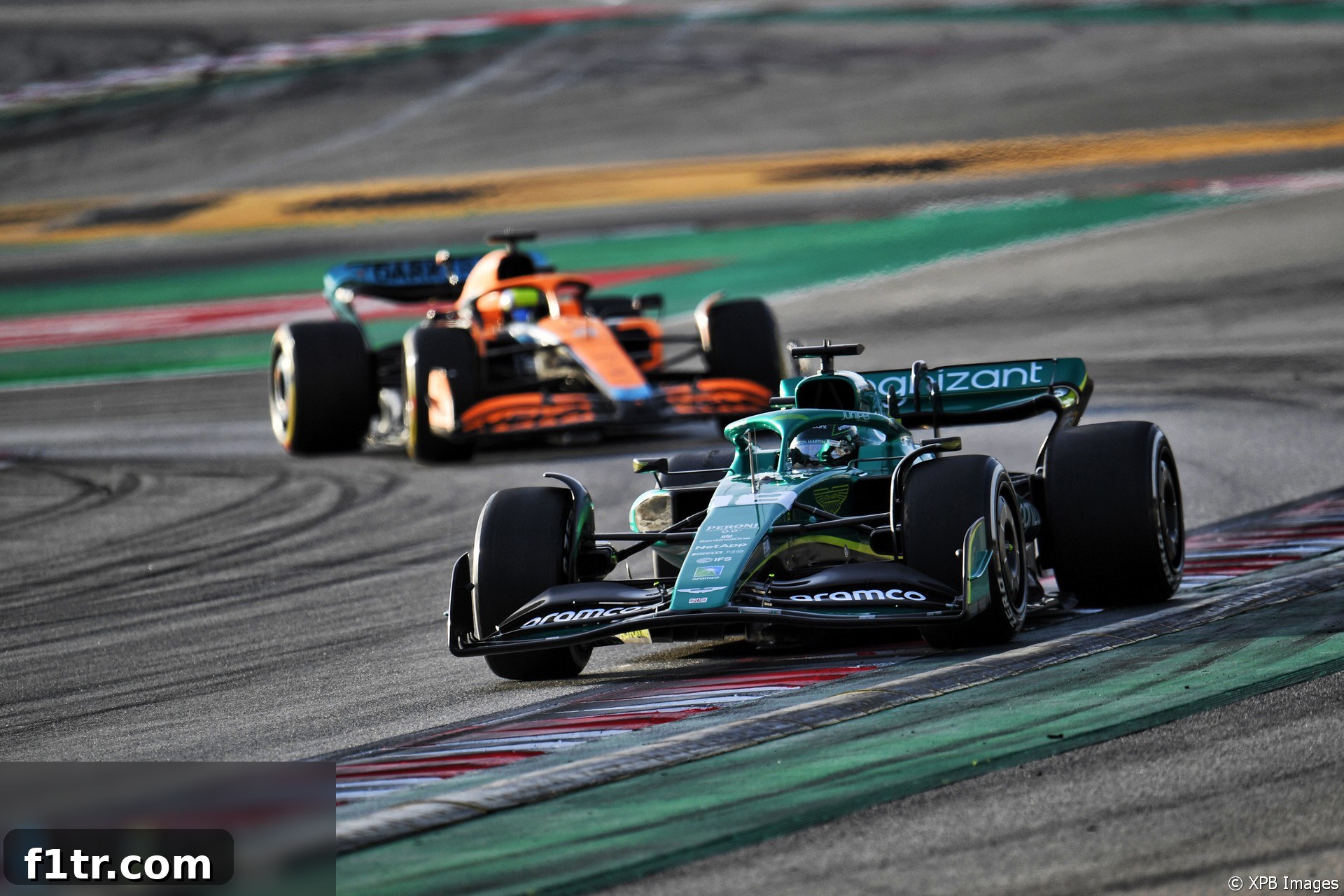
Formula 1’s 2022 Rules: A New Era for Overtaking?
The dawn of the 2022 Formula 1 season marked a pivotal moment for the sport, heralded by a sweeping overhaul of its technical regulations. At the heart of these changes was an ambitious goal: to create a racing spectacle where cars could follow each other more closely, thereby facilitating more thrilling overtakes. Early feedback from pre-season testing indicated that these bold new rules were already bearing fruit, with top drivers Max Verstappen and Alexander Albon offering encouraging insights into the efficacy of the revised aerodynamic philosophies.
For years, “dirty air” has been a pervasive challenge in Formula 1. This term refers to the turbulent, disrupted airflow generated by a car, which significantly impacts the aerodynamic performance of a following vehicle. When a car drives into this turbulent wake, it experiences a drastic reduction in downforce – the aerodynamic force that pushes the car onto the track, providing grip and stability. This loss of downforce makes the following car unpredictable, prone to understeer or oversteer, and often leads to increased tyre wear as drivers struggle to maintain control. Consequently, drivers have often found themselves unable to sustain close proximity to rivals, stifling genuine on-track battles and making overtaking a high-risk, often impossible, maneuver unless aided by DRS or a significant performance differential.
The 2022 regulations were meticulously designed to mitigate this very issue. The primary focus shifted to ground effect aerodynamics, a concept last seen prominently in F1 in the early 1980s. Under the new rules, much of the car’s downforce is generated by Venturi tunnels underneath the car, creating a low-pressure area that effectively sucks the car to the tarmac. This design drastically reduces the “outwash” effect – the tendency for complex front wing designs to push turbulent air out and around the following car – and instead directs the wake upwards and over the trailing car. The result is a cleaner, less disruptive air stream for the following vehicle, theoretically allowing drivers to maintain a much closer distance without suffering catastrophic losses in performance.
Driver Testimonials: Early Success on Track
Among the first to experience and comment on these changes were two drivers with contrasting recent histories in the sport: reigning world champion Max Verstappen and the returning Alexander Albon. Their early impressions from testing provided a tangible validation of the regulations’ intent.
Alexander Albon’s Surprising Ease of Following
Alexander Albon, making his return to Formula 1 after a season in DTM, was particularly struck by the immediate impact of the new cars. During a stint behind Pierre Gasly, Albon noted a significant improvement in his ability to follow closely.
“I had a couple of laps behind Gasly and it feels good, the initial feeling,” Albon recounted. He continued, “Obviously I haven’t raced in a while, so it’s a bit harder on that side. But I was surprised how close I could stay through turn two, turn three. I was almost under-driving because I was expecting worse, if that makes sense. But the initial feeling is positive.”
Albon’s comment about “under-driving” is telling. It suggests that his ingrained expectations of battling dirty air, developed over years of racing under previous regulations, were not met with the same resistance. The fact that he could approach corners with less caution than anticipated speaks volumes about the cleaner wake generated by the 2022-spec cars. This unexpected ease of following represents a critical step towards realizing the goal of more competitive and engaging wheel-to-wheel racing.
Max Verstappen’s Confirmation of Reduced Turbulence
Reigning world champion Max Verstappen echoed Albon’s sentiments, lending significant weight to the positive early assessments. Verstappen, renowned for his aggressive driving style and intimate understanding of car dynamics, affirmed that the ability to follow other cars had indeed improved.
“I’ve been following a few cars and it seems like it’s a little bit easier to stay behind,” Verstappen observed. He elaborated on the qualitative difference, stating, “At least you don’t have this weird loss of downforce where sometimes you have a lot of understeer or massive oversteer.”
Verstappen’s remarks highlight the crucial aspect of predictability. Under the old rules, the sudden and dramatic shifts in downforce experienced in dirty air often made a following car behave erratically, forcing drivers to back off or risk losing control. The reduction of these “weird” downforce losses translates directly into greater driver confidence and, crucially, more consistent car performance while pursuing a rival. This stability is paramount for sustained attacks and strategic maneuvers during a race.
The Mechanics Behind the Improvement
The driver feedback directly correlates with the fundamental changes in aerodynamic philosophy. By simplifying the front wings and mandating a more controlled airflow around the wheels, the new regulations effectively curtail the complex vortices and turbulent structures that characterized previous generations of F1 cars. The primary objective was to ensure that the air flowing off the car remains as “clean” as possible, minimizing its disruptive effect on the car behind.
The reintroduction of ground effect is central to this. Instead of relying heavily on large, intricate wings to generate downforce, the 2022 cars utilize carefully sculpted underbodies to accelerate air and create a powerful suction effect. This method produces downforce more efficiently and, critically, with a far less turbulent wake. The air leaving the rear of the car is more organized and directed upwards, allowing the following car to operate in a comparatively cleaner envelope of air. This means the following car’s own aerodynamic surfaces – particularly its front wing and floor – can function more effectively, retaining more of their intended downforce and stability.
Realistic Expectations and Future Outlook
While the initial signs are undoubtedly positive, both drivers, particularly Verstappen, maintained a realistic perspective regarding the ultimate impact of the rule changes. Verstappen cautioned against expecting a complete eradication of aerodynamic disturbance.
“Of course I don’t expect it to be fully gone and [that] you can follow on the rear diffuser, because of the speeds we’re still doing in an F1 car. But it all seems a bit more under control,” he stated.
This nuanced view is important. At the extreme speeds of Formula 1, even a significantly cleaner wake will still have some impact. The laws of physics dictate that any object moving at such velocity will generate turbulence. The goal was never to eliminate dirty air entirely, but rather to reduce its severity to a manageable level, allowing drivers to push harder for longer while following. The phrase “a bit more under control” perfectly encapsulates this achievement. It signifies that drivers now have a greater degree of command over their cars in close proximity to others, opening up more strategic possibilities and driver-led overtakes rather than relying solely on DRS zones or significant tyre degradation for an advantage.
The success of these regulations will ultimately be judged over the course of an entire season, across a variety of circuits with different characteristics. Factors such as tyre management, DRS effectiveness, and the natural evolution of car development throughout the year will also play crucial roles. However, these early testimonials provide a strong foundation for optimism. If drivers can consistently stay closer, brake later, and carry more speed through corners while behind another car, the 2022 rules could indeed usher in a new golden age for Formula 1 racing, characterized by more intense battles and a greater emphasis on driver skill in direct combat.
Implications for the Sport and Fan Engagement
The implications of genuinely improved overtaking extend far beyond the technical paddock. For fans, it promises a more exhilarating and less processional viewing experience. The frustration of seeing a faster car stuck behind a slower one, unable to make a move due to aerodynamic limitations, has been a common complaint. The 2022 rules aim to alleviate this, fostering a dynamic where on-track position is earned through daring maneuvers and sustained pressure, rather than being largely predetermined by qualifying. This shift is vital for maintaining and growing fan engagement, attracting new audiences, and solidifying Formula 1’s position as a premier global motorsport.
For the teams, the new regulations represent a fresh challenge and an opportunity to showcase their engineering prowess. While the initial focus was on meeting the regulatory framework, the continuous development throughout the season will involve fine-tuning their designs to maximize the benefits of the new aerodynamic package, perhaps even finding innovative ways to create even cleaner air for their following cars, or conversely, to create more disruptive air for those behind them, within the rules. This ongoing technical arms race is a core part of F1’s DNA.
Conclusion: A Promising Start for a Bolder Vision
Formula 1’s ambitious gamble with its 2022 technical regulations appears to have paid off in its initial stages. The unanimous positive feedback from seasoned drivers like Max Verstappen and Alexander Albon provides compelling evidence that the fundamental design goals – reducing dirty air and making it easier to follow and overtake – have been achieved to a significant degree. While the complexities of a full racing season will reveal the true extent of these changes, the early signs point towards a revitalized era of Formula 1, where cleaner air fosters closer racing and empowers drivers to engage in more spectacular on-track battles. The stage is set for a thrilling period in the sport’s history, where the engineers’ vision translates into a more exciting reality for drivers and fans alike.
Further Reading on the 2022 F1 Season
- Mercedes told me “you’re wrong” about 2022 car’s problems – Hamilton
- FIA confirms all 10 F1 teams complied with 2022 cost cap
- Steiner “not ashamed” of panning “slow” Schumacher in Drive to Survive
- Albon believes year out of F1 improved him as a driver
- Hamilton sees diversity gains in F1 years on from his ‘traumatising’ experience of racism
Browse all 2022 F1 season articles