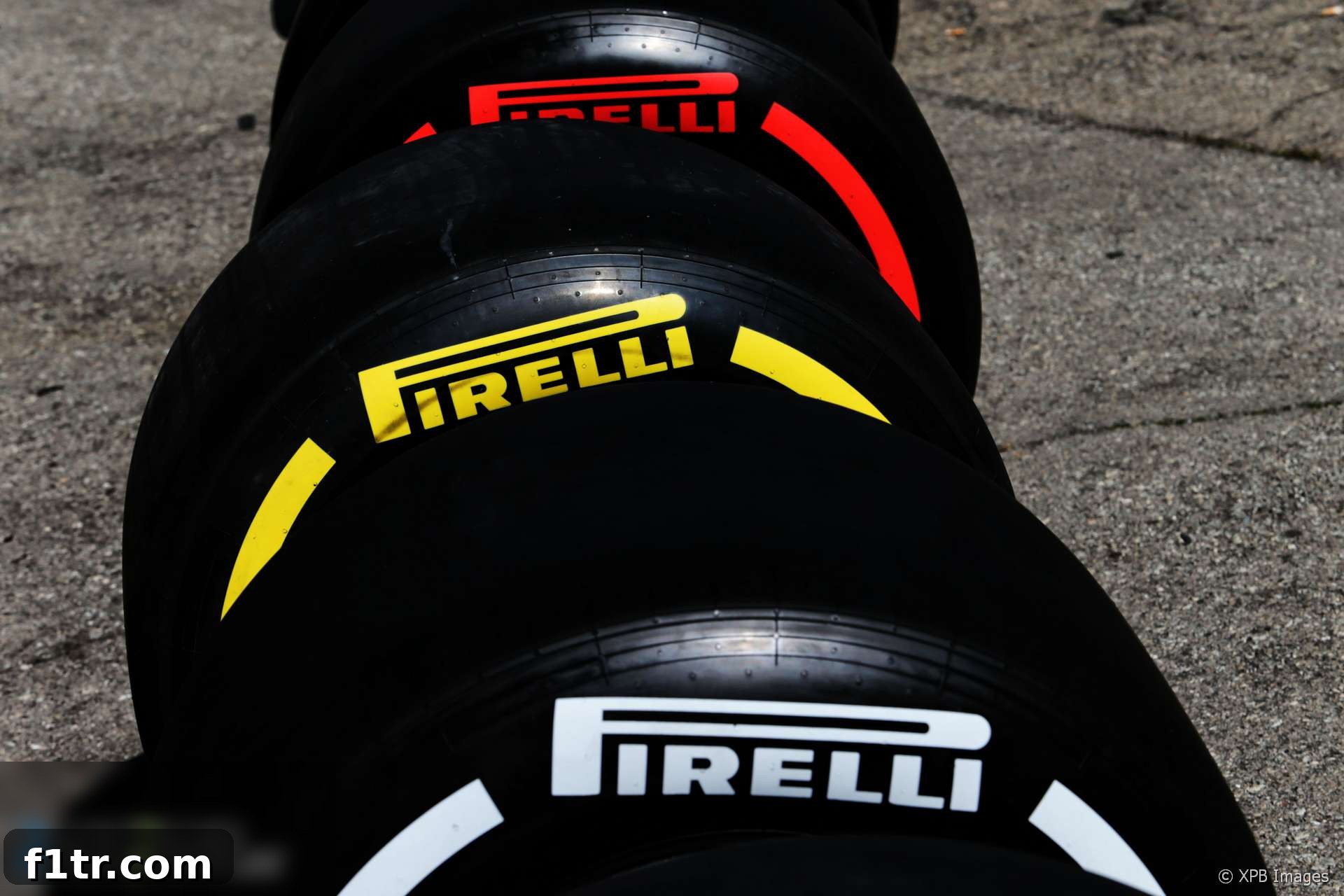
Pirelli’s recent announcement regarding the standardized three-colour system for their 2019 Formula 1 tyres has ignited a fresh debate within the motorsport community. While the simplification aims to enhance fan clarity, an underlying question persists: could the sport benefit more from a radical shift towards unmarked tyres, thereby injecting an unprecedented level of unpredictability and strategic depth back into Grand Prix racing?
An Early Start to a Pivotal F1 Weekend in Austin
Advert | Become a Supporter & go ad-free
4am: The shrill alarm tears me from sleep, a familiar jolt dictated by the demands of the global Formula 1 schedule. Though the Texan sky outside my window is still cloaked in pre-dawn darkness, the European F1 world has been buzzing for hours. It’s already 11 am across the Atlantic, and my digital inbox is a burgeoning testament to the day’s unfolding narrative. I methodically sift through a cascade of emails, catching up on breaking news and crucial updates, before diving into the digital editions of venerable British newspapers like The Times and The Telegraph. This routine preparation is essential, allowing me to fully grasp the intricate tapestry of happenings and ready myself for another intense day immersed in the world of Formula 1.
7:30am: With plans to rendezvous for a traditional British breakfast at the Williams hospitality suite, my first stop is a drive-thru for a quick coffee. The journey northward along the highway is unexpectedly dampened by a teeming downpour, characteristic of the unpredictable autumn weather in Texas. Despite the challenging conditions, the added travel time is minimal, extending my commute by a mere ten minutes. Such minor delays are par for the course on a Grand Prix weekend, and I arrive at the Circuit of the Americas with ample time to spare, my anticipation for the day’s events undimmed.
Driver Market Speculation and F1’s Political Landscape
8:30am: Upon arrival, I swiftly navigate the bustling paddock to set up my workstation for the day before heading directly to the Williams motorhome. There, I find myself seated opposite Dmitry Belousov, the Executive Director of SMP Racing and the designated ‘minder’ for Sergey Sirotkin. Our conversation naturally drifts to the swirling rumors surrounding Sirotkin’s future at Williams for the upcoming season. The outlook, it seems, is cautiously optimistic – “fair to middling,” as the adage goes. Yet, the consensus is clear: Sergey faces a formidable battle to retain his seat. The paddock is abuzz with speculation that Robert Kubica has secured additional funding, significantly bolstering his chances, while the highly-rated Esteban Ocon is reportedly eyeing a one-year deal, further intensifying the competition. This intricate dance of driver contracts, sponsorship deals, and political maneuvering is a constant undercurrent in Formula 1, shaping the destinies of many.
Advert | Become a RaceFans supporter andgo ad-free
Rain-Soaked Practice and a Mentor’s Legacy
10am: As predicted, the initial free practice session is severely hampered by persistent rain, offering little in the way of significant insights or data for teams. While the track remains largely inactive, it provides an opportune moment to reflect on my host for the weekend, Forrest Bond. I first crossed paths with Forrest in 2005, and he has since become an invaluable mentor, particularly in navigating the complex and often opaque world of F1 politics. I recall an instance where I had meticulously penned a detailed report concerning the exclusion of Minardi’s cars for technical non-compliance, only for them to be dramatically reinstated by a Melbourne court. My analysis, I believed, was the definitive account, crafted after an exhaustive study of the verdict and interviews with all key players. My sense of accomplishment, however, was momentarily overshadowed by Racefax, a publication run by a Texan I had never encountered before, and who, despite lacking full FIA accreditation, somehow managed to publish not only the identical legal documents but also internal FIA paperwork – a truly remarkable scoop.
I reached out to Forrest to congratulate him on his unparalleled access, and it became clear that we shared a common drive: a deep-seated distaste for the administrative practices of the FIA during the tumultuous Max Mosley era. Our shared perspective forged a lasting bond, leading to years of collaboration, the exchange of sources, materials, and joint efforts on numerous politically charged stories within the sport. When Mosley eventually stepped down in 2009, Forrest, feeling his mission accomplished, officially retired from his active involvement in F1 commentary, confident that a new chapter could begin.
Forrest has generously granted us unique access to his extensive archives, a treasure trove of F1 history stretching back to the early nineties. These invaluable records offer an unparalleled glimpse into one of the most turbulent and fascinating periods of the sport. We eagerly anticipate sharing some of these incredible accounts with you very soon, stories that are undoubtedly worth the wait.
Go ad-free for just £1 per month>> Find out more and sign up
F1’s Future and the Search for a Re-launch
12 noon: The FIA team boss press conference gets underway, and I find myself nodding in agreement as Maurizio Arrivabene articulates the urgent need for a “fundamental re-launch” of Formula 1. His sentiments perfectly echo the arguments I had put forth earlier this week in my ‘Peak F1’ column, a welcome validation that largely nullifies the occasional criticism from certain paddock insiders who perceive my analysis as “negativity.” Given that F1’s FWONK share price has seen a significant drop of almost 12 percent in the past week alone, one can certainly understand the heightened sensitivity around the sport’s commercial direction and future viability. Arrivabene’s call for a comprehensive overhaul highlights the growing consensus that F1 needs to critically evaluate its appeal, its regulations, and its business model to ensure sustained growth and engagement in an increasingly competitive entertainment landscape.
A Taste of Texas and International Connections
1pm: Lunch in the Media Canteen offers a hearty spread: succulent pulled pork, a classic American biscuit (more akin to a scone than its British namesake), noodles, and creamy coleslaw, all rounded off with decadent brownies. While one should never look a gift horse in the mouth, especially when it comes to complimentary food during a demanding Grand Prix weekend, a colleague playfully alludes to a scene from “The Shawshank Redemption” – a film I happen to adore – prompting a chuckle. The alternatives, after all, would involve a considerable trek through the relentless rain to secure a meal at a team’s hospitality, making the canteen fare a decidedly preferable option.
1:30pm: I seize a brief window to meet with an old friend, Nori Yamamoto, in the main grandstand lounge. Our acquaintance dates back to 2007 at Fuji, where his unparalleled insights and assistance proved invaluable during several Japanese Grands Prix. Nori, a lifelong F1 enthusiast, is currently on the path to becoming a qualified surgeon in Atlanta and has travelled to Austin with his family specifically for this race weekend. Our reunion is all too short, a fleeting moment amidst the chaos, but as the saying goes, better brief than not at all. These personal connections, forged over years and across continents, are a vital thread in the rich tapestry of the Formula 1 experience, reminding us of the sport’s global appeal and its ability to bring people together.
The Frustration of Wet Weather and Tyre Blame Games
2pm: The second practice session proves to be even wetter than the first, with treacherous track conditions prompting only half of the grid to venture out for a handful of cautious laps. This scenario starkly underscores a recurring dilemma: Formula 1 consistently champions its efforts to cultivate interest and expand its fanbase in the United States, yet loyal spectators who brave the elements are often left enduring hours of inaction. The disappointment is palpable. Some drivers are quick to point fingers at a perceived scarcity of wet weather tyres, but Pirelli, the sport’s sole tyre supplier, firmly refutes these claims. According to their records, teams were never in jeopardy of exhausting their allocated quotas of wet and intermediate tyres. This familiar cycle of buck-passing between teams and the tyre manufacturer offers little solace to the sodden fans in the grandstands, whose enthusiasm is tested by the lack of on-track action. The debate highlights the delicate balance between safety, spectacle, and resource management in challenging conditions.
4pm: The scheduled media interviews commence. I rotate through various sessions, first with the Williams duo, then Carlos Sainz Jnr at Renault – who, predictably, echoes concerns about the shortage of suitable wet rubber. Following Sainz, I speak with Renault’s technical director Nick Chester, Force India’s Otmar Szafnauer, before concluding the round with Mario Isola, Pirelli’s Head of F1 and Car Racing, whose insights are always crucial.
Pirelli’s 2019 Tyre Announcement and the Unmarked Tyre Debate
6:30pm: With the day’s official duties nearing completion, I pack up my gear and catch a shuttle to the Victory Lounge – coincidentally, the very place where I had earlier met with Nori. This venue is hosting Pirelli’s eagerly anticipated press conference, which is seamlessly combined with a relaxed BBQ party. The main event of the evening is Pirelli’s official announcement of the sidewall colours for their 2019 F1 tyre choices for each Grand Prix. The standardized sequence, designed for clarity, will be white for the Hard compound, yellow for the Medium, and red for the Soft. This choice is hardly surprising, given that these colours are deeply ingrained in Pirelli’s corporate identity and branding.
The stated aim of this simplification is to make tyre strategy more comprehensible for fans, effectively cutting down from an array of different colours across various races to just three consistent visual identifiers. On the surface, this move promises to simplify matters, reducing potential confusion. However, it prompts a more fundamental question: are we, in our pursuit of simplification, inadvertently over-complicating the sport’s strategic depth? I can’t help but wonder if a more radical approach might be beneficial: scrapping all sidewall colours entirely and keeping the tyre compounds a closely guarded secret, reminiscent of the exhilarating “tyre war” days when different manufacturers vied for supremacy.
I seized the opportunity to put this very concept, a topic that has occasionally surfaced in paddock discussions, to Daniel Ricciardo, Pirelli’s VIP guest for the evening. His immediate reaction was that teams would inevitably “work out” which compound their rivals were running. While there’s certainly an element of truth to his assertion – engineers and strategists are incredibly adept at deciphering data – I remain unconvinced that they would achieve certainty every single time. Imagine the strategic gamble, the enhanced need for on-track reconnaissance, and the sheer unpredictability if teams were genuinely unsure about their competitors’ tyre choices. This lack of definitive information would force more dynamic decision-making, encourage greater driver input, and potentially lead to more varied and exciting race strategies, ultimately boosting the spectacle for fans. The debate around tyre marking isn’t just about aesthetics; it’s about the very essence of F1 strategy and the pursuit of true unpredictability.
8pm: With the Pirelli event concluded, I head back to New Braunfels. By 10pm, I’m already in bed, mentally preparing for another 4am start, ready to tackle the next demanding day of the United States Grand Prix weekend, with the lingering question of F1’s ideal tyre strategy echoing in my mind.
Advert | Become a RaceFans supporter andgo ad-free
More from the 2018 United States Grand Prix
- Verstappen leaving rivals breathless in Mexican altitude
- Raikkonen ends longest-ever wait between wins
- 300 team radio messages from the United States Grand Prix
- 2018 United States Grand Prix Star Performers
- Top ten pictures from the 2018 United States GP
Browse all 2018 United States Grand Prix articles