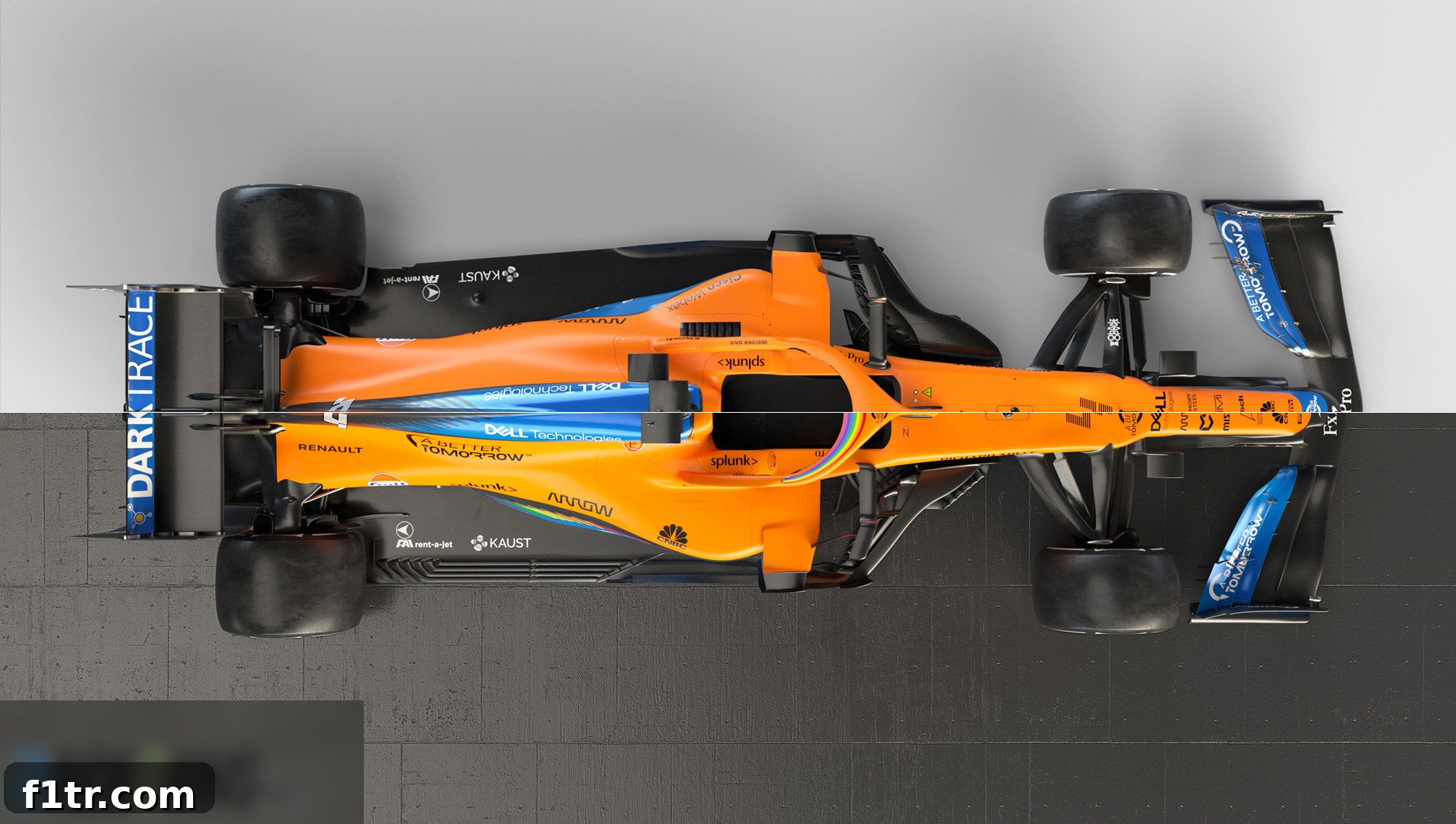
McLaren’s MCL35M: A New Chapter with Mercedes Power for the 2021 F1 Season
The 2021 Formula 1 season was a year of significant transition and meticulous engineering for McLaren Racing. While every team on the grid made necessary aerodynamic adjustments to comply with the year’s new rules, McLaren undertook a far more profound transformation: a fundamental change in engine suppliers. Moving from Renault to Mercedes-AMG, this strategic shift was arguably the most complex and critical engineering challenge for the Woking-based outfit during the condensed winter break. It represented not only a return to a historically successful partnership but also a testament to McLaren’s technical prowess in integrating a completely different power unit architecture into a car chassis originally designed for another manufacturer, all under stringent F1 regulations.
Integrating a new power unit, especially one as different in packaging and philosophy as the Mercedes-AMG M12 E Performance, into a chassis that was largely homologated from the previous year’s Renault-powered MCL35 was an undertaking of colossal proportions. Unlike designing a car from a clean sheet, McLaren’s engineers had to surgically adapt the existing structure. This involved extensive modifications to the chassis’s internal layout, redesigning crucial cooling systems, adapting the entire electrical and hydraulic architecture, and meticulously optimizing the car’s weight distribution and centre of gravity. The challenge was exacerbated by the restrictive cost-cap and development freeze regulations of the 2021 season, demanding ingenuity and efficiency from the team.
James Key, McLaren’s esteemed Technical Director, eloquently summarised the magnitude of this feat: “One of the key elements of the MCL35M design is the integration of the Mercedes-AMG power unit, which has taken a considerable effort from the team in Woking, as well as our colleagues at Mercedes. Despite our limited scope for installation in a homologated car, the team has done a fantastic job of optimising our design work.” This statement not only highlights the collaborative effort between McLaren and Mercedes but also underscores the delicate balance McLaren’s engineers had to strike: extracting maximum potential from the new powerplant while operating within extremely tight regulatory and structural constraints.
The Aerodynamic Evolution: How Mercedes Power Reshaped the MCL35M
The switch to Mercedes power brought about several visually striking and aerodynamically significant changes to the MCL35M, visible even to the untrained eye. Detailed top-down images and technical analyses revealed crucial alterations that visibly distinguished the 2021 car from its Renault-powered predecessor. One of the most immediate and impactful differences was the noticeably slimmer sidepods on the MCL35M. This tighter, more compact packaging around the engine bay is a direct result of Mercedes’ highly integrated and efficient power unit design, particularly its innovative turbocharger architecture which allows for greater freedom in packaging.
A more streamlined sidepod profile is not merely an aesthetic change; it significantly improves airflow to the rear of the car. This enhanced airflow management is critical for optimizing the performance of the diffuser and the rear wing, both paramount components for generating ground-effect downforce and overall aerodynamic efficiency. The ability to package the engine so tightly allowed McLaren to unlock significant gains in airflow conditioning, reducing drag and increasing the effective downforce generated by the rearward aerodynamic surfaces. This intricate interplay between powertrain integration and external aerodynamics is a hallmark of cutting-edge Formula 1 design.
Further observations from various angles indicated that the rear of the MCL35M appeared to have been subtly extended. This extension was likely necessitated by the slightly different dimensions or mounting points of the Mercedes gearbox, or perhaps to fine-tune the aerodynamic flow structures over the diffuser for maximum effect. Additionally, a larger upper air intake, a characteristic feature often seen on Mercedes-powered cars, was evident when viewed from the front. This suggests either distinct cooling requirements for the Mercedes engine or an optimized airbox design aimed at efficiently feeding the powerful unit, known for its superior thermal efficiency and robust power delivery.
The synergy between a power unit’s design and its ultimate aerodynamic integration is absolutely paramount in modern Formula 1. McLaren’s successful integration of the Mercedes unit meant they could not only potentially benefit from an increase in raw power but also capitalize on the inherent packaging advantages to unlock significant aerodynamic efficiency. This dual benefit was a major factor in the team’s optimism for the 2021 season. While other teams focused purely on refining their existing concepts to meet new regulations, McLaren was simultaneously undertaking a fundamental re-engineering of its car’s core, presenting a unique and formidable engineering challenge.
Adapting to the Universal 2021 Aerodynamic Rule Changes
Beyond the internal revolution of the engine switch, McLaren, like every other team on the grid, had to meticulously adapt to a specific set of aerodynamic regulations introduced for the 2021 season. These rule changes were primarily instigated by the FIA and Formula 1 to control escalating car speeds and to manage development costs, particularly in light of the global pandemic. They served as an interim measure before the radical regulatory overhaul planned for 2022. The most significant of these changes involved substantial alterations to the car’s floor area, especially in the critical region ahead of the rear wheels.
The most visually prominent effect of these new rules was the reduced area of the rear floor. Compared to the previous year’s design, the 2021 cars featured a distinctive, long, triangle-shaped cutaway in front of the back wheels. While seemingly minor, this modification had a profound impact on the car’s aerodynamic performance. The floor of an F1 car is arguably its most critical aerodynamic component, responsible for generating a significant portion of the total downforce through ground effect. By manipulating airflow beneath the car to create a low-pressure zone, it effectively sucks the car towards the track. Reducing the surface area in this specific, high-velocity region directly curtailed the car’s ability to “seal” the undertray and generate the same levels of downforce, thereby making the cars inherently slower through corners.
Despite this mandatory downforce reduction, Technical Director James Key conveyed a determined confidence in McLaren’s ability to mitigate these losses. He expressed the team’s ambition to “get back to 2020 downforce levels later in the year.” This aggressive target highlighted the relentless and iterative development cycle in Formula 1, where engineers constantly strive to recover lost performance through innovative design solutions. Teams spent the season developing intricate new floor designs, subtle diffuser tweaks, and finely sculpted winglets to recover the lost aerodynamic grip, often through complex flow structures that re-energize the air around the rear tires and maintain the crucial efficiency of the undertray. This commitment to continuous improvement is a cornerstone of success in modern F1.
The Evolving Front-End: McLaren’s Nose and Cape Design
While the engine integration and rear floor changes captured significant attention, the front-end aerodynamics of the MCL35M also underwent a continuous evolution. The nose of the launch-spec car for 2021 notably differed from the version seen at the very beginning of the 2020 season. However, this wasn’t an entirely new development for the new season. McLaren had, in fact, introduced this reshaped nose and its accompanying ‘cape’ element mid-way through the 2020 season. This demonstrated the team’s agile development capability and proactive approach to aerodynamic improvement, bringing a proven concept forward into the new year.
The nose cone is a fundamentally critical aerodynamic element, serving not only a safety function but also crucially dictating how airflow is managed over the front wings, bargeboards, and subsequently, underneath the car to the floor and diffuser. A narrower, more sculpted, or innovative nose design can significantly influence the quantity and quality of airflow directed underneath the car, which is vital for feeding the downforce-generating floor and diffuser components. The ‘cape’ element, a distinctive aerodynamic feature that extends backwards from the nose, is specifically engineered to guide airflow more efficiently underneath and around the chassis, further contributing to overall downforce generation and aerodynamic stability. McLaren’s strategic decision to carry this updated design into the 2021 season underscored its perceived performance benefits and the team’s unwavering commitment to optimizing every single aspect of their competitive package.
Ambition and Outlook: McLaren’s 2021 Season with Mercedes
The cumulative effect of these extensive changes positioned McLaren for a highly anticipated and potentially transformative 2021 season. The switch to Mercedes power was far more than just a quest for raw horsepower; it was about integrating McLaren into a proven, championship-winning ecosystem. Mercedes engines have consistently been recognized as the benchmark in the V6 turbo-hybrid era, offering an unparalleled blend of power, fuel efficiency, and bulletproof reliability. For McLaren, this represented a significant and measurable upgrade from their previous power unit supplier, promising a substantial leap forward in competitive performance and reliability.
Beyond the profound technical upgrades, McLaren also boasted an incredibly exciting driver lineup with the experienced and charismatic Daniel Ricciardo joining the promising young talent Lando Norris. This formidable combination of a potent new engine, meticulously refined aerodynamics, and a strong, dynamic driver pairing fueled immense aspirations within the team and generated considerable excitement among fans worldwide. The MCL35M was widely expected to be a strong contender in the intensely competitive midfield, with a realistic potential to challenge the established front-running teams on specific tracks and in varying conditions. The inherent advantages of the Mercedes power unit, coupled with McLaren’s effective integration and its continuous in-season aerodynamic development, promised a genuinely competitive and thrilling package.
The strategic decision to revert to Mercedes power, a partnership that yielded immense success and multiple championships in previous eras, unequivocally signaled McLaren’s clear intent to return to the pinnacle of Formula 1. The 2021 season, therefore, was not merely a stepping stone but a crucial litmus test of the team’s engineering prowess, adaptability, and strategic foresight under highly restrictive and challenging conditions. The MCL35M, in essence, was far more than just a new racing car; it was a powerful statement of intent, embodying McLaren’s renewed ambition and their profound confidence in the revitalized Mercedes-AMG partnership to propel them back into genuine championship contention in the years that followed.
Video: First look at McLaren’s MCL35M