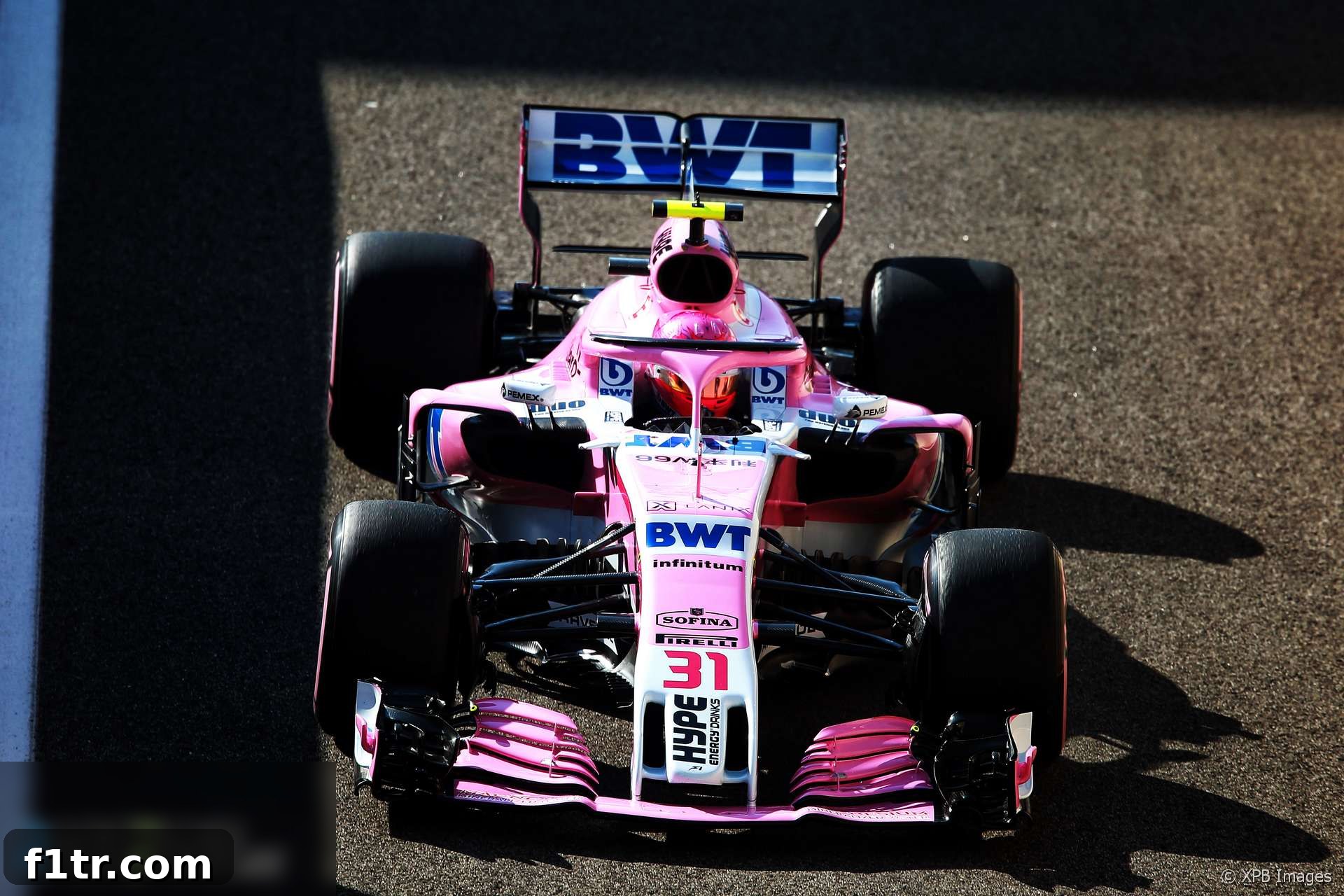
The motorsport world was abuzz with regulatory debate following Haas F1 Team’s protest against Racing Point Force India at the 2018 Abu Dhabi Grand Prix. The American team challenged the eligibility of Racing Point Force India to compete, asserting that it did not meet the definition of a ‘constructor’ as stipulated in the 2018 Formula One Sporting Regulations. However, after a thorough review, the stewards ultimately dismissed Haas’s protest, solidifying Racing Point Force India’s place on the grid.
Advert | Become a Supporter & go ad-free
The Heart of the Controversy: Constructor Status and Listed Parts
Haas’s protest centered on two key arguments: first, that the Racing Point Force India team (referred to as FIM in the protest documents) did not qualify as a ‘constructor’ under Article 6.3 and Appendix 6 of the 2018 Formula One Sporting Regulations. Second, and crucially, Haas argued that Racing Point Force India had improperly acquired ‘listed parts’ from its predecessor, Sahara Force India. Appendix 6 explicitly states that teams are prohibited from sourcing listed parts – components vital to a car’s performance and design – from competitors.
The term ‘constructor’ in Formula 1 is not merely a title; it carries specific regulatory obligations, especially concerning the design and manufacture of various car components. The regulations aim to ensure that teams primarily design and produce their own cars, maintaining the spirit of competition and innovation within the sport. Haas contended that Racing Point Force India’s operational model, particularly its reliance on parts from the former team, violated these fundamental principles.
A Team Reborn: The Transformation of Force India
To fully grasp the complexity of the protest, it’s essential to understand the tumultuous journey of the Force India team in 2018. The team, known then as Sahara Force India Formula One Team, entered administration on July 28, 2018, due to severe financial difficulties. This placed the team’s future in jeopardy, threatening its very existence in the sport.
A swift intervention followed, leading to Racing Point UK Limited acquiring the business and assets of Force India on August 16, 2018. This acquisition marked a pivotal moment, effectively transitioning ownership and operation. Crucially, on August 21, an entry form was signed on behalf of Racing Point UK Limited for the new entity, Racing Point Force India F1 Team, to enter the 2018 FIA Formula One World Championship. By August 23, 2018, the FIA had issued a new Super Licence to Racing Point Force India and formally recognized it as an F1 Constructor upon acceptance of its entry form and the signing of a Bilateral Settlement Agreement with the FIA. The “new” team then made its competitive debut at the Belgian Grand Prix in Spa later that month.
This rapid succession of events, from administration to re-entry under a new identity, created a unique regulatory conundrum. Haas’s protest sought to challenge whether this “rebirth” adhered strictly to the established rules, particularly concerning the continuity of parts and the definition of a constructor.
The Stewards’ Hearing: Arguments and Counter-Arguments
The hearing, held on November 23, 2018, at the Abu Dhabi Grand Prix, involved representatives from Haas, Racing Point Force India, and the FIA, each supported by legal counsel. It became a detailed examination of Formula 1’s intricate sporting regulations and their interpretation in extraordinary circumstances.
Haas’s Detailed Case
Mr. Courtenay-Stamp, representing Haas, reiterated that the Championship is exclusively for eligible constructors. He argued that Racing Point Force India failed to meet this definition, primarily because it did not design its own ‘listed parts’ and, alternatively, did not properly outsource their design or manufacture. He highlighted Article 1 of Appendix 6, which mandates that a competitor “shall in respect of the Listed Parts to be used in its cars in Formula One, only use Listed Parts which are designed by it.” While Article 2 of Appendix 6 permits outsourcing, it explicitly states that the third party involved in such outsourcing cannot be a “competitor.” Haas contended that Sahara Force India, even in administration, should be considered a former or existing competitor, thus rendering the acquisition of parts illegitimate. Furthermore, Haas asserted that the FIA could not unilaterally exercise its discretion under Article 8.5 to accept an entry if the team did not fundamentally meet the constructor definition.
Racing Point Force India’s Defense
Mr. Gay, on behalf of Racing Point Force India, presented a strong defense. He meticulously detailed the chronology of events, emphasizing that the sale of assets of Sahara Force India was effective August 16, 2018, as acknowledged in the Bilateral Settlement Agreement. He challenged Haas’s right to protest, suggesting that the FIA had “absolute discretion” under Article 8.5 to accept Racing Point Force India as a constructor. He also questioned the protest’s timeliness, pointing out that eight Grands Prix had already occurred since Racing Point Force India obtained its Super Licence, implying any challenge should have been lodged much earlier. Mr. Gay also referenced the “Budapest Agreement,” to which Haas was a party, arguing it effectively waived any right to object to the new team’s arrangement.
The FIA’s Clarifying Stance
Mr. Ketterer, representing the FIA, clarified the governing body’s position. He stressed that the FIA’s concern was purely regulatory, not commercial. He firmly stated that Sahara Force India had been excluded from the Championship and that Racing Point Force India was unequivocally a “new and different Team,” evidenced by its new Super Licence dated August 23, 2018. Crucially, he argued that on August 16, 2018, when its assets were sold, the former Sahara Force India team ceased to be a “competitor” within the meaning of the regulations. Therefore, the acquisition and use of ‘listed parts’ from this non-competitor entity by Racing Point Force India did not breach any FIA regulations and fully complied with the definition of ‘outsourcing’ as outlined in paragraph 9 of Appendix 6. He also noted that the FIA was not a party to the Budapest Agreement, rendering it irrelevant from a regulatory standpoint.
Advert | Become a RaceFans supporter andgo ad-free
Key Decisions by the Stewards
After considering all arguments and extensive documentation, the stewards issued a comprehensive ruling, systematically addressing each point raised in Haas’s protest. Their decisions collectively affirmed the legitimacy of Racing Point Force India’s entry and operational model.
Haas’s Right to Protest Affirmed (Decision 1)
First, the stewards confirmed that the Haas F1 Team indeed had the right to protest. Citing Article 13.2.1 of the International Sporting Code, which grants competitors the right to protest against “the Entry of a Competitor or Driver,” they dismissed Racing Point Force India’s submission that Haas lacked jurisdiction. This established the procedural legitimacy of Haas’s challenge.
Protest Deemed Timely (Decision 2)
Racing Point Force India had argued that the protest was not timely. However, the stewards ruled it was, acknowledging that a significant amount of critical information only became available to Haas recently. Furthermore, Article 13.3 of the Code allows for protests against a competitor’s entry at an event, provided it is lodged within two hours of the official scrutineering closing time, a requirement Haas fulfilled.
The “Budapest Agreement” Irrelevant (Decision 3)
Regarding the “Budapest Agreement,” which Racing Point Force India suggested waived Haas’s right to object, the stewards found this assertion inconsistent with the agreement’s wording. More importantly, as the FIA was not a party to this commercial agreement, it held no relevance in regulatory matters concerning the Championship.
Racing Point Force India Declared a New Team (Decision 4)
A fundamental decision was the stewards’ confirmation that Racing Point Force India F1 Team is unequivocally a new and distinct team. They noted it is a separate legal entity from the former Sahara Force India F1 Team, possessing a different ASN Competition Licence and a different FIA Super Licence. This distinction was crucial in how its operational practices would be judged against the regulations.
“Competitor” Definition and Listed Parts Clarified (Decisions 5 & 6)
These two decisions formed the cornerstone of the dismissal. The stewards meticulously ruled that the former Sahara Force India F1 Team was not a “competitor” under Appendix 6, Article 2 (b) of the 2018 F1 Sporting Regulations at the critical juncture. They reasoned that as of August 16, 2018, following the sale of its assets, the former team had forfeited all its rights and ability to field cars in the 2018 Championship. At that point, it ceased to meet the FIA’s definition of both a Competitor and a Constructor, lacking the resources to fulfill such obligations. Consequently, the procurement of ‘listed parts’ by Racing Point Force India from the administrator of the former team was deemed permissible under the “outsourcing” provisions of Appendix 6, as the source was no longer a “competitor.” The regulations lacked any specific prohibition against outsourcing from a former or excluded team.
Fulfillment of “Constructor” Definition (Decision 7)
Building on the previous points, the stewards concluded that Racing Point Force India F1 Team satisfied the definition of a “Constructor” under the 2018 FIA Formula One Sporting Regulations from August 23, 2018. This was based on the FIA issuing its Super Licence and accepting its F1 Entry Form on that date, coinciding with the signing of the Bilateral Settlement Agreement.
Validity of Entry Confirmed (Decision 8)
The stewards upheld the validity of Racing Point Force India’s entry into the 2018 Formula One World Championship. They emphasized that under Article 8.5 of the Formula One Sporting Regulations, the FIA possesses absolute discretion to accept or reject an application to compete. Furthermore, Article 8.1 grants the FIA the right to accept a late entry if a place is available, reinforcing the legitimacy of Racing Point Force India’s inclusion.
Haas’s Protest Dismissed (Decision 9)
Finally, based on all the aforementioned findings and interpretations, the stewards formally dismissed Haas F1 Team’s protests against car numbers 11 (Sergio Perez) and 31 (Esteban Ocon).
Implications and Final Outcome
The stewards’ ruling provided crucial clarity on the regulatory framework governing team transitions and the interpretation of constructor status in Formula 1. It underscored the FIA’s authority in sanctioning new entries under extraordinary circumstances, even when a team’s origins are complex. While Haas’s protest was ultimately unsuccessful, the stewards acknowledged it was lodged in good faith, given the significant amount of complex information that only recently came to the protesting party’s attention. The decision paved the way for Racing Point Force India to continue its participation, albeit without the constructor points accumulated by its predecessor.
Advert | Become a RaceFans supporter andgo ad-free
2018 F1 season
- F1 feared “death knell” for Drive to Survive after Ferrari and Mercedes snub
- McLaren staff told us we were “totally crazy” to take Honda engines in 2018 – Tost
- ‘It doesn’t matter if we start last’: How Red Bull’s junior team aided Honda’s leap forward
- Honda’s jet division helped F1 engineers solve power unit problem
- McLaren Racing losses rise after Honda split
Browse all 2018 F1 season articles