The Grand Resurgence of Formula 1: Navigating Unprecedented Growth and Its Inherent Challenges
Formula 1 has undeniably entered a new golden era, experiencing a surge in popularity that has reshaped every facet of the sport. What seemed like an almost unstoppable rise last year continues to gain momentum, transforming F1 from a niche motorsport into a global entertainment phenomenon. This remarkable ascent is evident across various domains, from lucrative television deals and a record-breaking calendar to expanded partnerships and an influx of new manufacturing interest. Grand Prix events around the world are consistently selling out, reflecting a vibrant and engaged fanbase that continues to swell.
Under the stewardship of Liberty Media, Formula 1’s owner, revenues have seen consistent and impressive growth across all key pillars: race promotion, media rights, and sponsorship. Following robust performances in the first and second quarters, Formula 1 proudly announced a 7% increase in revenue for the third quarter of 2022 compared to the same period in the preceding year. This financial success story paints a stark contrast to the sport’s struggles a mere decade ago, highlighting the profound impact of strategic leadership and innovative audience engagement.
The series has secured pivotal multi-year television agreements, solidifying its presence in key markets and broadening its reach globally. The announcement of a record 2023 F1 calendar, featuring an unprecedented number of races, underscores the sport’s expanding footprint and increasing demand from host cities. Beyond traditional sponsorships, F1 has forged lucrative expanded partnerships with technology giants like Amazon Web Services, showcasing its appeal to cutting-edge industries. Perhaps one of the most significant validations of F1’s renewed health came with the commitment of Audi, a major automotive manufacturer, to join the grid when the next generation of power units arrives. This kind of investment and long-term commitment speaks volumes about the perceived stability and future prospects of the championship.
A Golden Era: Unpacking F1’s Staggering Ascent Under Liberty Media
To fully appreciate Formula 1’s current robust state, it’s essential to compare it with the landscape of a decade ago. Back then, under the leadership of Bernie Ecclestone, the sport faced a significant decline in its worldwide viewership. In 2013, the official Global Report published by F1’s then-commercial rights owners, CVC, painted a bleak picture: a slump from 515 million viewers worldwide in 2012 to 450 million. Ecclestone himself attributed this decline to the dominance of Red Bull and Sebastian Vettel, suggesting that predictable outcomes had turned audiences away, particularly in the latter stages of the season. Indeed, Vettel’s relentless charge to the title that year, winning all of the final nine races, arguably contributed to viewer fatigue. Yet, remarkably, Max Verstappen’s similarly dominant performance in recent seasons has not only failed to deter audiences but has coincided with a period of unprecedented growth and renewed interest in F1.
The transformation can largely be traced back to the pivotal moment nearly six years ago when Liberty Media ousted Ecclestone and assumed control of the sport. Their strategic vision has been instrumental in attracting new demographics and reinvigorating the existing fanbase. A cornerstone of this strategy has been the hugely successful Netflix documentary series, “Drive to Survive,” which opened up the sport to millions of new viewers by humanizing its stars and offering a compelling behind-the-scenes narrative. This, combined with the intense and captivating rivalry between Max Verstappen and Lewis Hamilton, particularly in the 2021 season, ignited a passion among younger audiences who flocked to races and engaged with the sport like never before. Even the global Covid-19 pandemic, which impacted most major sports, saw F1 emerge as one of the first to successfully resume operations after its initial 2020 season cancellation, demonstrating its resilience and adaptability.
While the pandemic inevitably depressed earnings in the short term, Liberty Media can be more than satisfied with the extraordinary recovery and subsequent growth. The financial figures speak for themselves: the series generated a staggering $715 million (£638m) in revenue across the months of July, August, and September alone. Audience numbers have soared, with the total average viewership per Grand Prix reaching 22.9 million after the first seven races, marking an impressive 11% rise. Marquee events have shattered previous records; the new Miami Grand Prix, a race Liberty Media worked for years to secure on the calendar, recorded a total weekend audience of 23 million, a significant 27% increase compared to the 2021 United States Grand Prix. The Dutch Grand Prix also witnessed a record 10.11 million viewers across seven key markets, representing a colossal 44% rise from the previous year. Even after Verstappen had already clinched the championship, the Brazilian Grand Prix continued to attract massive audiences, recording 10.6 million viewers for eight major markets, up 42% from 2021. These figures clearly illustrate the widespread and growing appeal of Formula 1.
Conquering New Frontiers: The American Market’s Embrace of F1
Perhaps nowhere is Formula 1’s meteoric rise more evident than in the United States, a market the sport historically struggled to penetrate. Under Liberty Media’s guidance, F1 has meticulously cultivated its presence across the Atlantic, culminating in a significant expansion that has seen American audiences embrace the sport with unprecedented enthusiasm. The success of the United States Grand Prix in Austin, Texas, laid the groundwork, but it was the addition of the Miami Grand Prix that truly signaled a new era for F1 in America. Miami, with its vibrant atmosphere and celebrity appeal, became an instant hit, drawing in massive crowds and attracting a new demographic of fans and sponsors.
Building on this success, Formula 1 has further cemented its commitment to the US market with the highly anticipated Las Vegas Grand Prix, which joins the line-up as the third American race this year. The Las Vegas event is not just another race; it represents a unique opportunity for F1 to integrate itself into the heart of American entertainment, promising a spectacle unlike any other on the calendar. This aggressive expansion into the US underscores the sport’s global ambitions and its success in tapping into previously unreached fan bases. The narrative of F1 breaking into the American sports consciousness is a testament to the effectiveness of Liberty Media’s marketing and strategic initiatives, proving that a traditionally European-centric sport can capture the imagination of a diverse global audience.
The Leadership Perspective: Stefano Domenicali’s Strategy for Sustained Prosperity
Formula 1 CEO Stefano Domenicali articulated the championship’s forward-looking strategy during a November address to investors, emphasizing the magnificent increase in attendance and the influx of new audiences. He highlighted the evolving business model with promoters, noting that it now involves not only a fee paid by host venues but also significant revenue generation from high-end hospitality experiences like the Paddock Club, which is directly managed by F1. This dual approach allows the sport to maximize its earnings from race weekends.
Domenicali stressed the immense opportunity that lies ahead: “The big opportunity to move forward is how we can maximise the revenue and monetise the revenue that we can take from the fact that Formula 1 has become more and more attractive. That’s really what we’re going to do in the future.” This statement clearly outlines a proactive approach to capitalize on F1’s enhanced global appeal. He expressed confidence in the sport’s ability to innovate its revenue streams and ensure that this period of growth translates into sustained financial prosperity. “We have a different way to do it, and I’m sure that we’re going to capitalise on this growth in the best way that we can in the next couple of years,” Domenicali affirmed, indicating a strategic long-term plan to leverage the sport’s elevated status and secure its financial future, while carefully balancing commercial objectives with the integrity and appeal of the racing product itself.
The Paradox of Prosperity: Addressing Formula 1’s Growing Pains
While Formula 1 basks in the glow of its unprecedented success, this rapid growth is not without its challenges. The very factors contributing to its popularity also give rise to potential pitfalls that Liberty Media must navigate with foresight and prudence to avoid becoming a victim of its own success. The balance between maximizing commercial opportunities and preserving the core essence and integrity of the sport, particularly the fan experience and the well-being of its personnel, is becoming increasingly delicate.
The Burgeoning Calendar: Strains on Teams and Personnel
One of the most immediate and tangible downsides of F1’s expansion is the ever-growing calendar. With 23 rounds scheduled for the upcoming season, and six of these potentially featuring Liberty Media’s much-vaunted sprint format, the demand placed on teams and their personnel is escalating dramatically. This relentless schedule intensifies pressure across the board, arguably having a disproportionately greater impact on smaller teams with fewer resources compared to the established giants.
Haas driver Kevin Magnussen succinctly articulated this concern: “For a driver [the extra races] doesn’t matter. For the team, for the mechanics, for the catering people, I think already now it’s too many.” He highlighted the disparity, explaining that “some of the biggest teams they can shift around so some people go half a season, and another set of mechanics go half so they get a lot of races off. It’s very tough on small teams, they’re made of something special.” This insight underscores a critical issue: the human cost of expansion. Mechanics, engineers, logistics teams, and support staff spend an increasing amount of time away from their families, traversing the globe, often working grueling hours. While larger teams might mitigate this through rotation, smaller outfits frequently rely on the same core personnel for the entire season, leading to potential burnout and affecting morale. Maintaining a competitive edge while safeguarding the well-being of the workforce is a growing concern that needs proactive solutions.
Overwhelmed Venues and the Fan Experience Dilemma
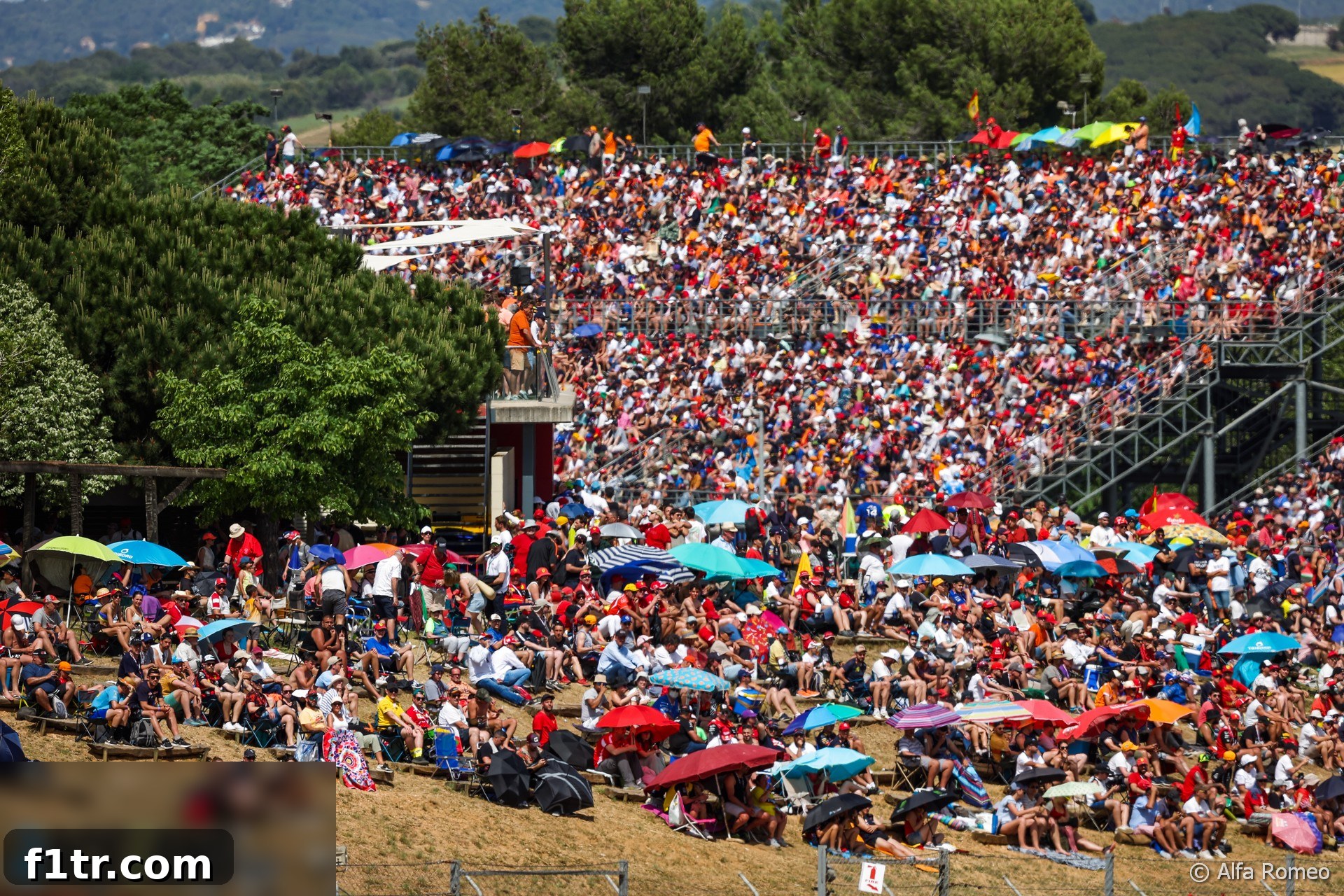
The sheer scale of rising attendances also presented significant logistical challenges for host venues during the 2022 season, threatening to detract from the overall fan experience. The Circuit de Catalunya, for example, publicly promised F1 that it would improve its arrangements for the Spanish Grand Prix after struggling immensely to cope with a sell-out crowd last May. Over the race weekend, some 300,000 fans flocked to the venue, but for many, the experience was far from enjoyable. Reports flooded in of chaotic traffic, colossal queues for refreshments under scorching heat, and facilities that simply appeared to burst at the seams. This particular incident served as a stark reminder that while attendance numbers are impressive, the quality of the on-site experience is paramount for retaining and growing the fanbase.
The Circuit de Catalunya was not an isolated incident. Across the calendar, visitor numbers caused logistical headaches, particularly at more rural Grand Prix venues. Traffic congestion led to agonizingly long queues at circuits like Spa-Francorchamps and Paul Ricard (though the latter will not feature this year, and Spa’s deal for 2024 is still uncertain). At Imola, heavy rainfall exacerbated parking issues, leaving many attendees stranded in car parks. Beyond direct venue challenges, the surge in F1 popularity has also contributed to a steep rise in ancillary costs for fans. Hotel charges in host cities, for instance, have skyrocketed. While F1 is not directly responsible for hotel pricing, these increased expenses add to the overall financial burden on fans, making the sport less accessible to some and potentially diluting the value of the experience for others. Ensuring that the joy of attending a Grand Prix remains affordable and enjoyable for the average fan is a crucial task for the sport’s long-term health.
Paddock Congestion: A New Challenge for Driver Accessibility
The increase in visitor numbers has even spilled into the exclusive confines of the paddock, notably at events in Austin and Mexico City. This unprecedented level of access and crowding prompted complaints from some drivers, who found it increasingly difficult to navigate the paddock freely or even interact with team members and media without being mobbed. In response, extra security guards had to be deployed at the Autodromo Hermanos Rodriguez to protect certain drivers, highlighting the very real implications of the sport’s heightened profile. While fan engagement is a core tenet of F1’s strategy, unchecked overcrowding in restricted areas can compromise the operational efficiency of teams and, more importantly, the safety and comfort of drivers and personnel. Striking the right balance between accessibility and exclusivity within the paddock is another delicate challenge that arises from F1’s overwhelming success.
Charting the Course Forward: Sustaining Success Without Compromising Core Values
At its heart, the enduring appeal and success of any sport are intrinsically linked to fan involvement and enjoyment. Liberty Media’s current boom undeniably proves that they have tapped into a winning formula, transforming Formula 1 into a global sensation. However, this success comes with a crucial caveat: the organization must remain acutely aware of the potential to become victims of their own triumph. The next few years represent some of the most critical in F1’s history, requiring shrewd strategic decisions to ensure continued growth without eroding the fundamental elements that make the sport so compelling.
The delicate balance between commercial expansion and maintaining the integrity of the sport and the welfare of its stakeholders – particularly the fans and team personnel – will be key. While CEO Stefano Domenicali has publicly stated his belief that 24 races should be the maximum number for a sustainable calendar, reports indicate that the series is actively working on a strategy to accommodate up to 25 races. The temptation for Liberty Media to further capitalize on F1’s burgeoning success and the seemingly endless list of willing host cities will be stronger than ever in 2023 and beyond. This is where “wise heads” will be crucial. These leaders must ensure that any further expansion does not come at the expense of the sport’s inherent appeal, the quality of the racing, the well-being of its participants, or the experience of its dedicated fanbase. The future of Formula 1 hinges on its ability to sustain its growth responsibly, keeping the fan experience at the core of every decision.