Charles Leclerc’s Monaco Pole: Triumph and Trepidation Amidst Gearbox Uncertainty
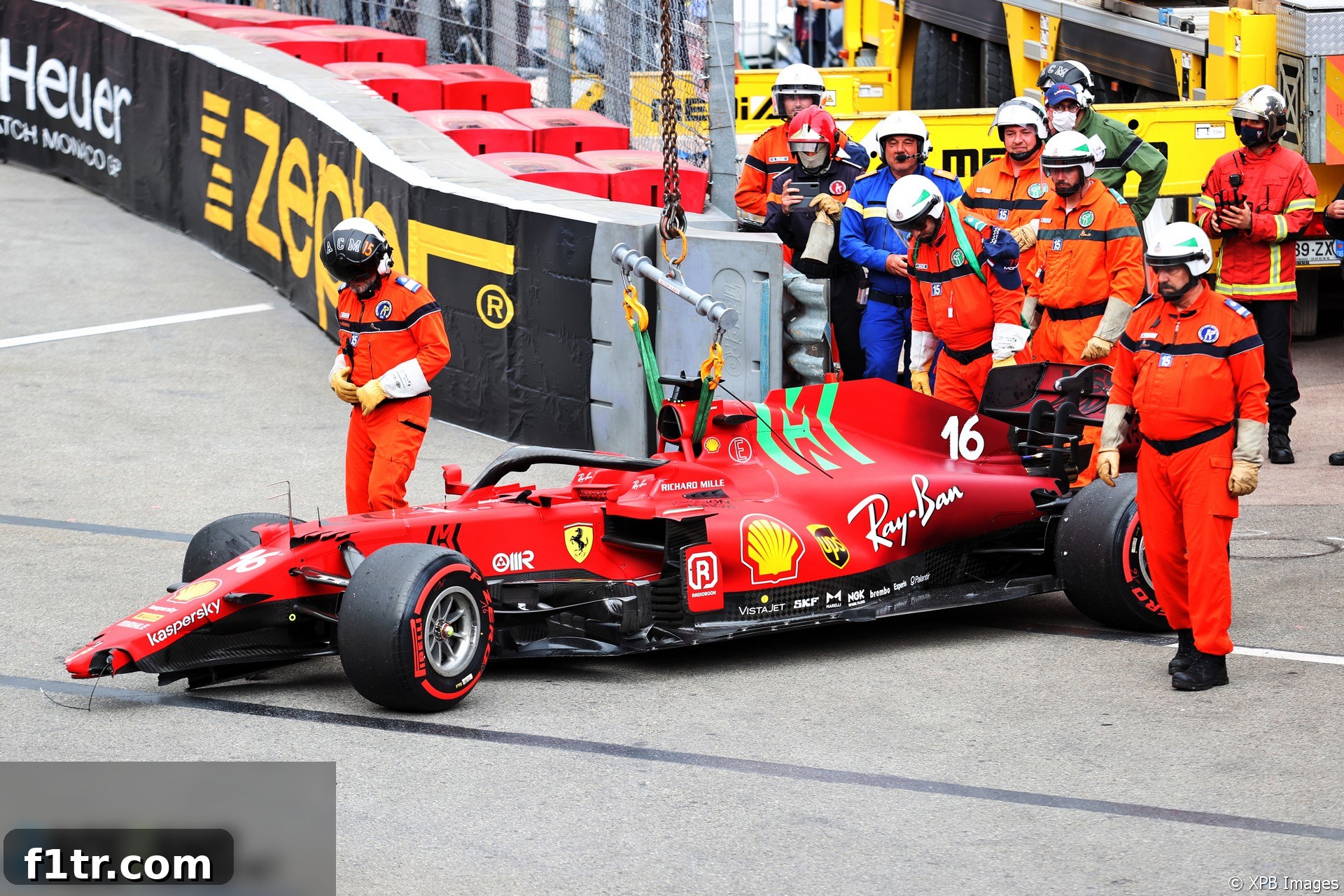
The legendary Monaco Grand Prix, a jewel in the Formula 1 crown, delivered its characteristic blend of high-stakes drama during qualifying. For local hero Charles Leclerc, securing pole position for the 2021 race was a momentous achievement, his first at his home circuit. Yet, the jubilation was immediately tempered by a heavy crash in the closing moments of Q3, leaving a palpable sense of concern regarding potential damage to his Ferrari’s gearbox. This incident cast a shadow of doubt over his starting grid position, transforming a dream pole into a nail-biting wait for mechanical assessment.
Monaco Mayhem: Leclerc’s Heroic Lap Ends in High Drama
Qualifying on the narrow, unforgiving streets of Monte Carlo is always a spectacle, a test of nerves and precision unmatched anywhere else on the F1 calendar. Drivers push the absolute limits, often brushing the barriers in a daring dance with disaster. Charles Leclerc, undoubtedly driven by the immense pressure and desire to perform on home turf, exemplified this ethos perfectly. He laid down an incredible lap time of 1 minute, 10.346 seconds, a blistering pace that rocketed him to the top of the timesheets with just moments left in the final qualifying session, Q3.
However, the drama wasn’t over. On his subsequent timed lap, in a bid to further cement his advantage or perhaps extract an even finer margin, Leclerc pushed too hard. Exiting the notoriously tricky swimming pool section, a sequence of high-speed chicanes that demand pinpoint accuracy, the rear of his Ferrari SF21 snapped loose. The car veered violently into the barrier, sustaining significant damage to its rear. The impact brought out the red flag, immediately halting the session and preventing any of his rivals, including title contenders Lewis Hamilton and Max Verstappen, from improving their times. This meant Leclerc’s earlier incredible lap stood, securing him a coveted pole position – but at what potential cost?
The Gearbox Gamble: A Race Against Time for Ferrari
Following the dramatic qualifying session, the immediate focus shifted from the ecstasy of pole to the very real possibility of a crippling grid penalty. In Formula 1, strict regulations govern the use of power unit components, including the gearbox. A single gearbox unit is mandated to last a certain number of race weekends. Should a gearbox need replacing outside of its permitted cycle, it incurs an automatic five-place grid penalty. For a driver who just secured pole position at a circuit where overtaking is notoriously difficult, such a penalty would be devastating, effectively nullifying his qualifying heroics.
Speaking to the media moments after the incident, Leclerc’s concern was palpable. “I am just waiting for the mechanics to open the gearbox and find out whether it’s damaged or not,” he admitted, the relief of pole mixed with a clear apprehension. The decision facing Ferrari would be monumental. Replacing the gearbox guarantees a five-place penalty, dropping him down the grid. However, racing with a potentially compromised gearbox, even if deemed serviceable, carries its own significant risks, including mechanical failure during the Grand Prix, which could lead to a DNF (Did Not Finish) and zero points. It’s a high-stakes engineering and strategic gamble.
The situation drew parallels to another incident earlier in the weekend involving Williams driver Nicholas Latifi. Latifi had suffered a similar heavy shunt during final practice. Crucially, when his car was repaired ahead of qualifying, it did not require a new gearbox. This precedent offered a glimmer of hope for Leclerc and Ferrari, suggesting that a significant impact doesn’t automatically mean irreparable gearbox damage. Nevertheless, each crash is unique, and the specific forces exerted on Leclerc’s Ferrari would need meticulous evaluation.
An Emotional Rollercoaster: Leclerc’s Bittersweet Pole
For any racing driver, securing pole position is a moment of immense satisfaction. For Charles Leclerc, achieving it at his home Grand Prix was a dream come true, yet the circumstances made it a bittersweet triumph. “It’s a shame to finish in the wall,” he confessed, acknowledging the unusual and slightly unsatisfying way his qualifying session concluded. “It doesn’t feel the same.” This sentiment perfectly encapsulated the conflicting emotions swirling around the young Monegasque driver – pride in his performance, yet regret over the crash and the ensuing uncertainty.
Despite the anticlimactic end, Leclerc was quick to highlight the quality of his pole lap. “But at the same time, I’m incredibly happy about my first timed lap, the first corner was quite tricky. I didn’t do a great first corner, but then second and third sector, I nailed it and I’m just very, very happy to be on pole.” This statement revealed the sheer mental fortitude required to extract the maximum from a car on the edge, especially at a circuit that demands unwavering concentration. The slight imperfection in the first sector, followed by absolute perfection in the subsequent sectors, demonstrated his ability to adapt and push through, ultimately delivering a lap that was just enough to seal pole.
The mental toll of a Monaco Grand Prix weekend, particularly for a local driver, cannot be overstated. Leclerc admitted the challenge of managing his emotions after a strong showing in practice. “Obviously it was very, very difficult to manage myself mentally after FP2. I could feel I was quite emotional in the car.” He then recounted his mindset entering Q3: “I told myself ‘now it’s Q3, now it’s time to put everything together’ and I managed to do so, so I’m incredibly happy.” This insight into his inner monologue reveals the immense pressure and self-discipline required to perform at the pinnacle of motorsport, especially when the stakes are so incredibly high.
Ferrari’s Resurgence: A Pleasant Surprise in the Principality
The 2021 season had been a rebuilding year for Ferrari after a challenging 2020 campaign. While they had shown signs of improvement, a pole position at a highly competitive circuit like Monaco was largely unexpected, even for the most optimistic tifosi. Leclerc himself acknowledged the surprise factor: “It’s tomorrow that we score points but I have to say that it’s a big surprise for everyone to be on pole and in fourth place for the race tomorrow.” The team’s performance, with Carlos Sainz also securing a strong fourth on the grid, indicated a significant step forward, particularly suited to the unique characteristics of the Monaco street circuit.
Ferrari had indeed shown glimpses of their potential throughout the practice sessions. Leclerc had been quickest in second practice, setting the stage for what would be a fiercely contested qualifying. The SF21, with its refined aerodynamic package and good mechanical grip, seemed perfectly adapted to the tight, twisty confines of Monaco, where outright engine power is less critical than chassis balance and driver confidence. This unexpected pace in the Principality gave the team and its fans renewed hope, hinting at a competitive future and a potential return to the front of the grid.
The team’s strong showing at Monaco was a crucial morale boost, demonstrating that their development efforts were bearing fruit. It also put them in a prime position to challenge the established front-runners, Mercedes and Red Bull, on a circuit where track position is king. The prospect of two Ferraris starting within the top four was a dream scenario for the Scuderia, provided, of course, that Leclerc’s gearbox passed inspection.
The Road Ahead: Monaco Grand Prix Race Day Outlook
As the dust settled on qualifying day, the eyes of the Formula 1 world turned to the mechanics at Ferrari, and then to race day itself. The Monaco Grand Prix is famously challenging, a grueling test of endurance, strategy, and mental fortitude. Converting pole position into a victory at Monaco is paramount, as overtaking opportunities are incredibly scarce. The start itself is crucial, as is effective pit strategy and, of course, avoiding any incidents.
For Charles Leclerc, the race held an additional layer of tension. His starting position, and therefore his entire race strategy, hung precariously on the gearbox assessment. Should he avoid a penalty, he would start from the absolute best possible position, giving him the strategic advantage to control the race from the front. If a penalty were incurred, his task would become significantly harder, forcing him to navigate through traffic on a circuit where making up positions is a Herculean effort. Regardless of the outcome of the gearbox inspection, the pressure on Leclerc and Ferrari to capitalize on their unexpected pace and deliver a strong performance at their home race would be immense.
The 2021 Monaco Grand Prix was set to be an event filled with anticipation, suspense, and the characteristic drama that only this iconic street circuit can provide. For Charles Leclerc, it presented an opportunity for a career-defining victory, tinged with the anxiety of a potential setback. His journey from local hero to pole-sitter, coupled with the lingering uncertainty of his car’s condition, made for a compelling storyline that captivated fans worldwide.
2021 Monaco Grand Prix
- ‘I need that point, we’ve lost a ton’: Hamilton team radio transcript analysis
- Perez sees Austrian double-header as valuable chance to master his RB16B
- No fun to be had in Monaco Grand Prix even if you’re winning, says Hamilton
- Mercedes explain Bottas’ Monaco pit stop failure
- F1 will consider adopting “intelligent” IndyCar rule in wake of Leclerc crash
Browse all 2021 Monaco Grand Prix articles