In a move that caught many by surprise during the recent British Grand Prix weekend, Alfa Romeo announced the extension of its title and livery sponsorship with the Sauber Formula 1 team. This decision raised eyebrows across the motorsport world, primarily because Alfa Romeo is globally recognized as a premier performance automotive brand, yet the Sauber team has struggled significantly in recent seasons. Currently, the team languishes in eighth position in the Constructors’ Championship, having secured a mere two points from a pair of tenth-place finishes. Such modest performance levels led many to question the strategic rationale behind renewing a partnership with a brand boasting such a rich, championship-winning heritage.
The renewed agreement, while its exact duration remains officially undisclosed, is understood to involve yearly assessments. Industry insiders suggest that the initial block of the partnership is set for three years, with options for further extension thereafter. This commitment implies that Alfa Romeo’s distinctive red and white racing colors are expected to remain a prominent fixture on the Formula 1 grid until at least the end of 2024. This timeline conveniently aligns with the conclusion of the sport’s current regulatory period, though discussions surrounding future regulations are, as always, ongoing and subject to change.
The original collaboration between Sauber and Alfa Romeo was the brainchild of the late Sergio Marchionne, the visionary former boss of Fiat Chrysler Automobiles (FCA). At the time of his untimely passing in July 2018, Marchionne also held the reins at Ferrari, forging deep connections between the iconic supercar manufacturer and the broader FCA Group, despite both entities operating as separately listed companies. Marchionne’s ambitious forecasts included annual sales targets of 400,000 units for Alfa Romeo, and he was instrumental in orchestrating the Ferrari engine deal that subsequently positioned Sauber as a crucial placement team for Ferrari Driver Academy talents. However, despite the high-profile Formula 1 association, Alfa Romeo’s market performance has regrettably fallen short of these lofty ambitions, with current annual sales figures lingering below 60,000 units globally.
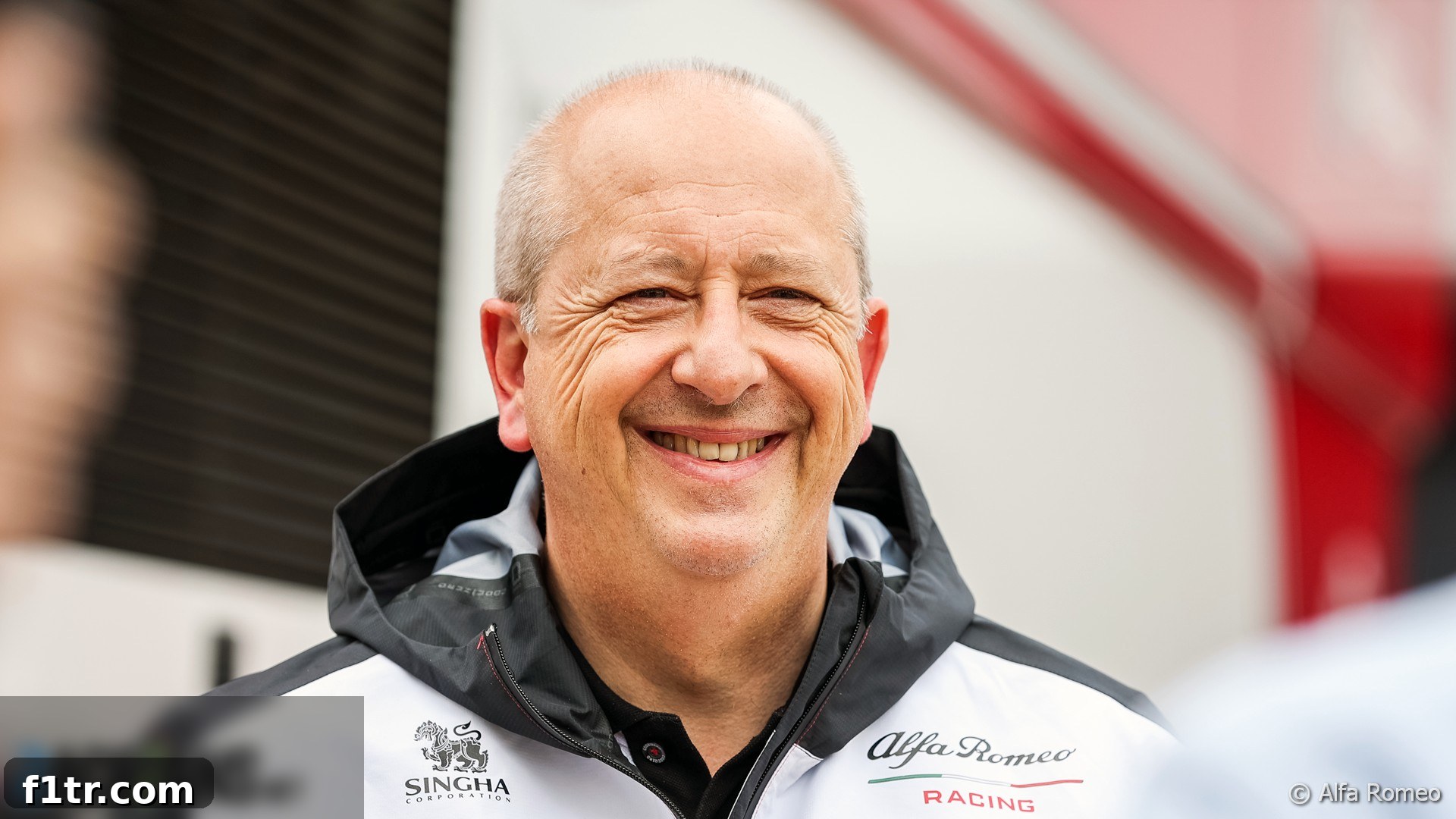
Compounding these hugely disappointing sales figures, Alfa Romeo has concurrently embarked on a significant electrification strategy, rebranding itself with the slogan ‘Alfa e-Romeo’ and launching its first full-electric flagship model. This dual narrative of underperforming sales and an aggressive push towards an electric future naturally led to a pressing question for CEO Jean-Philippe Imparato during an exclusive interview immediately following the announcement: “Why Formula 1, and not Formula E?” After all, for a budget roughly equivalent to what it costs to title and livery the Sauber team, Alfa Romeo could potentially establish and fully own an in-house Formula E team. Imparato, however, quickly pointed out that DS Automobiles, a sister company within the vast Stellantis automotive conglomerate, already maintains a strong presence in Formula E, thus avoiding brand overlap.
“My tribe of Alfa Romeo is passionate and deeply connected with Formula 1,” Imparato stated with a confident smile. “Our brand’s illustrious history is intrinsically linked with Formula 1. Given that DS is already actively competing in Formula E, we are fundamentally driven by the desire to remain consistent with our own heritage and avoid any internal brand overlap within Stellantis. For me, this decision to continue in F1 is entirely natural and strategically sound.” The terms ‘history,’ ‘clubs,’ and ‘tribe’ consistently punctuated our discussion, making it clear that Imparato views the Formula 1 connection as absolutely paramount to fostering brand loyalty and enriching the customer experience. He passionately emphasized the existence of 200 Alfa Romeo clubs worldwide, with a significant quarter of these vibrant communities located in North America alone.
“This level of global engagement is simply incredible,” he continued. “If you genuinely want to honor our rich history, and if you aim to effectively ‘feed back’ to our loyal customers, you must add something extraordinary beyond your traditional key performance areas. However, I can unequivocally tell you that if the return on investment for this Formula 1 project had not aligned perfectly with our expectations, we would never have agreed to this extension.”
Imparato, a Frenchman with Italian parentage, assumed leadership of Alfa Romeo in January, following a highly successful tenure at sister brand Peugeot, where he orchestrated an impressive revival. His appointment came shortly after the historic merger of PSA (which included Peugeot, Citroën, and Opel) with FCA (comprising Fiat, Chrysler), a monumental event that brought an array of iconic brands such as Alfa Romeo and Maserati under the expansive Stellantis umbrella. Immediately upon joining Alfa Romeo, he wasted no time in unveiling ambitious electrification plans for what is widely considered an archetypical “petrolhead” brand – a marque whose devout followers were reportedly horrified when its first diesel-engined cars were initially launched decades ago.
“The direct and tangible benefit for me, derived from the Formula 1 project, is its invaluable contribution to the storytelling of Alfa Romeo on the marketing front,” Imparato explained. “From a country market mix perspective, what struck me most vividly when I joined in January was the answer to my very first question: ‘Give me an overview of Alfa Romeo’s global awareness.’ I was genuinely surprised by the sheer breadth of worldwide recognition the brand already commands. Therefore, the immense global awareness generated by Formula 1 directly feeds into and strengthens Alfa Romeo’s country-mix strategy. You speak about Stellantis: I aspire for Alfa Romeo to be the global premium brand within this colossal group. What could possibly be better for achieving that ambition than leveraging the unparalleled global awareness of Formula 1 with the Alfa Romeo name?”
Pressing him further, we inquired whether his definition of ‘premium’ implied a positioning above Maserati within the Stellantis constellation. Imparato clarified, “There is one undisputed luxury brand within Stellantis, and that is Maserati. I do not have that specific positioning for Alfa Romeo. Alfa Romeo embodies Italian sporty nobleness, a heritage stretching back to 1910. It is definitively a premium brand, not an elitist one. Crucially, Formula 1 serves as a powerful, constant reminder to everyone that Alfa Romeo possesses an unparalleled, glorious history in motorsport.”
I then challenged Imparato on his previous, widely quoted remarks from his time at Peugeot, where he oversaw the cancellation of their Le Mans and World Endurance Championship campaigns. At the time, he famously told Autocar magazine, “One thing is for sure: motorsport is dead unless it’s electrified,” adding pointedly, “Asking for €220 million ($220 million) for a future motorsport program is completely mad.” How, then, does he reconcile those strong comments with Alfa Romeo’s renewed commitment to Formula 1? Imparato offered no denial of his past statements, instead providing a direct and candid explanation: “At that specific point in time, the situation for PSA, which was cash-strapped, was extremely tricky and precarious. We were compelled to make some incredibly difficult choices. Before even considering extending the agreement between Alfa Romeo and Sauber, I undertook meticulous calculations regarding the potential return on investment, evaluating Alfa Romeo’s situation through a medium- and long-term strategic lens.”
“I ultimately decided that Formula 1, representing the pinnacle of motorsport, conveys a powerful message of efficiency that can effectively feed and reinforce our brand values,” he elaborated. “The partnership we have cultivated with our colleagues at Sauber has proven to be profoundly positive. Therefore, our decision to proceed with the extension also serves as a clear message that Stellantis operates as a very stable and strategically focused group.”
The emphasis on “return on investment” is particularly intriguing, especially when considering the financial landscape. My own calculations suggest that the Sauber sponsorship deal costs Alfa Romeo approximately $25 million per year. When spread across their current maximum annual sales of 60,000 units, this translates to an astonishing add-on cost of roughly $400 per vehicle. To put these figures into stark perspective, consider that Ferrari, with the implementation of budget caps, is now likely to operate its Formula 1 program at a net profit, largely subsidized by external sponsorship and prize monies. The Renault Group, for instance, spends considerably less per unit, closer to $100 million in total. This raises a critical question: Can Alfa Romeo genuinely afford such significant per-unit add-on costs?
“Yes,” Imparato confidently affirmed, though he immediately stressed that he was not confirming the specific financial numbers I presented. “I can confirm, however, that the Formula 1 project we are currently developing with our colleagues at Sauber delivers a return on investment that is entirely compatible with the stringent profitability targets I have meticulously set for the brand.”
All of this sounds promising, but a fundamental question remains: Will the Formula 1 involvement actually translate into substantial increases in Alfa Romeo’s global sales figures? “That is a very interesting question,” Imparato acknowledged with a smile, recognizing the core dilemma. “By the way, it’s the first question I always encounter. It was the same when the Peugeot 3008 won ‘Car of the Year’; it was the same when Peugeot announced its return to WEC. Honestly, I don’t know if it will directly impact sales. I am not relying on sales increases based on this type of decision, because you can never truly predict if you will achieve 5%, 2%, or 10% more. The only truly concrete key performance indicator I keep in mind for this endeavor is visibility. For me, this is incredibly positive, provided that I remain very cautious about ensuring that any coverage generated is highly positive for us and effectively feeds the storytelling of Alfa Romeo.”
“For me, these two main points – visibility and storytelling – are absolutely key. I am not operating in a mainstream, volume-driven world. I am firmly situated in a premium world where sheer volume is not the primary driver. The main drivers in this segment are uncompromising quality and an exceptional customer experience.” He justifies the multi-year assessment approach by explaining that a comprehensive product plan simply cannot be effectively strategized in short, three-year blocks. Such a plan, he asserts, demands a minimum of 10 years to meticulously devise, implement, and fine-tune every intricate detail. “Three years is far too short, and ultimately inconsistent with long-term strategic planning,” he emphasized, adding that the overall strategy will be “invented collaboratively with the team.”
Evidently, then, Formula 1 serves primarily as a crucial positioning platform for Alfa Romeo, rather than a technical development program, especially considering that complete powertrains are sourced externally from Ferrari. The target market for Alfa Romeo is, by definition, inherently more informed and discerning than buyers of more utilitarian ‘econoboxes.’ In the premium segment, authenticity and genuine connection are often paramount. On that basis, one might reasonably question: Is this livery and badging deal with a Swiss-based team truly authentic to the core Italian spirit of Alfa Romeo?
Imparato thoughtfully made the point that due to having limited sponsorship “firing power” and a constrained budget, he had to meticulously choose his strategic battles. “We firmly decided that there would be only one primary sponsoring activity accounted for in the profit and loss statements of Alfa Romeo, and that singular activity is Formula 1. This means I can allocate all available resources there. I have deliberately chosen what my ‘fight’ is, and the extension of this agreement unequivocally indicates that I have selected Formula 1 as our core motorsport engagement. The second, equally critical part, is electrification – where does the ‘vibe’ of Alfa Romeo manifest in this new era? We frankly don’t have a choice,” he declared, referencing the European Union Commission’s recent decision to effectively ban internal combustion engines from 2035, building upon the long-standing diktat for the community to reduce its CO2 output by 55% by 2030.
“So, the question is no longer whether we possess a choice – we simply do not have that luxury of choice,” Imparato stressed with conviction. “Therefore, today, the overarching challenge for Alfa Romeo is to successfully electrify its entire range without ever losing that distinctive ‘Alfa Romeo touch’,” the 54-year-old emphasized, giving particular weight to the final word. “If we fail to electrify, Alfa Romeo as a brand is dead.” He confidently stated that by 2027, Alfa Romeo intends to offer a full and comprehensive range of battery electric vehicles. “What we are intensively working on today is defining: what will constitute the ‘sound of Alfa Romeo’ in the future? What will embody the ‘vibe of Alfa Romeo’ in this electrified era?”
Indeed, Imparato acknowledged that we are rapidly approaching a “completely different automotive world in the future.” His clear strategy involves positioning Alfa Romeo as a premium brand, utilizing Formula 1 as a prominent marketing pedestal, particularly by leveraging its hybrid engines, as a crucial preparatory step ahead of a full transition to electrification. “The fundamental question we faced was: ‘How do we effectively adapt to electrification?’ Our answer was: ‘Hey, we absolutely have to change; what is the most effective way for me to feed our brand storytelling based on electrification?’ That is point one. Point two is maintaining a visceral driving experience. And point three is delivering contemporary performance.”
“The answer to this multifaceted challenge came quite naturally when I met Frédéric Vasseur (Sauber team principal) several months prior: to strategically bet on Formula 1 as the next logical step in terms of technological content that perfectly fits my product roadmap, especially given that Formula 1 has been electrified since 2009. For me, in terms of pure rationale, it perfectly feeds our brand’s storytelling. This is the primary point. The second point, as an Alfa Romeo enthusiast, is that I want to prepare not just for the next 10 years, but I want to project a powerful message of stability to our loyal customer base and the wider industry. Extending this partnership with Sauber was a clear message to say, ‘Okay, we are fighting together, we are collaboratively building something truly special for the road, exemplified by the Alfa Romeo Giulia GTA, which is a fantastic car.'”
“Why not strive to go further with additional such aspirational products? That’s the second crucial point. And the third, perhaps less rational, point is Frédéric Vasseur himself. He is a team leader who has known this job inside out for many years, bringing invaluable experience and leadership.” These, he concluded, were the pivotal points that ultimately led to the pivotal contract extension.
Finally, the critical question of driver input arose, particularly as decision time looms for the upcoming seasons. Rumors are already swirling within the paddock that the veteran Kimi Räikkönen may soon hang up his Formula 1 helmet and potentially pursue racing opportunities elsewhere, with Valtteri Bottas frequently cited as his most likely replacement. Given that Ferrari is contractually entitled to nominate one driver for the team, what stance does Alfa Romeo take on the selection process for the second coveted seat? Imparato was unequivocally clear on this matter: “This is absolutely not my job. If I wish to successfully enter and thrive within this fantastic Formula 1 ecosystem, I must operate with a profound sense of humility.”
“My core responsibility is to expertly drive the Alfa Romeo brand forward. The responsibility of Frédéric – my trusted partner in this venture – is to effectively drive the team itself. Therefore, it is imperative not to conflate or confuse these distinct roles. He possesses the unparalleled expertise to lead the team and to make crucial driver selection decisions, and there is only one true boss in that specific area. That boss is Frédéric Vasseur.”
Clearly, then, the onus is squarely on Frédéric Vasseur and his dedicated team in Hinwil to consistently deliver strong on-track results and operational excellence. Their performance will be instrumental in ensuring that this crucial “multi-year” agreement with Alfa Romeo is not brought to a premature halt. It is paramount that the Formula 1 program effectively delivers in terms of enhancing Alfa Romeo’s brand image and, by extension, that of the entire Stellantis group. Ultimately, the challenge lies in ensuring that the passionate Alfisti community feels the “vibe” strongly enough to seamlessly embrace and transition to Alfa Romeo’s electrified future. This monumental task will undoubtedly require far more than just two points scored in 10 races, a reality that Jean-Philippe Imparato, with his keen strategic mind, surely understands implicitly.
Related Motorsport Insights
- The Year of Sprints: A Strategic Review of the Latest F1 Season
- FIA’s Challenge: Addressing Perception Issues Post-Controversial Decisions
- Budget Caps: The Next Major Battleground in Formula 1 Rivalries
- Jean Todt’s Legacy: Defying Expectations as FIA President and His Future Plans
- Sir Frank Williams: A Personal Tribute to a True Icon of Racing
Browse All Motorsport Columns