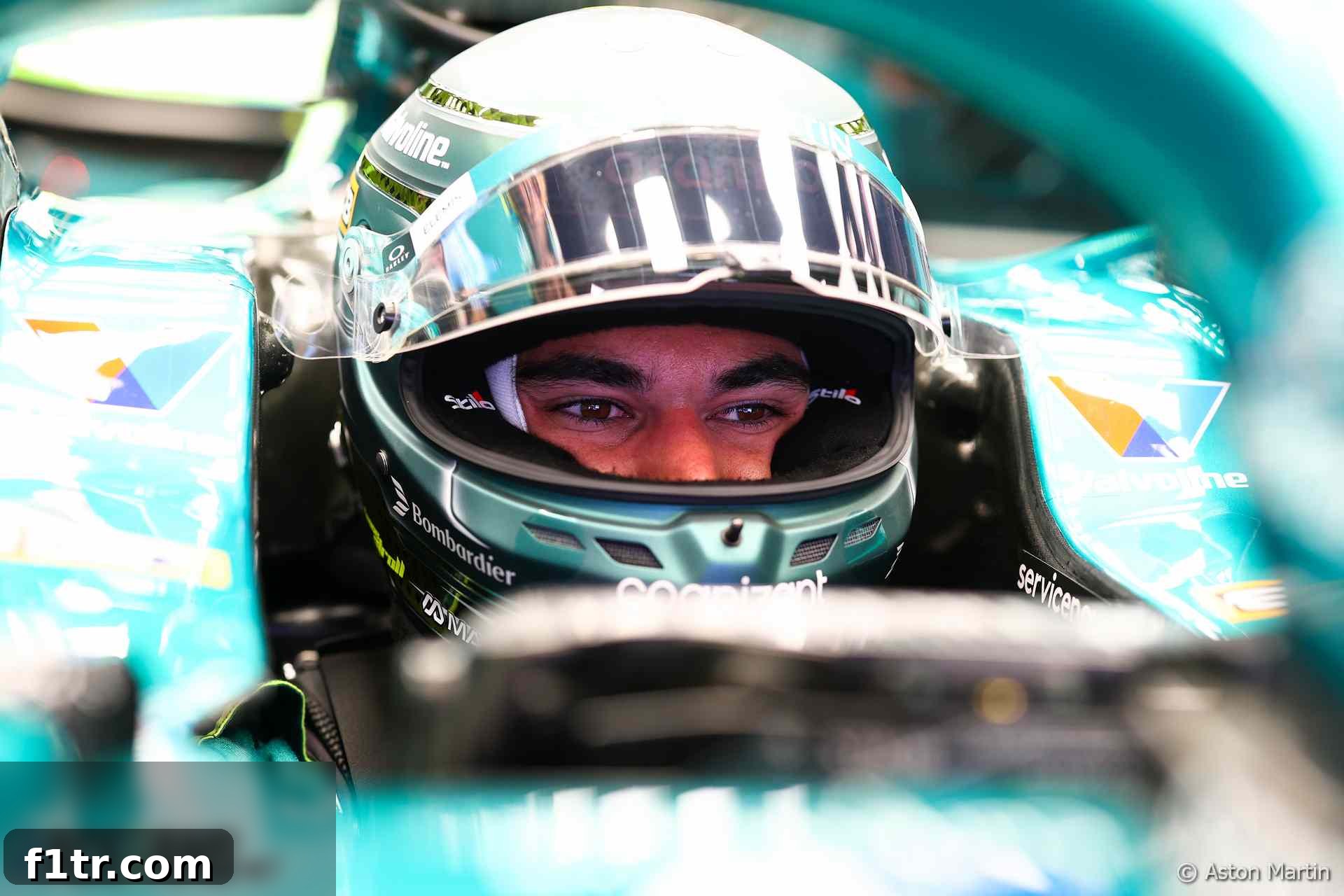
In the high-octane world of Formula 1, where physical and mental prowess are paramount, drivers often push their limits, battling not just competitors but also their own bodies. Aston Martin driver Lance Stroll recently found himself at this challenging intersection, making the difficult but ultimately sensible decision to withdraw from the Spanish Grand Prix. Citing escalating wrist pain, Stroll explained that continuing to drive would have been unwise, potentially exacerbating an existing injury. This candid revelation sheds light on the immense physical toll Formula 1 racing can take and the critical balance drivers must strike between competitive drive and long-term health.
The incident unfolded during a particularly grueling Spanish Grand Prix weekend, a race notorious for its demanding circuit that tests both car and driver to their absolute limits. Stroll’s discomfort, which had been a nagging issue for several weeks, intensified dramatically in Barcelona. “It was bothering me for a few weeks over in Imola and Monaco and then Barcelona was just really brutal throughout the weekend,” Stroll shared, painting a vivid picture of the relentless pain he endured. This ongoing struggle culminated in his withdrawal from the event after the second qualifying session (Q2), a decision that highlighted the severity of his condition.
The Agonizing Decision to Withdraw
For any elite athlete, particularly a Formula 1 driver, stepping away from a race is an incredibly tough call. The competitive instinct is ingrained, urging them to push through discomfort and pain in pursuit of performance. Stroll articulated this internal battle: “As an athlete in any sport you’re always trying to push through pain, discomfort, as much as you can to try and get a good result at the end of the weekend.” However, there comes a point when persistence becomes detrimental, risking more severe and lasting damage. For Stroll, that critical threshold was reached in Barcelona.
He further elaborated on his reasoning, explaining the growing concern for his physical well-being. “In that situation, I was struggling and I was trying to push through it, but I just didn’t feel it was sensible to push anymore. I felt like the damage was getting worse, and I needed to do something more serious about it.” This statement underscores the maturity and self-awareness required to prioritize health over immediate competitive ambition. The FIA confirmed the gravity of his situation, noting that Stroll “sought urgent medical attention for the pain” immediately after Q2, which also explained why he could not report for the mandatory post-session weigh-in.
Addressing an Old Foe: The Recurring Wrist Injury
This recent episode of wrist pain isn’t an isolated incident for Lance Stroll. It harks back to a significant injury he sustained in 2023, just before the start of that season. A cycling accident resulted in a fractured right wrist, necessitating surgery and a frantic recovery period to be fit for the opening Grand Prix. Despite successfully returning to competition then, the injury appears to have resurfaced. “It’s just the old injury that I had a couple of years ago. It just started to bug me again so I just got it sorted,” Stroll confirmed, without delving into the specifics of his recent medical intervention.
The nature of recurring injuries, especially in a physically demanding sport like F1, can be particularly frustrating for drivers. The intense G-forces experienced during braking, cornering, and acceleration place immense strain on a driver’s entire body, with the wrists and arms playing a crucial role in maintaining control of the steering wheel. Even minor pain can significantly impair a driver’s ability to react swiftly and precisely, costing valuable tenths of a second and compromising safety. Therefore, addressing such issues proactively, as Stroll has done, is vital for a driver’s career longevity and consistent performance.
The Road to Recovery and a Confident Return
Following his withdrawal from the Spanish Grand Prix, Stroll underwent a medical procedure to address the persistent wrist pain. While he remained tight-lipped about the exact nature of the treatment, citing medical privacy – “I don’t really want to get into detail about what I had to do and how I had to do it because it’s just my medical privacy, and I like to keep that confidential” – his subsequent comments indicated a successful intervention. “But all I can say for sure is I’m feeling a lot better. I’m looking forward to the race weekend,” he stated with renewed optimism.
The speed of his recovery and return for his home event, the Canadian Grand Prix at the iconic Circuit Gilles Villeneuve in Montreal, is a testament to both modern medical advancements and Stroll’s dedication to his craft. For drivers, downtime is minimal, and the pressure to return to peak physical condition for the next race is immense. Stroll’s ability to undergo a procedure and quickly regain confidence in his physical state is a positive sign for his season and the Aston Martin team.
The Frustration of Impaired Performance
Beyond the physical pain, the mental toll of an injury that hinders performance can be equally challenging for a driver. When asked about reports suggesting he was angry after his Q2 elimination, Stroll readily admitted his frustration. “I was frustrated, for sure. Frustrated about my wrist and the last three races from Imola,” he acknowledged. This highlights the deep emotional connection drivers have with their performance and the intense disappointment when physical limitations prevent them from showcasing their true potential.
Racing with pain significantly inhibits a driver’s ability to extract maximum performance from their car. The slight adjustments, the fine margins, and the split-second decisions that define success in F1 become exponentially harder when dealing with physical discomfort. Stroll recognized this directly: “It was just inhibiting my driving. So I knew that Sunday was going to be tricky, probably impossible. And at that point, I was pretty frustrated about it.” This candid admission offers a glimpse into the psychological burden of competing at the pinnacle of motorsport while not being at 100%.
The Significance of a Home Grand Prix
Lance Stroll’s return for the Canadian Grand Prix holds particular significance. As a native of Montreal, the race at Circuit Gilles Villeneuve is his true home event, an occasion where he is undoubtedly eager to perform well in front of his local fans and family. The atmosphere at the Canadian Grand Prix is always electrifying, and to race there fully fit and confident will be a major boost for Stroll.
The Circuit Gilles Villeneuve is a semi-permanent track known for its long straights and chicanes, demanding precise braking and quick changes of direction. While not as physically demanding on the wrists as some other circuits, the cumulative effect of constant steering inputs and vibration can still aggravate existing injuries. Therefore, Stroll’s confidence in his wrist’s condition for this particular circuit is a crucial factor in his ability to deliver a strong performance for Aston Martin, a team that is fiercely competing in the Constructors’ Championship.
Looking Ahead: A Resilient Athlete’s Journey
Lance Stroll’s journey through this recent physical challenge is a testament to the resilience required to thrive in Formula 1. His proactive approach to managing a recurring injury, making a difficult decision to prioritize his health, and subsequently returning with renewed confidence, exemplifies the dedication of top-tier athletes. For Aston Martin, having both drivers fully fit and capable of extracting maximum performance is vital for their ongoing campaign.
The narrative surrounding Stroll’s wrist injury and recovery provides valuable insight into the unseen struggles behind the glamour of F1. It reminds fans that these drivers are not just machines but human beings pushing incredible boundaries, often battling through personal discomfort for the love of the sport and the pursuit of victory. With his wrist now “sorted,” Stroll is primed to tackle his home Grand Prix, hoping to convert his renewed physical well-being into strong points for himself and the Aston Martin team, proving once again his enduring determination.