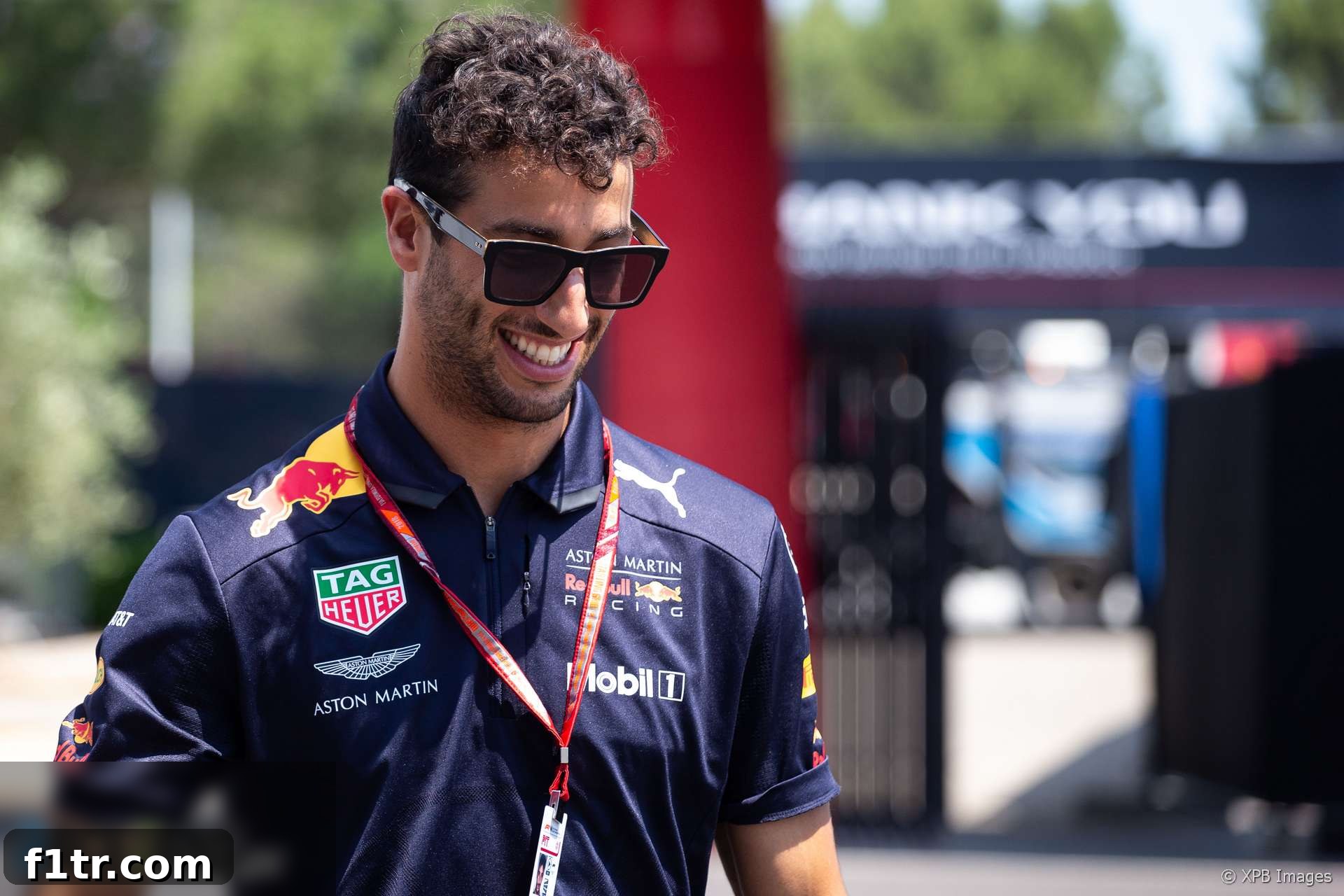
Daniel Ricciardo Faces Grid Penalty at German Grand Prix Amidst F1 Engine Component Scrutiny
The high-stakes world of Formula 1 often sees teams and drivers pushed to their limits, not just on the track, but also within the stringent technical regulations that govern the sport. At the 2018 German Grand Prix, Red Bull Racing driver Daniel Ricciardo found himself on the wrong side of these rules, incurring a significant grid penalty that forced him to start the race from the very back of the pack. This decision stemmed from Red Bull’s strategic choice to change multiple components within his power unit, exceeding the season’s permitted allocation.
Ricciardo’s RB14 was fitted with his third MGU-K (Motor Generator Unit – Kinetic), third energy store (ES), and third control electronics (CE) unit. Under the 2018 regulations, drivers were typically allowed a maximum of two units for each of these specific components throughout the entire season. By deploying a third of each, Ricciardo automatically triggered a cumulative grid drop, which effectively relegated him to the rear of the grid.
Understanding Formula 1 Power Unit Regulations and Their Impact
Modern Formula 1 power units are marvels of engineering, a complex integration of six key components designed to deliver incredible performance while striving for efficiency. The strict limits on component usage were introduced to manage costs, promote reliability, and encourage strategic planning from teams. Each season, the FIA (Fédération Internationale de l’Automobile) dictates the maximum number of each power unit element that can be used without penalty. Exceeding these allocations results in grid penalties, which can dramatically alter a driver’s race weekend prospects.
The six main components of an F1 power unit are:
- ICE (Internal Combustion Engine): The conventional combustion engine, albeit highly advanced and fuel-efficient.
- TC (Turbocharger): Boosts engine power by forcing more air into the ICE.
- MGU-H (Motor Generator Unit – Heat): Recovers energy from exhaust gases, crucial for hybrid efficiency.
- MGU-K (Motor Generator Unit – Kinetic): Recovers kinetic energy during braking, converting it into electrical power to be stored or deployed. This component is particularly stressed and often a source of reliability concerns.
- ES (Energy Store): The battery unit where recovered electrical energy is stored before being deployed.
- CE (Control Electronics): The brain of the power unit, managing all electrical systems and energy flow.
Ricciardo’s penalty highlighted a recurring challenge for teams: balancing raw performance with the longevity of these sophisticated components. Using a fresh set of components can offer a performance boost and increased reliability, but at the cost of track position. Teams often choose to take penalties at circuits where overtaking is more feasible, or when an existing component is nearing the end of its life cycle and might fail in a more critical race.
Ricciardo’s Strategic Penalty and Red Bull’s Calculations
Red Bull’s decision to take a grid penalty for Daniel Ricciardo at the German Grand Prix was undoubtedly a calculated move. While starting from the back is never ideal, teams often analyze the upcoming race calendar and specific circuit characteristics. Hockenheimring, with its long straights and varied corners, might have been deemed a track where Ricciardo, with Red Bull’s strong chassis, could still make significant progress through the field even from the rear. Furthermore, introducing fresh components at this stage could have provided improved reliability and performance for the crucial races later in the season.
The timing of such a penalty is a strategic puzzle. A new MGU-K, energy store, and control electronics could offer a crucial advantage in the demanding second half of the championship. For Ricciardo, who was battling for strong results, having fresh, reliable components could prevent future DNF (Did Not Finish) situations or further mid-season penalties at less opportune circuits. This decision reflects the intricate balance between short-term pain for long-term gain that F1 teams constantly navigate.
Wider Grid Implications: A Season of Component Changes
Daniel Ricciardo wasn’t alone in facing component changes that weekend. The 2018 German Grand Prix saw a flurry of activity in the pit lane regarding power unit replacements. Notably, all six Ferrari-powered drivers had their second and final MGU-Ks fitted, indicating a widespread concern or strategic play around this specific component among Ferrari’s engine customers. This included the factory Ferrari drivers Sebastian Vettel and Kimi Raikkonen, as well as the Haas and Sauber drivers.
Beyond the Ferrari contingent, Red Bull’s other driver, Max Verstappen, also joined Ricciardo in taking a new energy store at Hockenheim, albeit without a penalty as it was within his allocation. This pattern suggests that the MGU-K and energy store components were particularly susceptible to wear or performance degradation in the 2018 season, prompting teams to manage their usage carefully. The table below vividly illustrates the component usage across the entire grid up to that point in the season, revealing the varying degrees of reliability and strategic choices made by different manufacturers and teams.
Drivers running Honda power units, such as Brendon Hartley and Pierre Gasly of Toro Rosso, appeared to be struggling most significantly with reliability, having already used considerably more components than their rivals. Hartley, for example, had already gone through six ICEs and five of many other components, indicating a challenging season for the Japanese manufacturer and its junior team.
2018 F1 Engine Component Use at German Grand Prix
| No. | Car | Engine | Driver | ICE | TC | MGU-H | MGU-K | ES | CE |
|---|---|---|---|---|---|---|---|---|---|
| 28 | Toro Rosso | Honda | Brendon Hartley | 6 | 5 | 5 | 5 | 3 | 3 |
| 10 | Toro Rosso | Honda | Pierre Gasly | 4 | 4 | 4 | 3 | 2 | 2 |
| 14 | McLaren | Renault | Fernando Alonso | 3 | 3 | 3 | 3 | 2 | 2 |
| 3 | Red Bull | TAG Heuer | Daniel Ricciardo | 3 | 3 | 3 | 3 | 3 | 2 |
| 27 | Renault | Renault | Nico Hulkenberg | 3 | 3 | 3 | 2 | 2 | 2 |
| 77 | Mercedes | Mercedes | Valtteri Bottas | 3 | 3 | 3 | 2 | 2 | 2 |
| 55 | Renault | Renault | Carlos Sainz Jnr | 2 | 3 | 3 | 2 | 2 | 2 |
| 33 | Red Bull | TAG Heuer | Max Verstappen | 2 | 3 | 2 | 3 | 2 | 2 |
| 8 | Haas | Ferrari | Romain Grosjean | 2 | 3 | 3 | 2 | 2 | 2 |
| 7 | Ferrari | Ferrari | Kimi Raikkonen | 2 | 3 | 2 | 2 | 2 | 2 |
| 2 | McLaren | Renault | Stoffel Vandoorne | 2 | 2 | 2 | 2 | 2 | 2 |
| 20 | Haas | Ferrari | Kevin Magnussen | 2 | 2 | 2 | 2 | 2 | 2 |
| 9 | Sauber | Ferrari | Marcus Ericsson | 2 | 2 | 2 | 2 | 2 | 2 |
| 31 | Sauber | Ferrari | Charles Leclerc | 2 | 2 | 2 | 2 | 2 | 2 |
| 5 | Ferrari | Ferrari | Sebastian Vettel | 2 | 2 | 2 | 2 | 2 | 3 |
| 11 | Force India | Mercedes | Sergio Perez | 2 | 2 | 2 | 1 | 2 | 1 |
| 44 | Mercedes | Mercedes | Lewis Hamilton | 2 | 2 | 2 | 1 | 1 | 1 |
| 31 | Force India | Mercedes | Esteban Ocon | 2 | 2 | 2 | 1 | 1 | 1 |
| 18 | Williams | Mercedes | Lance Stroll | 2 | 2 | 2 | 1 | 1 | 1 |
| 35 | Williams | Mercedes | Sergey Sitorkin | 2 | 2 | 2 | 1 | 1 | 1 |
Component Definitions:
ICE: Internal Combustion Engine
TC: Turbocharger
MGU-K: Motor Generator Unit – Kinetic
MGU-H: Moto Generator Unit: Heat
ES: Energy Store
CE: Control Electronics
The Enduring Challenge of Reliability in Modern F1
The 2018 Formula 1 season was a fierce battleground, with Mercedes and Ferrari locked in a tight championship fight, and Red Bull often playing the spoiler. In such a competitive environment, every advantage counts, and reliability is paramount. Ricciardo’s penalty at Hockenheim was a stark reminder of the fine line teams walk between extracting maximum performance and ensuring their complex machinery lasts the season.
The constant development cycle in F1 means that power unit components are always pushed to their limits. While the penalties can be frustrating for drivers and fans, they are a fundamental aspect of the sport’s technical challenge. They force engineers to innovate not just for speed, but also for durability, making strategic engine management a critical factor in a team’s championship aspirations. Ultimately, Ricciardo’s experience at the German Grand Prix was a microcosm of the intense strategic chess game that unfolds behind the scenes in Formula 1, where every component change carries significant weight.
Advert | Become a RaceFans supporter andgo ad-free
More from the 2018 F1 season
- F1 feared “death knell” for Drive to Survive after Ferrari and Mercedes snub
- McLaren staff told us we were “totally crazy” to take Honda engines in 2018 – Tost
- ‘It doesn’t matter if we start last’: How Red Bull’s junior team aided Honda’s leap forward
- Honda’s jet division helped F1 engineers solve power unit problem
- McLaren Racing losses rise after Honda split
Browse all 2018 F1 season articles