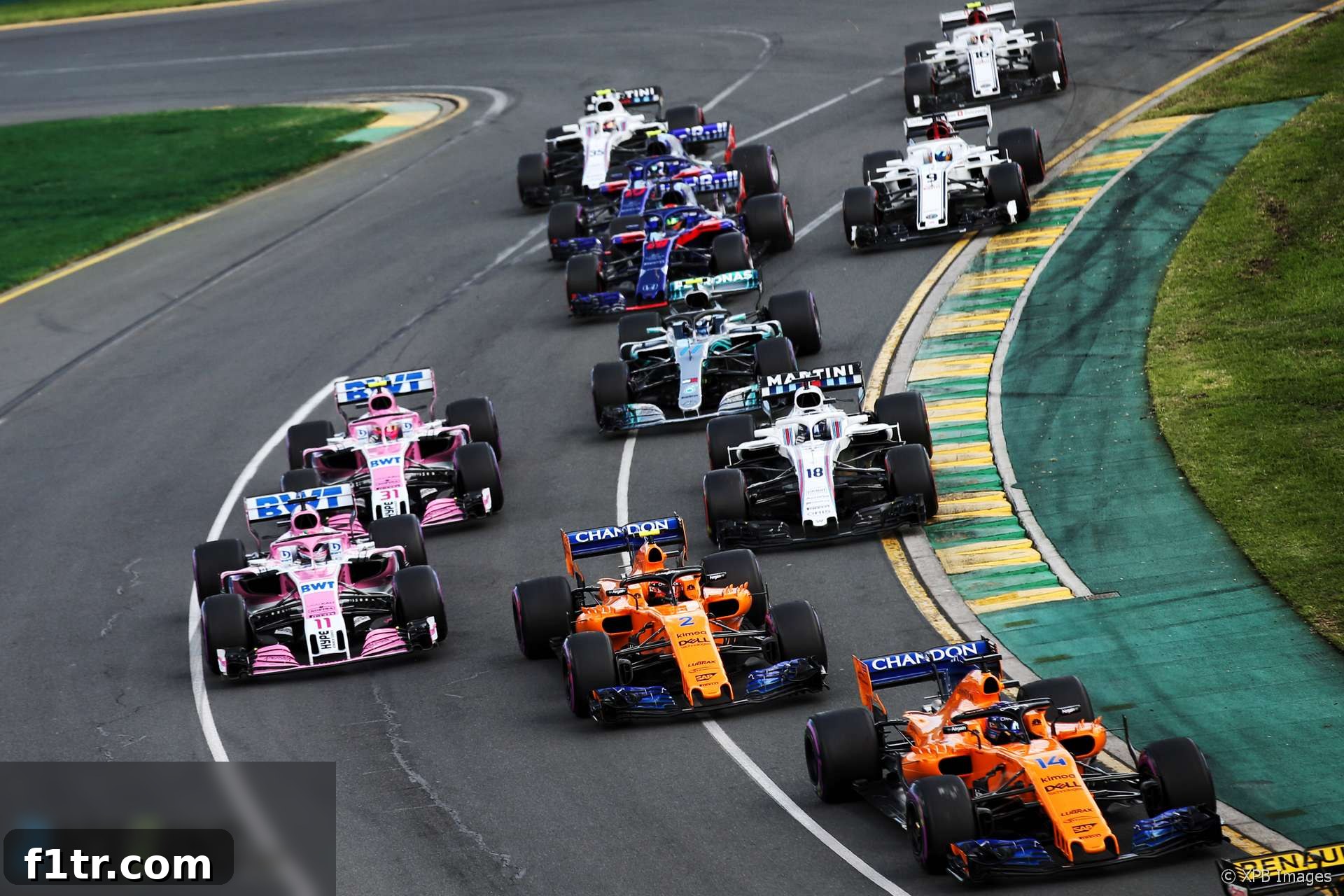
Formula 1’s commercial rights holder, Liberty Media, is driving significant change within the sport, notably with its determination to introduce a budget cap from the 2021 season. This ambitious move aims to level the playing field and address the ever-widening financial gap between the sport’s wealthiest and least resourced teams. A comprehensive analysis, compiled by @DieterRencken for RaceFans, sheds light on the stark financial realities by detailing how much each team spent in the 2018 season. This first part of the in-depth review focuses on the financial performance of the bottom five teams in that year’s championship, offering crucial insights into their operational costs, income sources, and overall sustainability within the high-stakes world of F1.
Advert | Become a Supporter & go ad-free
For many years, I have meticulously compiled an annual review of Formula 1 teams’ financial health. The foundation of this intricate analysis is built upon a blend of direct interviews with key personnel, confidential off-record discussions (which are indispensable for obtaining accurate internal figures), publicly available Companies House records for UK-based teams, and rigorous, old-fashioned investigative work. This detective-like approach includes cross-referencing information with individuals who have moved between teams or those with motivations, known best to themselves, to disclose pertinent details. Such a multi-faceted approach is essential to paint a true picture of the opaque financial landscape in F1.
Companies House records, while invaluable and accurate, present a time lag, typically being released nine months in arrears. For instance, the 2017 financial statements were filed by September 30, 2018. Where applicable, these records serve as a foundational baseline, subsequently updated and refined using published information, industry reports, and other known financial factors to provide the most current and relevant data possible for the analysis.
The financial records of non-UK teams, unlike their British counterparts, are not publicly accessible. Consequently, for teams like Toro Rosso in Italy, Sauber in Switzerland, and Ferrari, educated estimates are applied. Ferrari, operating as a vast conglomerate, does not segregate its finances, either within its broader group or specifically within its Gestione Sportiva (racing division), a practice that differs from Mercedes F1, which distinctly separates its engine and race team operations. Haas, with operational bases in the USA, Italy, and the UK, uniquely provided full financial disclosure, a level of transparency not matched by the other non-UK teams.
The ability of teams to obscure or “obfuscate” their true spending will undergo a significant transformation if, and crucially, when, budget caps are effectively implemented. While teams might still find ways to “fudge” certain expenses, such as marketing budgets and specific high-profile salaries, the overall financial balance will become far more transparent. This transparency will arise either through the explicit inclusion of these costs within the cap or through straightforward deduction processes. The multifaceted reasons why teams historically withhold such critical financial information often boil down to a reluctance to reveal their “lap time value for money,” a metric we rigorously calculate as the ‘bang-for-buck’ ratio, which highlights the efficiency of their spending in on-track performance.
Following Liberty Media’s first full year as Formula 1’s commercial rights holder in 2017, the sport eagerly anticipated the 2018 season, buoyed by numerous promises. These included an expansion of high-profile marketing activities to broaden F1’s appeal, the much-anticipated launch of an over-the-top (direct-to-consumer) TV streaming service to enhance fan engagement, and significant progress on F1’s long-standing challenges: the deeply inequitable financial distribution among teams and an engine-dominated spectacle that sometimes overshadowed pure racing skill.
However, the reality of 2018 proved somewhat divergent from these optimistic projections, a fact clearly mirrored in the performance of Liberty Media’s F1 Group shares (FWONK/FWONA). The share price experienced considerable volatility, peaking at $38.82 in February before plummeting to a low of $29 shortly before the final race in Abu Dhabi. While it’s true that global stock market indices faced considerable pressure in 2018, with many shares recording declines of around 15 percent, F1’s share price drop was notably double that, eventually settling at $32.40 at the time of this analysis.
The truly crucial factor, however, extends beyond the mere value of the stock to its pronounced volatility. This fluctuation vividly illustrates just how susceptible Formula 1 has become to investor sentiment, as extensively detailed in previous analyses. In an era where decisions were once primarily guided by sporting or technical imperatives, it is now entirely conceivable that future strategic choices within F1 will be primarily influenced, if not dictated, by the need to appease market expectations and investor confidence. This shift represents a fundamental change in the sport’s decision-making paradigm.
Understanding F1’s Complex Revenue Distribution
Formula 1’s intricate revenue distribution system is governed by a complex formula outlined in a series of bilateral agreements. These agreements, often inaccurately but euphemistically referred to as the ‘Concorde Agreements,’ are negotiated and entered into individually between the Commercial Rights Holder (CRH) and each participating team. The foundational prize fund is derived from 47.5 percent of F1’s earnings, but only after the deduction of all the sport’s substantial operating expenses, and before accounting for income tax, depreciation, and amortisation (EBITDA). This calculation establishes the initial pool from which teams receive their primary earnings.
To this basic prize fund, several significant bonuses are appended, further complicating the distribution. These include Constructors Championship Bonuses (CCB) as agreed upon during the 2013 signing (benefiting teams like Red Bull Racing and McLaren at the time). Critically, Ferrari receives a unique Long Standing Team (LST) payment, a historical entitlement. Additionally, Double Champion (DC) bonuses are paid to teams that have earned multiple championships since 2013 (such as Mercedes), and a $10 million Heritage Bonus (HB) is consistently paid to Williams, recognizing their long history in the sport.
The basic fund itself is bifurcated into two distinct ‘columns.’ Teams that have consistently ranked within the top ten of the FIA Constructors’ Championship at least twice over the preceding three years are allocated an equal share from ‘Column One.’ Conversely, ‘Column Two’ funds are disbursed according to a decreasing table based on their championship position, as previously detailed. For 2018, both Column One and Column Two were anticipated to each total approximately $330 million, combining to form a basic prize fund (before the aforementioned bonuses) of roughly $660 million.
Overall, the prize ‘pot’ distributed to teams amounts to approximately 66.6 percent of F1’s EBITDA. In 2018, this equated to around $960 million being disbursed, indicating a substantial $300 million bonus pot paid to qualifying teams. Liberty Media retains the remaining balance, approximately $480 million, to fulfill its loan obligations and shareholder commitments. This ‘pot’ is distributed to teams in ten monthly tranches, typically between March and December, unless a team encounters a cessation event, such as bankruptcy.
A critical point often overlooked is that as Liberty Media actively pursues its strategic quest to develop and expand Formula 1, the ballooning operational expenses associated with plush new offices, increased headcounts, and investments in improved technologies inevitably impact the EBITDA. This escalation in costs directly led to the “pot” contracting by an estimated four percent compared to 2017. This factor, compounded by projected decreases in lucrative hosting fees from circuits and broadcast income, understandably caused teams to increasingly voice their concerns and anxieties as the 2018 season drew to a close.
Go ad-free for just £1 per month>> Find out more and sign up
Compounding these financial pressures, TV ratings also experienced a significant decline, with the widespread shift to pay-TV in Italy cited as a primary contributing factor. The much-anticipated F1 TV streaming service, intended to mitigate these losses and broaden accessibility, arrived late to market, was plagued by technical problems upon launch, and ultimately failed to compensate for the substantial reduction in terrestrial viewership.
The tangible consequences of these financial and viewership challenges for the teams were immediately evident, manifesting as logo-less flanks and wings on their cars. Martini’s pre-emptive decision to exit Formula 1, even before Williams’s truly dire performance fully materialized, served as a stark and early indicator of the underlying commercial anxieties within the paddock.
Despite Liberty Media reporting a three percent growth in spectator numbers across the first 16 races of 2018, these statistics are based on promoter figures, which are notoriously prone to wide fluctuations and sometimes aggressive reporting. Formula 1’s true acid test will arrive with the release of Liberty’s comprehensive 2018 ‘eyeball’ report, a purified analysis of TV audience ratings by territory, which is expected early next year. This report will provide a clearer, more accurate picture of global viewership trends and the sport’s reach.
The unfortunate reality of Force India plunging into administration, despite Formula 1’s billion-dollar prize fund and its immense global appeal spanning 21 countries, is acutely symptomatic of two deeply ingrained ills within the sport: a fundamentally inequitable revenue structure and the exorbitant, spiraling costs of competing at the pinnacle, particularly in the relentless pursuit of pace with Mercedes and Ferrari – by far the largest beneficiaries of the existing financial model. Both of these critical issues squarely fall within Liberty Media’s control, yet visibly, little corrective progress was demonstrably made throughout 2018.
After two full seasons operating under Liberty Media’s stewardship, with barely two years remaining before the current bilateral agreements expire and Formula 1 is finally unshackled from the covenants imposed by previous rights holder CVC Capital Partners, virtually all of the sport’s key commercial metrics are unfortunately trending in the wrong direction, even if some only marginally so. This concerning trajectory persists despite improved on-track action and a captivating title chase that ebbed and flowed until September, which ultimately served as F1’s primary saving grace in a challenging 2018 season.
Advert | Become a RaceFans supporter andgo ad-free
2018 Formula 1 Team Budgets and Income: An In-Depth Look
This comprehensive report is structured into two distinct parts. This initial segment scrutinizes the financial performance of teams ranked from 10th to 6th in the 2018 championship standings. The financial health of the top five teams will be the focus of the analysis presented next week. Furthermore, the forthcoming report will introduce our unique financial indices, offering a more granular examination not only of team performance relative to their budget (the crucial Bang-for-Buck metric) but also detailing the costs incurred for lap time improvements compared to their 2017 performance.
Several key assumptions and methodologies underpin our financial calculations:
- Engine Divisions: Team budgets, where applicable, explicitly exclude engine division costs. It is assumed that the FIA’s guideline charge of approximately $25 million for an annual two-car engine supply is applied internally for teams with their own engine operations or charged by engine suppliers. However, the costs associated with tyre supply, approximately $1.5 million for a season’s two-car allocation, are fully integrated into the overall team budgets.
- Currency Conversion: To facilitate direct and accurate comparison across all teams, currencies have been uniformly converted to US Dollars. This approach is particularly critical given the volatility Brexit introduced to exchange rates, and the fact that most sponsor contracts are US$-based, with Liberty Media also disbursing prize monies in US currency. For consistency, the following conversion rates were applied: $1 = €0.88 / SFr1.00 / £0.80.
-
Key Performance Indicators:
- ‘Bang-for-buck’: This metric quantifies the efficiency of team spending, specifically indicating how much capital they expended to score a single championship point in the 2018 season.
- ‘Lap time index’: This innovative index measures the financial investment made per second of lap time gained over their 2017 performance, offering insight into the cost-effectiveness of performance improvements.
Williams
2018 Budget $150m
2018 Income $150m
2018 Profit/Loss Breakeven (Group)
Employees 630 F1 only
Points 7
Bang-for-buck $21.5m/point
Lap time index $450m/sec (-0.33s)
The 2018 season proved to be an exceptionally challenging and arduous year for Williams. Despite being powered by a formidable Mercedes engine, their FW41 chassis consistently found itself at the tail end of the grid, a consequence primarily attributed to severe aerodynamic imbalances that hindered its performance. The struggles were further compounded by the departure of long-time title sponsor Martini at the season’s conclusion, signaling deeper financial anxieties. However, key financial metrics for the group remained remarkably constant year-on-year, though the team’s headcount climbed by 10 percent, indicating investment in personnel despite on-track difficulties.
Approximately a quarter of Williams’ non-FOM (Formula One Management) income was generated through contributions from Martini, Rexona, and various other sponsors. This sponsor income, in turn, constituted roughly half of the team’s overall budget. The crucial balance of funding was provided by income directly linked to the team’s drivers at the time, Lance Stroll and Sergey Sirotkin. For the subsequent 2019 season, George Russell and Robert Kubica stepped into these roles, with Kubica specifically anticipated to bring significant funding via Polish sponsors. This external funding became even more critical as FOM revenues were projected to drop by an estimated $15 million due to Williams’ tenth-place finish in 2018.
During 2018, Williams undertook significant restructuring within its technical department and made substantial capital and process investments, demonstrating a proactive effort to reverse its fortunes. The team harbors strong hopes of securing a major new title sponsor to provide essential financial stability through the 2019 and 2020 seasons. Beyond this period, Williams aims to right-size its operations to align with the post-2020 Formula 1 landscape, when the much-anticipated budget caps will be phased in over three years, ultimately targeting an annual spend of $150 million.
The Team’s Perspective
Despite a challenging year on-track, we continued to manage the business well commercially, and look forward to 2019. Managing an independent team’s finances is a high wire act due to Formula 1’s financial environment, a situation that can only be properly addressed through fair revenue distribution and cost controls.
Note: As a listed company, Williams emphasizes that for legal reasons, any information provided is indicative only and does not constitute forward-looking projections or financial forecasts.
Advert | Become a RaceFans supporter andgo ad-free
Toro Rosso
2018 Budget $150m
2018 Income $150m
2018 Profit/Loss Breakeven
Employees 460
Points 33
Bang-for-buck $4.54m/point
Lap time index $131.5m/sec (-1.14s)
Toro Rosso, a crucial component of the Red Bull racing empire, primarily functions as a finishing school for Red Bull’s extensive cadre of development drivers. In 2018, the team notably returned to its core roots by fielding two promising rookies, Pierre Gasly and Brendon Hartley, following a period where it had retained drivers for multiple seasons. A significant additional development role was assigned to Toro Rosso for 2018: the critical task of meticulously preparing Honda’s power units and operations for their integration with the senior Red Bull Racing team from the 2019 season onwards. This was a pivotal strategic move for the entire Red Bull family.
To support its expanding roles, the team significantly enlarged its Faenza base in Italy and undertook a corresponding recruitment drive for both its main operational headquarters and its Bicester (UK) wind tunnel facility. The headcount saw a robust 15 percent increase over 2017, mirroring similar growth from the previous year, while the overall budget rose by 10 percent. The new partnership with Honda proved instrumental, contributing both crucial cash and advanced power units. This, in turn, allowed Red Bull to prudently reduce its direct financial contributions. The remainder of the budget was secured through a diverse portfolio of sundry sponsors, primarily Acronis and Casio, alongside income derived from FOM.
The 2018 season was inherently a trying year for Toro Rosso as Honda vigorously ramped up its efforts, largely for the broader strategic benefit of the Red Bull group. This intense development phase was reflected in the team’s ninth-place finish in the championship, a drop of two positions compared to their 2017 performance. For 2019, STR strategically recalled Daniil Kvyat, pairing the experienced Russian with rookie Alex Albon, who had demonstrated a strong performance in his F2 season. With the promise of improved Honda power and the significant benefits of enhanced technology sharing with Red Bull Racing, the outlook for Toro Rosso in 2019 suggested a definite upward trajectory.
The Team’s Perspective
We will fully exploit the synergies [with Red Bull Racing] within the framework of the regulations. The co-operation is already fully on target.
Sauber
2018 Budget $135m
2018 Income $135m
2018 Profit/Loss Breakeven
Employees 400
Points 48
Bang-for-buck $2.8m/point
Lap time index $54m/sec (-2.5s)
The 2018 season truly marked a pivotal turning point for Sauber, representing the Swiss team’s first full season under the shrewd and experienced leadership of team manager Frédéric Vasseur. His immediate and decisive move upon his appointment in 2017 was to abandon a pending engine deal with Honda in favor of signing for current-specification Ferrari powertrains. This strategic pivot proved profoundly impactful: not only did Sauber benefit from arguably one of the best engines on the grid, but it also secured the services of Ferrari’s highly touted junior driver, Charles Leclerc, and, crucially, significant financial backing through the Alfa Romeo partnership.
During 2018, the team underwent an internal restructuring of its ownership. Longbow Finance, the investment group that had previously owned Sauber, spun off the team. It now operates under Islero Investments AG, although critically, with the same core shareholders. Concurrently, these shareholders strategically increased their third-party business ventures to boost overall income for the group. The team’s headcount saw an encouraging 11 percent year-on-year growth, maintaining a similar trajectory to the previous year and indicating a steady expansion of its operational capabilities.
The net effect of these strategic changes and investments was a notable improvement for Sauber, as they climbed from 10th to eighth place in the Constructors’ Championship. This ascent was certainly aided by Williams’ significant slump and the teething pains experienced by the Toro Rosso-Honda partnership. However, their true benchmark remained Haas, which utilized the same Ferrari rear-end installation. Despite the sterling efforts and impressive performances of Charles Leclerc, Sauber ultimately fell short of consistently matching Haas’s pace. Leclerc’s exceptional talent earned him a promotion to Ferrari for 2019, while the experienced Kimi Raikkonen made the move in the opposite direction to Sauber.
Therein lies Sauber’s immediate challenge for the forthcoming season: the imperative to build upon, rather than merely consolidate, their eighth-place finish, demonstrating sustained progress and further closing the gap to the midfield leaders.
The Team’s Perspective
We do not comment on our financial situation.
Force India/Racing Point
2018 Budget $120m
2018 Income $125m
2018 Profit/Loss Went into administration
Employees 405
Points 111*
Bang-for-buck $1.08m/point
Lap time index $96m/sec (-1.24s)
After the dramatic turn of events that saw Force India plunge into administration in July 2018, a consortium led by fashion billionaire Lawrence Stroll emerged as the successful bidder for the assets of what had, in recent times, been the best-performing independent team on the Formula 1 grid. Crucially, however, the consortium did not purchase a ‘going concern’; this nuanced distinction had significant ramifications, potentially amounting to as much as $60 million in unresolved issues which continue to await full resolution.
During the initial races of the 2018 season, it became increasingly evident that the team’s on-track performance was severely hampered by a critical lack of budget, primarily stemming from team boss Vijay Mallya’s protracted legal travails. This financial constraint led to significant delays in crucial car updates, or in some cases, prevented them from being implemented altogether. By the season’s end, Team Principal Otmar Szafnauer candidly admitted that the team felt it was “always one update behind,” underscoring the profound impact of their financial woes on their competitive edge.
Their promising early-season performance was, however, rendered largely moot when the team’s hard-earned points were controversially reset at mid-season. This occurred upon their return to F1 under the new identity of Racing Point. Despite this setback, the team still missed a clear opportunity to surpass McLaren for seventh place (or even fourth if their combined points were considered). Had Force India been spared its debilitating legal and financial issues, it is highly probable the team could have replicated its impressive fourth-place finishes from the previous two years, even with what was (by then) the tightest budget in the entire paddock.
Looking ahead, the 2019 F1 season could prove even tougher for the newly formed Racing Point team unless the Stroll-led consortium significantly increases its financial contributions. Lawrence Stroll’s son, Lance Stroll, has joined the team, partnering with the financially backed Sergio Perez. However, FOM income for the team is projected to drop by a substantial $20 million, and this is even before accounting for the contentious and still unresolved $60 million financial implications. The road ahead for Racing Point appears challenging, requiring robust investment to stabilize and grow.
The Team’s Perspective
Delivering a virtual fifth place is an bigger achievement than our past fourth places given the circumstances.
*Note: Force India scored 52 points after the 59 points they scored prior to the Belgian Grand Prix were deducted due to the administration. Had all the points they scored in 2018 counted, they would have been fifth in the championship standings.
McLaren
2018 Budget $220m
2018 Income $220m
2018 Profit/Loss Breakeven
Employees 760
Points 62
Bang-for-buck $3.23m/point
Lap time index $240m/sec (-0.92s)
While the 2017 season proved to be deeply embarrassing for McLaren from a performance standpoint, the team managed to balance its books relatively effectively due to Honda’s substantial marketing contributions and the provision of free engines. However, the strategic decision to terminate that partnership and sign for customer Renault power units dramatically shifted the financial dynamics: money now flowed in the opposite direction – a situation set to continue until the end of the 2020 season – yet on-track performance regrettably saw only marginal improvement. This placed significant strain on McLaren’s financial model.
True, McLaren did advance from ninth to sixth in the Constructors’ Championship standings for 2018. However, a closer examination of the raw numbers reveals a more nuanced picture. This improvement was significantly influenced by Williams’ massive slide down the grid and the splitting of Force India’s points tally due to their mid-season administration. If these mitigating factors are discounted, McLaren would effectively have been positioned in eighth place, underscoring that their rise was less about inherent performance gains and more about the misfortunes of their rivals.
The financial figures clearly point to a projected $50 million underwriting requirement (and potentially more) for McLaren, unless CEO Zak Brown can miraculously secure substantial new sponsorship deals. Although the team’s headcount saw a slight year-on-year increase, the prevailing strategy for the year was focused on cost savings. A significant portion of Fernando Alonso’s substantial stipend was partially offset by a barter deal involving his Kimoa brand. Furthermore, Alonso was granted the freedom to race for Toyota in the World Endurance Championship (WEC), allowing him to earn hard cash externally. These combined measures are estimated to have saved McLaren approximately $20 million.
Raising significant cash will prove increasingly challenging for McLaren without their former star drivers. Fernando Alonso and Stoffel Vandoorne have been replaced by Carlos Sainz Jnr and rookie Lando Norris. While the team’s FOM income is expected to improve only marginally, McLaren appears poised to effectively tread water for the next couple of seasons, focusing on consolidation rather than aggressive expansion.
The team’s saving graces lie in its highly profitable automotive and advanced technology divisions, the presence of Middle Eastern shareholders with exceptionally deep pockets, and a combination of bond issues and a significant cash injection from Michael Latifi. Without these crucial external financial pillars, McLaren Racing could potentially be facing the severe prospect of extinction, highlighting the critical role of diversification and strong backing in F1’s current economic climate.
The Team’s Perspective
We have a plan to recover over the next [three-four] years as we improve performance that will come with improved cashflow from Formula 1 and also knock-on improvements within sponsorship. For that period we have to fund it and that’s what the equity came in to do.
Stay tuned for the conclusive part of our in-depth analysis on how much Formula 1 teams spent, featured in next week’s RacingLines column.
Don’t miss anything new from RaceFans
Follow RaceFans on social media to stay updated with the latest news and analysis:
- Join RaceFans on Facebook
- Follow RaceFans on Twitter
- Get daily email updates from RaceFans
RacingLines: In-depth Analysis
- The year of sprints, ‘the show’ – and rising stock: A political review of the 2021 F1 season
- The problems of perception the FIA must address after the Abu Dhabi row
- Why the budget cap could be F1’s next battleground between Mercedes and Red Bull
- Todt defied expectations as president – now he plans to “disappear” from FIA
- Sir Frank Williams: A personal appreciation of a true racer
Browse all RacingLines columns