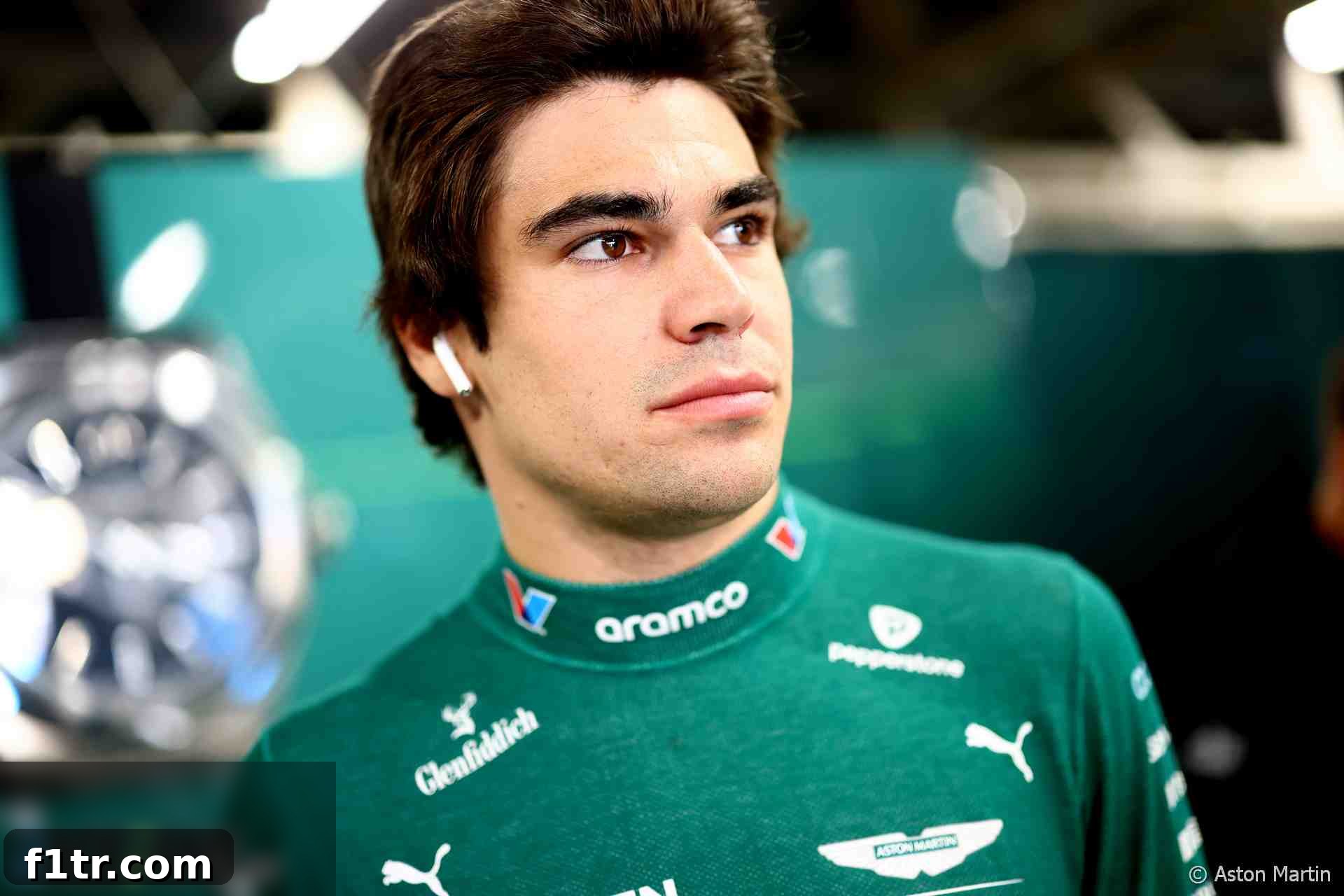
The impending arrival of Formula 1’s 2026 regulations has ignited a fervent debate within the paddock, with Aston Martin driver Lance Stroll openly expressing his reservations. Stroll has characterized the significant overhaul as “a bit sad,” suggesting a departure from what he perceives as the core essence of Grand Prix racing. His candid remarks highlight a growing undercurrent of concern among drivers, many of whom, he believes, are hesitant to vocalize similar criticisms for what he termed “political reasons.”
The new technical framework for 2026 represents one of the most radical shifts in recent Formula 1 history. At its heart lies a revolutionary power unit concept, designed to achieve a near 50/50 split between internal combustion and electrical power. This increased reliance on hybrid technology is coupled with the introduction of innovative active aerodynamic systems, allowing cars to dynamically adjust their wings to reduce drag on straights and maximize downforce through corners. While these changes are touted as a step towards greater sustainability and improved racing, Stroll’s early simulator experiences have left him unconvinced, particularly regarding the anticipated reduction in overall downforce levels.
Stroll’s Critique: A Call for Simpler, More Agile Racing
Lance Stroll’s primary apprehension stems from the fundamental shift in the sport’s energy philosophy. “It’s just a bit of a shame we’re just – Formula 1’s just – taking that path of electric energy and we’ve had to shed all the downforce off the cars to support the battery power,” he explained. This statement encapsulates a sentiment shared by purists who long for an era of lighter, more aerodynamically efficient machines where raw mechanical grip and engine power were paramount. Stroll envisions a Formula 1 where cars are “light, nimble, fast cars with a lot of downforce,” advocating for a simpler, less technologically complex approach to the sport. He yearns for a championship that prioritizes pure racing prowess over what he dismissively refers to as an “energy, battery, championship, science project.”
The FIA has championed the 2026 regulations with a vision of a “nimble car concept,” promising lighter, more agile vehicles. The target minimum weight for these new cars is set to drop from the current ~798kg to ~768kg, a seemingly ambitious reduction of 30 kilograms. However, skepticism abounds regarding the feasibility of achieving this target, especially given the increased battery weight necessitated by the enhanced electrical power component. Many within the sport question whether this weight reduction will genuinely translate into the intended “nimbleness” or if the overall driving experience will be compromised by the trade-offs in downforce and handling characteristics.
The Technical Blueprint: A Deep Dive into the 2026 Regulations
To fully grasp the scope of Stroll’s concerns, it’s essential to understand the intricate details of the 2026 technical regulations. The power unit changes are arguably the most significant. The MGU-H (Motor Generator Unit-Heat), a complex energy recovery system, will be removed, simplifying the engine architecture while placing greater emphasis on the MGU-K (Motor Generator Unit-Kinetic) and the electrical side of the powertrain. This revised power split aims to make the engines more relevant to road car technology and attract new manufacturers to the sport, such as Audi and Ford (partnering with Red Bull Powertrains).
Complementing the power unit overhaul is the innovative active aerodynamics package. This will feature adjustable front and rear wings that drivers can manipulate during a lap. On straights, wings can be flattened to reduce drag and increase top speed – a mode referred to as “X-mode.” Conversely, in braking zones and corners, the wings can be re-angled to generate maximum downforce – “Z-mode” – enhancing grip and stability. While this system aims to improve efficiency and potentially facilitate closer racing by allowing cars to follow each other more easily, it introduces another layer of complexity for drivers, who will need to manage these aerodynamic settings in real-time alongside energy deployment and recovery.
Furthermore, the 2026 cars will run on 100% sustainable fuels, a cornerstone of Formula 1’s commitment to achieving a net-zero carbon footprint by 2030. This ecological imperative, while commendable, undeniably influences design choices and performance parameters, often requiring compromises in traditional racing metrics.
“Political Reasons” and the Paddock’s Silent Majority
Stroll’s assertion that many of his rivals privately share his concerns but are unwilling to voice them publicly resonates strongly. “I think a lot of the drivers can agree on that. Maybe some of them can’t talk about it for political reasons,” he stated. This speaks volumes about the delicate political landscape within Formula 1, where team affiliations, manufacturer interests, and sponsor relationships can often dictate public commentary. Drivers, particularly those aligned with major manufacturers heavily invested in the new regulations, might feel constrained from criticizing the future direction of the sport. Their contractual obligations and career aspirations could easily outweigh the desire for frank expression.
Indeed, other prominent drivers, including reigning world champion Max Verstappen, have previously hinted at similar worries. Verstappen, known for his forthright opinions, has expressed apprehension that the intricate management of energy regeneration and deployment might overshadow the actual act of racing. The fear is that strategic calculations surrounding battery usage and electrical boost could become the dominant factor in a race, potentially detracting from pure driving skill and on-track battles. Stroll echoed this sentiment, questioning, “I don’t know if that’s racing.”
The Downforce Dilemma: Impact on Driving and Spectacle
The planned reduction in downforce is a particularly thorny issue for many drivers. Downforce is the invisible force that pushes a Formula 1 car into the track, providing immense grip and allowing for the astonishing cornering speeds characteristic of the sport. A significant reduction could fundamentally alter the driving experience, making cars less planted and more prone to sliding. While this might, in theory, make cars more challenging to drive, there’s a fine line between a challenge and a frustration. Drivers thrive on precision and confidence in their machinery; a drastic drop in downforce could lead to a less engaging and potentially slower spectacle.
The trade-off is clear: to accommodate the heavier and more powerful electrical components, aerodynamic efficiency has been sacrificed. Stroll’s desire for “a lot of downforce” stems from a fundamental understanding of what makes a Formula 1 car thrilling to drive and watch. Less downforce means slower cornering speeds, and potentially less spectacular, committed driving through fast bends. The crucial question is whether the “nimble car concept” will truly materialize or if the cars will simply feel heavier and less reactive despite the weight reduction targets.
Beyond the Track: Sponsor Influence and the Sustainability Narrative
Stroll’s team, Aston Martin, has a notable title sponsor in Aramco, the Saudi Arabian state oil producer. Aramco CEO Amin Nasser has publicly voiced skepticism regarding the global rush away from fossil fuels and towards green energy technologies. While Stroll’s comments about the “energy, battery powertrain that’s not very racy” align broadly with his sponsor’s perspective, it’s important to differentiate individual driver opinion from corporate stance. Nevertheless, the alignment highlights a broader tension within Formula 1 as it navigates its commitment to sustainability while retaining its high-performance, fossil-fuel-guzzling heritage.
Stroll’s wistful thoughts about “cars that can scream a little bit louder, be a bit lighter, and not depend and focus so much on that energy, battery powertrain” offer a glimpse into a desire for F1 to reconnect with its more visceral roots. This perspective, while perhaps at odds with the sport’s progressive environmental agenda, underscores the challenge of balancing technological advancement, environmental responsibility, and the enduring appeal of raw speed and sound that has captivated fans for decades.
The Road Ahead: Adaptation and Anticipation
Despite his reservations, Lance Stroll remains pragmatic about the future. He acknowledges that come 2026, all teams and drivers will be operating under the same set of rules. “But it’s going to be the same for everyone next year and it’s all going about who can do that best,” he concluded. This sentiment highlights the perpetual competitive spirit of Formula 1: regardless of the regulations, success will ultimately boil down to which team and driver combination can best interpret and exploit the rulebook. “I’m sure whoever’s doing that best is going to love the new regs.”
The 2026 regulations promise a fascinating, albeit contentious, chapter in Formula 1’s storied history. While they are designed to push the boundaries of technology and sustainability, they also spark important debates about the sport’s identity and future direction. Lance Stroll’s “sad” assessment serves as a powerful reminder that while innovation is crucial, the emotional connection to speed, sound, and uncompromising performance remains at the heart of Formula 1’s appeal.