In the high-octane world of Formula 1, where milliseconds define victory and defeat, the pit stop stands as a testament to human precision, teamwork, and raw speed. Yet, recent seasons have seen this ballet of mechanics punctuated by moments of alarming chaos, prompting a necessary debate about safety versus the inherent thrill of the sport. Guenther Steiner, the outspoken team principal of the Haas F1 team, has weighed in with his characteristic candor, advocating for a cautious approach to regulatory changes despite a spate of pit lane incidents that have rattled the paddock.
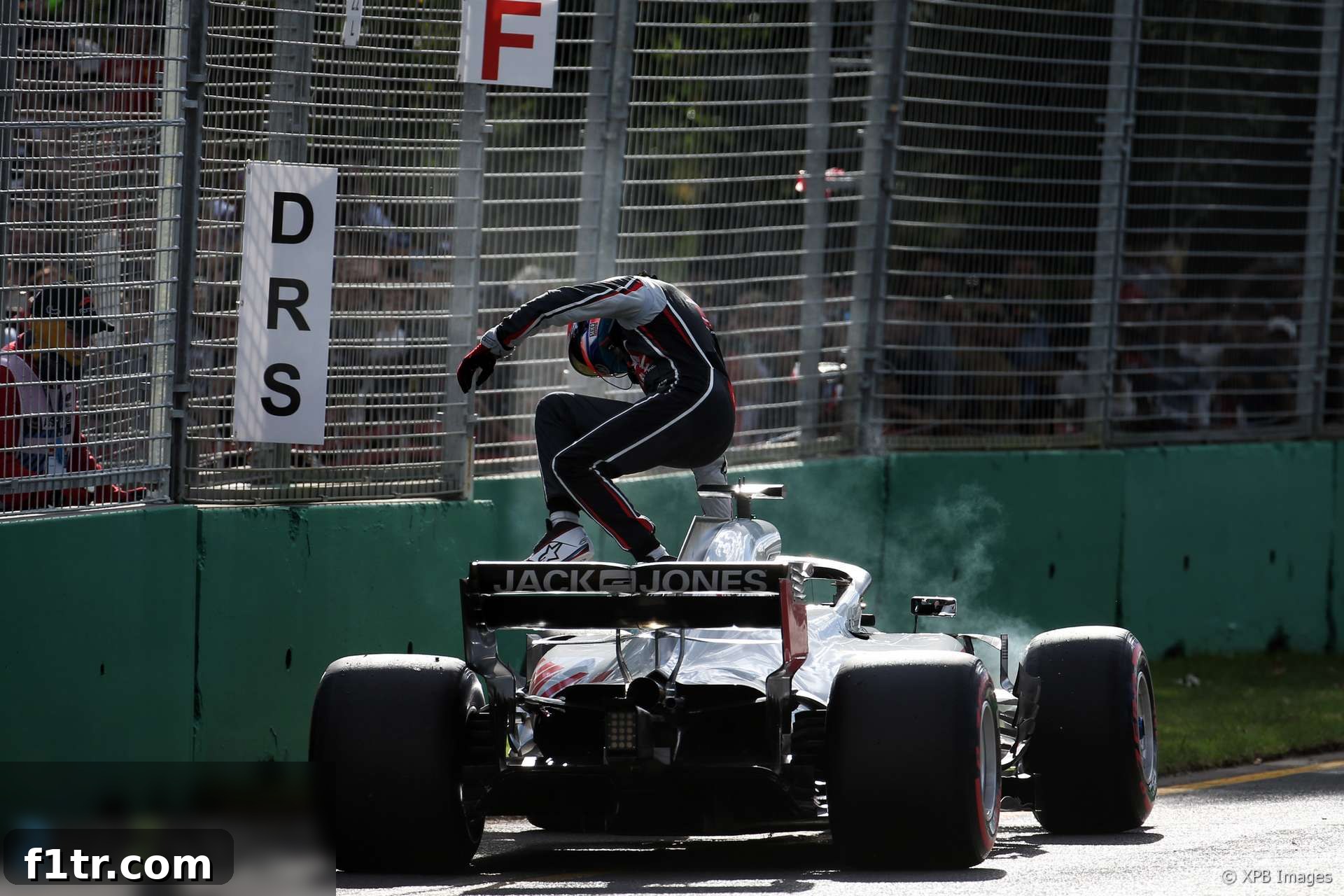
The controversies first flared vividly at the season-opening Australian Grand Prix, where both Haas cars were forced into early retirement due to loose wheels. This double disappointment was a stark reminder of the unforgiving nature of pit lane operations. The shadow of these events lingered into the following race in Bahrain, where further incidents unfolded, most notably involving Ferrari. A mechanic suffered an injury during one of two unsafe release incidents for the Italian team, escalating concerns about the protocols and pressures within the pit lane. Then, in China, McLaren received a fine for releasing Stoffel Vandoorne’s car with an unsecured wheel, highlighting that the issue was not isolated to a single team but a systemic challenge confronting the entire grid.
Advert | Become a Supporter & go ad-free
The Human Element: Preserving F1’s Thrill
Steiner, however, remains resolute in his belief that Formula 1 should resist the urge for a knee-jerk reaction, warning against the introduction of excessive restrictions that could dilute the spectacle. “I think our pit stop, for us it didn’t make it interesting, but it gives another element of interest,” he stated, reflecting on the Haas incidents. His philosophy hinges on the idea that the human element, including the potential for error, is fundamental to the sport’s appeal. “If you make everything 100% safe, why the hell do we watch F1 racing? That’s my opinion.”
This perspective resonates deeply with many long-time fans who cherish the unpredictable drama that often arises from human fallibility. Motorsport, at its core, is a dangerous pursuit, and while safety advancements are paramount, an over-reliance on automation risks stripping away the very essence that makes it compelling. Steiner articulates this eloquently: “We need to have this, where the human being can make a mistake. It happened to us and I’m not happy about it but in general we need some risk-taking. If you make everything automatized we can put robots there and we do it and there will be no problem but then who is going to watch us?”
He is quick to clarify that his stance is not an endorsement of recklessness. “I’m not saying that we should put people in danger,” he emphasized. Instead, it’s an acknowledgement of the inherent risks that are part of the broader sporting landscape. Comparing it to other physically demanding sports, he added, “Playing football somebody breaks their leg. Again, I feel sorry about the guy and I think it shouldn’t happen, but it happened, and we cannot make it right anyway.” This analogy underscores the universal truth that accidents, regrettable as they are, can occur even in regulated environments. The key, in Steiner’s view, is to manage risk, not eliminate it entirely at the cost of the sport’s character.
The Efficacy of Existing Safety Measures
Steiner further bolstered his argument by highlighting that the safety devices intended to prevent wheels from detaching – which have been progressively introduced over recent seasons – did, in fact, function as designed. These systems, often involving sophisticated sensors and tethers, are crucial in preventing catastrophic failures on track. “The system worked, so why are we going to change it?” he questioned. His point is that when mistakes occur, the system identifies them and assigns consequences, rather than allowing a loose wheel to endanger other drivers or spectators on the circuit.
In the case of Haas, the repercussions were immediate and severe: two cars retired from the race, losing valuable points and incurring significant reputational damage. “Yes, we had a loose wheel, who paid the consequences? The people who put it on. Nobody else,” Steiner asserted. This accountability, he believes, is a powerful deterrent against future errors. The penalties levied by the FIA, whether in the form of fines, grid penalties, or disqualifications, serve as a regulatory framework that encourages vigilance without needing to completely overhaul the fundamental process of a pit stop.
“I wouldn’t rush to a knee-jerk reaction after what happened. It was clearly our fault, we paid the price for it, and on we moved. Nobody was hurt in our instance. It’s part of Formula One, if you do something wrong you get penalized,” he elaborated. This pragmatic perspective underscores a fundamental tenet of competitive sport: mistakes happen, they are penalized, and teams learn from them. The challenge lies in ensuring that these lessons are learned without compromising the safety of the individuals who bring the sport to life.
Haas’s Resilience and the Psychology of the Pit Crew
The aftermath of the Australian Grand Prix was undoubtedly a trying time for the Haas team. The double retirement, stemming from a seemingly routine procedure, cast a shadow over their potential. Steiner openly admitted the psychological toll it took, even on himself. “You can imagine how everybody felt for the first pit stop we did in Bahrain I didn’t even want to watch it, but then I did,” he confessed, illustrating the immense pressure on the pit crew. Each mechanic, often unseen heroes of the sport, performs under incredible scrutiny, knowing that a fraction of a second or a single misplaced movement can alter the course of a race.
The rapid recovery and subsequent performance of the Haas pit crew stands as a testament to their professionalism and resilience. After the initial jitters in Bahrain, the team rallied. “The guys did a good job recovering this quick,” Steiner proudly noted. By the third pit stop in that race, Haas had executed the eighth fastest stop of the entire event – a remarkable turnaround given the preceding events. “Our aim was just to get the car out again solidly,” he clarified, emphasizing that speed, while always desirable, took a backseat to reliability and confidence during this recovery phase. “I think our guys bounced back very strong, we did the right thing shuffling a few positions and giving them enough practice so they get the confidence back.” This thoughtful approach to team management, prioritizing psychological recovery and diligent practice, highlights Steiner’s leadership and understanding of human performance under extreme pressure.
The Broader Implications for Formula 1 Safety and Spectacle
Steiner’s comments ignite a broader debate that constantly simmers within Formula 1: how to balance the relentless pursuit of safety with the undeniable allure of danger and unpredictability that is woven into the sport’s fabric. The FIA, F1’s governing body, continuously reviews regulations, evolving safety standards with each passing season. From improved car structures to stricter pit lane rules and advanced medical facilities, the sport has made colossal strides in protecting its participants. However, the pit stop remains a crucible of high-speed human interaction, a volatile intersection of man and machine where the margin for error is razor-thin.
Introducing further automation, such as completely robotic wheel changes or systems that physically prevent a car from leaving the pit box until all parameters are perfectly met, could theoretically eliminate human error. But at what cost? Would F1 lose a crucial part of its dramatic tension? The iconic image of a perfectly executed pit stop, a coordinated dance of two dozen individuals working in unison, is one of Formula 1’s most enduring and compelling spectacles. It showcases human skill, coordination, and speed in a way that few other moments in sport can replicate.
Ultimately, Guenther Steiner’s argument is a powerful one for retaining the essential human drama that has defined Formula 1 for decades. While the safety of drivers, mechanics, and spectators must always be paramount, there is a fine line between necessary caution and over-regulation. His stance champions the resilience of teams to learn from mistakes, the efficacy of existing penalty systems, and the profound importance of the human element in maintaining F1’s thrilling and unique identity. As Formula 1 continues to evolve, the discourse surrounding safety will undoubtedly remain a central theme, shaping the future of a sport that lives on the edge.
Go ad-free for just £1 per month>> Find out more and sign up
Related Formula 1 Insights
- F1 feared “death knell” for Drive to Survive after Ferrari and Mercedes snub
- McLaren staff told us we were “totally crazy” to take Honda engines in 2018 – Tost
- ‘It doesn’t matter if we start last’: How Red Bull’s junior team aided Honda’s leap forward
- Honda’s jet division helped F1 engineers solve power unit problem
- McLaren Racing losses rise after Honda split
Browse all 2018 F1 season articles