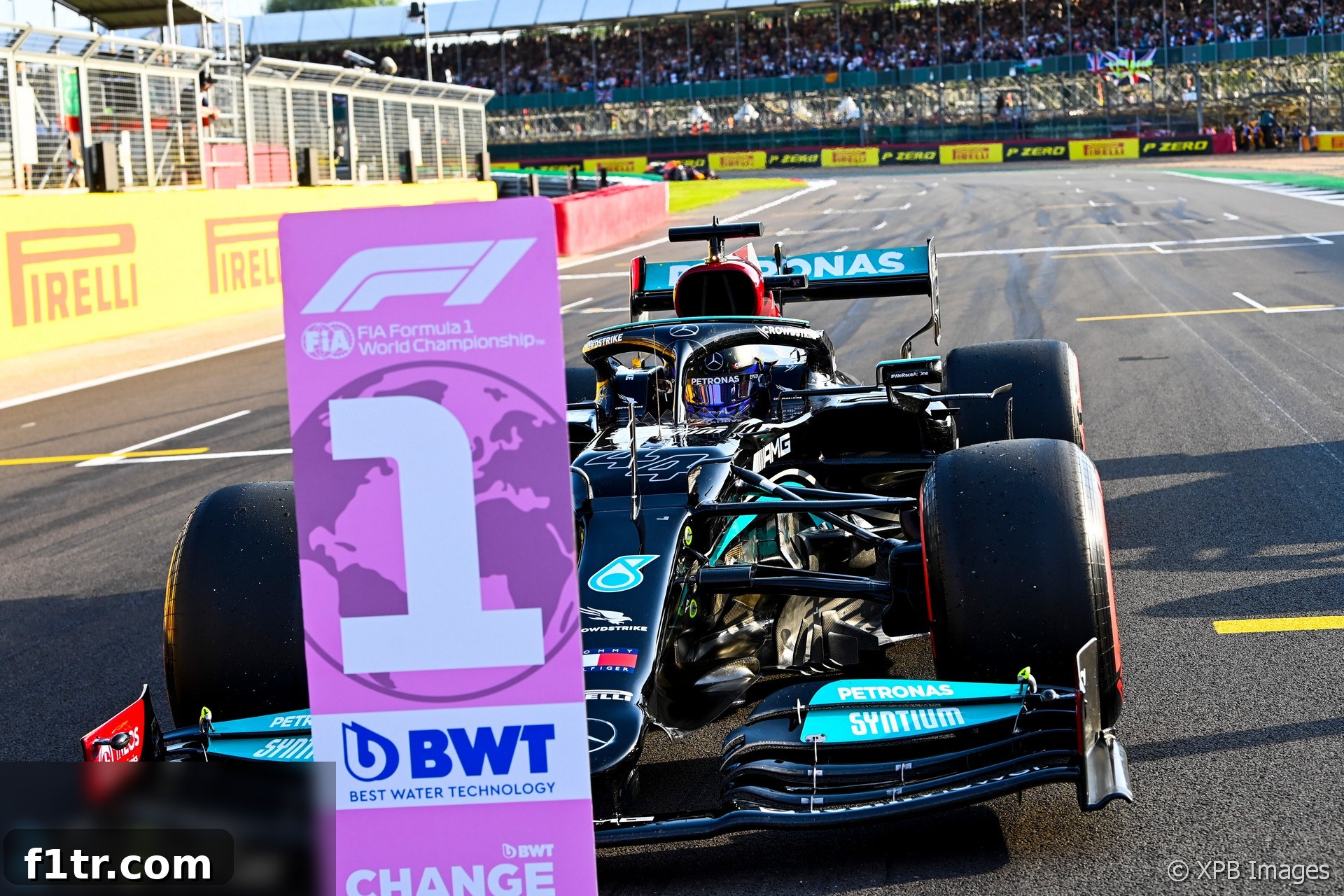
In the vibrant and ever-evolving world of Formula 1, recent changes have sparked considerable debate, particularly concerning the prestigious definition of ‘pole position.’ Haas team principal Guenther Steiner has emerged as a prominent voice, joining a chorus of industry figures calling for F1 to revert to its traditional understanding of pole, a direct consequence of the sport’s experimental sprint qualifying format.
Formula 1 News Digest: Pole Position Debate, Tyre Tech, and More
Pole Position Controversy: The Heart of F1 Tradition
Advert | Become a Supporter & go ad-free
Formula 1 introduced its groundbreaking sprint qualifying format at Silverstone, a bold move designed to inject more excitement into Grand Prix weekends. This new structure added a concise, short-form race on Saturday, specifically tasked with determining the starting grid for Sunday’s main event. However, a significant departure from established tradition quickly fueled controversy: F1 declared that the winner of this sprint race, rather than the fastest qualifier from Friday’s session, would be officially credited with ‘pole position’ for the weekend.
This controversial ruling was immediately evident at its debut. While Lewis Hamilton showcased his blistering pace by setting the fastest lap time during Friday’s traditional qualifying session, it was Max Verstappen, the dominant winner of the Saturday sprint qualifying race, who was subsequently designated as the official pole position holder. This decision ignited a passionate discussion amongst drivers, team principals, and fans alike, touching upon the very essence of what ‘pole position’ historically represents in motorsport.
Among the first and most vocal critics was four-time world champion Sebastian Vettel, who unequivocally described the decision as “wrong.” His sentiment is now echoed by Guenther Steiner, the straight-talking team principal of Haas F1 Team, who firmly aligns with Vettel’s traditionalist view.
Steiner articulated his perspective, stating, “I think if we go ahead with this sprint qualifying for the future, qualifying should be counted as a qualifying, as a pole position and the sprint qualifying as a sprint qualifying win. I would do it like this.” Steiner’s argument underscores a desire to preserve the distinct achievements within a Grand Prix weekend: recognizing the raw speed of a single-lap qualifier separately from the strategic and racing prowess demonstrated in the sprint event.
The core of the debate centers on the historical significance of pole position – traditionally awarded to the driver who demonstrates ultimate one-lap speed and mastery of the circuit. For many, this is a purist’s benchmark, a testament to raw pace and precision, recorded independently of race outcomes. The new definition, while aiming to elevate the sprint race’s importance and create additional on-track action, is seen by some as potentially diluting the value and statistical integrity of true pole position. The implications for F1’s vast historical records and the legacies of its greatest drivers are profound, prompting concerns about how future generations will interpret these statistics and compare eras.
Recognizing the strong feedback from the paddock and the importance of this statistical distinction, Formula 1 managing director Ross Brawn has indicated a willingness to reconsider the rule. Brawn’s comments suggest that if the sprint qualifying format proves successful and is retained beyond the current season, the definition of pole position will likely be reviewed. This could potentially pave the way for a return to a more traditional interpretation that honors both the fastest qualifier and the sprint race winner in their own right, perhaps with distinct titles like “fastest qualifier” and “sprint pole winner” to acknowledge both achievements without conflating them.
Pirelli Reveals Extreme Demands of Silverstone on F1 Tyres
Pirelli, Formula 1’s exclusive tyre supplier, provided fascinating insights into the colossal forces exerted on its tyres during the recent British Grand Prix weekend at Silverstone. Renowned as one of the fastest and most aerodynamically demanding circuits on the calendar, Silverstone consistently pushes both cars and tyres to their absolute limits, particularly through its iconic high-speed corner sequences like the flowing Maggotts, Becketts, and Chapel complex.
Mario Isola, Pirelli’s head of motorsport, detailed the immense lateral energy transferred into the tyres at this high-energy circuit. “There is a lot of lateral energy that is going into the tyre and the front is the most heavily loaded tyre,” Isola explained. He elaborated on specific data points, highlighting the extraordinary stresses endured: “We were just checking the other day on the loads for example in Maggotts, Becketts and Chapel, the sequence, on the loaded side on each tyre there is a lateral load of 1,200 kilos. That is quite a lot on each tyre.”
This staggering figure – equivalent to over 1.2 tonnes of force acting laterally on a single tyre through a corner – underscores the incredible engineering marvel of modern F1 tyres, designed to withstand such punishing conditions. Isola further emphasized the extreme nature of Silverstone’s layout: “And there are many corners where we have more than five G or close to five G of lateral acceleration. So it’s quite a hard circuit for the tyre, especially for the front.” These extreme G-forces, representing multiples of the force of gravity, place immense structural and thermal demands on the rubber, necessitating robust tyre construction and meticulous compound selection from Pirelli.
Understanding these profound loads is crucial for teams in terms of setting up their cars for optimal performance, managing critical tyre wear during races, and developing effective pit stop and overall race strategies. At a circuit like Silverstone, where sustained high-speed cornering is paramount, tyre degradation and thermal management can be decisive factors, significantly influencing pit stop timings, stint lengths, and ultimately, overall race performance. Pirelli’s detailed data vividly illustrates why Silverstone remains one of the ultimate tests for Formula 1 machinery and its critical interface with the track: the tyres themselves.
Advert | Become a RaceFans supporter andgo ad-free
Social Media Highlights from the Motorsport World
A glimpse at notable posts from Twitter, Instagram, and other platforms, offering insights into the lives and thoughts of motorsport personalities, and connecting fans directly to the action and off-track moments:
Good to be back home 👌 pic.twitter.com/Gy4zlnyBNF
— Max Verstappen (@Max33Verstappen) July 20, 2021
Following a demanding Grand Prix weekend, drivers often share personal updates, offering fans a unique, unfiltered window into their demanding schedules and moments of respite. Max Verstappen here shares a moment of returning home, reflecting the life of an F1 athlete constantly on the move, jet-setting between races. Social media platforms like Twitter play a crucial role in fostering a stronger connection between the sport and its global audience, allowing supporters to feel closer to their favorite stars.
- Find more official F1 accounts to follow in the F1 Twitter Directory, your comprehensive guide to staying connected with the sport’s top figures, teams, and official news channels.
Motorsport Connections: News, Debates, and Updates
A curated selection of the latest and most engaging stories from across the motorsport landscape, offering diverse perspectives, key developments, and updates from the paddock and beyond:
The Hamilton-Verstappen Clash: A Deep Dive into the Silverstone Collision Controversy
The high-speed collision between title rivals Lewis Hamilton and Max Verstappen at the British Grand Prix remains a fiercely debated incident, drawing strong opinions from across the F1 spectrum. Former F1 supremo Bernie Ecclestone weighed in with his characteristically forthright views, asserting that Hamilton was to blame for the 180mph crash with Verstappen at Silverstone. Ecclestone, known for his provocative and often controversial opinions, criticized the stewards’ decision, stating, “If you have to give a sanction, which in some ways they didn’t need to, this was not right decision – it wasn’t enough.” His comments suggest a belief that Hamilton’s ten-second penalty was insufficient given the severity and championship implications of the incident, which sent Verstappen into the barriers.
Meanwhile, Sky Sports F1 pundit and former driver Martin Brundle offered his expert analysis, aiming to objectively analyze and explain the Hamilton, Verstappen British GP collision. Brundle revealed a key piece of information reportedly sourced from Red Bull Racing: “I am told by Red Bull there is data to prove Lewis was significantly faster into Copse than at any other time and he would not have made the corner without running wide, and inevitably contacting Max.” This assertion by Red Bull, if substantiated, suggests a deliberate and aggressive maneuver by Hamilton that pushed the limits of racing etiquette and possibly exceeded normal racing lines for that corner, adding another layer of complexity to the already contentious incident. The ongoing discussion highlights the fine margins, intense rivalry, and high stakes that defined this pivotal moment in the championship battle.
Wider Motorsport Insights: IndyCar, F2, and More Global Racing News
Beyond the pinnacle of Formula 1, the world of single-seater motorsport continues to deliver thrilling action and intriguing stories from across its diverse categories:
Helio Castroneves Eager to Bridge Personal Gap in Season at Nashville (IndyCar): IndyCar legend Helio Castroneves prepares for the inaugural Nashville street circuit race, expressing anticipation for the unique challenges it presents. He specifically notes the significant elevation changes on the bridge, a rarity for urban tracks. “Castroneves was surprised at the amount of elevation change on the bridge, which IndyCar athletes will cross twice each lap. While street courses are typically rough and bumpy, rarely do they have much elevation change. Castroneves expects that to throw teams a curveball,” highlighting the unique engineering and driving challenges a new and unconventional track brings to the series.
Richard Verschoor Praises “Fastest Ever” Sprint Race Two Getaway (F2): In the fiercely competitive Formula 2 championship, Richard Verschoor celebrated a phenomenal start in his second sprint race, a critical moment in any F2 event. “In the first race the start was not great – it was a complete disaster if I am honest, so I am happy to have gotten a good start in race two. It was by far the quickest that I have ever done, so it was good, and I hope to repeat it,” showcasing the relentless pursuit of perfection and the critical importance of a strong launch off the grid in the highly competitive feeder series, where every millisecond counts.
Monilite Racing to Field Dexter Patterson at Spa-Francorchamps (Formula Regional European by Alpine): Young talent Dexter Patterson, a former karting world champion with a stellar junior record, is set to make his Formula Regional European by Alpine debut with Monilite Racing. “Born in 2003, Patterson has been a world-class karting star for several years. In 2017, he won the prestigious Trofeo Industrie, before claiming the CIK-FIA World Junior Championship in the OK-Junior class later the same year. In 2019, he won the WSK Super Master Series in the OK class,” marking an exciting and highly anticipated step for a promising driver looking to climb the single-seater ladder towards Formula 1.
Police Urge Witnesses for Watch Robbery After Euro 2020 Final (Metropolitan Police): In a concerning incident outside the sporting arena, police are actively investigating a robbery that occurred following the Euro 2020 final. “He was approached by two men who engaged him in conversation. A short time later he was assaulted and held by one of the men while his watch was removed from his wrist. The victim was understandably shaken but did not sustain any lasting injuries.” This incident is believed to be connected to the alleged mugging of F1 driver Lando Norris, highlighting broader safety concerns for public figures and athletes, even away from the perceived security of the race track environment.
- Lando Norris “shaken” after alleged mugging at Euro 2020 final, a stark reminder of the vulnerabilities athletes can face and the importance of personal security even when celebrating sporting events.
We always endeavour to credit original sources and provide a comprehensive overview of motorsport news. If you have a tip for a link relating to single-seater motorsport to feature in the next RaceFans round-up please send it in via the contact form. Your contributions help us keep the motorsport community informed and engaged with the most relevant stories.
Advert | Become a RaceFans supporter andgo ad-free
Debating F1’s Red Flag Rules: Safety vs. Fair Play in Race Suspensions
The increasing frequency of red flags in Formula 1 races has sparked an intense discussion regarding the rules surrounding car repairs during race suspensions. A popular suggestion advocates for banning repairs during red flag periods, arguing for a more stringent approach to race disruptions and preventing teams from gaining an unfair advantage. However, community member Rowmk9 offers a compelling counter-argument, highlighting the complexities and potential negative ramifications of such a rule from multiple angles, prioritizing safety and genuine competition.
Rowmk9 argues against the suggestion that because the use of the red flag has become more common, it’s time to take away the automatic right for teams to repair their cars during race suspensions:
“I think no repairs under a red flag is not a good idea. The best suggestions I’ve seen in the comments is that cars needing repairs get put in their garages and put to the back of the field for a restart. In the scenario that unfolded at Silverstone, that would’ve put Hamilton at the back and still have a penalty and a win would’ve almost certainly been out of reach then.” This initial point deftly underscores how a ‘no repair’ rule, or even a ‘repairs allowed but start from the back’ rule, could drastically alter race outcomes and disproportionately penalize drivers, even those who might have been innocent victims of significant on-track incidents. The example of Lewis Hamilton at Silverstone, who recovered from damage, serves as a poignant illustration of how such a rule could fundamentally change the dynamic of a race.
“However, this could also ‘penalise’ victims of race damage as well as perpetrators (imagine if on lap one in the race there had been another skirmish unrelated to the red flag where the innocent party picked up front wing damage or a puncture). Then this rule completely trashes their race. So on some days this rule would punish a perpetrator of a red flag incident, and on other days it could ruin the races of completely innocent parties who may have picked up damage from being on the wrong end of a poor overtaking move.” Rowmk9 expertly draws attention to the unintended and often unjust consequences. Under such a rule, drivers who are not at fault for an incident, yet sustain damage during a chaotic race start or an unrelated skirmish, could see their entire race unjustly ruined, thereby undermining the fundamental principle of fair competition and potentially penalizing pure misfortune.
“Then there is the most important aspect, safety. I think if teams aren’t able to repair damage before a car takes a race restart, that puts them and the FIA in a tricky position if any car with damage is then subsequently involved with a serious crash that results in injury or loss of life.” The ultimate and most critical concern, as highlighted by Rowmk9, is driver safety. Forcing cars with potentially significant, race-affecting damage to restart without the opportunity for proper repairs could introduce unacceptable risks. This scenario could lead to further, more severe accidents and compromise the well-being of drivers and track personnel. This perspective strongly suggests that while the desire for stricter rules to enhance spectacle or perceived fairness is understandable, safety must unequivocally remain the paramount consideration, often outweighing calls for changes that might inadvertently introduce new dangers. The ongoing debate continues to balance the integrity of competition with the imperative of driver safety in Formula 1.
Rowmk9
From the Fan Forum: Strategic Quandaries
Engage with the passionate F1 community and delve into the strategic decisions that shape Grand Prix weekends and ignite lively debates among enthusiasts:
- Red Bull ‘sacrificed’ Perez when he was running 10th – what if he’d been higher up? This topic sparks a lively discussion on the controversial subject of team orders and strategic gambles, particularly when a driver’s position or potential is sacrificed for a teammate’s championship aspirations. It explores the ethical and competitive implications of such decisions in the high-stakes world of Formula 1, asking how much is too much when it comes to prioritizing one driver’s success over another’s.
Happy Birthday Shout-Out!
A special recognition to members of our global motorsport family celebrating another year around the sun:
Happy birthday to Dirceu! We hope you have a fantastic day filled with celebration, joy, and all things motorsport. May your year ahead be as exciting as a thrilling Grand Prix finish.
If you want a birthday shout-out for yourself or a fellow fan, be sure to tell us when yours is via the contact form or by adding your name to our growing list here. We love celebrating with our dedicated community of motorsport enthusiasts!
On This Day in Motorsport History
Reflecting on significant moments and poignant anniversaries from the rich tapestry of motorsport’s past, reminding us of the heroes, triumphs, and tragedies that have shaped the sport:
- 30 years ago today, motorsport tragically lost Paul Warwick, the promising younger brother of F1 driver Derek Warwick. Paul was a dominant force in the British Formula 3000 series that year, having won the first four races consecutively and leading the fifth at Oulton Park when he suffered a fatal crash. His exceptional talent and potential were recognized posthumously, as he was awarded the championship title, a somber yet fitting testament to a career cut tragically short but remembered for its brilliance and promise.