Haas F1 Navigates Driver Incident: Guenther Steiner Addresses Mazepin-Schumacher Contact at British Grand Prix Sprint Qualifying
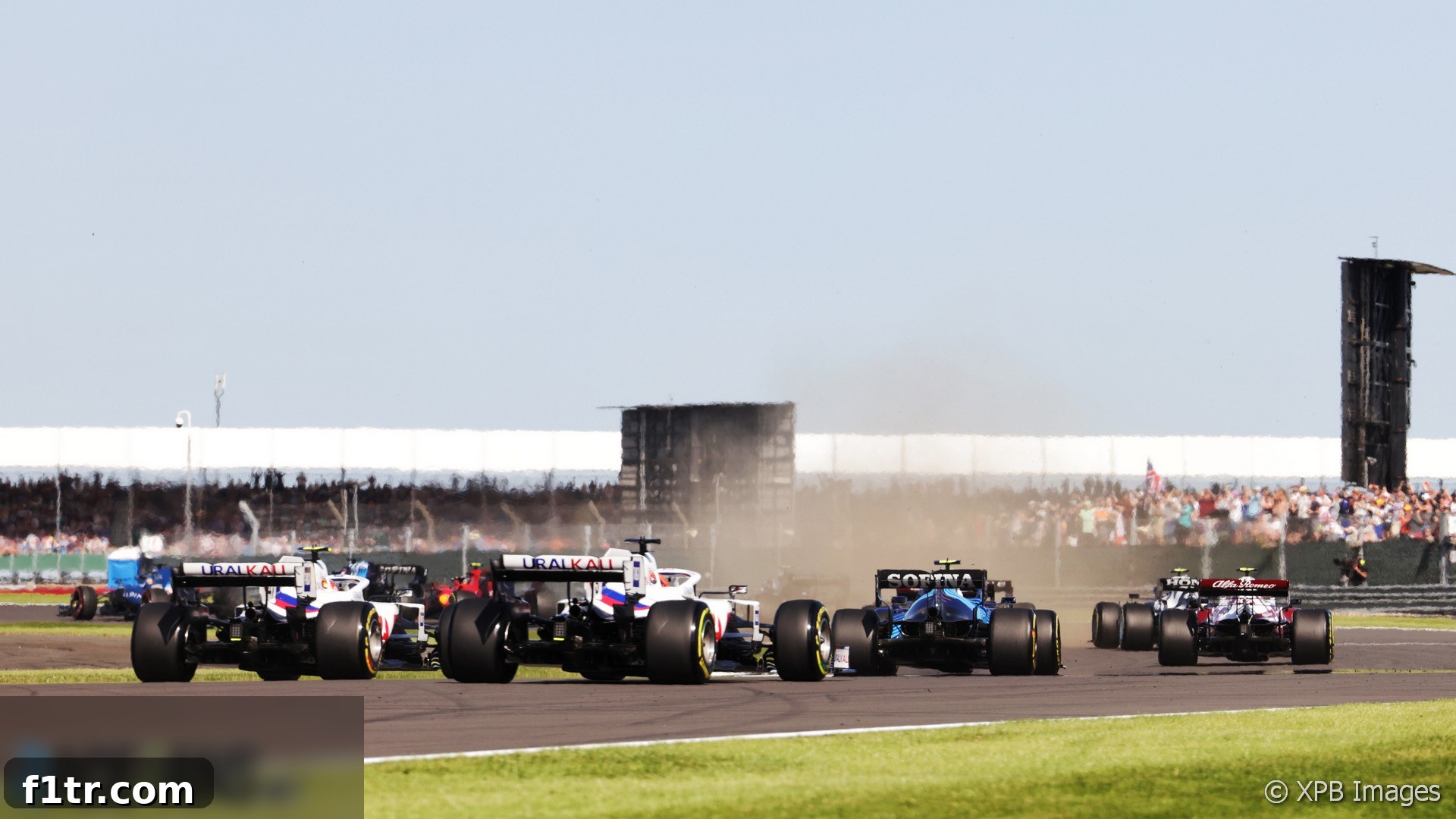
The intensity of Formula 1 sprint qualifying at the British Grand Prix brought a familiar challenge to the Haas F1 team, as its two rookie drivers, Nikita Mazepin and Mick Schumacher, made contact. Team principal Guenther Steiner, ever pragmatic, acknowledged that while such incidents should ideally be avoided, he refrained from placing explicit blame on either driver. This internal collision, occurring early in the sprint race, presented another test for the young team and its burgeoning driver lineup, forcing immediate repairs and strategic thinking for the main event.
A Costly Encounter at Silverstone’s Village Corner
The incident unfolded on the opening lap of the sprint qualifying race at Silverstone, a high-stakes format designed to set the grid for Sunday’s main Grand Prix. As the pack jostled for position, Nikita Mazepin’s car made contact with his teammate Mick Schumacher’s vehicle at the challenging Village corner. The impact sent Schumacher into an involuntary spin, disrupting both drivers’ races and raising immediate concerns within the Haas garage. This marked another chapter in the season’s narrative of two rookie drivers pushing the limits, sometimes at each other’s expense.
Steiner confirmed that both cars sustained damage in the collision, which inevitably compromised their performance throughout the short sprint race. For a team like Haas, operating with finite resources and focused on long-term development, any damage, regardless of its severity, represents a significant setback, both financially and in terms of track time and data collection. The incident underscored the fine line rookie drivers must walk between aggressive racing and preserving team assets, especially when battling each other.
Assessing the Damage: Implications for Performance and Repairs
Nikita Mazepin’s Front Wing Damage
Guenther Steiner provided a detailed account of the damage sustained by Mazepin’s car. “Nikita’s car had a deformed wing endplate,” Steiner explained, highlighting the critical nature of even minor aerodynamic components in Formula 1. Initially, the endplate held together, but data on lap six confirmed that a section of the front wing had detached. While perhaps not visually catastrophic, this loss had a tangible impact on the car’s aerodynamic balance. Steiner elaborated, “The damage was not that big, but obviously it has an impact on aero and you can immediately see it on the tyre temperature.” Such a change in airflow can significantly alter downforce distribution, affecting grip, balance, and tire wear—all crucial elements for competitive racing.
Even a small deformation or missing piece on the front wing can disrupt the intricate airflow patterns designed to channel air over and around the car, optimizing downforce and minimizing drag. The resulting aerodynamic inefficiency can lead to instability, increased tire degradation, and a general lack of performance, making it exceedingly difficult for the driver to extract the maximum potential from the car. For a team already fighting at the back of the grid, these subtle impacts become even more pronounced.
Mick Schumacher’s Floor Damage
Mick Schumacher’s car also suffered critical damage, specifically to its floor. “Mick’s car had damage on the floor, on the side, obviously, where he went in,” Steiner noted. The floor of a Formula 1 car is arguably one of its most vital aerodynamic components, responsible for generating a substantial portion of the car’s total downforce through ground effect. Damage to this area, even if not visually extensive, can have profound consequences on the car’s stability and grip.
Steiner emphasized the impact: “It is not major damage, but every little bit of downforce helps us. And for sure it doesn’t make the car go any faster if you have damage.” The meticulous design of the floor and its associated elements, such as the bargeboards and diffusers, creates a low-pressure area beneath the car, effectively sucking it onto the track. Any compromise to this delicate structure, be it a crack, a deformation, or a missing piece, diminishes the car’s ability to generate optimal downforce, leading to reduced cornering speeds and overall performance degradation. For Schumacher, this meant a compromised sprint race, making it harder to challenge rivals or gain valuable positions.
Steiner’s Stance: No Blame, But a Clear Expectation for Rookies
In the aftermath of the collision, Guenther Steiner adopted a characteristic approach, choosing not to attribute blame directly to either driver. This stance reflects his understanding of the pressures faced by rookie drivers in the cutthroat world of Formula 1, coupled with the inherent difficulties of racing wheel-to-wheel. “We spoke about it very openly in the debrief,” Steiner revealed, indicating a transparent and constructive post-race analysis within the team. He explained his perspective: “Where I see it is that we are where we are and the car understeered and obviously he tried to do his best and slipped into him.”
Despite this understanding, Steiner’s message was clear: such incidents must be avoided. “My opinion is obviously we should avoid it, but it happens. It’s one of these things.” This pragmatic view acknowledges the human element of racing while setting a fundamental expectation for team cohesion and asset preservation. For Haas, a smaller team with aspirations for future competitiveness, avoiding inter-team collisions is paramount for maintaining morale, managing costs, and maximizing learning opportunities. The ability of both cars to continue the race, despite the damage, was a small but significant positive in Steiner’s eyes, as it allowed the drivers to gain more invaluable track experience. “Fortunately both cars continued so they could get the race in, which is important for them mainly,” he added. Ultimately, the underlying principle remains unwavering: “they can’t run into each other.”
Rapid Repairs and Resourceful Recycling: The Haas Approach
Immediately following the sprint qualifying, the Haas team faced the urgent task of repairing both cars in time for the British Grand Prix later that afternoon. This required swift action and a testament to the dedication of the pit crew. Steiner confirmed the necessary replacements: “They put a new floor on Mick’s car and a new front wing on Nikita’s.” This immediate replacement strategy ensures that both drivers start the main race with fully functional, undamaged components, giving them the best possible chance to compete.
Crucially, the damaged parts are not simply discarded. Steiner outlined Haas’s resourceful and cost-effective approach: “They will be repaired afterwards – not here at the place. It’s not that they’ll be thrown away, these parts.” This commitment to repairing and reusing components back at the factory highlights the team’s efficiency and adherence to budget constraints, particularly significant in an era of Formula 1’s budget cap regulations. For a team like Haas, every component represents a considerable investment in research, design, and manufacturing. The ability to repair and recycle parts significantly reduces operational costs and minimizes waste, demonstrating a sustainable approach within the high-tech environment of F1.
Steiner provided insight into the repair processes for specific components. For parts like the front wing, he described, “You have to unglue the old one and then you bond the new one on, which doesn’t make it heavier because the part you exchange is the same piece.” This meticulous process ensures that the repaired part retains its structural integrity and exact specifications, preventing any performance penalty due to increased weight or altered aerodynamics. Similarly, for floor damage, Steiner explained, “On the floor, I didn’t look at the damage, but normally you can put it back in the mould and repair it without increasing the weight or compromising the quality of it.” Such specialized repair techniques are essential for F1 teams, allowing them to extend the lifespan of costly components and maximize their investment throughout a demanding season.
The Road Ahead: British Grand Prix and Beyond for Haas
Following the sprint qualifying incident and the subsequent repairs, Mick Schumacher and Nikita Mazepin were set to start the British Grand Prix from 18th and 19th positions on the grid, respectively. While starting further down the order presents its own challenges, having fully repaired cars gave them a renewed opportunity to compete and gain valuable experience in the main event. For Haas, the 2021 season was largely earmarked as a development year, focusing on the future and gathering data for the significant rule changes slated for 2022.
This long-term strategy means that every race, every lap, and every incident, while sometimes frustrating, serves as a crucial learning experience for the young driver pairing. The British Grand Prix, with its fast corners and strategic demands, provided another platform for Mazepin and Schumacher to hone their skills, understand race management, and push the limits of their machinery. The incident in sprint qualifying, therefore, became not just a setback, but a critical lesson in race craft, spatial awareness, and the delicate balance of aggression versus preservation. As the season progressed, the consistent theme for Haas remained the growth and development of its rookie drivers, paving the way for a more competitive future.
Navigating the Rookie Season: Lessons from Silverstone
The incident at Silverstone’s Village Corner served as a stark reminder of the steep learning curve inherent in a rookie Formula 1 season. For drivers like Nikita Mazepin and Mick Schumacher, every race weekend presents a myriad of new challenges, from adapting to the car’s nuances to mastering track specifics and managing race dynamics under immense pressure. Collisions between teammates, while undesirable, are not uncommon in the intense environment of professional motorsport, particularly when drivers are fighting for every tenth of a second and looking to establish themselves.
Steiner’s measured response, focusing on open communication and future avoidance rather than punitive blame, is crucial for fostering a healthy team environment where young drivers can learn from their mistakes without being overly deterred. It allows them to understand the consequences of their actions while still encouraging the competitive spirit necessary to succeed in F1. The ability to repair and reuse parts also subtly reinforces the value of team assets, linking driver behavior directly to the team’s operational efficiency and budgetary constraints. Ultimately, incidents like these are painful but essential parts of a rookie’s journey, shaping their race craft, decision-making, and understanding of what it takes to be a complete Formula 1 driver.
Conclusion: A Balanced Path Forward for Haas
Guenther Steiner’s handling of the Mazepin-Schumacher incident at the British Grand Prix sprint qualifying epitomizes the balanced approach required to manage a Formula 1 team with two rookie drivers. While acknowledging the need to avoid future contact, his decision not to attribute direct blame underscores a commitment to their development and learning. The meticulous repair and recycling of damaged components further illustrate Haas’s resourceful operational philosophy, optimizing their limited budget and contributing to a more sustainable practice within the sport.
As Mick Schumacher and Nikita Mazepin continue their journey in Formula 1, each race, each incident, and each conversation with their team principal adds to their invaluable experience. The Silverstone collision, while a momentary setback, ultimately served as another critical lesson in the demanding world of top-tier motorsport. For Haas, the focus remains steadfast on nurturing its young talent and strategically building towards a more competitive future, with the understanding that such challenges are integral to the growth process.
2021 British Grand Prix Related Articles
- Verstappen reveals “vision problems” since 2021 Silverstone crash with Hamilton
- Who was to blame for Verstappen and Hamilton’s collision at Silverstone?
- Hamilton penalty “harsh” for move within FIA’s overtaking guidance – Allison
- Why Hamilton “wasn’t seen as wholly to blame” for the Verstappen crash
- Sainz convinced he had pace to challenge for podium without British GP setbacks
Browse all 2021 British Grand Prix articles