McLaren’s Resurgent Form: Seidl Confident in Securing Fourth Place in the 2019 Constructors’ Championship
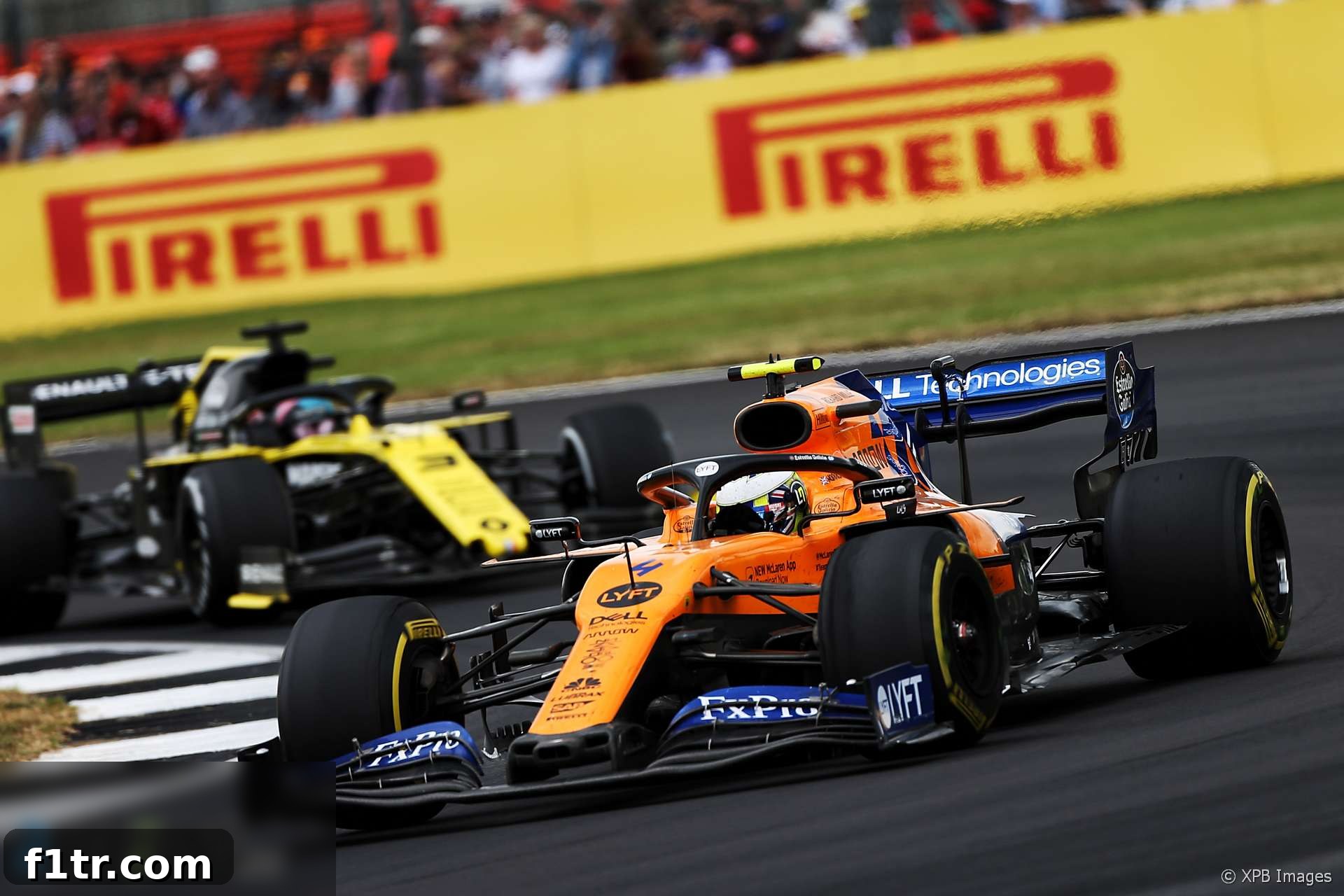
As the 2019 Formula 1 season approached its thrilling climax, McLaren F1 Team Principal Andreas Seidl articulated a profound sense of confidence regarding his squad’s trajectory. Following a strong showing at the Japanese Grand Prix, Seidl firmly stated that the Woking-based outfit possessed “everything in its hands” to decisively beat their closest rival, Renault, for the coveted fourth position in the Constructors’ Championship. This declaration underscored a remarkable turnaround for McLaren, a team that had navigated several challenging seasons prior to 2019, making their pursuit of a top-four finish a significant milestone in their rebuilding journey.
With merely four races remaining on the calendar, McLaren had established a considerable lead over Renault, boasting 111 points to their competitor’s 77. The Suzuka event further solidified their advantage, with McLaren extending their lead by a crucial single point. This achievement was particularly noteworthy given the circumstances surrounding the race. Despite a challenging outing for rookie sensation Lando Norris, who was unfortunately forced into an early pit stop due to overheating brakes, leading to a non-points finish, the team’s overall performance ensured they continued to outscore their adversaries. Adding another layer of complexity to the Constructors’ battle, Renault’s points tally from Japan remained provisional, pending the outcome of a protest lodged against them by Racing Point.
A Pivotal Season for McLaren: The Road to Recovery
The 2019 Formula 1 season marked a significant chapter in McLaren’s storied history. After years of struggling at the back of the grid and failing to meet the high expectations set by their legacy, the team embarked on a comprehensive restructuring program. The arrival of key personnel, most notably Andreas Seidl as Team Principal in May 2019, signaled a renewed commitment to a methodical and performance-driven approach. Seidl, with his extensive experience in endurance racing and previous stints in Formula 1, brought a fresh perspective and a clear vision for how to steer McLaren back towards competitiveness. His leadership, combined with strategic technical adjustments and a renewed focus on team culture, began to yield tangible results, transforming the MCL34 into a consistently competitive midfield contender.
For a team like McLaren, securing fourth place in the Constructors’ Championship is more than just a numerical achievement; it represents a powerful statement of intent. Financially, it translates into a larger share of Formula 1’s prize money, providing vital resources for future car development and infrastructure improvements. Strategically, it enhances the team’s reputation, making it a more attractive destination for top engineering talent and potential sponsors. Psychologically, it serves as a massive morale booster for everyone at the McLaren Technology Centre, validating their hard work and dedication. This position indicates that the team is firmly on the path to reclaiming its former glory, laying a robust foundation for even greater ambitions in the seasons to come, including the eventual engine switch to Mercedes.
Suzuka Performance: A Testament to Progress and Resilience
The Japanese Grand Prix at the iconic Suzuka Circuit provided a vivid illustration of McLaren’s resurgence. Andreas Seidl highlighted the “lots of positives to take away” from the race weekend. Central to this success was the stellar performance of Carlos Sainz Jr., who delivered another masterful drive. Sainz expertly managed his race, fending off the recovering Ferrari of Charles Leclerc to secure an impressive fifth-place finish. This result marked Sainz’s third fifth-place finish of the season, showcasing his remarkable consistency and maturity behind the wheel. His ability to extract maximum performance from the MCL34, coupled with intelligent race craft, was instrumental in McLaren’s points haul and their sustained lead over Renault.
While Sainz celebrated another strong points finish, his teammate Lando Norris experienced a more challenging race. After a promising start, Norris was unfortunately forced to make an unscheduled pit stop due to an issue with overheating brakes. This setback cost him any chance of scoring points, a disappointing outcome for the talented rookie. However, the fact that McLaren still managed to extend their lead over Renault by a point, even with one car failing to score, underscored the strength of their package and the resilience of the team. It highlighted that even on a less-than-perfect day, the overall performance capability of the MCL34, combined with Sainz’s execution, was enough to keep their championship aspirations firmly on track.
The Suzuka weekend was further complicated by off-track drama involving McLaren’s direct rival. Renault’s points from the Japanese Grand Prix remained provisional following a protest lodged by Racing Point against the team. This added an element of uncertainty to the Constructors’ Championship standings, with potential implications for the final points tally. Such situations underscore the competitive nature of Formula 1, where every point, every decision, and every regulation compliance is meticulously scrutinised. For McLaren, this protest, regardless of its outcome, highlighted the fine margins separating the midfield teams and the constant pressure to perform both on and off the track.
Andreas Seidl’s Vision: Driving Consistent Performance and Development
Andreas Seidl’s leadership has been a cornerstone of McLaren’s rejuvenation. His calm, methodical, and pragmatic approach has permeated through the team, fostering an environment of continuous improvement and clear objectives. When speaking about the team’s position, Seidl’s analysis was direct and encouraging: “For us, it’s good to score again more points compared to Renault. So I’m happy that we could extend the lead again over our competitors.” This focus on incremental gains and relentless pursuit of performance has been a hallmark of his tenure. He further emphasised the team’s strong competitive footing, stating, “I think with what we have seen as a kind of a trend in the last three, four races, we clearly have the fourth strongest car.” This assessment was not born of bravado but from a data-driven understanding of the MCL34’s capabilities and its consistent performance against key rivals.
Seidl’s confidence extended beyond just the immediate goal of securing fourth place. He stressed the importance of maintaining this momentum, both in the current season and looking ahead. “We have everything in our hands now to secure this P4 at the end of the season, which will be a great achievement for us as a team,” he affirmed. However, his vision also encompassed the bigger picture: “At the same time, it’s important now to stay flat out for next year’s car, make the next step.” This forward-looking perspective is crucial for sustained success in Formula 1, where development cycles are continuous, and the competition is constantly evolving. Seidl’s ability to balance immediate objectives with long-term strategic planning has been a defining characteristic of his leadership at McLaren, instilling a culture of ambition tempered with realism.
The MCL34: A Platform for Understanding and Unlocking Potential
A significant factor in McLaren’s improved performance in 2019 was the MCL34 itself. The team’s engineers and designers, under the technical leadership, worked diligently to create a competitive package, and crucially, they continued to extract more performance from it throughout the season. Seidl confirmed this ongoing development, noting, “It seems that we still keep improving the car or still keep understanding the car better and better.” This continuous learning process is vital in modern Formula 1, where even minor aerodynamic tweaks or setup adjustments can yield significant lap time improvements. The dedication to bringing minor updates right up until the end of the season demonstrated McLaren’s commitment to maximizing every opportunity to gain an edge.
The ability to “understand the car better and better” implies a sophisticated interplay between simulation tools, track data, and driver feedback. It suggests that the team was effectively diagnosing the car’s strengths and weaknesses, allowing for targeted development. This deep understanding contributed to the MCL34 performing exceptionally well, particularly at the Japanese Grand Prix. Seidl expressed satisfaction with the team’s operational efficiency during the weekend, especially considering the unique challenges posed by the altered Sunday schedule due to adverse weather conditions. “I’m also happy with the execution of the different Sunday compared to other race weekends because it’s a change. We all live in these fixed schedules, fixed procedures and so on, so it’s a challenge. It’s the same for all but it’s a challenge if you have these changes. So I’m happy with how the team did today together with the drivers,” he remarked. This praise highlights the professionalism and adaptability of the entire McLaren operation, from the pit crew to the strategists, demonstrating a well-oiled machine capable of performing under pressure.
Looking Ahead: Maintaining Momentum and Future Ambitions
As the 2019 season drew to a close with McLaren in a commanding position, the focus inevitably shifted towards maintaining this upward trajectory and building for the future. The directive from Andreas Seidl to “stay flat out for next year’s car” was a clear indication that complacency would not be tolerated. The team was already heavily invested in the development of the 2020 challenger, aiming to build upon the strong foundation laid by the MCL34. This proactive approach is essential for any team aspiring to move up the grid, as the competitive landscape of Formula 1 demands constant innovation and evolution. The insights and lessons learned from the 2019 season, particularly regarding car understanding and operational efficiency, were invaluable assets being carried forward.
The importance of securing fourth place in the Constructors’ Championship cannot be overstated for McLaren’s long-term ambitions. It provided tangible proof that their rebuilding strategy was working and that the team was once again capable of punching above its weight. This success fostered a positive momentum that would carry into the subsequent seasons, reinforcing confidence among staff, attracting new talent, and solidifying relationships with partners. McLaren’s journey back to competitiveness in 2019, spearheaded by the clear vision and steady leadership of Andreas Seidl, served as a compelling narrative of resilience, strategic acumen, and a relentless pursuit of engineering excellence, setting the stage for an exciting future for the iconic British racing team.
Related Articles: 2019 F1 Season
- Crying in the Melbourne car park at 2019 grand prix was my career low – Ocon
- McLaren Racing reports reduced £71 million loss in 2019
- Kvyat: Hockenheim podium last year was “my biggest achievement” so far
- How the FIA’s new encrypted fuel flow meter targets Ferrari’s suspected ‘aliasing’ trick
- “He smashed my office door”: 23 must-see moments from ‘Drive to Survive’ season two
Browse all 2019 F1 season articles