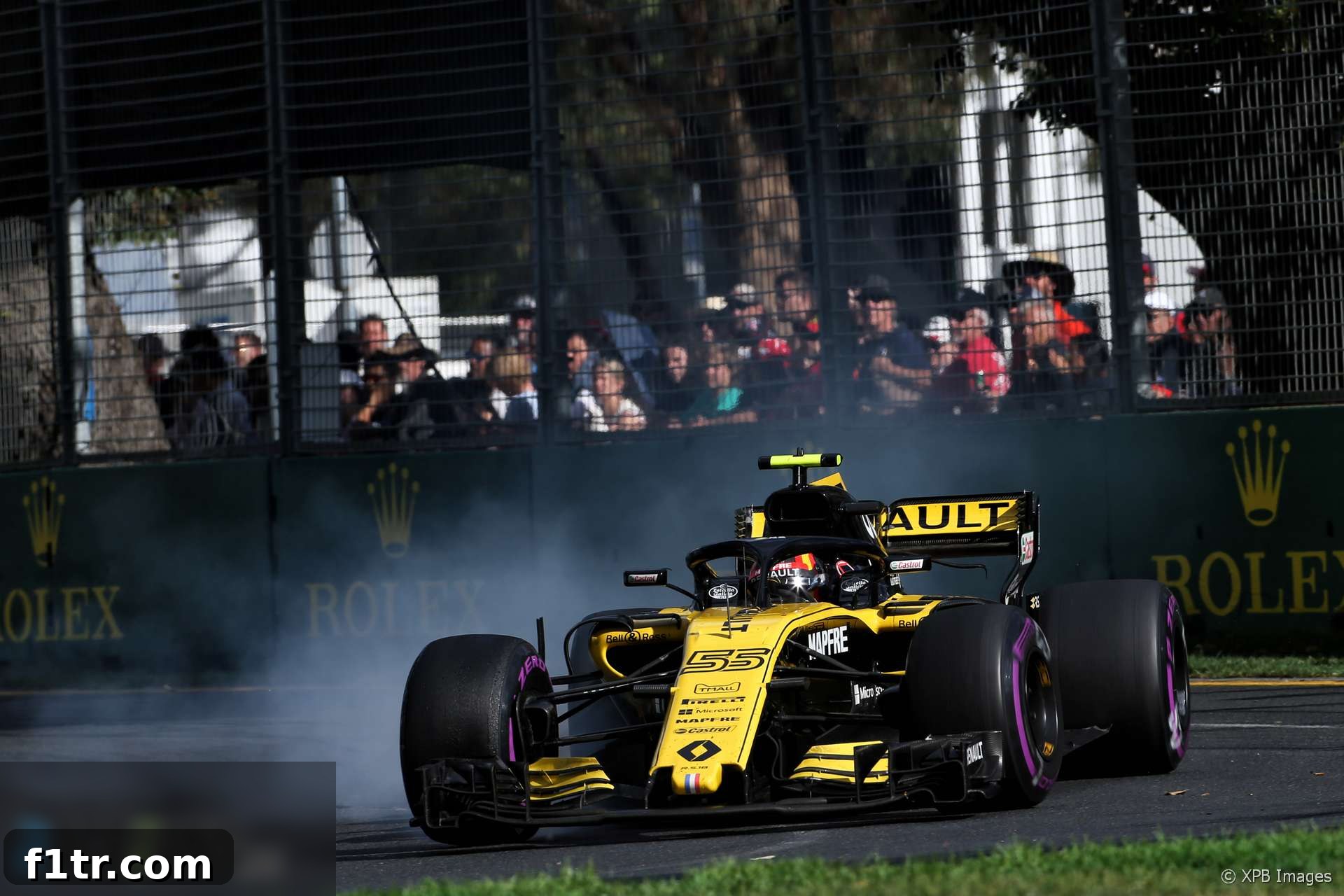
Carlos Sainz Jr.’s Unforeseen Hydration Nightmare at the 2018 Australian Grand Prix
The thrilling spectacle of Formula 1 consistently pushes the boundaries of human endurance and automotive engineering. Yet, amidst the quest for fractional gains and podium finishes, even the most meticulous preparations can be derailed by unexpected technical glitches. This was starkly evident for Carlos Sainz Jr. during the 2018 Australian Grand Prix, where a seemingly minor malfunction with his in-car hydration system transformed his race into an intense battle against severe physical discomfort and nausea, almost forcing him to vomit inside his cockpit.
In a candid post-race interview, Sainz detailed the peculiar circumstances of his ordeal. From the opening lap of the season’s inaugural race in Melbourne, a critical component designed to aid his performance — the drinks tube — began to malfunction. Instead of dispensing controlled sips of fluid, it relentlessly pumped water into his mouth. “From lap one I had a drink tube pumping water into my mouth,” Sainz explained, painting a vivid picture of the relentless issue. “And I had to drink it until I noticed I was just getting full of water in my stomach.” What should have been a strategic rehydration process quickly spiraled into an involuntary and excessive intake of water, laying the groundwork for a challenging race ahead.
The Grueling Reality: Battling Nausea Under Extreme G-Forces
The human body is remarkably resilient, but even the finely-tuned physique of a Formula 1 driver has its limits. For Sainz, the ceaseless flow of water resulted in a significant digestive issue, exacerbated by the unique demands of F1 racing. “I got a bit of a digestion problem because the amount of water that I had in my stomach going from side to side in the corners with the G-force,” he elaborated. Formula 1 cars generate incredible G-forces – up to 5G or more – during cornering, acceleration, and heavy braking. This means that at every turn, the excessive volume of liquid within Sainz’s stomach was violently sloshed from side to side, creating a profound and relentless sense of nausea and general unwellness. It was a cruel synergy of a minor technical failure and the extreme physical environment of an F1 cockpit.
The severity of his condition was evident in his radio communications with the Renault pit wall. Sainz explicitly conveyed his distress, reporting, “I’m struggling with my stomach – I’ve got a lot of nausea from the water.” This direct admission highlights the immense psychological and physical fortitude required to perform at the pinnacle of motorsport while battling such internal turmoil. Imagining a driver navigating a high-speed circuit, making complex strategic decisions, and reacting to dynamic racing situations, all while fighting the urge to vomit, underscores the extraordinary mental resilience that sets F1 drivers apart.
An Unwanted Distraction: Spraying Water in the Cockpit
The situation became even more challenging when Sainz attempted to remedy the problem mid-race. In an effort to stop the constant flow of water into his mouth, he managed to detach the faulty tube. However, this action only created a new, unwanted distraction: the disconnected tube continued to spray water, now uncontrollably, directly onto his visor and within the confined space of the cockpit. This not only intensified his physical discomfort but also became a significant visual obstruction. In a sport where precision and crystal-clear vision are paramount, an uncontrolled spray of water inside the helmet is a critical impediment, further compromising a driver’s focus and reaction times.
The culmination of Sainz’s struggle arrived during a Safety Car period. While these race neutralisations typically offer a brief respite from the flat-out racing intensity, they can, paradoxically, heighten a driver’s awareness of their internal discomfort as adrenaline levels might momentarily subside. It was during this period that the Spanish driver was pushed to his absolute physical limit. “At some point I just tried to make it to the finished because I was nearly vomiting under the Safety Car,” he candidly confessed. This poignant admission vividly illustrates the sheer willpower and mental toughness required to persevere in Formula 1, even when the body is actively rebelling against the demands placed upon it.
Carlos Sainz’s Remarkable Resilience and a Crucial Point
Despite the debilitating nausea and profound discomfort, Carlos Sainz Jr. showcased truly remarkable resilience. He heroically pressed on through the remainder of the 2018 Australian Grand Prix, ultimately guiding his Renault R.S.18 across the finish line in a commendable 10th position. This strong performance secured a valuable championship point for himself and for the Renault Sport Formula One Team. While a single point might appear modest in the broader context of a championship season, earning it under such immensely adverse and physically demanding conditions speaks volumes about his unwavering determination, professionalism, and sheer mental strength.
Reflecting on the unexpected turn of events, Sainz expressed a philosophical rather than frustrated perspective. “When you have good pace the whole weekend and suddenly this problem happens in the race it’s a bit unfortunate,” he acknowledged. This sentiment perfectly encapsulates the unpredictable nature of Formula 1, where months of rigorous testing, meticulous engineering, and strategic planning can, at times, be undone by the smallest and most unforeseen malfunction. True to the spirit of a top-tier athlete, his reaction was pragmatic and forward-looking: “I think there’s no fault for anyone, just an unfortunate situation, we’ll learn from it.” This ethos of continuous improvement and learning from every setback is a cornerstone of success in the highly competitive world of F1.
The Unseen Challenges of Formula 1: Beyond Raw Speed
This incident serves as a powerful reminder that Formula 1 is a multifaceted sport, extending far beyond the thrilling overtakes and blistering speeds witnessed on track. It is an intricate dance between human physiology, cutting-edge technology, and unparalleled mental fortitude. Hydration systems, often overlooked by casual observers, are critically important components designed to support drivers through grueling races, often held in scorching temperatures and under extraordinary physical stress. A standard F1 hydration setup involves a small fluid reservoir, typically containing water or an electrolyte solution, strategically placed within the car, connected via a tube to the driver’s helmet, allowing for precise fluid intake through a straw. When such a vital system fails, as Sainz experienced, the consequences can be severe, impacting not just performance but also driver well-being.
The 2018 Australian Grand Prix, hosted at the challenging Albert Park street circuit in Melbourne, marked the eagerly anticipated start of that year’s F1 season. For Sainz, then in his first full season with the factory Renault team after his mid-2017 switch from Toro Rosso, a solid start was crucial for building momentum. While his 10th-place finish might not have fully reflected the raw pace he had shown throughout the weekend, the sheer accomplishment of finishing and scoring a championship point despite his profound physical ordeal was a testament to his mental toughness and remarkable ability to perform under extreme adversity. These qualities have been defining features of his impressive career ever since.
Learning from the Unexpected: F1’s Relentless Pursuit of Perfection
In the unforgiving, high-stakes environment of Formula 1, every race serves as an invaluable learning opportunity. Incidents such as Sainz’s hydration system malfunction are subjected to rigorous and meticulous analysis by team engineers and strategists to ensure that such occurrences are prevented in the future. Experts will closely examine every aspect of the drinks tube design, the efficiency and reliability of the pump mechanism, and the entire installation process to identify any potential weaknesses or points of failure. Driver feedback, no matter how uncomfortable the experience might have been, is absolutely invaluable in this relentless, continuous cycle of innovation and improvement. This iterative process of identifying problems, conceptualizing ingenious solutions, rigorous testing, and subsequent refinement is truly at the very heart of F1’s unwavering pursuit of perfection.
Moreover, this incident subtly underscores the inherent vulnerability of even the most sophisticated and technologically advanced machinery. While Formula 1 cars stand as marvels of modern engineering, they remain incredibly complex systems, comprised of countless individual components, each possessing the potential for an unforeseen failure. Sainz’s memorable struggle at the 2018 Australian Grand Prix has since become a distinctive footnote in that season’s narrative, serving as a powerful and vivid illustration of the unexpected challenges that can emerge in motorsport and the extraordinary resilience of the elite athletes who manage to conquer them.
Carlos Sainz Jr.’s arduous battle with his faulty hydration system at the 2018 Australian Grand Prix transcends a mere anecdote. It stands as a compelling narrative of sheer perseverance, brilliantly illuminating the often-unseen struggles that drivers face and the relentless physical and mental demands that define Formula 1. His remarkable ability to push through profound nausea and discomfort, ultimately securing a valuable championship point, underscores not only his exceptional skill but also the extraordinary dedication and unwavering determination required to compete at the absolute pinnacle of motorsport. It is a powerful testament to the undeniable truth that in the world of Formula 1, even the smallest component can wield a monumental impact on a driver’s race, and their profound capacity to overcome adversity is often as critically important as their raw speed and talent.
Go ad-free for just £1 per month>> Find out more and sign up
More from the 2018 F1 Season
Delve deeper into other significant stories, analyses, and pivotal moments from a truly memorable year in Formula 1 racing:
- F1 feared “death knell” for Drive to Survive after Ferrari and Mercedes snub
- McLaren staff told us we were “totally crazy” to take Honda engines in 2018 – Tost
- ‘It doesn’t matter if we start last’: How Red Bull’s junior team aided Honda’s leap forward
- Honda’s jet division helped F1 engineers solve power unit problem
- McLaren Racing losses rise after Honda split
Browse all 2018 F1 season articles