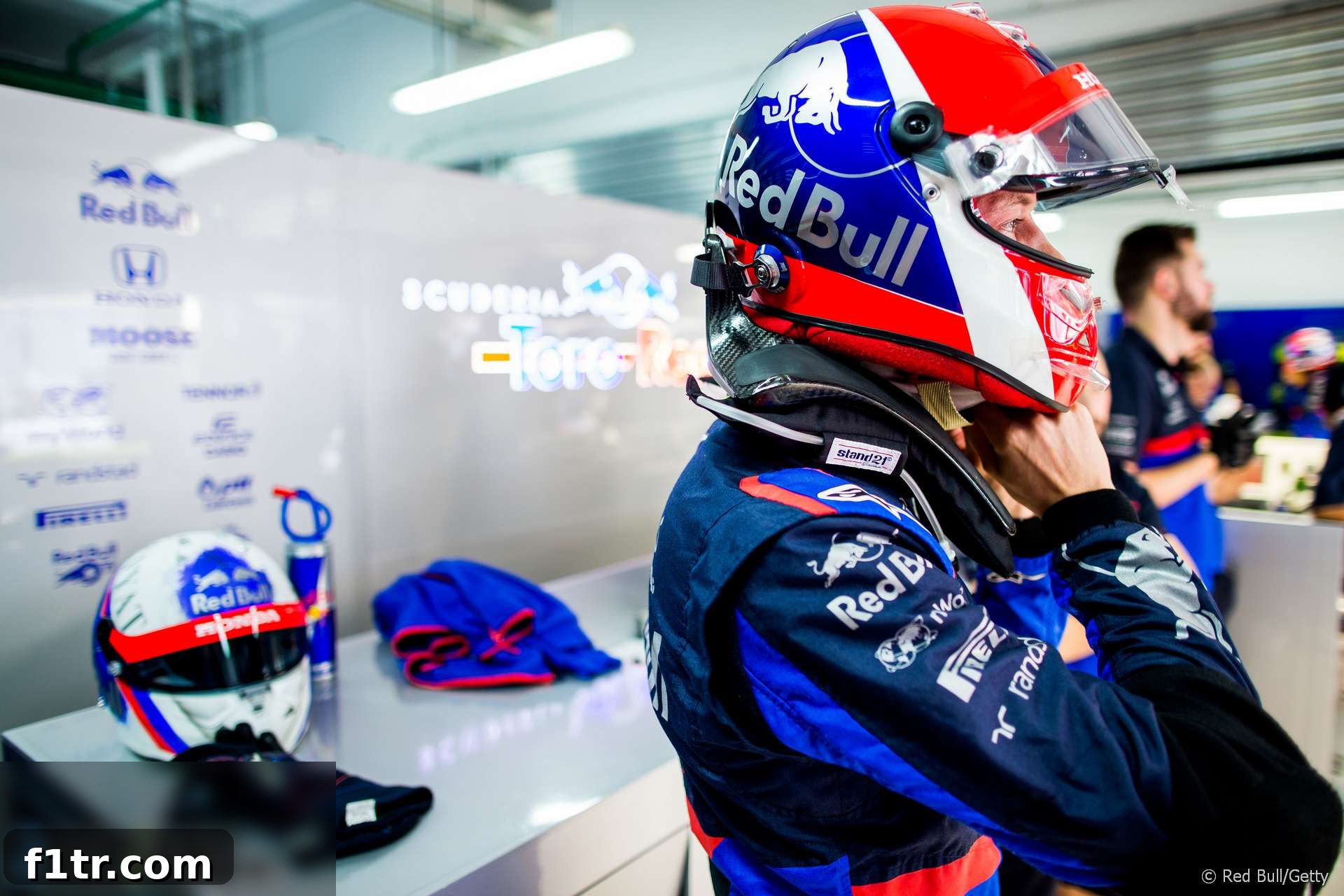
Daniil Kvyat, the charismatic Russian driver for Toro Rosso, found himself at the center of a curious but passionate debate during his home Grand Prix weekend. The contention revolved around a seemingly minor detail: his helmet design. Kvyat expressed his intention to potentially disregard a specific Formula 1 regulation that strictly limits the number of helmet livery changes a driver can make within a single championship season. This defiance, though centered on an aesthetic choice, sparked discussions about driver individuality versus the FIA’s efforts to standardize visual identification on track.
Daniil Kvyat Challenges F1 Helmet Rule Ahead of Home Grand Prix
The Formula 1 paddock often buzzes with technical innovations, strategic gambles, and fierce rivalries. However, sometimes, a seemingly minor regulatory detail can capture the imagination and ignite a debate among drivers, fans, and officials alike. Such was the case with Daniil Kvyat during the Russian Grand Prix at the Sochi Autodrom. The Toro Rosso driver, known for his determined spirit, declared his potential intent to breach Article 9.1 of the FIA’s sporting regulations concerning helmet designs, labeling the rule “a joke.”
The Heart of the Controversy: Kvyat’s Unique Sochi Design
Kvyat’s usual helmet design is a distinctive blend of blue and red, a livery that has become familiar to fans throughout the 2019 season. However, earlier in the year, he had already made one design change, opting for a predominantly red helmet for the Italian Grand Prix. This change, according to the current regulations, was his sole permitted alteration for the season.
For his highly anticipated home race in Sochi, Kvyat unveiled a special, largely white helmet design, clearly intended as a tribute to the significance of the event for him personally and for his Russian supporters. This new design was vibrant and personalized, reflecting the unique atmosphere of a home race. However, he was quickly advised that deploying this third distinct design would likely constitute a violation of the existing rules.
Despite the warning, Kvyat remained defiant. While he utilized his standard helmet during Friday practice sessions, he strongly hinted at his willingness to race with the new, special design on Saturday and Sunday. “We’ll see, maybe I will use tomorrow,” he stated, adding, “Let’s see. I still want to know what could be the consequence. But to be honest there are bigger problems to focus on than the helmet.” This comment subtly underscored a common sentiment among drivers and some fans: that certain regulatory minutiae can overshadow more pressing issues within the sport.
He further elaborated on his surprise regarding the strictness of the rule. “The rule says that there is one helmet you can use per year which I didn’t know about,” Kvyat admitted. Despite his lack of awareness, his enthusiasm for the design remained high. “But it’s a good helmet, I hope you saw it, I put it there in the garage just to show it to everyone.” This highlights the personal connection drivers often have with their helmet liveries, seeing them as an extension of their identity and a canvas for self-expression.
Understanding the FIA Helmet Rule: Article 9.1
The regulation at the core of this discussion is Article 9.1 of the Formula 1 Sporting Regulations. It states:
“In order for drivers to be easily distinguished from one another whilst they are on the track, the crash helmet of each driver must, with the exception of one event of the driver’s choice, be presented in substantially the same livery at every Event during a championship season.”
“A change to helmet livery will also be permitted if a driver changes team during a championship season.”
This rule explicitly limits drivers to one helmet design change per season, with an additional allowance if a driver switches teams mid-season. The primary stated purpose behind this regulation is to ensure “drivers to be easily distinguished from one another whilst they are on the track.” In a sport where cars often feature similar liveries among teammates and can be difficult to identify at high speeds, helmet designs serve as crucial identifiers for commentators, officials, and, most importantly, the fans watching from the stands or at home.
The Intent Behind the Restriction
Beyond simple identification, the rule also touches upon broader themes within Formula 1. For many years, drivers had the freedom to change their helmet designs frequently, often bringing special liveries for specific races, milestones, or even just personal preference. This era saw a vibrant array of designs throughout a season. However, as Formula 1 grew into a global sporting spectacle with intricate branding and marketing strategies, the FIA, along with commercial rights holders, sought to enhance driver recognition and brand consistency.
The argument was that iconic drivers should have iconic, consistent helmet designs that become synonymous with their image. Think of Ayrton Senna’s yellow helmet or Michael Schumacher’s red. These became instantly recognizable symbols, aiding in fan engagement and brand building. By limiting changes, the FIA aims to cement a driver’s visual identity, making them more distinguishable and memorable over time, particularly for new fans trying to follow the sport.
Historical Context and Evolution of Helmet Rules
The strictness of the current helmet rule is a relatively recent development. For decades, drivers enjoyed considerable freedom in their helmet designs. Legends like James Hunt, Graham Hill, and Niki Lauda had their signature designs, but even they might occasionally sport a variation. In more modern times, drivers like Rubens Barrichello or Jenson Button were known to regularly introduce special helmet liveries for their home races or significant events. This freedom was largely unrestricted.
The shift towards stricter regulation began around the mid-2010s. The FIA observed that some drivers were changing their helmet designs so frequently that it became challenging for spectators and broadcasters to consistently identify them, especially with the introduction of the halo device, which further obscured driver visibility. The rule was initially introduced in 2015, drawing mixed reactions. While some agreed with the need for clearer identification, many drivers and fans lamented the loss of an avenue for personal expression and artistic creativity.
The “one event of driver’s choice” clause was a concession, allowing drivers to still celebrate a special occasion, like a home Grand Prix or a significant career milestone, with a unique design, while largely maintaining consistency for the rest of the season. The allowance for a team change also makes practical sense, as a driver’s helmet livery often incorporates team colors or sponsors, necessitating a redesign upon switching teams.
Driver Individuality Versus Regulatory Control
Kvyat’s frustration (“a joke”) encapsulates the tension between a driver’s desire for individuality and the sport’s regulatory framework. For many drivers, their helmet is perhaps the most personal piece of equipment they use. It’s a canvas for their identity, often featuring personal symbols, national colors, or tributes. It’s one of the few areas where they can truly express themselves in a highly commercialized and controlled environment.
The comment about “bigger problems to focus on than the helmet” further highlights this perspective. Drivers are primarily concerned with performance, safety, fair competition, and the overall spectacle of racing. From their viewpoint, a rule dictating helmet design might seem trivial when compared to fundamental issues like track limits, car development regulations, or safety protocols. This isn’t to say identification isn’t important, but rather that the severity of the restriction feels disproportionate to its perceived impact.
Some might argue that strict adherence to such rules reflects the professional nature of the sport, where every detail, no matter how small, contributes to the overall brand and efficiency of operations. Others would counter that sacrificing a touch of individuality for minor identification gains detracts from the human element and the personality that drivers bring to the track.
Potential Consequences and the Way Forward
Should Daniil Kvyat choose to defy the rule and use his special white helmet, the FIA would technically be within its rights to impose a penalty. Historically, penalties for such infringements might range from a formal warning to a fine. It is highly unlikely that a helmet design violation would lead to more severe sporting penalties like grid drops or points deductions, as it does not impact sporting performance or safety. However, even a minor penalty could set a precedent and draw further attention to the rule.
The situation with Kvyat and his Sochi helmet serves as a focal point for an ongoing discussion within Formula 1. How much control should the governing body exert over elements of driver identity? Is there a middle ground that allows for better identification without stifling creativity and personal expression? Perhaps a review of the rule could consider allowing for a greater number of special liveries for significant events, or a more flexible interpretation, provided the core elements of a driver’s primary design remain recognizable.
Ultimately, Kvyat’s willingness to challenge this regulation, even subtly, brings an intriguing human element to the highly technical world of Formula 1. It reminds us that behind the cutting-edge machinery and strategic battles, there are individuals with their own personalities, desires for self-expression, and frustrations with the bureaucratic elements of their sport.
Whether Kvyat ultimately risked a penalty for his special Sochi helmet remains to be seen, but his stance undeniably highlighted a peculiar facet of Formula 1’s intricate rulebook and sparked a conversation far larger than a mere piece of headgear.
Related 2019 F1 Season Articles
- Crying in the Melbourne car park at 2019 grand prix was my career low – Ocon
- McLaren Racing reports reduced £71 million loss in 2019
- Kvyat: Hockenheim podium last year was “my biggest achievement” so far
- How the FIA’s new encrypted fuel flow meter targets Ferrari’s suspected ‘aliasing’ trick
- “He smashed my office door”: 23 must-see moments from ‘Drive to Survive’ season two
Browse all 2019 F1 season articles