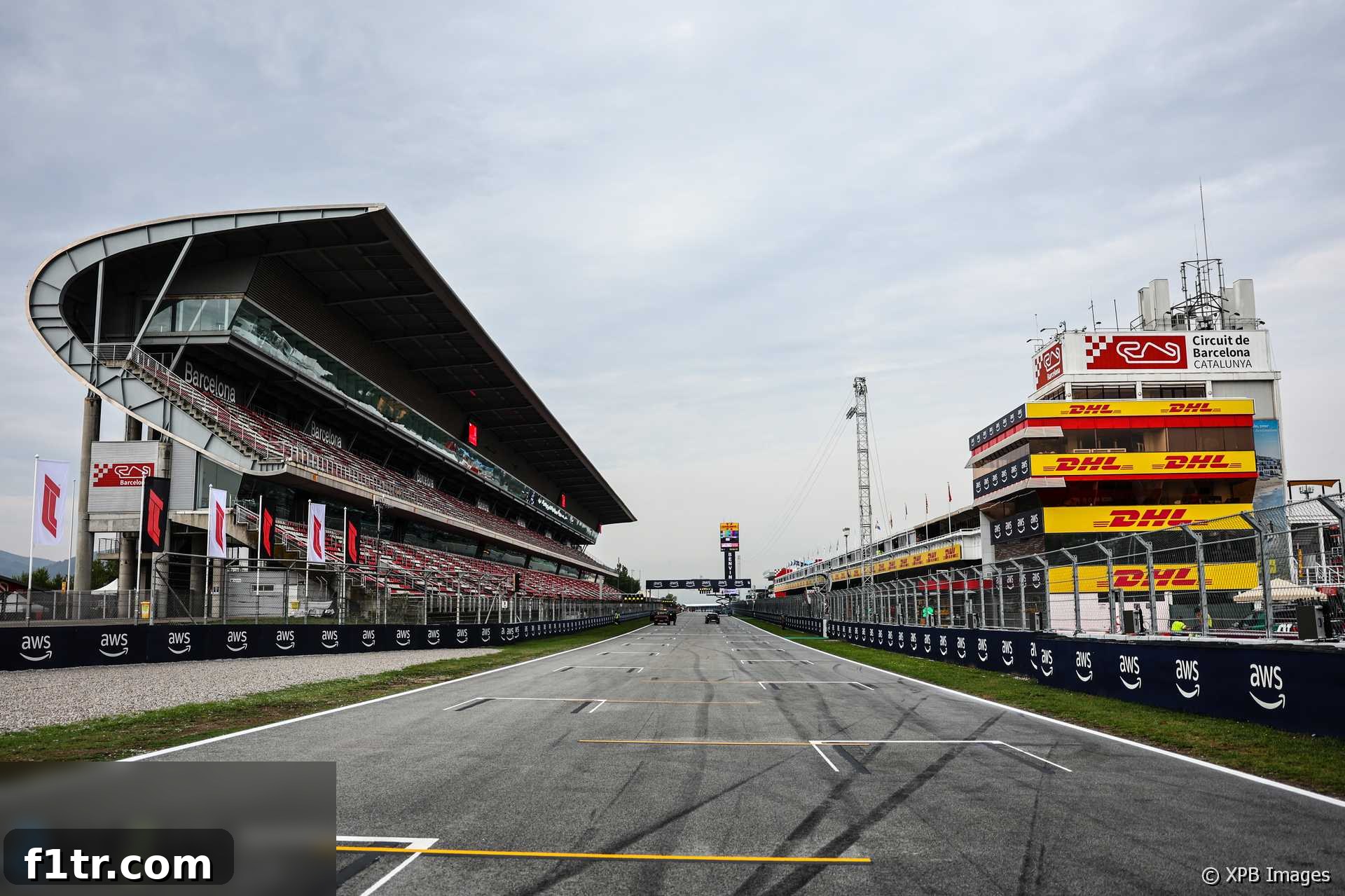
Spanish Grand Prix: Thunderstorm Threat Looms Over Barcelona This Weekend
Formula 1 makes its anticipated return to a permanent circuit for the first time since the season opener in Bahrain three months ago, and the excitement for the Spanish Grand Prix is building. However, as teams and drivers gear up to tackle the challenging Circuit de Catalunya, a significant element of uncertainty has entered the equation: the weather. Forecasts predict a considerable risk of thunderstorms throughout the weekend, promising to add an extra layer of drama and strategic complexity to what is already a pivotal race in the championship calendar.
The 2023 season has already witnessed its share of weather-related disruptions. The Emilia-Romagna Grand Prix at Imola was regrettably cancelled due to severe flooding in the region, and the iconic Monaco Grand Prix last weekend featured a rain-affected closing stages that threw race strategies into disarray. Now, it appears the Circuit de Catalunya, renowned for its technical demands and strategic racing, may follow suit, with a palpable risk of precipitation potentially impacting all three days of competitive action. This developing weather scenario ensures that the Spanish Grand Prix will be far from a straightforward affair, keeping everyone on their toes.
Unpredictable Skies: A Detailed Day-by-Day Forecast for Barcelona
Current meteorological projections paint a picture of unpredictability, indicating approximately a 40% chance of rain hitting the track on each of Friday, Saturday, and Sunday. This persistent threat of showers means teams will need to be exceptionally agile in their planning and execution, adapting rapidly to changing conditions and making crucial real-time decisions that could define their weekend. The inherent variability of weather systems, particularly around mountainous regions like Montmeló, adds to the challenge, making precise hourly predictions difficult but the overall risk of rain undeniable.
Friday: Practice Sessions Under Watchful Skies
The initial practice session on Friday morning (FP1) is expected to begin under dry and mildly warm conditions, with ambient temperatures hovering around 20 degrees Celsius. This window will be absolutely critical for teams to gather baseline data, calibrate their updated packages, and allow drivers to reacquaint themselves with the reconfigured track, particularly the high-speed final sector. Accurate data collection in FP1 will form the foundation for weekend setup decisions, making dry running invaluable.
However, the calm may be short-lived. Forecasts suggest a brief but significant downpour could occur before the commencement of the afternoon’s second practice session (FP2). This timing is particularly problematic, as FP2 is traditionally dedicated to crucial long-run simulations and race pace analysis. Any rain would severely disrupt these plans, forcing teams to abort dry-weather runs and compromising their understanding of tyre degradation and fuel load effects. Such a scenario could lead to a frantic scramble for dry running early in the session if the rain passes quickly, or a session dominated by intermediate tyre running, leaving teams with incomplete data for Sunday’s race strategy. This could throw a significant spanner in the works for teams aiming to validate upgrades or optimize their race setup.
Saturday: Qualifying on a Knife Edge
Saturday’s weather outlook largely mirrors Friday’s, with temperatures anticipated to remain consistent in the low 20s. The final practice session in the morning (FP3) is projected to stay dry, offering teams a last, crucial chance to fine-tune their setups on slick tyres before the high-stakes qualifying session. Every minute of dry track time in FP3 will be utilized to perfection, as it may be the final opportunity for optimal dry setup work.
However, the afternoon presents another significant risk of showers, potentially arriving just in time to affect qualifying. This could transform the grid-deciding session into a thrilling and unpredictable affair. A wet qualifying session would not only test the drivers’ raw car control but also the teams’ ability to make swift tyre calls – switching between slick, intermediate, and full-wet tyres as track conditions evolve. The restored, high-speed final two corners, now without the much-criticized chicane, will become an even greater challenge in wet conditions. These fast bends demand immense precision and bravery in the dry; in the wet, they could be unforgiving, potentially leading to spins or crucial mistakes that could shuffle the grid dramatically and open the door for unexpected pole positions or surprising eliminations. A wet qualifying session has historically proven to be a great equalizer, often producing a mixed-up grid and setting the stage for an exciting race.
Sunday: Race Day Drama with a 40% Chance of Thunder
The eyes of the motorsport world will undoubtedly be fixated on the Barcelona skies on Sunday, as drivers could face their second consecutive rain-affected race. The day is expected to begin with bright, sunny conditions, offering a deceptive sense of calm. However, the forecast indicates a strong likelihood of the weather becoming unsettled as the day progresses, with a 40% chance of showers specifically between 3 pm and 5 pm – precisely when the Spanish Grand Prix is scheduled to take place. This timing could not be more critical.
This isn’t merely a light drizzle threat; the predictions hint at a potentially powerful burst of rain, possibly accompanied by thunder. Such an intense downpour could be strong enough to severely disrupt the race, leading to multiple safety car periods, red flags, or a complete reshuffling of the running order. Wet races are a true test of a driver’s skill, a team’s strategic acumen, and the reliability of the car in treacherous conditions. Pit wall strategists will be working overtime, weighing the risks and rewards of early pit stops for intermediate tyres, assessing crossover points, and constantly monitoring rival strategies. The Spanish Grand Prix, already a race known for its strategic depth, could become an epic battle of wits against the elements, providing unforgettable moments for fans.
Beyond the Rain: A Cooler Spanish Grand Prix
Even if the heavens decide to hold their precipitation, this year’s Spanish Grand Prix is guaranteed to be a stark contrast to its 2022 predecessor in terms of ambient temperatures. Despite being held in June this year, a month typically associated with warmer weather, the forecast predicts significantly cooler conditions than last season’s event. The 2022 Spanish Grand Prix, held in May, was infamous for recording the highest ambient temperatures of the entire season, with mercury pushing towards a scorching 37 degrees Celsius on the back of a widespread European heatwave. Those extreme conditions placed immense stress on tyres, engines, and the drivers themselves, making it a grueling endurance test.
This year, drivers are likely to face much more manageable temperatures, projected to be in the mid-20s (Celsius). While this might sound like a relief, it brings its own set of challenges and strategic considerations. Cooler track temperatures generally result in lower tyre degradation, allowing for longer stints and potentially opening up different strategic options. However, achieving optimal tyre warm-up, especially with the harder compounds, could become a more prominent factor. Teams will need to recalibrate their understanding of tyre performance in these new conditions, potentially altering their approach to setup and race management compared to previous years at Barcelona. The cooler conditions might also favor certain car characteristics or driver styles that thrive when tyre overheating is less of an issue.
The Circuit de Catalunya: A Technical Testpiece
The Circuit de Catalunya, located just outside Barcelona, has been a staple on the Formula 1 calendar for decades and is revered as one of the most comprehensive testing grounds for an F1 car. Its demanding blend of high-speed corners, flowing sections, and a long main straight requires a finely balanced car setup that combines aerodynamic efficiency with mechanical grip. The track is also notorious for its abrasive tarmac, which traditionally leads to high tyre degradation, making tyre management a critical component of any successful strategy, irrespective of the weather.
The recent removal of the chicane in the final sector, reverting to the original fast, sweeping corners, has injected new life into the circuit. This change not only increases average lap speeds but also places a greater emphasis on aerodynamic efficiency and driver commitment through Turns 13 and 14. These faster corners will be particularly challenging in wet conditions, demanding immense precision and courage from the drivers. The redesign aims to improve the racing spectacle, offering more opportunities for overtakes, especially into Turn 1 after the long DRS straight. However, any form of precipitation will magnify the technical demands of these sections, creating a truly formidable challenge for the world’s best drivers and potentially leading to more mistakes and incidents.
Strategic Implications and Team Preparedness
For every team on the grid, an unpredictable weather forecast means a heightened state of preparedness. Data analysis teams will be scrutinizing weather models constantly, contingency plans for various scenarios will be refined, and communication between the pit wall and drivers will be paramount. Tyre choices will be more complex than ever, with teams needing to decide between bringing additional sets of intermediate or wet tyres to the grid, balancing the risk of being caught out versus having enough dry-weather options. Teams with a strong understanding of their car’s performance in varied conditions and a flexible strategy will undoubtedly have an advantage.
Teams like Red Bull, often seen as strong performers in mixed conditions, might relish the opportunity to capitalize on any chaos. Ferrari, who have had mixed fortunes in changeable weather, will be looking to prove their adaptability, while Mercedes, with their recent upgrades, will be keen to show their pace regardless of the conditions. The Spanish Grand Prix has a reputation for often being a processional race due to the difficulty of overtaking; however, the prospect of rain could entirely rewrite the script, forcing drivers to take risks and opening the door for unexpected heroes and dramatic swings in fortune. The strategic chess match on the pit wall will be as compelling as the on-track action.
Stay Updated Throughout the Unpredictable Weekend
With such an unpredictable weekend ahead, staying informed about the latest track conditions and meteorological updates will be crucial for fans and teams alike. For more real-time updates on the track conditions and developing weather during each session, keep a close eye on RaceFans Live and the RaceFans Twitter account, which will provide essential information for fans and teams alike.
2023 Spanish Grand Prix: Further Insights and Developments
Delve deeper into the narratives and developments surrounding this crucial race:
- Ben Sulayem raises safety concerns over “too many people on the grid” at races
- Why Ferrari say their change in design is the result of “discipline”, not “copying”
- Hamilton and Russell were seeking tow from Sainz when they collided – Mercedes
- Red Bull’s Spanish GP diffuser update was ‘inspired by rivals’ including Williams
- Why McLaren always doubted second-row start in Spain would lead to points finish
Explore all articles related to the 2023 Spanish Grand Prix