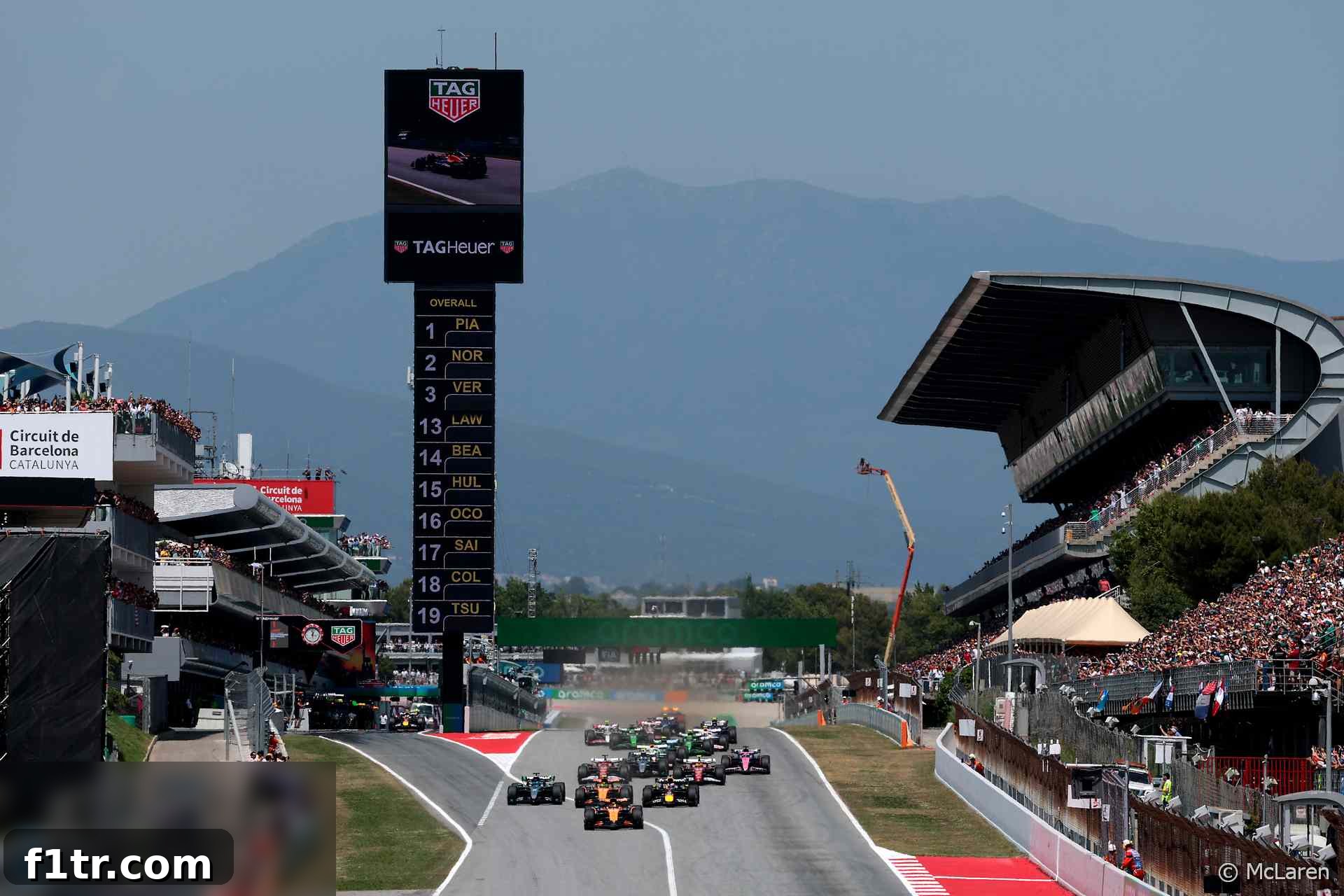
Circuit de Catalunya Rebrands as Barcelona-Catalunya Grand Prix Amidst Shifting F1 Landscape
A significant transformation is on the horizon for Formula 1 in Spain. The revered Circuit de Catalunya, a cornerstone of the F1 calendar for decades, is set to adopt a new identity from next year. Following the decision to relocate the prestigious “Spanish Grand Prix” title to a new venue in Madrid, the iconic Barcelona track will proudly host the “Barcelona-Catalunya Grand Prix.” This strategic rebranding marks a pivotal moment for the circuit, underscoring its enduring legacy and commitment to remaining a vital part of Formula 1’s global presence.
The Spanish Grand Prix Moves: A New Chapter in Madrid
The highly anticipated shift of the Spanish Grand Prix title to Madrid heralds a new era for motorsport in the country. Promoters of a brand-new, cutting-edge part-street circuit in Madrid have secured a substantial 10-year agreement with Formula One Management. This long-term commitment signals a bold new direction for the Grand Prix, promising a fresh spectacle and drawing new audiences to the sport in the nation’s capital. While specific details of the Madrid circuit are still emerging, the prospect of urban racing adds an exciting dimension to the F1 calendar, aligning with the sport’s global expansion strategy and its aim to engage new demographics.
For the Circuit de Catalunya, the change means its venerable title as host of the “Spanish Grand Prix” will conclude at the end of its current contract. With one year remaining on its existing deal, the circuit is slated to host the ninth round of the 2026 F1 calendar, scheduled for mid-June. This event will officially be known as the Barcelona-Catalunya Grand Prix, a name that not only reflects the circuit’s official designation but also reinforces its deep connection to the vibrant region of Catalonia and the bustling metropolis of Barcelona. This move underscores a broader trend in Formula 1, where traditional European venues are adapting to new market demands while striving to preserve their invaluable contribution to the sport’s history and future.
Spain’s Enduring Dual Grand Prix Tradition
While the relocation of the “Spanish Grand Prix” title might seem like a departure from tradition, Spain has a rich and established history of hosting multiple Formula 1 rounds within a single season. The upcoming 2026 season will mark the eighth occasion Spain has welcomed two separate world championship events. This phenomenon is largely attributed to the former “European Grand Prix,” a race designed to provide an additional F1 event in Europe when demand for more races or suitable venues arose, particularly during periods of intense interest in the sport.
Historically, the Circuit de Catalunya has been the steadfast home of the Spanish Grand Prix since its inclusion on the calendar in 1991, establishing itself as a beloved and familiar stop for teams and fans alike. Its consistent presence has made it synonymous with Spanish motorsport. However, the European Grand Prix found its homes at other distinguished Spanish venues, showcasing the country’s diverse range of racing facilities. Jerez de la Frontera, a circuit renowned for its challenging layout and passionate atmosphere, played host to the European Grand Prix in both 1994 and 1997, leaving a lasting impression on F1 lore. Later, the bustling port city of Valencia captivated audiences with its spectacular street circuit, which hosted the European Grand Prix consecutively from 2008 to 2012, offering a distinct urban racing experience. These periods demonstrate Spain’s profound passion for Formula 1 and its proven capacity to successfully manage multiple high-profile motorsport events, setting a compelling precedent for the dual-race scenario unfolding in 2026 and offering a glimpse into a potentially dynamic future for F1 in the Iberian Peninsula.
The Invaluable Role of Circuit de Catalunya in Formula 1 Development
Beyond its grand prix status, the Circuit de Catalunya has long held an unparalleled position as a premier testing ground for Formula 1 teams. Its diverse layout, featuring a mix of high-speed straights, challenging corners, and technical sections, makes it an ideal proving ground for new chassis designs, aerodynamic packages, and tire compounds. For decades, teams have flocked to Barcelona during the crucial pre-season testing phase and throughout the year, gathering invaluable data that directly influences car development and performance. The circuit’s balanced nature allows engineers to assess every aspect of a car’s behavior, from low-speed grip to high-speed stability, making it a comprehensive benchmark for innovation.
This deep association with testing has cemented Catalunya’s reputation as “the Formula 1 track” for many within the paddock. Drivers gain extensive experience on its tarmac, understanding its nuances intimately, while engineers rely on its consistent conditions to benchmark their innovations. The circuit provides a comprehensive test of a car’s overall capabilities, making it indispensable for preparing for the rigors of a new season and adapting to evolving technical regulations. Its importance transcends mere race hosting; it is a vital laboratory where the future of Formula 1 cars is meticulously crafted and refined, shaping the performance and competitive landscape of the sport year after year. The data collected here informs critical design decisions, driver feedback, and ultimately, the spectacle witnessed on race weekends globally.
Fernando Alonso: A Champion’s Fierce Advocacy for Barcelona
Adding significant weight to the Circuit de Catalunya’s plea for its long-term future in Formula 1 is the impassioned advocacy of two-time world champion Fernando Alonso. Appointed an ambassador for the circuit this year, Alonso has voiced his strong belief that F1 must continue to visit the track long after its current grand prix deal expires. His perspective, shared by many veterans of the sport, underscores the delicate balance between Formula 1’s relentless drive for global expansion into new markets and the imperative to honor its traditional roots and established venues that have shaped its history.
“I don’t think that we will lose Barcelona,” Alonso firmly stated, reflecting both his conviction and personal wish. He acknowledges the undeniable appeal and strategic importance of introducing new venues and countries to the F1 calendar, a trend that has seen the sport’s global footprint expand significantly over the past decade, attracting new fan bases and commercial opportunities. However, Alonso articulates a crucial counterpoint: the necessity of preserving “some traditional circuits where the history of Formula 1 has been written and made.” For Alonso, and countless fans worldwide, Formula 1 and Barcelona are intrinsically linked, almost synonymous with each other, representing a vital part of the sport’s heritage and identity.
Alonso’s argument is deeply rooted in the circuit’s unparalleled utility for the teams themselves. “We’ve been testing here for decades,” he explained, emphasizing the long-standing relationship between the circuit and the technical development of F1 cars. “I think all the teams choose Barcelona when they have to choose one test track.” He highlighted that even with new regulations and car designs on the horizon, teams will once again converge on Barcelona for winter testing, reinforcing its status as the default “Formula 1 track.” This preference is not arbitrary; it stems from the circuit’s well-understood characteristics, its diverse range of corners and straights, and its ability to provide representative data for diverse car setups, which is crucial for engineers seeking to optimize performance.
Furthermore, Alonso praised the continuous efforts made by the circuit operators to maintain and elevate its standards. “The circuit has made some changes to make it up to Formula 1 standards. In the last two or three years, all the paddock facilities, the grandstands, everything has taken a new level.” These comprehensive improvements demonstrate the circuit’s proactive approach to meeting modern F1 requirements, ensuring it remains a state-of-the-art facility capable of hosting top-tier motorsport events and providing a premium experience for both teams and spectators. Alonso concluded with a powerful assertion of the circuit’s enduring value: “Barcelona has been here for the last two or three decades, and Barcelona will be here for the next 10, 20, 30, 40 years. Some of the venues will be just momentarily on the calendar and then probably they will disappear again. So, we cannot lose Barcelona.” His words serve as a poignant reminder of the cultural and historical weight carried by established circuits, advocating for their continued presence amidst the sport’s dynamic evolution and ever-changing calendar.
The Future of Formula 1 in Spain: A Dual-Venue Landscape?
The advent of the Barcelona-Catalunya Grand Prix alongside the new Spanish Grand Prix in Madrid opens up intriguing possibilities for Formula 1’s future presence in Spain. With two distinct circuits and two unique events, Spain could cement its position as a dual-host nation, catering to different facets of the sport’s appeal. While Madrid offers the glamour of a modern street circuit experience, attracting urban crowds and showcasing the city’s vibrant atmosphere and strong tourist appeal, Barcelona-Catalunya provides the classic, purpose-built track experience, valued by purists and indispensable for technical development and traditional racing spectacle.
This dual-venue strategy aligns with Formula 1’s broader ambition to expand its global reach while simultaneously preserving its heritage. It reflects a nuanced approach to calendar planning, acknowledging the value of both new, exciting destinations and historic, technically crucial tracks. The challenge, however, lies in the logistical and financial sustainability of hosting two Grand Prix events in a single country, particularly in a sport where hosting fees are substantial and competition for calendar slots is fierce. Nonetheless, given Spain’s passionate motorsport culture, its strong economy, and the complementary nature of the two circuits, there is a compelling argument for maintaining both. The long-term viability will likely depend on the success of both events in attracting spectators, sponsors, and delivering compelling racing, but the initial signs point towards an exciting new chapter for Formula 1 fans across Spain and beyond, promising a richer and more diverse F1 experience.
Related Formula 1 Content
- One of F1’s greatest races happened 15 years ago today. Or did it?
- “Overtaking is overtaking”: Domenicali denies F1’s yo-yo racing is “artificial”
- The crashes F1 is trying to prevent may be rare – but the danger is obvious
- F1 returning to India soon after 2027 sounds like wishful thinking
- Verstappen loathes F1’s new generation of cars – but what do his rivals reckon?
Browse all Formula 1 articles