Alpine’s Mexican Grand Prix Ordeal: A Battle Against Unseen Forces and Unrelenting Heat
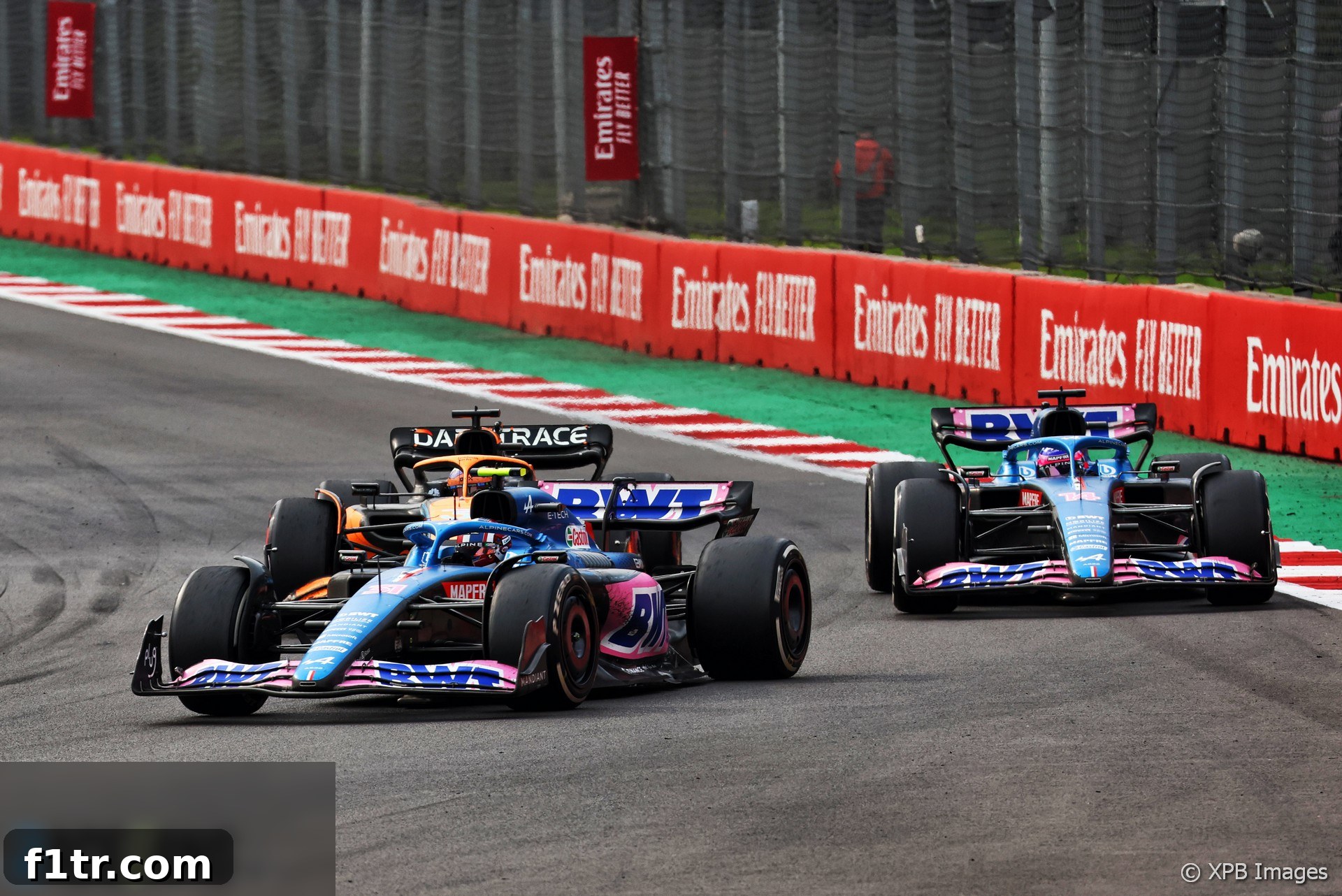
The 2022 Formula 1 season delivered relentless drama, and for the Alpine F1 Team, the Autodromo Hermanos Rodriguez circuit in Mexico City brought a particularly strenuous challenge. As the team fought fiercely to secure fourth place in the Constructors’ Championship, the Mexican Grand Prix unfolded as a gripping tale of resilience, frustration, and strategic compromise. While Esteban Ocon valiantly steered his car to an eighth-place finish, his teammate Fernando Alonso was forced to retire once again, highlighting the persistent reliability issues plaguing the French outfit.
The high-altitude Mexican track, renowned for its punishing demands on engines and cooling systems, pushed Alpine to its limits. What transpired was a race where both drivers grappled with critical mechanical issues, threatening a double retirement and potentially derailing their championship ambitions. Ocon’s efforts to nurse his car to the chequered flag, as he later revealed, involved extensive “lift-and-coast” tactics, a testament to the extreme measures required to complete the race.
Esteban Ocon’s Gritty Performance: Mastering the ‘Lift-and-Coast’ Challenge
Esteban Ocon’s P8 finish, a lap down on the leaders, might appear an unremarkable result on paper, but it represented a monumental effort in the face of adversity. The young Frenchman found himself in a constant battle not just with his rivals, but with his own machinery. Throughout the entire race, Ocon was forced to manage severe cooling issues, a critical problem that could lead to catastrophic engine failure if not meticulously controlled.
The term “lift-and-coast” often comes up in Formula 1, typically associated with fuel saving. However, in Mexico, for Ocon, it was primarily a cooling management strategy. This technique involves lifting off the throttle earlier than usual before a corner and coasting for a significant period before applying the brakes. While it conserves fuel, its immediate benefit in Ocon’s case was to reduce the engine load, thereby lowering operating temperatures that were dangerously close to critical levels. Such tactics inevitably compromise lap time, as the car is not under full power for extended periods on the straights.
Ocon described the experience as a “race of damage limitation,” a stark contrast to the aggressive racing he prefers. Having to consciously back off for “a lot of seconds of lift-and-coast” meant he couldn’t attack the circuit with the maximum performance the Alpine A522 was capable of. The high altitude of the Autodromo Hermanos Rodriguez, where the thinner air significantly reduces cooling efficiency and engine power, only exacerbated these challenges. For a driver, this constant management is mentally draining and physically frustrating, knowing precious tenths of a second are being sacrificed lap after lap.
“I couldn’t really attack to the maximum. A lot to review for us,” Ocon stated after the race, reflecting on the arduous task. “The team said it was critical that I had to do a lot of seconds of lift-and-coast, and when you do so, obviously you don’t accelerate. So you lose a lot of lap time, especially on a track like that. We’ve managed, we finished the race, which is the most important. But we’ve lost some important points today as a team.” His four points, however, proved crucial in the broader championship context, preventing rivals McLaren from making a more significant dent in Alpine’s advantage.
Fernando Alonso’s Mexican Misfortune: Another Power Unit Failure
While Ocon battled to the finish, Fernando Alonso was not as fortunate. The two-time world champion’s race ended prematurely, retiring just eight laps from the finish due to an unrelated power unit problem. At the time of his retirement, Alonso was running in ninth place, poised to add valuable points to Alpine’s tally. His untimely exit was a bitter pill to swallow, particularly given his strong performance earlier in the race.
Alonso’s 2022 season had been marred by a series of reliability setbacks, leading to a palpable sense of frustration for the veteran driver. He had consistently demonstrated exceptional pace, often outperforming expectations in qualifying and the initial stages of races, only for mechanical failures to strip away potential points. The Mexican Grand Prix simply added another chapter to this unfortunate narrative, further fueling his growing discontent with the car’s dependability.
Post-race, Alonso was vocal about his experience, reiterating his belief that his car was disproportionately affected by mechanical issues compared to his teammate’s. “I claimed my Alpine was much more prone to race-ending problems than his team mate’s,” he stated, a sentiment he had expressed multiple times throughout the season. This perception of an unfair distribution of bad luck only intensified the pressure on the team to address their reliability woes comprehensively.
Alpine’s Strategic Gamble: Pace Over Unwavering Reliability
The underlying reason for Alpine’s reliability challenges can be traced back to a conscious strategic decision made by the team for the 2022 season: to prioritize outright pace and development over bulletproof reliability. This philosophy aimed to accelerate the performance curve of the A522, allowing them to close the gap to the front-runners and establish themselves as the clear fourth-fastest team on the grid. It was a calculated risk, betting that the gains in speed would outweigh the occasional loss of points due to mechanical failures.
While this aggressive development strategy yielded positive results in terms of raw pace, enabling Alpine to regularly compete for points and sometimes challenge the top three teams, it also came with significant trade-offs. The high-performance components, pushed to their limits, inevitably led to increased stress and a higher propensity for failure. This delicate balance between speed and durability is a constant challenge in Formula 1, and Alpine’s gamble saw them frequently on the wrong side of the equation during races.
Esteban Ocon, despite experiencing his own share of mechanical woes, acknowledged the team’s overarching strategy. “We are happy with the strategy of the team to push the pace of the car in front of the reliability. That was always the aim of the team,” he explained. However, he also admitted that the extent of the cooling problems in Mexico was “a bit unexpected,” indicating that even within their strategic framework, some failures still caught them off guard. This highlights the inherent unpredictability of pushing the boundaries in motorsport engineering.
This strategic choice, while understandable in the pursuit of performance, undoubtedly placed immense pressure on both drivers. For Alonso, in particular, who was vying for every possible point in his final season with Alpine, the frequent retirements were a source of profound frustration. For Ocon, it meant navigating races like Mexico, where the primary objective shifted from maximizing performance to simply keeping the car alive and bringing it home.
The Driver Reliability Debate: A Tale of Two Alpines?
Fernando Alonso’s outspoken comments about his car being “much more prone to race-ending problems” than Ocon’s fueled an ongoing debate about internal reliability distribution within the Alpine garage. While it’s common for drivers to feel a streak of bad luck, Alonso’s consistent grievances throughout the season lent a particular weight to his claims. Many observers wondered if there was indeed a disparity in component quality or allocation.
However, Ocon offered a counter-perspective, reminding everyone that he too had faced his share of reliability and car-related issues during the season. “I broke the gearbox in Imola, I broke the car in Silverstone, I [retired] in Singapore. I can count them on as well on my side. We’ve both had issues,” Ocon clarified. This balanced view suggests that while Alonso might have suffered more high-profile race retirements, both drivers were indeed grappling with the consequences of the team’s aggressive development strategy.
Furthermore, Ocon pointed out a crucial detail regarding engine allocation: “I’ve also changed six engines like him, obviously brought one today. We’re on the same number of engines.” This fact directly challenges the notion that Alonso was intentionally being given inferior or older components. If both drivers were on the same engine cycle and number of power unit elements, it suggests that the reliability issues were more systemic to the Alpine package rather than specific to one car or driver.
Ultimately, the perception of reliability in Formula 1 can often be influenced by the timing and impact of failures. While both drivers experienced problems, Alonso’s often occurred when he was in strong points-scoring positions, making them more visible and impactful on his championship standing. This “tale of two Alpines” likely stemmed from unfortunate coincidence rather than intentional disparity, underscoring the capricious nature of mechanical reliability in the pinnacle of motorsport.
Advert | Become a RaceFans supporter andgo ad-free
The Crucial Battle for Fourth: Impact on the Constructors’ Championship
The events of the Mexican Grand Prix held significant implications for Alpine’s critical fight for fourth place in the Constructors’ Championship. Securing P4 is not merely a matter of prestige; it carries substantial financial rewards and significantly impacts a team’s budget, resources, and development capabilities for future seasons. For a midfield team like Alpine, this position is a cornerstone for their long-term aspirations of challenging the top three.
Esteban Ocon’s four points for eighth place, earned through sheer grit and meticulous car management, were therefore incredibly valuable. Had he also retired, McLaren, their closest rival for fourth, would have significantly narrowed the gap, potentially even overtaking Alpine depending on their own performance. Instead, Ocon’s points limited McLaren’s gains, preserving Alpine’s slender advantage heading into the final two races of the season.
Following Mexico, the gap between Alpine and McLaren stood at a nail-biting seven points. This made the concluding events of the 2022 season – Brazil and Abu Dhabi – absolute do-or-die races for the French team. Every point became vital, every strategic decision magnified, and every ounce of reliability scrutinized. The pressure on both drivers and the entire team to deliver consistent, trouble-free performances reached an unprecedented level.
Ultimately, securing fourth place would validate Alpine’s aggressive development strategy and provide a strong foundation for their 2023 campaign. It would demonstrate progress, attract talent, and reinforce investor confidence. Conversely, losing out to McLaren would represent a significant setback, raising questions about their strategic choices and the balance between pace and reliability. The Mexican Grand Prix served as a stark reminder of how precarious their position was and how every single point truly mattered.
Navigating the Final Straits and Beyond
The 2022 Mexican Grand Prix encapsulated much of Alpine’s season: moments of impressive pace, intertwined with frustrating reliability issues. Esteban Ocon’s heroic drive highlighted the team’s fighting spirit and the drivers’ ability to perform under extreme pressure. Fernando Alonso’s retirement, meanwhile, underscored the persistent mechanical vulnerabilities that often overshadowed their potential. The team’s strategic choice to prioritize pace was a bold one, yielding speed but demanding a high toll in terms of component longevity.
As the season drew to a close, Alpine faced the ultimate test of their championship credentials. The battle for fourth place was a microcosm of their season-long journey, defined by fierce competition and the relentless pursuit of perfection. The lessons learned from races like Mexico, particularly regarding cooling and power unit management, would be invaluable as they looked to refine their package and address the fundamental balance between outright performance and the unyielding demand for reliability in Formula 1’s fiercely competitive environment. The path to sustained success would require not only speed but also the unwavering ability to consistently deliver it to the chequered flag.
2022 Mexican Grand Prix Related Articles
- How many victory chances did Hamilton have in his first winless F1 season?
- Delay in producing new parts held up Alfa Romeo upgrade
- Doohan’s practice run earns praise, but Alpine undecided over reserve role
- ‘I was in the fight, which hasn’t been often this year’: Ricciardo’s Mexican GP transcript
- Verstappen “will continue to break records for the rest of his career” – rivals
Browse all 2022 Mexican Grand Prix articles