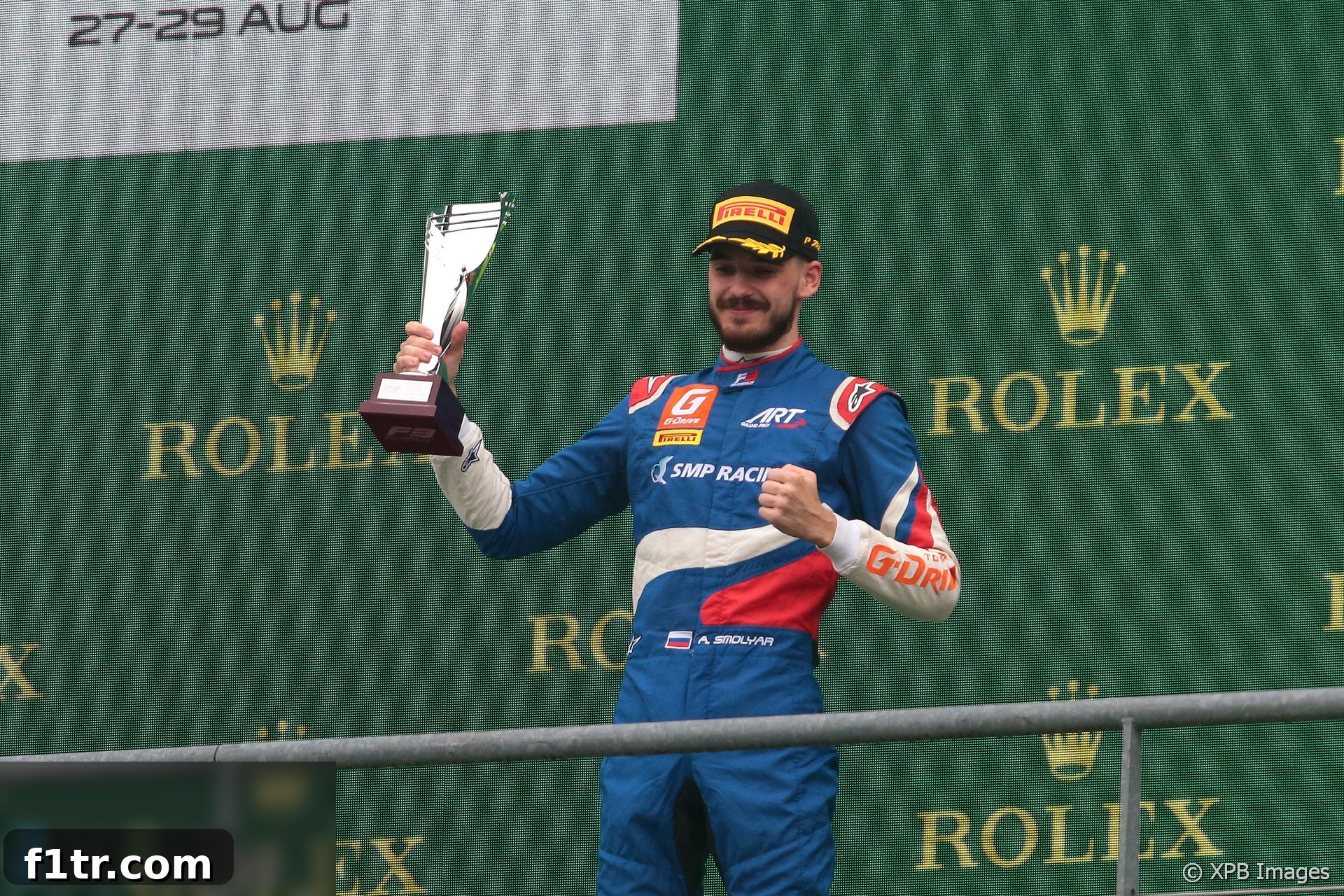
The landscape of international motorsport has been profoundly reshaped by recent geopolitical events, leading to an unprecedented wave of withdrawals and restrictions impacting Russian athletes. Among the latest and most prominent figures to step away from competition is Formula 3 driver Alexander Smolyar. His decision not to continue racing in the wake of Russia’s invasion of Ukraine underscores the difficult choices faced by many, as sport grapples with its response to global conflicts. Smolyar’s announcement joins a growing list of Russian competitors who have found their careers at a crossroads, caught between their professional aspirations and the stringent new requirements imposed by international sporting bodies.
Advert | Become a Supporter & go ad-free
Alexander Smolyar’s Difficult Decision and the FIA’s Stance
Alexander Smolyar, a promising talent in the junior motorsport categories, had been preparing for what was expected to be a crucial third season in the FIA Formula 3 Championship with MP Motorsport. After a commendable sixth-place finish in the 2021 F3 season, hopes were high for his continued progression. However, the rapidly evolving geopolitical situation following Russia’s invasion of Ukraine just weeks prior dramatically altered his trajectory. The Fédération Internationale de l’Automobile (FIA), motorsport’s global governing body, quickly responded with new directives for Russian and Belarusian competitors.
These directives stipulated that any Russian drivers participating in FIA-sanctioned series would be required to do so under a neutral flag, eschewing any national symbols or anthems. More significantly, drivers were mandated to sign declarations explicitly stating their acknowledgment of “the strong commitment made by the FIA to stand in solidarity with the people of Ukraine.” Furthermore, they were required to undertake not to “express any support (direct or indirect) for the Russian and/or Belarusian activities in respect of Ukraine.” This unprecedented demand placed individual athletes in a challenging position, requiring them to publicly distance themselves from their country’s actions to continue their careers.
Smolyar, who has long been supported by the prominent Russian junior driver program SMP Racing, confirmed his withdrawal from the championship through a social media statement. His message resonated with the broader difficulties faced by Russian motorsport. “I will not compete in FIA F3 and any international racing series this year,” Smolyar declared. He further elaborated on the reasons behind his decision, stating, “I stand with the decision of SMP Racing to stop its European program as a result of an unprecedented requirements that FIA put on any Russian driver as a condition for access to international competitions.” This statement not only highlighted his personal sacrifice but also underscored the collective response from Russian motorsport entities, indicating a broader withdrawal from international circuits.
A Ripple Effect Across Motorsport: Other Russian Drivers Affected
Smolyar’s withdrawal is not an isolated incident but rather the latest in a series of significant impacts on Russian drivers and teams across various top-tier motorsport disciplines. The pressure on international sports organizations to respond to the conflict has led to a seismic shift, forcing many to re-evaluate their associations with Russian entities and individuals.
Formula 1: Nikita Mazepin’s Abrupt Exit
Perhaps the most high-profile casualty in Formula 1 was Nikita Mazepin. His ties to Russian sponsorship and his father’s company, Uralkali, became untenable for the Haas F1 Team. Following mounting international pressure and the specific sanctions imposed, Haas announced the termination of its contract with Uralkali and, consequently, with Mazepin himself. This decision, made just weeks before the start of the 2022 F1 season, abruptly ended Mazepin’s brief Formula 1 career. His removal highlighted the swift and decisive actions teams were willing to take to align with international sentiment and comply with evolving sanctions, regardless of the significant financial implications for the team.
World Endurance Championship: G-Drive Racing’s Withdrawal
Beyond Formula 1, the World Endurance Championship (WEC) also saw a significant Russian presence vanish. The highly successful Russian team G-Drive Racing, a consistent frontrunner in the LMP2 category, announced its complete withdrawal from the championship. This decision directly impacted ex-F1 racer Daniil Kvyat and Roman Rusinov, who were slated to compete with the team. G-Drive’s exit meant the loss of prominent drives for these seasoned competitors, illustrating how the geopolitical fallout extends beyond individual drivers to affect entire racing operations built around Russian backing and personnel. Kvyat, who had been aiming to rebuild his international racing career in endurance events after his Formula 1 stint, found his plans derailed by circumstances far beyond his control.
W Series: Irina Sidorkova Steps Down
Even in the burgeoning W Series, a championship dedicated to promoting female talent in motorsport, a Russian driver was affected. Irina Sidorkova, who had competed in the series, stepped down from her position. Her absence was notable at pre-season tests, where Jem Hepworth replaced her at the Circuit de Catalunya. The W Series, which races alongside several Grand Prix weekends, aims to provide a platform for aspiring female racers. Sidorkova’s withdrawal, much like Smolyar’s, reflects the widespread impact of the FIA’s regulations and the collective decision-making among Russian sporting bodies regarding international participation.
Advert | Become a RaceFans supporter andgo ad-free
The Broader Implications: Navigating Ethics, Careers, and Future Prospects
The decisions made by Alexander Smolyar, SMP Racing, G-Drive, and others reflect a deep and complex challenge confronting Russian athletes and sports organizations. The FIA’s “unprecedented requirements” have created a moral and professional quandary: drivers are compelled to choose between their national identity and their international careers. While the FIA’s stance is rooted in a desire to express solidarity with Ukraine and condemn aggression, it places individual athletes in an unenviable position, potentially isolating them from their chosen professions.
The immediate consequence is the forfeiture of invaluable racing opportunities, lost sponsorships, and a halt in career progression for many talented individuals. For junior drivers like Smolyar, missing a critical season in a feeder series like F3 can have long-lasting repercussions, potentially derailing their path to higher categories like Formula 1. The financial implications are also substantial, affecting not only drivers but also teams and support staff reliant on Russian funding. SMP Racing’s decision to “stop its European program” signifies a significant reduction in opportunities for many young Russian talents who aspired to compete on the international stage.
Looking ahead, the future for Russian participation in international motorsport remains highly uncertain. The current geopolitical climate suggests that these restrictions may endure for an extended period, leading to a potential long-term isolation of Russian talent from global competitions. This could have a profound impact on the development of motorsport within Russia and on the diversity of talent seen on the world stage. The hope remains that a resolution to the conflict will eventually allow for the reintegration of all athletes under fair and respectful conditions, but for now, the path forward is fraught with challenges and difficult choices.
Conclusion: A New Era for Motorsport and Geopolitics
The withdrawals of Alexander Smolyar, Nikita Mazepin, G-Drive Racing, and Irina Sidorkova serve as stark reminders of how deeply intertwined international sport has become with global politics. The FIA’s robust response to the conflict in Ukraine has created a precedent, forcing athletes and teams to navigate a complex ethical and professional landscape. While the sporting world aims to foster unity and fair competition, the imperative to stand in solidarity with those affected by conflict has taken precedence, leading to significant sacrifices within the Russian motorsport community.
For Alexander Smolyar and his compatriots, the immediate future in international racing is on hold. Their stories are a poignant illustration of the human cost beyond the headlines, where individual careers and lifelong dreams are put on pause due to circumstances beyond their control. As the motorsport world continues to adapt to these shifts, the ongoing dialogue between sporting integrity, national identity, and global responsibility will undoubtedly shape the trajectory of racing for years to come.
2022 F1 season
- Mercedes told me “you’re wrong” about 2022 car’s problems – Hamilton
- FIA confirms all 10 F1 teams complied with 2022 cost cap
- Steiner “not ashamed” of panning “slow” Schumacher in Drive to Survive
- Albon believes year out of F1 improved him as a driver
- Hamilton sees diversity gains in F1 years on from his ‘traumatising’ experience of racism
Browse all 2022 F1 season articles