2024 Qatar Grand Prix Preview: High Stakes at Losail
As the Formula 1 season draws towards its thrilling conclusion, the caravan heads to the Middle East for the penultimate round – the Qatar Grand Prix. While the coveted drivers’ championship has already been secured, the battle for the constructors’ crown remains intensely alive, promising a spectacle of strategic prowess and raw speed. This event, notably the final sprint weekend of the year, is steeped in compelling narratives, from crucial team rivalries and the ever-present challenges of the Losail International Circuit to off-track political discussions and a significant milestone for one of the sport’s legends. Let’s delve into the key talking points that will undoubtedly shape the action and drama in Qatar.
The Losail International Circuit, with its unique blend of high-speed sections and technically demanding corners, offers a distinct test for both machinery and human endurance. Every point gained will be invaluable for teams still vying for championship glory. Beyond the fierce on-track competition, significant discussions regarding the future expansion of the F1 grid and critical safety measures involving tyre integrity add layers of intrigue, making the Qatar Grand Prix an unmissable chapter in the 2024 Formula 1 calendar.
The Constructors’ Championship Showdown: McLaren vs. Ferrari
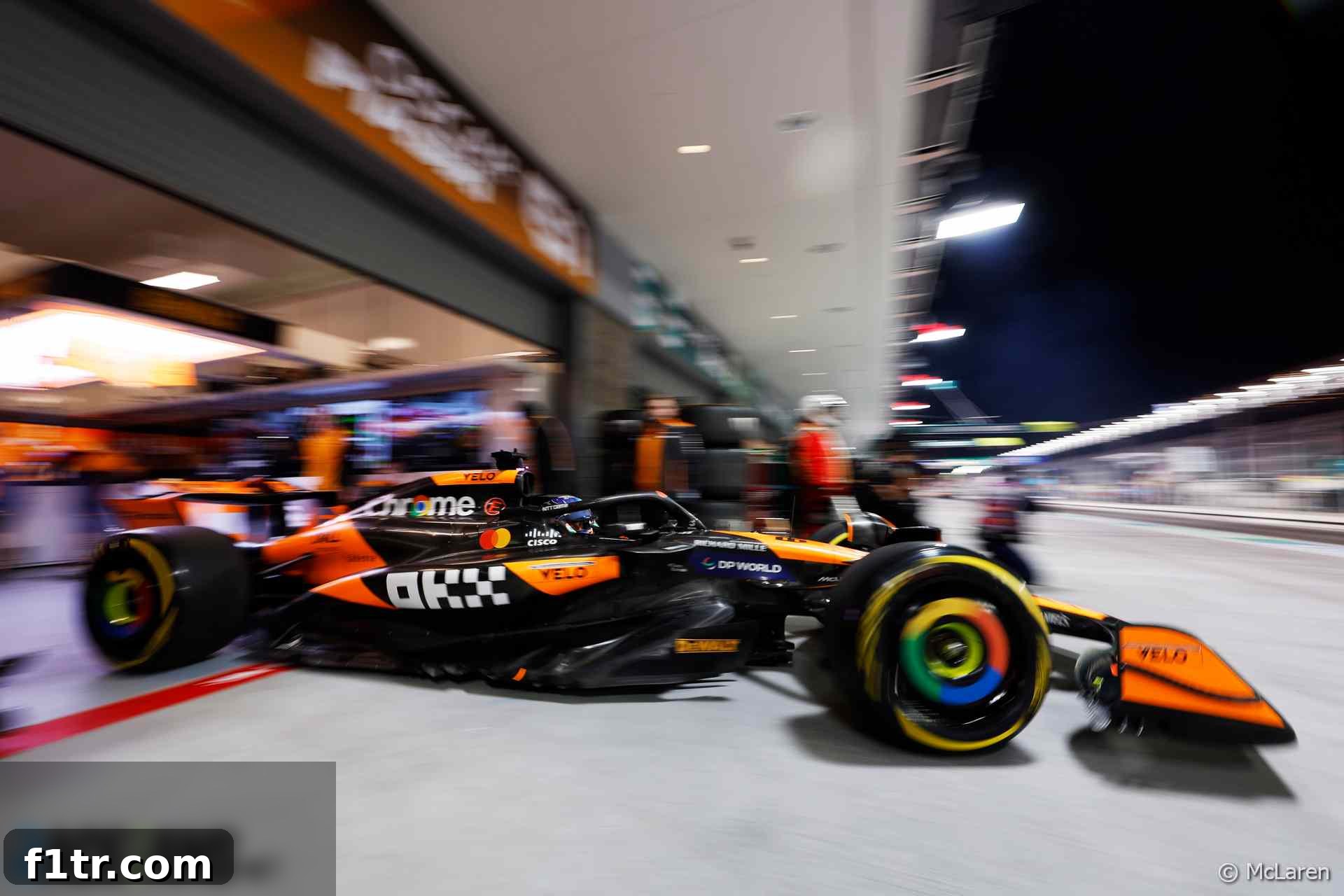
McLaren arrives in Qatar with a renewed sense of purpose, aiming to rebound from a minor setback suffered in their pursuit of the constructors’ championship during the previous round in Las Vegas. There, their closest adversaries, Ferrari, managed to out-score them by a decisive 12 points. However, the Woking-based squad might count themselves fortunate, as an unexpected one-two finish by Mercedes prevented Ferrari from accumulating an even larger points haul, particularly on a weekend where McLaren’s MCL38 seemed to struggle with its characteristic pace.
Expectations are high that the performance pendulum will swing back firmly in McLaren’s favor at the Losail International Circuit. Team Principal Andrea Stella articulated this cautious optimism, stating, “The conditions and circuit in Qatar suit our car well.” This confidence is largely rooted in the MCL38’s proven strengths: its exceptional performance in high-speed corners and its aerodynamic efficiency, both of which are critical attributes for success on the flowing Losail layout. The circuit boasts several long, sweeping bends that demand not only immense downforce but also a stable and predictable aerodynamic platform – characteristics where McLaren has consistently demonstrated an advantage throughout the season.
In stark contrast, Ferrari’s Carlos Sainz Jnr openly expressed his apprehension regarding the upcoming challenge in Qatar. “I’m a bit worried about Qatar,” Sainz admitted, drawing parallels between the demanding sections of the Las Vegas track and what awaits them in Losail. He elaborated on his concerns: “Turn one and turn three [in Las Vegas] is exactly the type of corner you have in Qatar. Fourth, fifth gear, long combined [steering inputs], which is exactly where we’ve been struggling. And just in that sector to the Merc, we were three tenths off. So if you keep adding those corners up, it could be a tough one for us in Qatar.” This candid assessment underscores Ferrari’s vulnerability in sustained, high-load cornering, an area where McLaren has typically excelled and will likely seek to capitalize.
Should McLaren manage to assert their dominance in Qatar, they could potentially secure the constructors’ championship a full week before the highly anticipated season finale. A hypothetical scenario involving a one-two finish in both the sprint race and the main grand prix, combined with securing the fastest lap in the latter, would mathematically guarantee them the title regardless of Ferrari’s performance. Achieving such a remarkable feat would not only mark a triumphant return to form for McLaren but would also end a significant drought, securing their first constructors’ championship in 26 years. This trophy represents not just immense prestige and a testament to team effort but also a substantial financial boost crucial for ongoing development and competitiveness in future seasons. The pressure is undeniably immense for both iconic teams as they push to the limit.
Mercedes’ Enigmatic Performance: The Losail Riddle
Mercedes unexpectedly turned heads with a stellar performance on the cold and low-grip Las Vegas Strip Circuit. The W14, a car that has proven notoriously temperamental and inconsistent throughout the season, found an unanticipated sweet spot amidst the high speeds and relatively smooth, urban layout. This stark contrast to their usual form has left both the team and motorsport pundits perplexed, questioning which iteration of the Silver Arrow will emerge for the challenging Qatar Grand Prix.
The Losail circuit presents an entirely different set of demands compared to Las Vegas. It is a high-downforce track characterized by long, sweeping corners that place a premium on aerodynamic efficiency, impeccable balance, and meticulous tyre management, all under the intense desert heat. Historically, Mercedes has performed well at Losail, which might suggest a return to their competitive baseline. However, the W14 has been a constant source of frustration for its drivers, Lewis Hamilton and George Russell, frequently exhibiting unfathomable swings in performance not only from one track to another but sometimes even within the course of a single race weekend.
The paramount question for the Qatar Grand Prix is whether the dominant W14 that clinched a one-two in Las Vegas will make a reappearance, or if the more familiar, inconsistent version that has often struggled to find its operating window will once again plague the team. Mercedes’ engineers have invested countless hours in understanding the car’s nuanced behavior, but finding that elusive optimal operating window has remained a season-long challenge. Their performance in Qatar will serve as a crucial barometer of their progress in comprehending the W14’s complex dynamics and their ability to consistently extract pace across highly variable track conditions. This race will provide invaluable data, not just for the remaining events of the season but also for the critical development pathway of their 2025 challenger. The team hopes to translate the insights gained from their Las Vegas success into consistent form, but the demanding nature of Losail’s layout, coupled with extreme temperatures, will truly test their adaptability and resolve.
F1 Grid Expansion: Andretti-Cadillac’s Entry and Political Ramifications
For a considerable period, the majority of Formula 1 teams have staunchly opposed the expansion of the grid by Formula One Management (FOM) to include new competitors. The ten existing teams have consistently raised concerns regarding the potential dilution of the sport’s lucrative prize fund, the impact on their collective brand value, and the significant logistical and operational challenges inherent in expanding the paddock. However, a seismic development has recently emerged: confirmation that the racing outfit spearheaded by American racing icon Michael Andretti, now operating under the formidable banner of General Motors’ Cadillac brand, is officially poised to join the F1 grid as the 11th competitor in 2026. This marks a truly pivotal moment, as it signifies the first expansion of the F1 grid in a decade, bringing the total number of cars back to 22 – a sight not witnessed since the 2016 season.
The ultimate confirmation of Andretti-Cadillac’s entry, despite the initial and sustained resistance from many corners of the paddock, is a powerful testament to the unwavering determination of the American team and the undeniable allure of integrating a global automotive powerhouse like General Motors into Formula 1. This significant development inevitably sparks a series of critical questions and intense discussions across the sport: How will the existing teams, many of whom were vocal opponents, react to this finalized deal? What specific mechanisms and financial adjustments will be implemented to adequately recompense them for the potential loss of earnings, considering the prize fund will now be distributed among 11 teams instead of the current 10? The controversial ‘anti-dilution’ fee, initially designed to compensate existing teams for the entry of a newcomer, has been a major point of contention and is almost certainly destined to become a central focus of future negotiations.
Expect these multifaceted discussions, heated arguments, and intricate political maneuvers to dominate the off-track chatter and media briefings throughout the Qatar Grand Prix weekend. The addition of a new team, particularly one backed by a brand as significant and globally recognized as Cadillac, is set to fundamentally reshape the commercial and competitive landscape of Formula 1 for years to come. It will necessitate a comprehensive re-evaluation of financial models, strategic alliances, and even the future direction of the sport itself. The implications extend far beyond mere prize money, touching upon team prestige, technological development, and the sport’s broader appeal to new markets and demographics.
Addressing Tyre Safety: Has F1 Solved Losail’s Kerb Issues?
Formula 1 officials and teams will be intensely focused on preventing a recurrence of the significant tyre-related problems that dramatically impacted last year’s Qatar Grand Prix. The inaugural event at the freshly resurfaced Losail International Circuit saw Pirelli, the sport’s exclusive tyre supplier, discover alarming levels of damage to its tyres, primarily attributed to the aggressive design of the circuit’s kerbs. This alarming discovery triggered a swift, comprehensive, and unprecedented response from both Pirelli and the series organizers to safeguard driver welfare and ensure the integrity of the race.
During the 2023 event, detailed investigations revealed that persistent and excessive running over the pyramid-shaped kerbs, particularly in fast corner sequences like Turns 12-14, was causing severe delamination and critical structural damage to the sidewalls of the tyres. This was not merely a cosmetic issue; it presented a grave safety risk of sudden and catastrophic tyre failures at high speeds. To mitigate this immediate threat, drastic measures were implemented mid-weekend: the track limits were modified to actively discourage drivers from running wide onto the problematic kerbs, and an unprecedented maximum stint length of just 18 laps was enforced for the main race. This regulatory change forced all teams into a mandatory three-stop strategy, fundamentally altering the strategic landscape and demanding rapid adaptation. Furthermore, the condensed sprint event format, which typically allows for only a single hour of practice, necessitated an additional practice session to provide teams with crucial time to adjust to these new rules and confirm the behavior and durability of their tyres, adding another layer of complexity to an already challenging weekend.
To proactively address and prevent a recurrence of these critical issues, significant modifications have been undertaken for this year’s event. The kerbs at Losail have undergone specific redesigns and modifications to reduce their abrasive nature and minimize the risk of tyre damage when cars inevitably make contact. In addition, gravel strips have been strategically added beyond the track limits in key areas prone to track limit infringements. These gravel traps serve a dual, highly effective purpose: they provide a tangible penalty for drivers exceeding track limits, thereby discouraging them from intentionally running wide over the potentially damaging kerbs, and they have been proven highly effective when introduced at other circuits this season in enhancing overall safety and upholding track integrity. With these comprehensive proactive measures now in place, Formula 1 hopes for a smoother, safer, and strategically more predictable race weekend, where the primary focus can remain firmly on the intense competition rather than lingering concerns about tyre durability or structural integrity. Pirelli will maintain rigorous monitoring of tyre wear and degradation throughout the weekend, ready to provide updates and ensure optimal safety protocols are consistently upheld.
Driver Endurance: Battling the Extreme Heat and Humidity
Last year’s Qatar Grand Prix was universally declared by the drivers as the single most physically punishing event on the entire Formula 1 calendar. The race, held seven weeks earlier in the season under the scorching conditions of early October, combined with the inherently demanding Losail track layout, pushed competitors to their absolute physical and mental limits. The relentless extreme heat, compounded by high humidity levels and the unrelenting G-forces generated by the circuit’s fast, sweeping corners, led to severe dehydration, profound exhaustion, and even instances of sickness among the elite field. Notable examples included Esteban Ocon being visibly ill inside his cockpit during the race, and rookie Logan Sargeant being forced to retire due to severe heat exhaustion, powerfully underscoring the brutal nature of the challenge.
In direct response to these severe strains on driver welfare, both event organizers and teams have meticulously implemented several key measures to alleviate the physiological burden for this year’s event. A crucial change is the later start time for the main race, strategically designed to shift the most intense running hours into the cooler parts of the evening, thereby significantly reducing the peak ambient and track temperatures drivers will endure. Furthermore, new and enhanced cooling devices have been extensively integrated into the cars, specifically engineered to improve ventilation within the confined cockpit and actively aid driver thermoregulation. These innovations, which range from more efficient air scoops and improved helmet ventilation systems to advanced suit cooling mechanisms, are intended to make a tangible difference in driver comfort, concentration, and overall stamina throughout the gruelling race.
While these thoughtful adjustments are widely expected to considerably reduce the physical strain on the drivers, the Qatar Grand Prix is still broadly anticipated to remain one of the toughest physical challenges they will encounter all season. The unique combination of sustained high G-forces, the demanding concentration required by Losail’s layout, and the persistent, inherent heat of the desert environment will collectively continue to test every driver’s mettle, pushing them to the absolute brink of their formidable endurance capabilities. Success in Qatar will not only be about car performance but also a profound testament to driver fitness and mental fortitude.
Fernando Alonso: A Historic 400th Grand Prix Start
Fernando Alonso, the sport’s evergreen and iconic veteran, achieved a remarkable milestone three rounds ago in Mexico by making his 400th appearance at a Formula 1 race weekend. However, the Qatar Grand Prix is set to mark an even more profound and significant achievement for the two-time world champion: his 400th official Grand Prix start. This extraordinary feat is a powerful testament to Alonso’s enduring passion for racing, his unparalleled talent behind the wheel, and his incredible longevity in one of the most physically and mentally demanding sports on the planet.
Alonso’s illustrious career, which spans over two decades, has seen him navigate and compete successfully across multiple distinct eras of Formula 1. He has masterfully adapted to numerous dramatic regulation changes, diverse car designs, and fiercely competitive landscapes. Reaching 400 starts places him in an exceptionally exclusive club of drivers, highlighting a level of dedication, unwavering commitment, and superior physical fitness rarely seen in motorsport. This is a momentous occasion for fans worldwide and for the sport itself, celebrating a true icon who continues to vigorously challenge younger competitors and deliver thrilling, high-performance racing. His continued presence on the grid remains a profound source of inspiration and excitement, adding historical depth and unparalleled experience to every single race weekend he graces.
Your Predictions for a Thrilling Qatar Grand Prix
With such a rich tapestry of compelling storylines converging at the Losail International Circuit, the 2024 Qatar Grand Prix promises to be an unmissable event for Formula 1 enthusiasts globally. Will McLaren effectively leverage its car’s inherent track-suited characteristics to triumph and clinch the coveted constructors’ championship against a determined Ferrari squad? Can Mercedes finally unlock the secrets of their enigmatic W14 and deliver another unexpected, dominant performance reminiscent of Las Vegas? How will the paddock absorb and react to the impending, politically charged arrival of Andretti-Cadillac onto the F1 grid? Crucially, will the comprehensive solutions implemented for tyre safety hold up robustly under the demanding race conditions and the intense heat of the desert? And perhaps most importantly, which driver will ultimately master the extreme heat, the relentless physical challenge, and the technically demanding Losail circuit to emerge victorious?
The stage is now meticulously set for a truly thrilling and unpredictable battle under the spectacular desert lights. We eagerly invite you to join the conversation and share your informed predictions and insightful analysis. Who do you believe will truly be the team to beat in Losail, and which driver will stand on the top step of the podium? Will the pre-race favourites deliver on their promise, or are we poised for another unexpected twist in this captivating season? Share your unique perspectives, expert insights, and enthusiastic expectations below as Formula 1 prepares for its penultimate and potentially pivotal race of what has been a truly memorable and action-packed season.