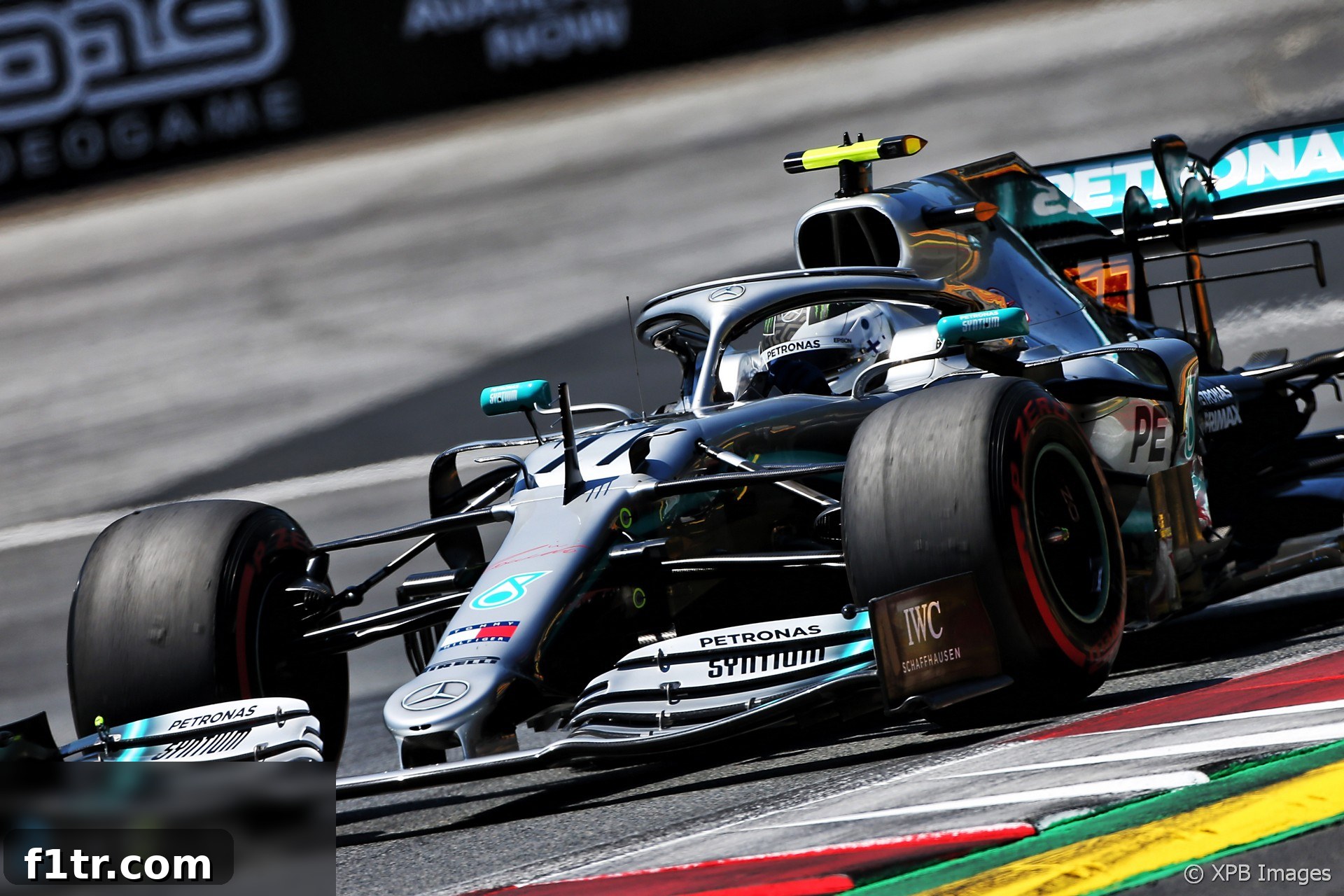
Mercedes F1 Faces Uphill Battle at Austrian Grand Prix Amidst Altitude and Heat Challenges
The dominant Mercedes-AMG Petronas Formula 1 team found themselves in an uncharacteristic position of struggle at the 2019 Austrian Grand Prix. Team principal Toto Wolff revealed that a potent combination of the Red Bull Ring’s high altitude and scorching track temperatures significantly compromised the W10’s performance, leading to a less competitive weekend than the Silver Arrows have grown accustomed to.
Just one week prior, Mercedes had showcased commanding pace, out-qualifying Ferrari by a comfortable 0.646 seconds at Paul Ricard. However, the unique conditions in Austria saw a dramatic reversal, with Mercedes trailing their Italian rivals by 0.259 seconds in qualifying. Wolff pinpointed the confluence of lower atmospheric pressure and the unusually warm conditions as the primary culprits behind this unexpected dip in form for their championship-leading W10 challenger.
The Alpine Challenge: Understanding Altitude’s Impact on F1 Performance
The Red Bull Ring, nestled in the picturesque Styrian Alps, stands approximately 660 metres above sea level. This makes it the third-highest circuit on the Formula 1 calendar, surpassed only by Interlagos in Brazil (764m) and the formidable Autódromo Hermanos Rodríguez in Mexico (a staggering 2,200m). While not as extreme as Mexico City, this elevation presents distinct challenges that profoundly affect an F1 car’s intricate systems.
At higher altitudes, the air density decreases. For a Formula 1 car, this has a multifaceted impact. Firstly, less dense air means there is less oxygen available for the engine’s combustion process, naturally reducing power output. While modern turbo-hybrid power units are designed to mitigate this effect better than their naturally aspirated predecessors, the efficiency and ultimate power ceiling can still be affected. Secondly, and perhaps more critically in Mercedes’ case, the thinner air generates less aerodynamic downforce. Wings and aerodynamic surfaces rely on dense air to produce grip, so a reduction in air density necessitates compensatory measures to maintain cornering performance.
Compounding these issues are the high ambient temperatures often experienced at the Red Bull Ring, particularly during the European summer. Thinner air is also less effective at dissipating heat. This means that components such as the engine, gearbox, and brakes, which operate at extreme temperatures, face an uphill battle to shed excess heat. The cooling systems, meticulously designed for optimal aerodynamic efficiency at sea level, suddenly become marginal. This delicate balance between maximum performance and reliable operation is pushed to its absolute limit.
Mercedes’ Achilles Heel: Cooling Compromises and Aerodynamic Penalties
Toto Wolff was candid about Mercedes’ specific vulnerability, stating, “The way we packaged our car, we are a bit marginal on cooling.” He elaborated on how the combined stress of altitude and heat forced the team into a difficult compromise: “If you add those two factors of altitude and heat together, that puts us in a compromised situation that we just have to open up more than we would like to.”
To combat overheating, teams must create larger apertures in the car’s bodywork to allow more airflow through the radiators and cooling ducts. While effective for temperature management, this practice comes at a significant cost: aerodynamics. Every opening, every vent, disrupts the smooth flow of air over the car’s surfaces, increasing drag and reducing the efficiency of the aerodynamic package. This directly translates to a loss of downforce and a reduction in straight-line speed – precisely the “straight-line speed disadvantage” Wolff alluded to. The intricate dance between engineering for speed and engineering for reliability becomes a precarious tightrope walk.
Lewis Hamilton, Mercedes’ star driver, had already anticipated these challenges ahead of the weekend. On Thursday, he spoke about the necessity of making compromises to improve cooling. “Here is one of the toughest races,” Hamilton commented, recalling past struggles. “Last year we had a double DNF. So for sure you imagine all the engineers are on the edge of their seats, a bit nervous because it’s very hot here, it’s like 700 metres in altitude here.” He further explained the predicament: “There’s only 10 corners but the cars are always on the limit in terms of cooling. The cars are heavier this year so the brakes are even worse. And they end up having to open up the car to create cooling and that’s always worse for the car aerodynamically so you lose performance. Some teams have to do it less than others.” Hamilton’s insights underscore the team’s historical awareness of this specific circuit’s demands.
Ferrari’s Fortuitous Advantage: Thriving Where Rivals Struggle
In stark contrast to Mercedes’ cooling woes, Ferrari appeared to handle the challenging Austrian conditions with greater ease. Wolff conceded that Ferrari had “done a better job in that area,” suggesting their car design might inherently offer more efficient cooling solutions or a more robust thermal management package that requires fewer aerodynamic compromises. This inherent advantage, coupled with the thinner air potentially suiting their power unit’s characteristics or aerodynamic philosophy better, allowed them to unlock performance where Mercedes was forced to dial it back.
The shift in qualifying performance, from a significant deficit to a lead of over a quarter of a second, vividly illustrates how specific track characteristics and environmental factors can swing the competitive pendulum. For Ferrari, this unexpected boost represented a golden opportunity to challenge Mercedes’ seemingly unbreakable dominance, especially after a somewhat underwhelming start to the season for the Scuderia. Their ability to manage the heat and altitude without incurring as severe an aerodynamic penalty placed them in a prime position to capitalize on Mercedes’ struggles.
The Ghosts of 2018 and Implications for Race Day
The memories of the Red Bull Ring likely haunted the Mercedes garage. The 2018 Austrian Grand Prix was a particularly bruising affair for the Silver Arrows, culminating in a rare double DNF (Did Not Finish). Mechanical issues, exacerbated by the relentless heat, led to both Lewis Hamilton and Valtteri Bottas retiring from the race. This bitter experience undoubtedly informed the team’s heightened caution and strategic compromises in 2019, emphasizing reliability over outright pace when faced with similar conditions.
Beyond the critical qualifying session, these compromises cast a long shadow over the race itself. Over a full Grand Prix distance, the sustained stress on components, combined with potentially sub-optimal aerodynamic settings, can lead to increased tire degradation, further strain on the power unit, and reduced driver comfort. Mercedes’ engineers would have worked tirelessly to find the best possible balance, but the fundamental limitations imposed by the car’s design and the environmental conditions meant that outright pace might have to be sacrificed for longevity. Race strategy would become paramount, with careful management of temperatures, tire wear, and fuel consumption playing a decisive role.
Adapting for the Future: Mercedes’ Enduring Engineering Challenge
Wolff’s statement that qualifying results were “a realistic reflection of where our car is” at that moment suggests a pragmatic acceptance of their vulnerabilities. While the W10 was an undeniably formidable machine, its strengths were perhaps maximized in specific operating windows, leaving room for rivals to exploit weaknesses under unusual conditions. This serves as a powerful reminder of the relentless engineering challenge in Formula 1, where optimizing for one set of parameters can inadvertently create compromises in another.
For Mercedes, the lessons learned from the Austrian Grand Prix would be invaluable for future car development, particularly when designing for circuits known for high altitude or extreme temperatures. The constant pursuit of perfection demands an understanding of every potential variable, and the Red Bull Ring provided a harsh but necessary lesson in the delicate balance required to maintain dominance across a diverse F1 calendar. It highlighted that even the most dominant teams must continually adapt and refine their approach to remain at the pinnacle of motorsport.
The 2019 Austrian Grand Prix became more than just another race; it was a testament to the unpredictable nature of Formula 1. It showcased how environmental factors can dramatically shift the competitive landscape, forcing even the most prepared teams to battle not only their rivals but also the elements. This added layer of complexity is what makes Formula 1 such a compelling spectacle, reminding us that success is a multifaceted equation with many variables.
Related Articles: 2019 F1 Season
- Crying in the Melbourne car park at 2019 grand prix was my career low – Ocon
- McLaren Racing reports reduced £71 million loss in 2019
- Kvyat: Hockenheim podium last year was “my biggest achievement” so far
- How the FIA’s new encrypted fuel flow meter targets Ferrari’s suspected ‘aliasing’ trick
- “He smashed my office door”: 23 must-see moments from ‘Drive to Survive’ season two
Browse all 2019 F1 season articles