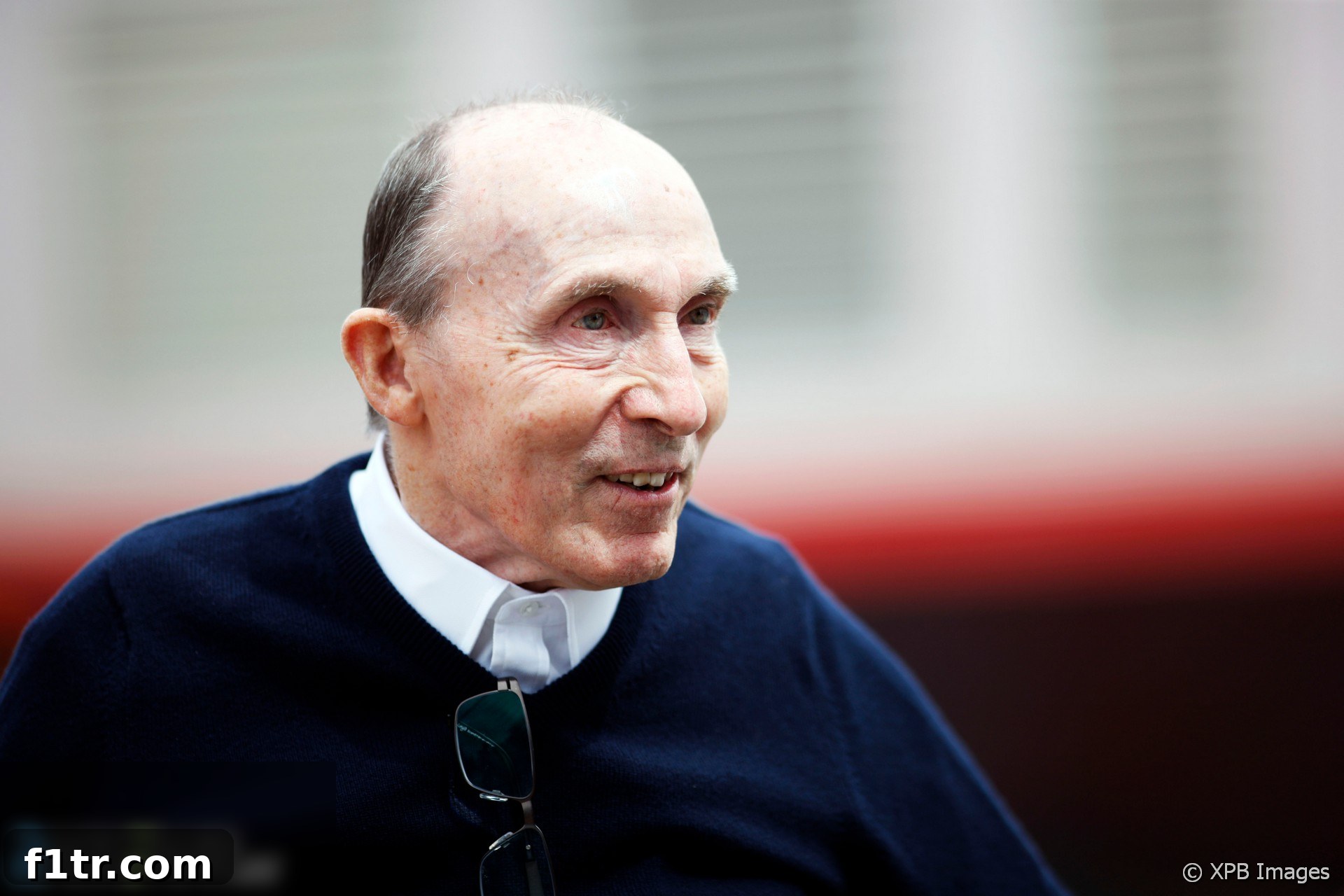
In the illustrious annals of Formula 1, few names resonate with the same indomitable spirit and sheer passion for racing as Sir Frank Williams. His journey, marked by both triumphs and tribulations, began for many, including myself, with a simple mention, almost whispered, on a race day. My personal connection to this legend began on a scorching Saturday in 1972, at the South African Grand Prix, an event that etched itself into my memory as my very first live experience of a world championship round.
Before that pivotal day, my understanding of Formula 1 was shaped by the local championship in my birth country. It was a rugged affair, populated by owner-drivers piloting cars that were often at least a year old, typically acquired after the grand circus had departed Kyalami. I knew the visceral scents of fuel and burning rubber, the roaring symphonies of those machines. But the 1972 Grand Prix was different. It brought to life the legendary names and vibrant colours I had only glimpsed in the dog-eared, borrowed pages of international motorsport magazines.
Early Encounters and Enduring Impressions of a Racing Icon
My guide through this exhilarating new world was Frank Wingels Senior, a former saloon racer whose son, also named Frank, became my school friend and fellow motorsport enthusiast. Frank Senior, a true hero in his own right, had achieved considerable success racing a ‘works’ Volvo 122S. Crucially for a budding F1 fanatic like me, he subscribed to airmail copies of British motorsport magazines, making him my undisputed F1 guru. We’d spend hours poring over race reports and driver profiles, fueling our shared passion.
That unforgettable day at Crowthorne corner, perched in the top row, Frank Senior’s running commentary served as our impromptu PA system, his voice cutting through the roar of engines as cars flashed by during warm-ups and later, in the heat of the race. When Henri Pescarolo, adorned in a vivid lurid-green helmet, emerged in the striking dark blue Williams-entered Motul March 721, my guru offered a telling observation: “I’m surprised he’s here; I didn’t think Frank Williams could afford the trip.”
My ‘Frank’ proceeded to paint a picture of ‘that’ Frank – a man perpetually cash-strapped, running his racing operation hand-to-mouth. He even revealed an unflattering moniker, “Wanker Williams,” and confidently predicted that Williams would “never make it.” As a young, impressionable fan, how could I question my seasoned mentor? History, however, would emphatically prove ‘my’ Frank, and indeed virtually every other F1 observer at the time, spectacularly wrong. This early, perhaps harsh, assessment only amplified the magnitude of Frank Williams’s eventual achievements, showcasing his incredible resilience and unyielding determination.
The Genesis and Glorious Rise of Williams Racing
Within a mere decade, Frank Williams defied all expectations. His team, Williams Grand Prix Engineering, rose from the ashes of financial uncertainty to claim its first Formula 1 World Titles in 1980. This was not a fleeting success; over the subsequent seven years, the team amassed five more constructors’ championships, firmly establishing itself as a dominant force in the sport. My personal idol at the time, Keke Rosberg, clinched the 1982 Drivers’ Championship, a significant victory as it marked the last title won by a normally-aspirated car before the turbocharged era irrevocably changed the landscape of F1.
The relentless pursuit of excellence continued. Honda turbos, synonymous with raw power and engineering prowess, propelled Williams to the Constructors’ Championship in 1986. This victory was particularly poignant, coming despite the life-altering injuries Frank Williams himself sustained in a severe car crash earlier that year, while returning from a testing session. His unwavering commitment to his team, even from a hospital bed, became a testament to his unparalleled dedication to motorsport. Today, Williams Racing stands as the third-oldest continuously present name on the Formula 1 grid, surpassed only by Ferrari and McLaren, boasting an incredible nine Constructors’ Titles and having guided drivers to seven World Championships.
A Glimpse Behind the Persona: The Unyielding Team Principal
The year 1990 brought a unique opportunity when the Williams team arrived at Kyalami for testing, and I was asked by the circuit to assist them in a liaison role. Frank himself was not present, but I distinctly recall the palpable trepidation that swept through the team when a report came in: Thierry Boutsen had crashed on cold tires. “The guv’nor won’t take this well…” muttered my team contact, a chilling premonition. Boutsen, though physically unharmed, looked more shaken after receiving a direct call from Frank than he had after his terrifying 240kph crash at Sunset Corner. The incident solidified a distinct impression: Frank Williams was not a man to be crossed.
My subjective opinions of him, largely formed by distant television shots, had ranged from dour and ruthless to outright ice-cold. This perception was reinforced in 1992, when, despite the team’s utter domination of the season, Frank controversially ‘fired’ Nigel Mansell. The considerable media pressure that followed failed to budge him. Yet, a nagging voice within me argued that this was not malice, but merely a true racer doing what he believed was necessary for his team’s future, a pragmatic ruthlessness born of ambition and survival.
From ‘Wanker’ to Knight: A Testament to Resilience
Late in 1992, amidst the swirling controversies, I was desperately trying to secure sponsorship for an aspiring F1 driver aiming for Formula Renault. In a moment of audacious desperation, I decided a call to Frank Williams was worth the shot. He was the archetypal racer, his cars ran Renault engines, he was British, and the worst he could do was say “No” – albeit, likely, very harshly. It was after hours, the ideal time to bypass formidable PAs and reach the top man directly. Nervously, I dialled the Didcot number – a number I still have listed today – and requested to be transferred to “Mr. Williams” regarding a sponsorship matter. It was a tenuous truth, but it did the trick. Within seconds, the reigning world champion constructor was on the other end, albeit on speakerphone.
I rapidly, perhaps too rapidly, explained my proposition. I highlighted that £150,000 was a mere drop in his then £80 million budget ocean, that our driver would compete in his sponsor colours, and that Williams would have the first option on the driver’s services. In retrospect, it was incredibly naive; yet, such junior team models are commonplace today. I braced myself for the inevitable dressing down for wasting his precious time. Instead, Frank, with characteristic charm, politely declined my offer, wished me well in my search, and added, “Who knows, we may well meet one day…”
I should have been deflated by the rejection, but instead, I was elated. Here was a team boss who was genuinely human, possessed a common touch, and had the courtesy to listen to my improbable tale. We eventually did meet, a little over four years later, at Silverstone. I had finally gained my first media accreditation and found myself in the Rothmans Williams hospitality suite, courtesy of the South African arm of the cigarette brand. I was introduced to Frank as a “South African journalist.” When he heard my name, his eyes lit up, as if recalling it, even if the circumstances remained hazy. Years later, I reminded him of that audacious phone call. “It was cheeky,” he smiled, a glint of amusement in his eyes.
Once, when I recounted my experiences to a Williams team member, he offered a keen insight: “Of course he listened – there may have been gold at the end of the call.” He then added, “But Frank would never put you down, regardless… and another thing: he never, ever forgets a name or face.” This remarkable ability to connect with people, to remember them and make them feel valued, was a cornerstone of his leadership and character.
The year 1999 saw Williams launch their FW21 at Autosport International. As I moved between the various press events, I spotted Frank, who had been knighted just a week earlier in the New Year’s Honours List, being wheeled past the legendary Jackie Stewart in the corridor. “Congratulations Sir Wanker,” the Scot, who would himself be knighted two years later, boomed after Sir Frank. Williams grinned, a wide, genuine smile, as though it was the biggest compliment he had ever received. His pleasure, having fought his way from the derogatory “wanker” nickname to a knighthood on his own terms, was undeniably clear and immensely satisfying to witness.
The Human Side of a Racing Titan: Paddock Politics and Personal Principles
I had more frequent interactions with Frank during the BMW-powered era, when I was contracted to a Munich-based German website. Following qualifying sessions, Frank would convene a select media session, usually called by his daughter Claire, who was then the team’s media officer. He would begin solemnly, then gradually spill the beans, at times offering particularly acidic remarks about various paddock shenanigans. Yet, he always did so with a twinkle in his eye and that slight, knowing smile.
The noughties were rife with paddock politics, a natural consequence of a tightly enclosed hectare populated by powerful figures like Max Mosley, Bernie Ecclestone, Jean Todt, Flavio Briatore, Ron Dennis, and Frank himself, along with the CVC heavies who believed their investments in F1’s commercial rights granted them ownership of the sport. Frank was our invaluable source, keeping us abreast of the intricate, often clandestine, dealings. A true measure of his standing and his implicit trust in us was that he never once uttered the phrase “off-record.” And in turn, we never compromised him by publishing the more poisonous revelations. Occasionally, he would ask one or two of us to remain behind. The first time this happened, I braced myself for a scolding over something I had written, or worse, an indiscretion. Instead, during these more intimate chats, he would unpack even more, revealing the deeper layers of F1’s political landscape.
That slightly mischievous smile often masked his deep annoyance over the pressing issues of the day. One such issue was Max Mosley’s plan to permit customer cars – with Prodrive keenly pursuing a deal with McLaren – a proposal that not only breached the Concorde Agreement but also violated prevailing regulations. Frank was unequivocal: customer cars were not Formula 1, and he threatened legal action. He ultimately won. When I respectfully pointed out that Williams himself began as a customer car operator, and had run one as recently as 1977, Frank charmingly countered that it had been an early, albeit legal, convenience born of financial necessity. He then firmly asserted that he had been party to the original Concorde Agreement because, in his unwavering opinion, Formula 1 was, and should always be, exclusively for constructors. Full stop.
Some of these media sessions would coincide with Formula 3000 rounds – the distant forerunner to today’s Formula 2. Frank would abruptly stop mid-sentence, his gaze fixed on the TV screens, watching a few opening laps of the junior series before resuming exactly where he had left off. When I once foolishly asked whether he, a championship-winning team boss, still enjoyed junior series racing, the look that accompanied his concise reply, “Of course, it’s motor racing,” told me off in no uncertain terms. It was a silly question, illustrating his pure, unadulterated love for every facet of the sport, regardless of the level.
The Enduring Legacy: Priorities and Unwavering Commitment
As age and his profound disabilities inevitably caught up with him, Frank’s attendance at Grands Prix diminished. This reduction was notably accelerated after he sold his private jet, a luxury that had previously made longer trips more bearable, to fund a new wind tunnel. This singular act spoke volumes about his priorities, clearly demonstrating that the advancement and competitiveness of Williams Racing always came before personal comfort. Despite his reduced presence, the absence of those informal, off-record chats was sorely felt by the media contingent. Still, whenever Frank was present, I made a point of popping in to greet him, gently shaking a finger in a customary gesture. Each time, he made me feel as though I was the very person he had been waiting for, a truly remarkable trait.
I am certain that all who visited him received similar treatment, but the fact remains that Frank possessed an extraordinary ability to make people feel special. This unique quality enabled him to charm crucial funding out of numerous companies, drawing them in with his enormous enthusiasm for and unrelenting commitment to Formula 1. This charisma was coupled with a steely determination, a dogged perseverance that allowed him to survive the myriad trials and profound tragedies that life relentlessly hurled at him, emerging stronger each time.
Over the years, I came to know Michael Waldher, the Austrian nurse who served as Frank’s personal carer from 2010 to 2016. While Michael, for ethical reasons, is understandably unwilling to discuss intricate details, he fondly recalls Frank’s unstinting gratitude and unwavering courtesy. Frank, in his position, could have easily demanded that Michael, a paid employee, bring him a cup of tea immediately. “Instead, it was always a polite, ‘Michael, please bring me a cup of tea’ and always a ‘thank you’ afterwards,” Michael remembers with affection. As a qualified nurse, he understands more than most how physically and emotionally demanding the care of para- and tetraplegics can be, and how those affected can understandably become bitter about their challenging circumstances. Yet, Frank was precisely the opposite: many of his close associates attest that they never once heard a word of complaint from him, a testament to his incredible inner strength and dignity.
Waldher smiles warmly as he recounts what he considers one of the happiest days of Frank’s life during the six years they were inseparable: the podium finish scored by Valtteri Bottas in 2014 at the Red Bull Ring. It was a hugely significant moment, being the first podium since the team’s split with BMW in 2005, save for Pastor Maldonado’s somewhat fortuitous 2012 win, achieved by a driver who had been ‘discovered’ and nurtured by Williams. As Michael pushed Frank towards the car park after that memorable race, he persuaded Claire to sit on his lap – a rare and touching demonstration of familial emotion from Frank, who, despite his reserved nature, was often at his most content when surrounded by the countless racing cars bearing the iconic ‘W’ on their nose, preferably within the very factory that proudly carried his name on its door.
Employees at the factory would recount tales of Frank being wheeled between rows of sophisticated machines and autoclaves during night shifts, stopping here to meticulously check a component, there to question a manufacturing process. He knew them all by name, too – primarily because most were Williams lifers, such was the profound loyalty he instilled in them. “They all felt they were doing it for him,” Michael confirms, encapsulating the deep sense of camaraderie and shared purpose that defined Williams Grand Prix Engineering.
The Changing Tides of F1 and a Lasting Legacy
Of course, the team’s painful slump to the bottom of the rankings in recent years undoubtedly hurt Frank deeply. However, Formula 1 had irrevocably changed, and Frank, by his very nature and physical condition, simply could not change with it. The sport he knew and loved, a raw, entrepreneurial endeavour, had evolved into a corporate circus. Frank, famously, was never a good corporate clown; he once candidly told me he was “unemployable.” The primary reason for Williams’s extraordinary success, apart from his own inherent attributes, was an uncanny ability to recruit and retain precisely the right people when it mattered most.
He demonstrated this brilliantly in the beginning with Patrick Head, who joined as an inexperienced, junior engineer but was given all the necessary tools and autonomy to create groundbreaking products that brought immense pride to the company name – Williams Grand Prix Engineering – on a global stage. And he demonstrated it again at the end: when all seemed lost, the team was ultimately saved by having the right, carefully selected management team at the helm, orchestrating a professional sale rather than a desperate collapse.
Over the last five years, four independent teams, including Williams, changed hands after losing the unequal fight against the corporate giants of Formula 1, with one, Manor, folding completely. The sales of (Genii) Lotus, Sauber, and Force India were notoriously messy affairs. In stark contrast, Williams was meticulously packaged and presented on the market in a professional, dignified manner, a testament to Frank’s foresight and planning. He had put that capable management team in place specifically for such an eventuality, ensuring his beloved team’s legacy would continue, even without his direct stewardship.
I did not know Frank as intimately as I would have liked, nor as well as those who graced the paddock long before my entrance. Yet, of all the remarkable individuals I have encountered in Formula 1, the one I was always most pleased to see was Frank Williams. His distinctive mannerisms, his unwavering passion, and his profound love for the sport were simply infectious. He richly deserved every one of his considerable achievements, most, if not all, of which were won against overwhelming odds. Indeed, the title “Lord Williams of Didcot” would have been a more fitting tribute to his colossal impact and enduring spirit.
In the powerful, must-see documentary simply titled ‘Williams’, Michael Waldher utters the poignant final words: “Frank will stop [racing] when his eyes close.” For once, I respectfully disagree with a man who knew Frank far better than most, and certainly better than I. Frank has not stopped racing, for the simple, undeniable reason that he cannot. Sir Francis Owen Garbett Williams has merely found another racetrack, somewhere, elsewhere, continuing his eternal quest for speed and triumph.
Further Reading: Insights into the World of Formula 1
- The Year of Sprints, ‘The Show’ – and Rising Stock: A Political Review of the 2021 F1 Season
- The Problems of Perception the FIA Must Address After the Abu Dhabi Row
- Why the Budget Cap Could Be F1’s Next Battleground Between Mercedes and Red Bull
- Todt Defied Expectations as President – Now He Plans to “Disappear” from FIA
- Sir Frank Williams: A Personal Appreciation of a True Racer
Browse all RacingLines columns