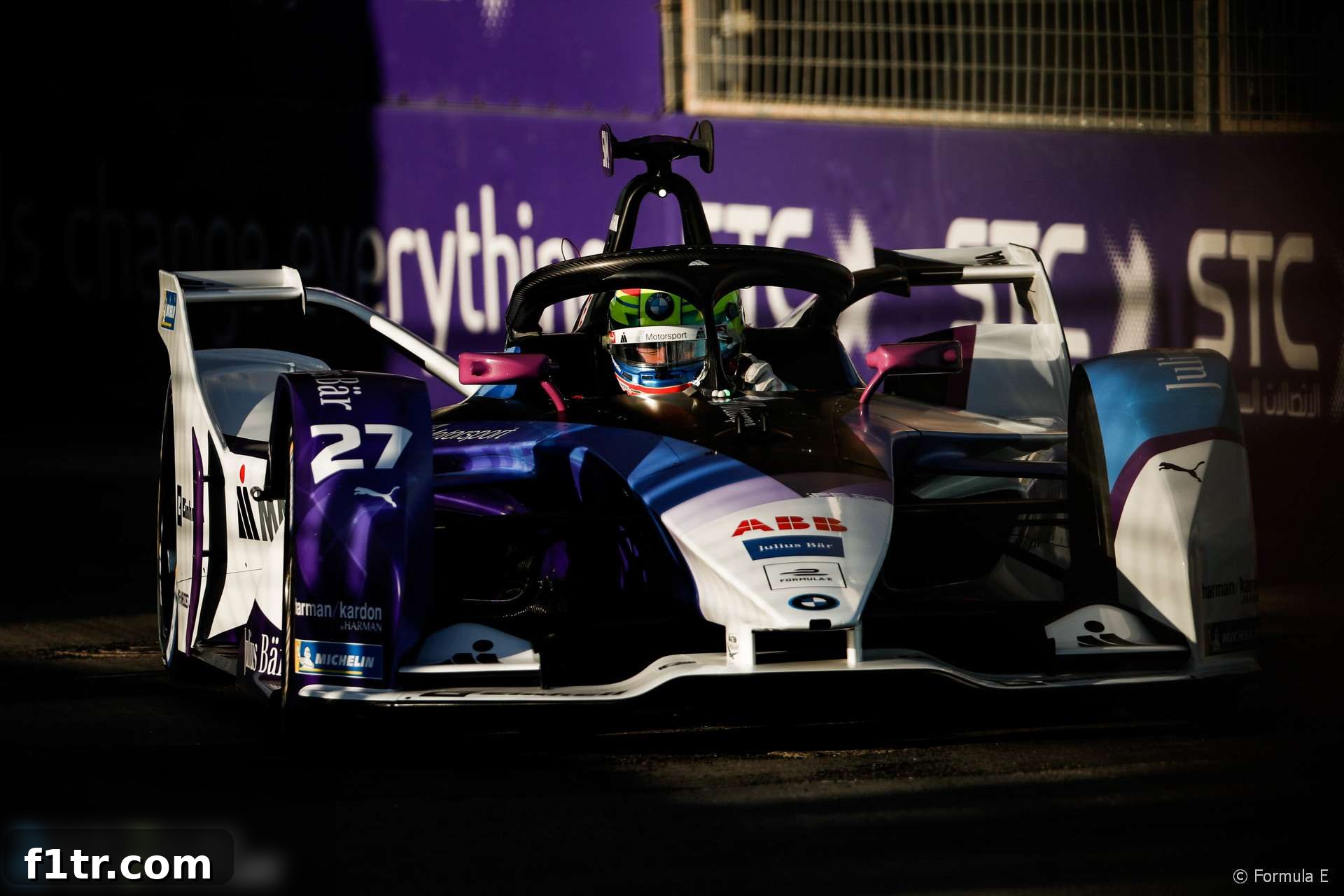
Alexander Sims Claims Pole Position for Diriyah E-Prix Season Opener Amidst Mercedes’ Strong Debut
The electrifying 2019-20 Formula E season roared to life in Diriyah, Saudi Arabia, with Alexander Sims of BMW i Andretti Motorsport seizing a sensational pole position for the opening race. Sims masterfully navigated the challenging street circuit, fending off an impressive debut challenge from the championship’s newest manufacturer, Mercedes-EQ Formula E Team. The silver arrow cars immediately made their presence felt, with Stoffel Vandoorne and rookie Nyck de Vries locking out the second and third spots on the grid, signaling their potent intentions for the season ahead.
The Diriyah circuit, infamous for its dusty surface, presented a formidable challenge to all competitors. While heavy rain had masked the extent of the dust problem in the previous season, this year, the issue was glaringly obvious. This characteristic, coupled with the unique group qualifying format, played a crucial role in shaping the grid. The running order for qualifying groups is determined by the previous season’s championship standings, meaning the highest-ranked drivers run earliest on the dirtiest track. This year, the expectation was clear: the track would likely ‘rubber in’ and improve significantly for the later groups, potentially offering a strategic advantage to teams with lower championship standings or newcomers, such as Mercedes and Porsche, each fielding a new driver in their squads.
Qualifying Groups: Navigating the Dusty Streets
Group One: The Chequered Flag Conundrum
| Position | Driver | Team | Time |
|---|---|---|---|
| 1 | Jean-Eric Vergne | DS Techeetah | 1’16.139 |
| 2 | Robin Frijns | Envision Virgin | 1’16.200 |
| 3 | Sebastien Buemi | Nissan e.Dams | 1’16.243 |
| 4 | Mitch Evans | Jaguar | 1’16.532 |
| 5 | Lucas di Grassi | Audi | 1’17.213 |
| 6 | Antonio Felix da Costa | DS Techeetah | 1’18.613 |
The opening group, comprising some of the championship’s most decorated drivers, experienced the most intense manifestation of the ‘chequered-flag chicken’ phenomenon. This tactical game involves drivers deliberately holding back, unwilling to be the first to cross the start line for their hot lap, preferring to benefit from the slipstream of those ahead and avoiding being the first to ‘clean’ the racing line. The result was a chaotic queue, further compounded by an unfortunate technical setback for Antonio Felix da Costa. A brake failure in the garage forced his team to send him out with explicit instructions to immediately attempt a 250kW hot lap, bypassing an essential installation lap typically used to scrub tires and build confidence. His compromised run led to an uncharacteristically slow time and a minor brush with the barriers, highlighting the pressures of the session.
As the clock ticked down, Mitch Evans found himself leading a congested train of cars, a position no driver wants to be in. Sébastien Buemi, at the very back of the pack, risked missing the chequered flag entirely for his flying lap. Despite Evans’s attempt to drop behind Lucas di Grassi before engaging maximum power, this maneuver inadvertently bunched the cars even tighter, denying anyone clear air and creating a precarious nose-to-tail squeeze. While Jean-Eric Vergne ultimately topped this group, his time, nearly four seconds off the pace set in free practice, was a stark indicator of the severely compromised track conditions and the strategic fumbling within the group. It was immediately apparent that these times would be nowhere near Super Pole contention.
Group Two: Finding the Rhythm
| Position | Driver | Team | Time |
|---|---|---|---|
| 1 | Sam Bird | Envision Virgin | 1’14.946 |
| 2 | Jerome D’Ambrosio | Mahindra | 1’15.273 |
| 3 | Andre Lotterer | Porsche | 1’15.518 |
| 4 | Oliver Rowland | Nissan e.Dams | 1’15.653 |
| 5 | Pascal Wehrlein | Mahindra | 1’16.200 |
| 6 | Daniel Abt | Audi | 1’16.264 |
As Group Two commenced, a noticeable, albeit slight, improvement in track conditions offered a glimmer of hope. Sam Bird capitalized brilliantly on this evolving surface, meticulously piecing together a significantly superior lap time compared to his Group One counterparts. His blistering 1:14.946 immediately set a new benchmark, proving to be over three-tenths faster than the commendable effort of Jerome D’Ambrosio. Both drivers showcased impressive pace, with their times instantly registering as serious contenders for the coveted Super Pole shootout. Andre Lotterer, making his debut with the Porsche team, also delivered a solid performance, underscoring the potential for the new manufacturer to compete at the sharp end. The competitive nature of this group clearly demonstrated the rapid track evolution and the increasing grip available to the later runners, laying down a formidable challenge for the groups yet to come.
Group Three: The Battle for Super Pole
| Position | Driver | Team | Time |
|---|---|---|---|
| 1 | Stoffel Vandoorne | Mercedes | 1’15.151 |
| 2 | Edoardo Mortara | Venturi | 1’15.254 |
| 3 | Alexander Sims | BMWi Andretti | 1’15.255 |
| 4 | Maximilian Guenther | BMWi Andretti | 1’15.680 |
| 5 | Oliver Turvey | NIO 333 | 1’16.018 |
| 6 | Felipe Massa | Venturi | 1’16.583 |
Group Three unfolded as the most intensely competitive session of the day, producing a torrent of strong performances that highlighted the increasing grip on the Diriyah circuit. The times posted by drivers in this group firmly established them as front-runners, all vying for a spot in Super Pole. Alexander Sims and Edoardo Mortara, both delivering exceptional laps, were separated by an agonizingly thin margin of just one-thousandth of a second. However, their brilliant efforts were eclipsed by a mere tenth of a second by Stoffel Vandoorne, who demonstrated the raw speed of the new Mercedes-EQ package. All three drivers immediately propelled themselves into Super Pole contention, setting the stage for a thrilling shootout.
Aside from the front-running trio, Maximilian Günther in the second BMW i Andretti car also put in a respectable time, underscoring the team’s overall strong performance. The only significant deviations from the competitive pace within this group were a costly mistake from Formula 1 veteran Felipe Massa, which compromised his lap, and the continuing struggles of the NIO 333 team, whose car appeared to lack the outright pace to challenge for top positions. This group truly showcased the evolving nature of the track and the caliber of drivers who could extract maximum performance under rapidly improving conditions.
Group Four: The Rookie Gauntlet and Yellow Flags
| Position | Driver | Driver | Team | Time |
|---|---|---|---|---|
| 1 | Nyck de Vries | Mercedes | 1’15.027 | |
| 2 | Brendon Hartley | Dragon | 1’17.074 | |
| 3 | Neel Jani | Porsche | 1’17.745 | |
| 4 | Ma Qing Ha | NIO 333 | 1’21.701 | |
| 5 | Nico Mueller | Dragon | 1’23.017 | |
| 6 | James Calado | Jaguar | 1’23.792 |
The final qualifying group, largely populated by rookie or less experienced drivers, was always anticipated to be the most unpredictable. Adding to this inherent volatility was the dirty track, which by this point had already caught out even seasoned drivers. This combination transformed Group Four into something of an attrition event, where clean laps were hard to come by, and true pace often remained obscured by circumstances rather than a lack of driver talent. It was here that Mercedes’ strategic foresight truly paid off.
Nyck de Vries, the talented Mercedes rookie, was sent out early in the session, a decision that proved to be a stroke of tactical genius. Despite the theoretical disadvantage of a less-developed track, his early run allowed him to complete his crucial qualifying lap cleanly and without interruption. In stark contrast, the other drivers in the group became entangled in a series of unfortunate events. This literally unfolded with debutants Nico Mueller and James Calado, both of whom spun or parked their cars at Turn 17 during their hot laps. These incidents immediately brought out the yellow flags, effectively neutralizing the session and preventing any other driver from improving their times. De Vries’s calculated early run, combined with the subsequent chaos, secured him an unexpected but well-deserved spot in Super Pole, further emphasizing Mercedes’ impressive showing on debut.
Super Pole Showdown: Sims Dominates
With the group qualifying sessions concluded, the stage was set for the Super Pole shootout, featuring the top six fastest drivers, each vying for pole position and the single championship point awarded for the fastest group qualifying time (which Sam Bird had claimed). Bird, building on his strong performance in free practice and his dominant Group Two time, was widely considered a strong favorite for pole. However, the Super Pole session often introduces its own unique pressures and challenges, and Diriyah was no exception.
As the cars took to the track for their individual flying laps, a curious shift in track conditions seemed to occur. Instead of the anticipated continued improvement, the track appeared to reverse its development, possibly due to cars going off-line or kicking up more dust. It was in this critical moment that Alexander Sims delivered a truly charging lap, a masterclass of precision and aggression. His 1:14.563 proved to be an unbeatable benchmark, a testament to his skill and the refined setup of his BMW i Andretti machine. Despite the best efforts of the Mercedes drivers, Sims’ time remained unchallenged.
Sam Bird, who had looked so strong earlier, suffered a critical off-line error during his hot lap, costing him precious tenths and taking him out of realistic contention for pole. Edoardo Mortara’s solid lap further highlighted the strength of the Mercedes-powered Venturi, meaning three of the top four cars in Super Pole were propelled by Mercedes power, a remarkably convincing debut showing on single-lap pace for the German manufacturer. Sims’ pole position was not just a victory for himself and BMW i Andretti but also a clear statement of intent for the new season, promising thrilling battles to come.
Qualifying – Full Results:
Super Pole:
1. Alexander Sims – BMW Andretti – 1:14.563
2. Stoffel Vandoorne – Mercedes – 1.14.839
3. Nyck de Vries – Mercedes – 1:14.929
4. Edoardo Mortara – Venturi – 1:15.131
5. Sam Bird – Virgin – 1:15.350
6. Jerome D’Ambrosio – Mahindra – 1:15.539
Groups:
7. Andre Lotterer – Porsche – 1:15.518
8. Oliver Rowland – Nissan e.Dams – 1:15.563
9. Maximilian Guenther – BMW Andretti – 1:15.680
10. Oliver Turvey – NIO – 1:16.018
11. Jean-Eric Vergne – DS Techeetah – 1:16.129
12. Robin Frijns – Virgin – 1:16.200
13. Pascal Wehrlein – Mahindra – 1:16.200
14. Sebastien Buemi – Nissan e.Dams – 1:16.243
15. Daniel Abt – Audi Abt – 1:16.264
16. Mitch Evans – Jaguar – 1:16.532
17. Felipe Massa – Venturi – 1:16.583
18. Brendon Hartley – Dragon – 1:17.074
19. Lucas di Grassi – Audi Abt – 1:17.213
20. Neel Jani – Porsche – 1:17.745
21. Antonio Felix da Costa – DS Techeetah – 1:18.613
22. Ma Qing Ha – NIO – 1:21.701
23. Nico Mueller – Dragon – 1:23.017*
24. James Calado – Jaguar – 1:23.792*
*Times set without using 250kW
Formula E News and Updates
- McLaren to quit Formula E at end of season
- Wehrlein beats Jaguar pair to title in dramatic Formula E finale
- Wehrlein’s London win sets up thrilling three-way title showdown in finale
- Da Costa takes hat-trick of wins in chaotic second Portland race
- Da Costa inherits Portland win from Evans after Cassidy spins lead away
Browse all Formula E articles