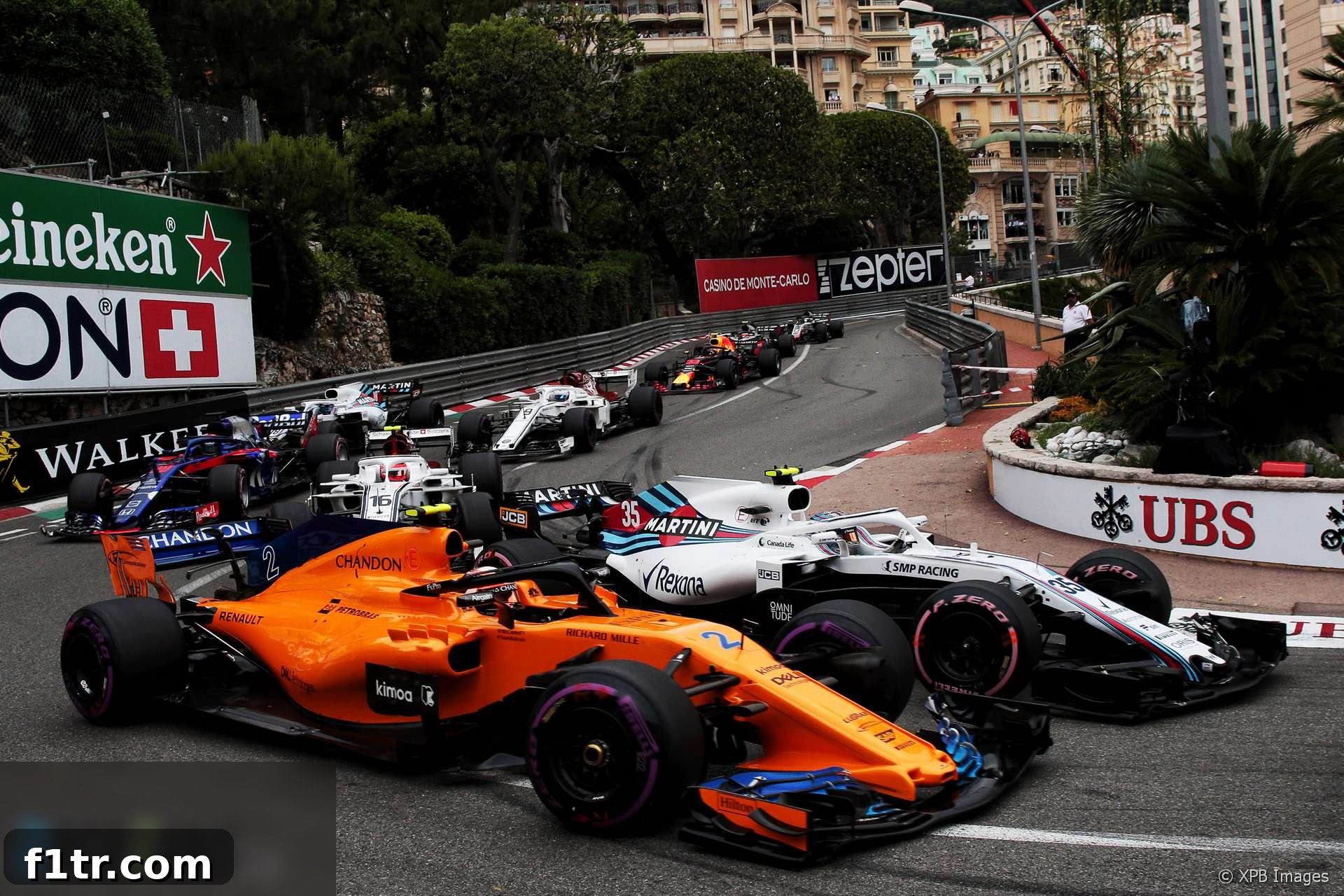
The Formula 1 calendar is steeped in history, featuring iconic venues that have defined the sport for decades. Among them, the Monaco Grand Prix stands as the undisputed ‘Crown Jewel’. Present on the world championship calendar every year since its inception in 1950, with only a handful of exceptions, it boasts one of the longest and most revered lineages in motorsport. Yet, despite its enduring legacy and unparalleled glamour, the Monaco Grand Prix harbours a curious anomaly that sparks debate annually: its uniquely shorter race distance.
While every other round of the Formula 1 World Championship must adhere to a minimum race distance of 305 kilometres, Article 5.3(a) of the sporting regulations stipulates a distinctive 260-kilometre distance exclusively for the Monte Carlo event. This significant deviation from the norm means that Monaco consistently holds the title of F1’s shortest race, not in terms of time, but in overall distance covered. This raises a pertinent question among fans, drivers, and pundits alike: Is there still a valid justification for treating this prestigious round of the championship so differently from all others? Or is it time for the Monaco Grand Prix to finally align with the standard race lengths observed across the rest of the F1 calendar?
The Curious Case of Monaco: A Historical Perspective
The roots of Monaco’s abbreviated race distance can be traced back to an earlier era of Formula 1. In the formative years of the sport, cars were less reliable, speeds were lower, and the demanding, intricate street circuit made for incredibly long race durations. Completing a full 305-kilometre distance could easily push past the then-unlimited race time, leading to lengthy, drawn-out spectacles that tested the endurance of both machinery and man. To ensure races concluded within a more reasonable timeframe, especially given the inherent challenges and slower average speeds on the Principality’s tight roads, a reduced distance was introduced.
This pragmatic adjustment became an entrenched part of the Monaco Grand Prix’s identity, evolving into a tradition that has persisted for over 70 years. While modern Formula 1 cars are vastly different – more robust, faster, and capable of sustained high performance – the regulation remains. Last year, for instance, drivers completed the 260-kilometre distance in approximately one hour and 42 minutes. At that pace, they could comfortably cover the standard 305-kilometre distance well within the current two-hour time limit imposed on all F1 races. This stark contrast between historical necessity and contemporary capability forms the core of the ongoing debate.
Arguments For Standardizing Monaco’s Race Length
Proponents of a standardized race distance for Monaco argue that the original justifications for its shorter length are now entirely obsolete. Modern Formula 1 cars are technological marvels, capable of running a full 305-kilometre race within the two-hour time limit without issue. The notion that a longer race would push past this limit is largely unfounded; even with Safety Car or Virtual Safety Car periods, races like Singapore, another street circuit notorious for its duration, have successfully completed full distances, sometimes nearing the two-hour mark but rarely exceeding it.
Extending the Monaco Grand Prix to the standard 305 kilometres could inject much-needed excitement into a race that is often criticised for being processional. The circuit’s tight confines make overtaking incredibly difficult, leading to races that can sometimes resemble a parade. A longer race would offer more opportunities for strategic variations to emerge, as driver fatigue sets in, and, crucially, as tyre degradation becomes a more significant factor. Currently, tyre wear at Monaco is negligible due to the circuit’s low-speed nature and smooth surface, allowing drivers to often complete large portions of the race on a single set. A longer distance might necessitate more pit stops, or at least force teams to manage their tyres more carefully, creating strategic dilemmas and potential for unexpected outcomes.
Moreover, more laps mean more instances where race leaders must contend with the complex and frustrating challenge of navigating lapped traffic around Monaco’s maddeningly close confines. These moments, while often not leading to overtakes, can create drama and pressure, potentially leading to errors that could shake up the order. From a sporting integrity perspective, treating Monaco uniquely also raises questions of fairness. If the race remains an 85% distance event, some argue it should only award 85% of the points – translating to 21 points for the winner, 15 for second, and 0.85 for tenth place or the fastest lap. This proposition, while radical, highlights the perceived inconsistency of Monaco’s current status.
Arguments Against Changing Monaco’s Unique Format
On the other side of the debate, many argue vehemently for preserving Monaco’s distinct character, including its shorter race distance. For over 50 years, the Formula 1 races in Monte Carlo have run to this reduced distance, with only a few exceptions where torrential rain forced even earlier stoppages, such as the 1984 and 1996 Monaco Grands Prix. This shorter distance has become an integral and traditional component of a race that fundamentally deviates from the norm in numerous other ways.
Monaco’s unique status within Formula 1 extends far beyond its race length. It is the only event where practice sessions take place on Thursday, allowing a traditional break on Friday for the Principality’s social calendar. It is also the only track on the calendar shorter than the minimum length stipulated for Grade One circuits by the FIA, underscoring its historical exemption and singular nature. Furthermore, Monaco is famously the only race that does not pay a hosting fee to Formula 1 Management. This long-standing arrangement reflects the immense value Monaco brings to the sport in terms of prestige, glamour, and global visibility – elements that money alone cannot buy. As the saying goes, “you get what you pay for,” or in this unique case, “what you don’t pay for” still delivers immeasurable brand value to F1.
The combination of these deviations — the Thursday practice, the unique track layout, the absence of a hosting fee, and the shorter race distance — collectively define the Monaco Grand Prix as truly special. Altering any one of these elements, particularly the race distance, could be seen as eroding the very essence of what makes Monaco, Monaco. For many purists and traditionalists, the race is a spectacle of precision driving and historical significance, where even a shorter distance presents an unparalleled challenge. They contend that the race’s distinctive qualities are precisely what cement its status as a cornerstone of the F1 calendar, and any attempt to homogenise it with other races would diminish its legendary appeal.
The Verdict: A Step Towards Modernity or Undermining Tradition?
From an objective standpoint, it becomes increasingly difficult to justify maintaining the shorter race length for Monaco in the modern era of Formula 1. While the argument for tradition holds significant sway, it rarely stands as a singular, compelling justification for maintaining a practice when more logical and potentially beneficial alternatives are readily available. The sport is constantly evolving, seeking to optimise spectacle, competition, and fan engagement. Adjusting Monaco’s race distance could be a relatively small, yet impactful, step in that direction.
Enlarging the Monaco Grand Prix to the standard F1 race length holds the tangible promise of injecting a greater degree of action and strategic complexity into a race that often struggles to deliver overtakes. While the tight nature of the circuit will always limit wheel-to-wheel battles, a longer race offers more opportunities for the drivers and cars to fatigue, leading to potential errors. It would provide more laps for tyres to genuinely wear down, forcing teams to consider multi-stop strategies or manage tyre life more judiciously. Furthermore, the increased frequency of managing lapped traffic, particularly in the later stages, could create critical pressure points that influence the outcome.
It is important to acknowledge that extending the race distance might not fundamentally transform the Monaco Grand Prix into a festival of overtaking. However, it represents a commitment to maximising the sporting challenge and potential for drama within the existing framework of this legendary event. It is unlikely to be the most pressing issue facing Formula 1 today, but it is a symbolic move that aligns the sport’s most iconic race with its contemporary competitive standards. It signals a willingness to adapt and improve, even when confronting the deeply embedded roots of tradition.
What Do the Fans Think? Community Poll Insights
The debate surrounding Monaco’s race length is clearly a polarising one among the Formula 1 fanbase. A community poll on this very topic reveals a significant division of opinion, underscoring the delicate balance between honouring tradition and embracing modernity within the sport. The results showed that a considerable portion of voters, approximately 28%, strongly agreed that the Monaco Grand Prix should be the same length as other F1 races, with another 24% slightly agreeing. This combined majority of 52% suggests a clear lean towards standardisation among a large segment of the fanbase, indicative of a desire for more consistent sporting regulations across the calendar and potentially more action in Monte Carlo.
However, a strong counter-argument was also evident, with 20% of voters strongly disagreeing with any change, and an additional 14% slightly disagreeing. This collective 34% highlights a passionate segment of fans who value Monaco’s unique traditions and believe its distinct format is part of its charm. The remaining voters were either neutral (11% neither agree nor disagree) or had no strong opinion (4%). These poll insights reveal that while there’s a definite push for change, the loyalty to Monaco’s historical quirks remains robust, making any decision on this matter a complex balancing act for Formula 1’s governing bodies.
Ultimately, the question remains: Should the Monaco Grand Prix conform to the same race distance as all the other rounds of the championship? The arguments are compelling on both sides, representing the timeless tension between preserving the sport’s rich heritage and pushing for continuous improvement and innovation. As Formula 1 looks to its future, how it addresses such unique historical quirks will define its evolution, balancing its celebrated past with an exciting, competitive future.
Advert | Become a RaceFans supporter andgo ad-free
Debates and polls
- What must Formula 1 fix with its new rules – and what should it leave unchanged?
- ADUO: Do F1 teams who fall behind deserve to get help to catch up?
- F1 is considering doubling its sprint races. Do you want more or fewer?
- Will this be a fight or a rout? 20 questions for the 2026 Formula 1 season
- Which Formula 1 team has the best-looking car – and the worst – for the 2026 season?
Browse all debates and polls