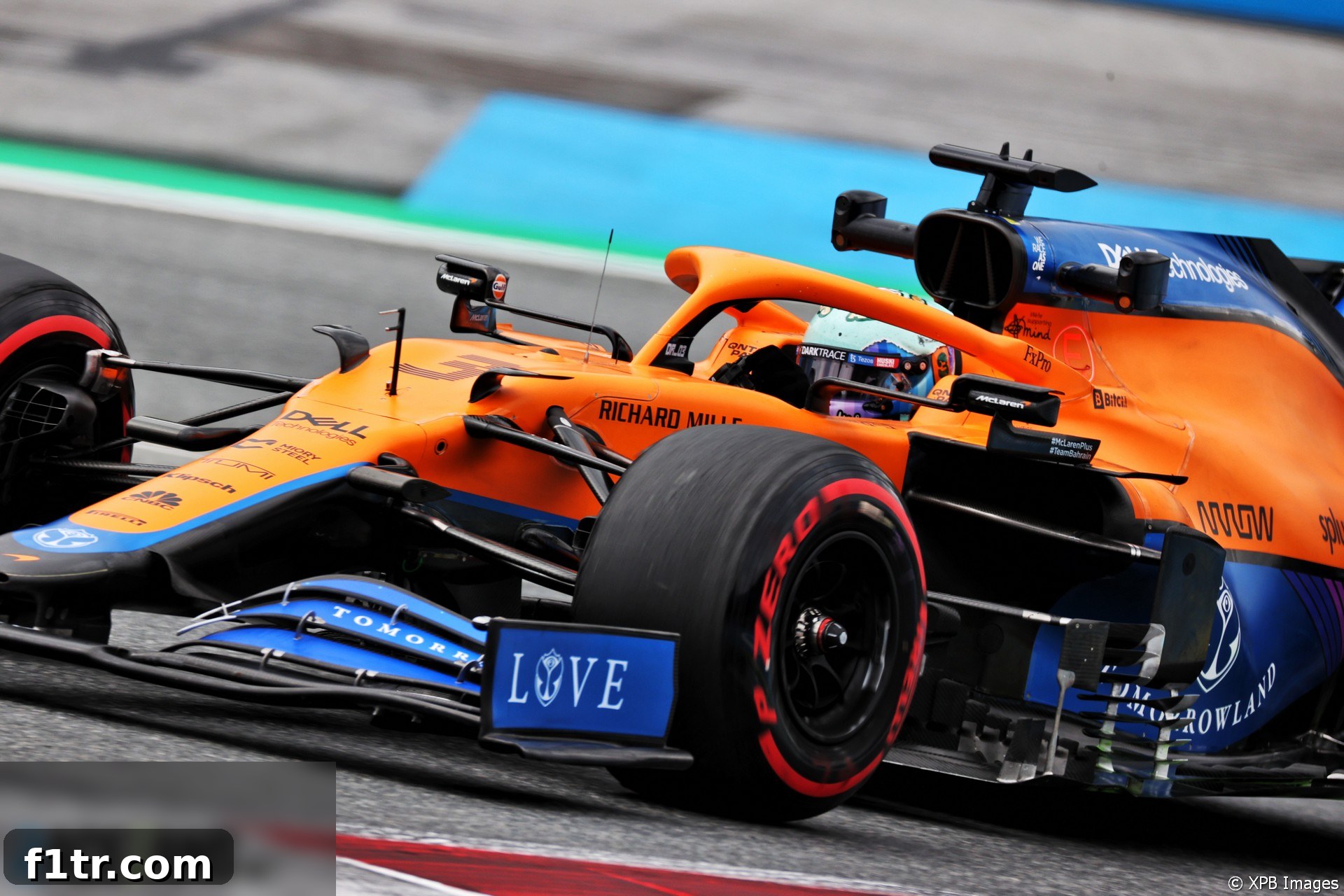
McLaren’s Dual Q3 Ambition: Andreas Seidl Stresses Both Cars in Final Qualifying Stage
In the high-stakes world of Formula 1, qualifying performance often dictates race outcomes, and for McLaren Team Principal Andreas Seidl, the imperative is clear: both cars must consistently reach Q3. Seidl recently underlined the “important” objective of having both Lando Norris and Daniel Ricciardo battling for top-ten grid slots, a feat they have only achieved in half of the races so far this season. This aspiration is not merely about individual driver performance but is fundamental to McLaren’s broader strategic goals in the fiercely contested Constructors’ Championship.
The 2021 season has presented a mixed bag for the Woking-based outfit. While Lando Norris has been a beacon of consistency, impressively navigating his MCL35M into the final round of qualifying in all eight races to date, his experienced teammate Daniel Ricciardo has faced a steeper learning curve. Ricciardo has found himself eliminated in Q2 on three occasions, including at the same track just last weekend, and failed to progress beyond Q1 during the Portuguese Grand Prix. This disparity highlights a crucial area for improvement as McLaren seeks to cement its position among the sport’s elite.
The Critical Need for Consistent Q3 Appearances
“It will be important for us to get back into quali three with both cars,” Seidl stated, emphasizing the collective goal. He added, “It would obviously be great if we could repeat Lando’s performance again like we have seen last weekend in qualifying and beat the Ferraris and battle one or the other Red Bull or Mercedes, which will be difficult.” This ambition underscores McLaren’s intent to not only lead the midfield but also to occasionally challenge the established front-runners, a task that becomes significantly more feasible with two cars starting within the top ten.
Consistently placing both cars in Q3 yields multiple benefits. Firstly, it maximizes the team’s points-scoring potential, which is vital in their ongoing battle for third place in the Constructors’ Championship, primarily against Ferrari. Every extra position on the grid can translate into valuable points, and having two drivers in Q3 doubles the chances of securing strong finishes. Secondly, it provides crucial data from both drivers operating at the absolute limit, accelerating car development and understanding. A unified front in qualifying reinforces team morale and demonstrates robust engineering and strategic execution.
Lando Norris: A Pillar of Consistency
Lando Norris’s performance in 2021 has been nothing short of exceptional. His unbroken streak of Q3 appearances is a testament to his natural talent, growing maturity, and deep understanding of the MCL35M. Norris has consistently extracted the maximum from his package, often outperforming the car’s inherent pace and positioning McLaren strongly for Sunday’s race. His ability to adapt to varying track conditions and maintain a high level of performance under pressure has elevated him to one of the most exciting talents on the grid. This consistency not only brings points but also sets a very high benchmark for his teammate.
Norris’s seamless integration with the car and the team, having been with McLaren for several seasons, allows him to push the limits with confidence. His feedback is precise, and his understanding of how to set up the car for optimum single-lap pace is evident. This has enabled McLaren to be a formidable force, even when facing stiff competition from rivals like Ferrari, who also possess a strong car and driver lineup. Norris’s strong qualifying form has been a cornerstone of McLaren’s competitive resurgence.
Daniel Ricciardo’s Adaptation Journey
In contrast, Daniel Ricciardo’s transition to McLaren has been more challenging than many anticipated. Despite his undeniable talent and a formidable track record, the nuances of the MCL35M have required a significant period of adjustment. After yesterday’s practice sessions, Ricciardo ended up 15th fastest, though tellingly, he was only two-tenths of a second slower than Norris. This narrow margin suggests that the raw pace is within reach, but finding that final crucial tenth or two, especially when pushing the car to its absolute limit in qualifying, remains the hurdle.
Andreas Seidl acknowledges Ricciardo’s ongoing process, stating, “He made some good steps forward for some of the races like in Barcelona and Paul Ricard.” However, the team principal also candidly admitted, “But he’s still not fully at home with our car, not fully comfortable, especially when you have to push this car to the limit in qualifying. That’s why we still see these ups and downs.” This assessment points to the subtle yet profound differences in car philosophy and driving style required by the McLaren compared to his previous teams.
Ricciardo himself provided insight into his struggles. Following practice, where McLaren focused on development work for a floor upgrade, he expressed confidence in finding more time for qualifying. “We’re just lacking a little bit,” he reflected. “There’s nothing which feels out of place with balance in the car. I assume it’s probably just a little bit everywhere. I know there’s not many corners here but maybe we’re just missing half a tenth everywhere and obviously that adds up to maybe half a second or something and maybe that’s what we need.” This perspective highlights the cumulative effect of marginal gains or losses across a lap, especially on shorter, more intense circuits.
The challenge for a driver like Ricciardo, renowned for his late braking and aggressive driving style, lies in adapting his natural instincts to a car that may demand a different approach. The McLaren MCL35M, with its Mercedes power unit, has unique characteristics that Norris has mastered. For Ricciardo, it’s about re-calibrating his muscle memory and developing the precise confidence to extract maximum performance, particularly when the car is on the knife-edge of grip during crucial qualifying laps.
The Path Forward: Patience and Development
Seidl’s message to the team and to Ricciardo is one of patience and focused effort. “We simply have to stay calm, together with him, work on the challenges he’s having with our car and then to simply pull off this performance that we have seen from him already more often,” he affirmed. This collaborative approach is critical. F1 cars are incredibly complex machines, and fine-tuning a driver’s comfort and confidence within a new chassis often takes time, even for a seasoned veteran like Ricciardo.
The team’s ongoing development work, such as the floor upgrade mentioned by Ricciardo, plays a significant role. These aerodynamic enhancements are designed to improve the car’s overall performance and handling characteristics. A more stable and predictable car will naturally boost a driver’s confidence, enabling them to push harder without fear of unexpected snap oversteer or understeer. McLaren’s engineers will be working tirelessly with Ricciardo, analyzing data, experimenting with setup changes, and potentially tailoring certain elements to better suit his driving preferences.
Ricciardo’s pedigree suggests that he will eventually overcome these hurdles. His previous successes, including multiple Grand Prix victories, attest to his immense talent and resilience. The process of adaptation is not linear, and there will likely be further “ups and downs” as Seidl mentioned. However, the collective belief within McLaren is that once Ricciardo fully “clicks” with the MCL35M, he will consistently deliver the kind of top-tier qualifying and race performances he is known for.
Broader Implications for McLaren’s Championship Hopes
For McLaren, securing both cars in Q3 isn’t just about individual glory; it’s a strategic necessity in their quest for higher championship standings. The battle for third place in the Constructors’ Championship is incredibly tight, with Ferrari consistently posing a strong challenge. Every point counts, and starting positions directly influence the likelihood of scoring those points. A dual Q3 presence provides strategic flexibility on Sunday, allowing the team to split strategies, cover rival moves, and increase their chances of bringing home a significant haul of points.
Looking ahead, McLaren’s ability to unlock Ricciardo’s full potential will be pivotal. With Norris already performing at an elite level, a consistently strong Ricciardo would transform McLaren into an even more formidable force, capable of regularly challenging the likes of Red Bull and Mercedes on certain circuits. The team’s investment in both drivers and ongoing car development underscores their ambition to return to the very pinnacle of Formula 1. The journey to consistent dual Q3 appearances is a clear indicator of their progress and a measure of their competitive strength.
Related Content
- Vasseur on Alfa’s “huge step forward” and why he’s vexed by technical directives
- How Ricciardo “got some enjoyment back” after “really low” first race in Austria
- F1’s penalty points are not “harsh” and won’t be reviewed this year – Masi
- Austrian double showed Sainz found his feet faster than 2021’s other big-name moves
- 2021 Austrian Grand Prix Star Performers
Browse all 2021 Austrian Grand Prix articles