Tristan Vautier Makes Highly Anticipated IndyCar Return at Detroit Grand Prix with Dale Coyne Racing
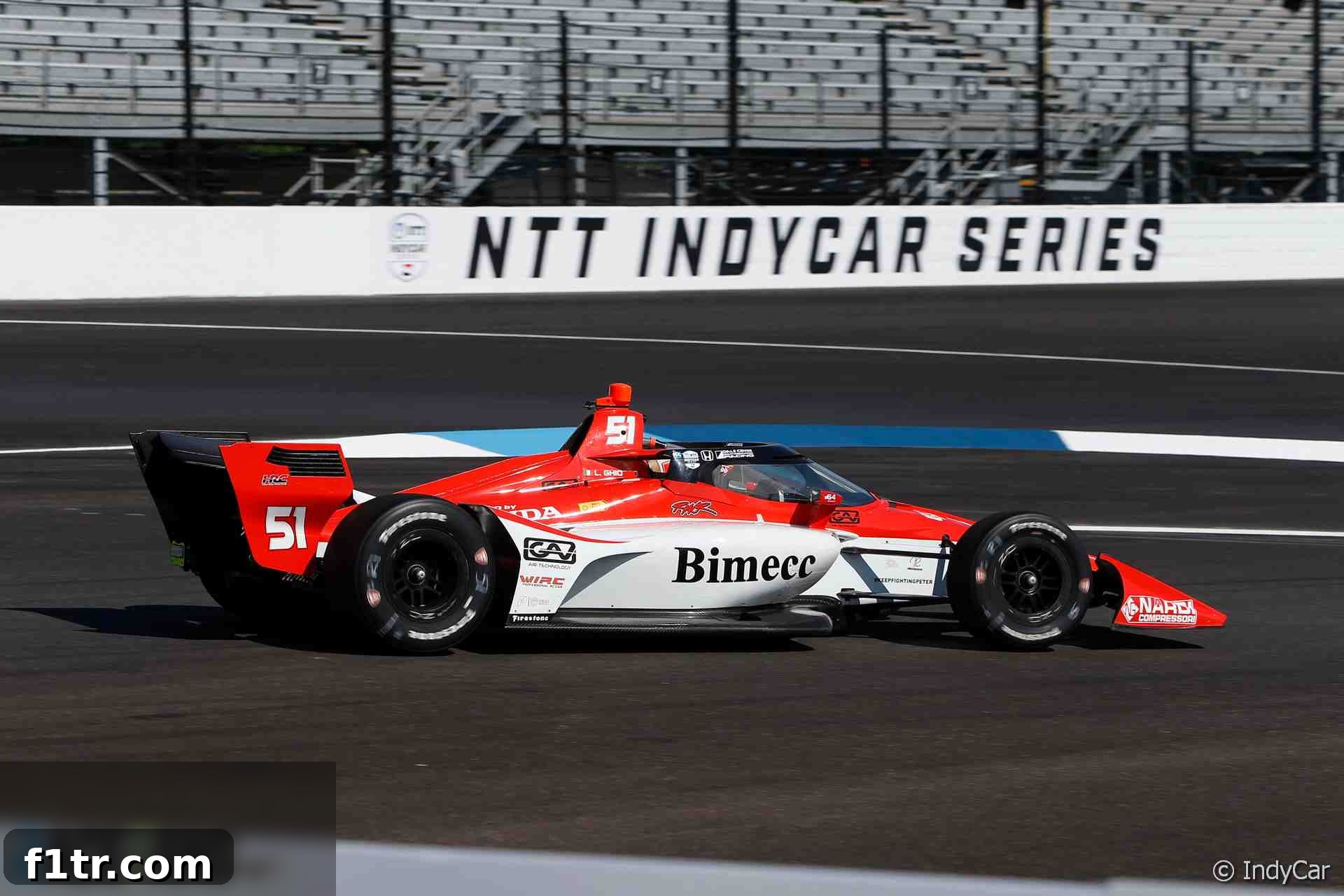
The exhilarating world of IndyCar racing is set to witness a significant comeback this weekend as Tristan Vautier, a name familiar to long-time fans, makes his highly anticipated return to the series after a seven-year hiatus. The French driver is slated to take the wheel of Dale Coyne Racing’s number 51 entry at the challenging Detroit Grand Prix, marking a pivotal moment in both his career and the team’s unconventional season.
A Seven-Year Hiatus Ends: Vautier Back in IndyCar’s Spotlight
Vautier’s return to the NTT IndyCar Series is more than just another entry; it’s a narrative of resilience, opportunity, and the relentless pursuit of speed. His last appearance in IndyCar dates back to 2017, also with Dale Coyne Racing, making this weekend’s reunion a full-circle moment for the driver and the team. The Detroit Grand Prix, known for its demanding street circuit layout, presents an immediate and formidable challenge, pushing Vautier straight into the deep end of one of motorsport’s most competitive open-wheel championships.
Expressing his excitement on social media, Vautier shared, “Super-excited to be returning to IndyCar with Dale Coyne Racing for this weekend’s Detroit Grand Prix. Big challenge ahead, let’s go!” This sentiment captures the mixture of enthusiasm and sober recognition of the task at hand. The IndyCar paddock has evolved considerably in seven years, with new technologies, intensified competition, and a fresh crop of talent. Vautier’s ability to quickly re-adapt will be under intense scrutiny, making his performance a key story to follow.
From Indy Lights Champion to IndyCar Contender
Tristan Vautier first burst onto the American open-wheel scene with considerable promise. His journey to IndyCar was paved with success in the Road to Indy ladder system, culminating in a dominant performance in the 2012 Indy Lights (now Indy NXT) championship. Winning the feeder series title is a traditional pathway to IndyCar, signaling a driver’s potential and readiness for the premier category. Vautier’s championship run showcased his raw speed, strategic acumen, and ability to manage a season-long campaign against rising stars.
His impressive Indy Lights title earned him a spot in the IndyCar Series with Schmidt Peterson Motorsports (now Arrow McLaren) in 2013. As a rookie, Vautier faced the steep learning curve inherent in IndyCar, adapting to more powerful cars, diverse track types including ovals, road courses, and street circuits, and the tactical nuances of fuel saving and tire management. Despite the challenges, his rookie season was a valuable experience, laying the groundwork for future appearances and cementing his reputation as a skilled and adaptable driver.
Previous Stints: A History with Dale Coyne Racing
Following a year out of the series in 2014, Vautier re-entered the IndyCar paddock in 2015, forging his initial connection with Dale Coyne Racing. This period proved to be particularly fruitful, yielding his career-best IndyCar result. It was at the second Detroit race that year, held at the former Belle Isle venue, where Vautier piloted his Coyne machine to an impressive fourth-place finish. This performance demonstrated his affinity for street circuits and his capability to extract maximum performance from the equipment, even with a smaller, independent team. His familiarity with both the team and the challenging Detroit circuit could provide a crucial advantage in his upcoming return.
Vautier’s most recent IndyCar start before this weekend was also with Dale Coyne Racing, occurring in 2017 at Texas Motor Speedway. That race, however, ended prematurely for Vautier when he was caught up in a multi-car collision shortly after half distance, through no fault of his own. While an unfortunate conclusion, it highlights his last engagement with the series and the team, adding another layer of history to this weekend’s highly anticipated comeback.
The Sportscar Chapter: Maintaining Form and Skill
Since his last IndyCar outing, Tristan Vautier has not been idle. Instead, he has carved out a successful career in sportscar racing, competing in some of the world’s most prestigious endurance championships. This shift allowed him to hone his craft, maintain his competitive edge, and adapt to different racing disciplines. His tenure in sportscars includes significant runs in the IMSA SportsCar Championship, GT racing, and notably, the World Endurance Championship (WEC).
Last year, Vautier was part of the Vanwall team in the WEC, competing in the Hypercar class. Racing in such a high-caliber championship against factory-backed teams and world-class drivers ensures that Vautier’s racing instincts, physical conditioning, and strategic thinking remain sharp. The skills developed in sportscar racing – consistent pace over long stints, managing traffic, and working closely with teammates on setup – are highly transferable to IndyCar, particularly on street circuits where precision and endurance are key. This extensive experience outside of open-wheel racing ensures he returns not as a rusty veteran, but as a seasoned competitor with a broadened skill set.
Dale Coyne Racing’s #51 Car: A Season of Rotating Drivers
Advert | Become a Supporter & go ad-free
Tristan Vautier’s entry into the Dale Coyne Racing #51 car marks him as the fifth different driver to occupy that seat in the first six points-scoring rounds of the 2024 season. This highly unusual situation underscores the unique challenges and operational dynamics of independent teams like Dale Coyne Racing, which often rely on a mix of funded drivers, promising rookies, and experienced part-timers to fill their lineups. The constant rotation speaks volumes about the demanding financial landscape of IndyCar and the team’s ongoing search for stability and performance.
The Driver Carousel: An Unprecedented Challenge
The season began with Colin Braun at the helm of the #51 car for the season-opening round at St. Petersburg. Braun, an accomplished sportscar and NASCAR driver, brought a wealth of oval and endurance racing experience, making his IndyCar debut on the street circuit. Following him, young talent Nolan Siegel took over for the Long Beach Grand Prix. Siegel, a promising contender from the Indy NXT series, represents the future of American open-wheel racing, gaining crucial experience in the premier category.
Next, Italian driver Luca Ghiotto, a former Formula 2 and Formula 3 front-runner, spent two weekends in the car, venturing into IndyCar for the first time. His European open-wheel background brought a different perspective to the team. Most recently, Katherine Legge, an experienced IndyCar and sportscar racer, took the wheel for the prestigious Indianapolis 500, a race demanding unique specialization and bravery. Her participation highlighted the team’s strategic choice to bring in an oval specialist for the crown jewel event.
This rapid succession of drivers, each with distinct backgrounds and skill sets, presents a significant operational challenge for Dale Coyne Racing. Continuity is crucial for success in motorsport, allowing engineers and drivers to build a rapport, develop the car setup, and refine strategies over time. Without a stable driver, the team faces a constant re-learning process, making it difficult to find a consistent rhythm and optimize performance.
Impact of Instability on Team Performance
The fluctuating driver lineup undoubtedly impacts Dale Coyne Racing’s ability to maximize its potential. Each new driver requires time to acclimatize to the car, the team’s procedures, and the specific demands of IndyCar. This process consumes valuable track time and resources that could otherwise be dedicated to refining the car’s setup or developing new components. For a smaller team, every moment on track is precious.
Furthermore, a lack of consistent feedback from a single driver can hinder car development. Engineers rely heavily on driver input to understand handling characteristics, identify areas for improvement, and validate setup changes. With different drivers providing varied perspectives, it becomes more challenging to pinpoint persistent issues or pursue a cohesive development direction. This instability can translate into inconsistent on-track results, making it harder for the team to climb the championship standings.
The Significance of the Detroit Grand Prix
The Detroit Grand Prix is not just another race on the IndyCar calendar; it’s a vibrant and demanding event that holds a special place for many. Its street circuit layout, located in the heart of downtown Detroit, offers a unique set of challenges that can both reward precision and punish even the slightest error. For Tristan Vautier, this particular venue carries added significance, potentially playing a crucial role in his comeback narrative.
A Demanding Street Circuit Test
The Detroit Grand Prix circuit is renowned for its tight corners, bumpy surfaces, and unforgiving concrete walls. Unlike purpose-built road courses or high-speed ovals, street circuits demand a blend of aggressive driving and pinpoint accuracy. Drivers must navigate through narrow confines, manage tire wear on abrasive surfaces, and contend with limited run-off areas. Overtaking is notoriously difficult, placing a premium on qualifying performance and strategic race management.
The technical nature of the track requires a car with excellent mechanical grip, strong braking, and agile handling. The close proximity of the walls means that even a small mistake can lead to significant damage and an early retirement. This high-pressure environment makes the Detroit Grand Prix a true test of a driver’s skill, concentration, and mental fortitude, particularly for someone returning after a long absence.
Vautier’s Detroit History: A Glimmer of Past Success
Adding to the intrigue of Vautier’s return is his prior success at the Detroit Grand Prix. As mentioned, his career-best IndyCar finish of fourth place came at Belle Isle in 2015, during his first stint with Dale Coyne Racing. This strong performance on a similar street circuit layout suggests that Vautier possesses a particular aptitude for these types of tracks. His familiarity with the unique demands of urban racing, coupled with his historical success in Detroit, could provide a valuable psychological and strategic advantage.
Dale Coyne Racing’s decision to bring Vautier back for Detroit might well be influenced by this past performance, hoping to capitalize on his comfort and speed on the street circuit. A strong showing here would not only be a personal triumph for Vautier but also a much-needed boost for the team, demonstrating their ability to unlock potential and achieve competitive results.
Team Lineup for Detroit: Harvey and Siegel’s Roles
For the Detroit Grand Prix, Tristan Vautier will be joined by Jack Harvey, who returns to Dale Coyne Racing as his teammate. Harvey’s presence provides a level of continuity for the team, as he has been a more consistent fixture in the second Coyne entry this season. Meanwhile, Nolan Siegel, after his attempt to qualify for the Indianapolis 500 last week, will return to his planned schedule in the Indy NXT series. This ensures that the DCR lineup for Detroit comprises a mix of returning experience and a familiar face, offering a dynamic combination for the challenging weekend ahead.
Looking Ahead: What Does the Future Hold for Vautier and DCR?
Dale Coyne Racing has not yet indicated whether Tristan Vautier is part of their long-term plans for the number 51 entry. This leaves open the question of whether his Detroit appearance is a one-off opportunity, a strategic evaluation, or a potential audition for a more extended role. The answer will likely hinge on his performance this weekend and the broader strategic and financial considerations of the team.
A Shot at Redemption or a New Beginning?
For Vautier, this return could be seen as a shot at redemption, a chance to re-establish himself in the IndyCar paddock after a significant period away. A strong, error-free performance in Detroit could open doors for future races, either with Dale Coyne Racing or potentially with other teams looking for experienced and proven talent. The challenge is immense, as he must re-acclimatize to the current generation of IndyCar machinery, the competitive intensity, and the strategic complexities of modern racing without the benefit of extensive testing.
His success would not only be a personal victory but also a testament to the fact that talent and dedication can endure beyond traditional career paths. It could signal a new beginning, allowing him to leverage his sportscar experience to become a more complete and versatile IndyCar driver.
Navigating the Highly Competitive IndyCar Landscape
The IndyCar Series is arguably one of the most competitive motorsport championships in the world. The field is packed with world-class drivers, including former F1 stars, Indianapolis 500 winners, and multiple series champions, all vying for victory in cars that are remarkably similar in performance. This level of competition means that even minor differences in setup, strategy, or driver performance can have a significant impact on results.
For Vautier, returning to this environment means immediately being up against the very best. He will need to quickly shake off any rust, find his rhythm, and demonstrate his ability to compete at the sharp end. The pressure will be immense, but it is precisely this challenge that makes his return so compelling.
The Stakes for Dale Coyne Racing
From Dale Coyne Racing’s perspective, securing a consistent and competitive driver for the #51 car is paramount. The constant rotation of drivers, while necessary at times due to funding or specific event requirements, ultimately hinders the team’s ability to build momentum and consistently challenge for strong finishes. A successful outing with Vautier could provide a much-needed injection of stability and confidence.
If Vautier performs well, it could provide the team with a clear direction for the remainder of the season, potentially leading to a more stable driver lineup. This would allow the team to focus on car development, optimize their operations, and work towards improving their overall championship standing. The stakes are high for both driver and team as they head into the demanding streets of Detroit.
Conclusion: High Hopes for a Promising Return
Tristan Vautier’s return to the IndyCar Series at the Detroit Grand Prix with Dale Coyne Racing is undoubtedly one of the most intriguing storylines of the season. After a seven-year absence and a successful stint in sportscar racing, Vautier brings a wealth of experience and a renewed hunger for open-wheel competition. His previous success at Detroit and his history with the team offer a promising backdrop for this comeback.
While the challenges are formidable, including re-adapting to the series and navigating Dale Coyne Racing’s evolving driver lineup, the potential rewards are significant. A strong performance in Detroit could reignite Vautier’s IndyCar career and provide much-needed stability and momentum for Dale Coyne Racing. All eyes will be on the #51 car this weekend as Tristan Vautier writes the next chapter of his IndyCar journey on the demanding streets of Detroit.
More from the World of IndyCar
- Understanding IndyCar: Chassis and Engine Developments
- The Growing Appeal of IndyCar in Global Motorsport
- Top Five IndyCar Street Circuits and Their Challenges
- How IndyCar Rookies Are Making an Impact This Season
- Dale Coyne Racing: A Look at Their Team Strategy and History
Browse all IndyCar articles