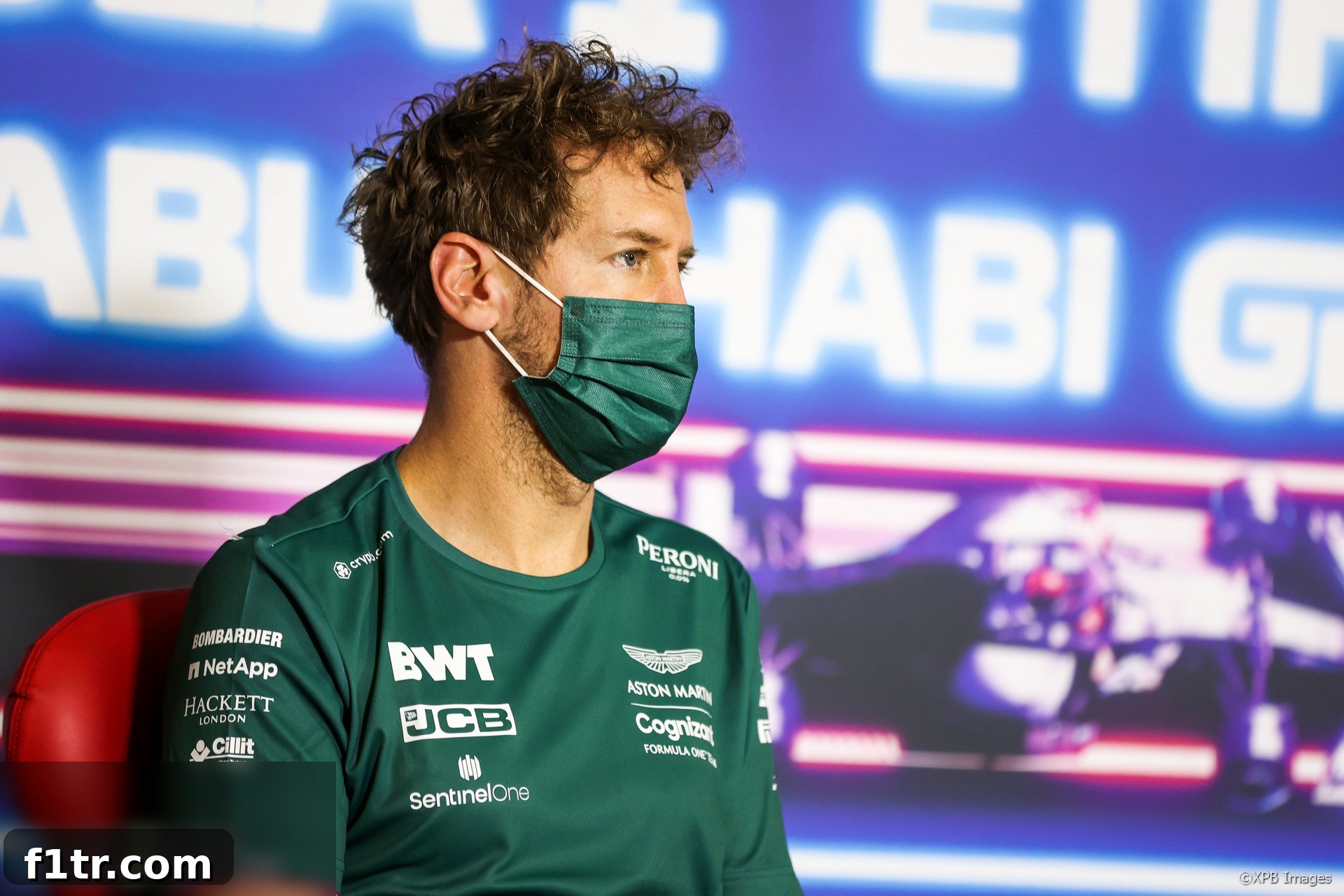
The Unwavering View: Why Michael Schumacher Remains Sebastian Vettel’s Greatest of All Time Despite Lewis Hamilton’s Records
In the high-octane world of Formula 1, where legends are forged and records are relentlessly pursued, the debate over the “Greatest of All Time” (GOAT) is an evergreen topic. While Lewis Hamilton continues to redefine what’s possible, smashing long-standing statistical benchmarks, one prominent voice remains steadfast in his conviction: four-time world champion Sebastian Vettel. For Vettel, no matter how many world championship titles Hamilton clinches, Michael Schumacher will always hold the undisputed title of the greatest Formula 1 driver.
Advertisement | Support Us & Enjoy an Ad-Free Experience
Support independent Formula 1 journalism and get exclusive content by becoming a RaceFans supporter today. Experience our articles without interruptions and delve deeper into the world of F1.
The pinnacle of Hamilton’s illustrious career saw him on the cusp of securing a record eighth world championship, a feat that would finally move him past the seven-title record Schumacher established in 2004. Even before this potential milestone, the Mercedes driver had already eclipsed many of Schumacher’s other significant records, including the most career wins, pole positions, podium finishes, and laps led. These achievements solidify Hamilton’s position as a statistical titan, challenging the very notion of what constitutes F1 greatness. Yet, for Vettel, these numbers, while impressive, do not alter his deeply held belief.
Sebastian Vettel’s Deep-Rooted Admiration for Michael Schumacher
Sebastian Vettel’s stance on the GOAT debate is not merely a preference but a profound conviction rooted in admiration, respect, and a personal connection. Speaking ahead of a pivotal championship showdown, Vettel openly expressed his sentiments: “Michael is my hero. For that reason, I probably don’t want Lewis to win.” This raw, honest statement encapsulates the emotional weight many, including fellow drivers, attach to Schumacher’s legacy.
Vettel, a formidable competitor himself with four world championships to his name, fully acknowledged the incredible season put forth by both Hamilton and his rival, Max Verstappen. “They both had a strong season and they are going into the last race with the opportunity to win the championship because they both deserve it,” he stated, demonstrating his professional respect for their achievements. However, his personal leanings remained clear: “In a way I’d be happy if Michael’s record still stands, but even if Lewis wins, to me Michael is still the greatest. If Lewis can win one more, two more, three more, five more championships, it doesn’t change anything for me. And I get along with Lewis.”
This nuanced perspective highlights the dichotomy between statistical achievement and an athlete’s personal impact. For Vettel, Schumacher transcends mere statistics, embodying an ideal of driving excellence and pioneering spirit that resonates deeply. His “gut says I want Max to win just to keep Michael’s record alive,” a sentiment many fans might share, while his “head is quite clear in terms of may the better man win.” This internal conflict reveals the very human element behind the objective pursuit of records.
Michael Schumacher: The Enduring Benchmark of Formula 1 Excellence
Michael Schumacher’s era was defined by an unparalleled blend of raw talent, relentless dedication, and strategic brilliance. His seven world championships, achieved over two distinct periods of dominance, set a benchmark that many believed was insurmountable. From his early triumphs with Benetton to his legendary five consecutive titles with Ferrari between 2000 and 2004, Schumacher became synonymous with excellence. He transformed Ferrari into a winning machine, instilling a level of professionalism and technical prowess that raised the bar for the entire sport.
Beyond the statistics – 91 wins, 68 pole positions, 155 podiums – Schumacher’s influence extended to the very fabric of Formula 1. He was a pioneer in physical training, pushing the boundaries of driver fitness. His tactical intelligence, particularly in wet conditions, was legendary, earning him the moniker “Regenmeister” (Rainmaster). For a generation of drivers and fans, Schumacher wasn’t just a competitor; he was an inspiration, a mentor, and a symbol of what dedication could achieve. Vettel’s connection to Schumacher runs deeper than mere admiration; he had the privilege of getting to know him personally, evolving from a fan to a friend. This rare intimacy undoubtedly solidified Schumacher’s place as an unmatched hero in Vettel’s eyes.
Lewis Hamilton’s Historic Ride: Redefining Modern F1 Greatness
Lewis Hamilton’s career trajectory is a testament to sustained excellence and adaptability. Bursting onto the scene in 2007, he immediately challenged established norms, securing his first world title in only his second season. His move to Mercedes in 2013 marked the beginning of an unprecedented era of dominance, where he, alongside the German team, rewrote the F1 record books. Hamilton’s six titles with Mercedes, bringing his total to seven, were achieved through a combination of blistering speed, strategic prowess, and a remarkable ability to perform under pressure.
His record-breaking achievements in wins, poles, and podiums speak volumes about his consistency and longevity at the absolute pinnacle of motorsport. Hamilton has not only equaled Schumacher’s championship count but has also arguably pushed the statistical boundaries further in several key areas. His impact extends beyond the track, as a prominent voice for diversity and inclusion within the sport, adding another layer to his complex legacy. While his statistical supremacy is undeniable, the question for some, like Vettel, remains whether sheer numbers can fully capture the essence of being the “greatest.”
The Enduring Subjectivity of the ‘Greatest of All Time’ Debate
The “Greatest of All Time” debate in any sport is inherently subjective, often influenced by personal allegiances, historical context, and the criteria one chooses to prioritize. In Formula 1, comparing drivers across different eras presents unique challenges. Car technology, safety standards, race calendars, and competitive landscapes have all evolved dramatically. A driver’s success is intricately linked to the machinery they pilot, the team they are part of, and the regulations of their time.
Some argue that pure statistics offer the most objective measure, pointing to Hamilton’s superior numbers in many categories. Others contend that the context of Schumacher’s achievements, particularly his role in transforming Ferrari, elevates his status beyond mere records. Then there are those who remember legends like Juan Manuel Fangio, Jim Clark, or Ayrton Senna, whose brilliance, though numerically smaller in terms of championships, left an indelible mark on the sport, often against different levels of competition or in far more perilous conditions. Vettel’s perspective serves as a powerful reminder that while numbers tell one story, the emotional connection, the personal inspiration, and the heroic narrative a driver creates can be equally, if not more, impactful in defining their ‘greatness’ in the eyes of others.
Sebastian Vettel’s Own Illustrious Career
It is also worth noting Sebastian Vettel’s own impressive career. Winning his fourth world title at the age of 26, seven years younger than Schumacher when he won his fourth championship, Vettel was once seen as the likeliest contender to challenge his hero’s records. He amassed 53 career wins, a tally surpassed only by Schumacher and Hamilton. His period of dominance with Red Bull Racing from 2010 to 2013 showcased incredible speed, strategic acumen, and the ability to operate under immense pressure. Reflecting on his own place in the sport’s history, Vettel stated, “I think to Michael, I got very close, especially getting to know him and becoming a friend. So, yeah, I think I’m happy with where I am [in the record books]. Let’s put it this way.” This humble acceptance highlights that for Vettel, personal connection and satisfaction outweigh the relentless chase for statistical supremacy.
As Formula 1 continues to evolve and new talents emerge, the GOAT debate will persist, fueling passionate discussions among fans and pundits alike. What is clear, however, is that drivers like Michael Schumacher, Lewis Hamilton, and Sebastian Vettel have each carved out their own monumental legacies, contributing to the rich tapestry of motorsport history in unique and unforgettable ways. For Sebastian Vettel, the emotional resonance and personal hero-worship of Michael Schumacher remain an immutable truth, a testament to the enduring power of inspiration over mere statistics.
Advertisement | Become a RaceFans supporter andgo ad-free
Enjoy F1 insights without interruptions. Join our community of supporters today! Gain early access to content and support independent journalism.
Related: The Controversial 2021 Abu Dhabi Grand Prix Legacy
- Masi ‘basically gifted the championship’ to Verstappen says 2021 FIA steward Sullivan
- Norris called out F1 over its farcical 2021 finale. Will it get it right this time?
- Why Mercedes put ‘a reminder of joy and pain’ on display in their factory lobby
- Hamilton would be an eight-time champion if Whiting was still alive – Steiner
- Verdict on error in GT race suggests Mercedes would have lost 2021 Abu Dhabi GP appeal
Explore More Articles on the 2021 Abu Dhabi Grand Prix