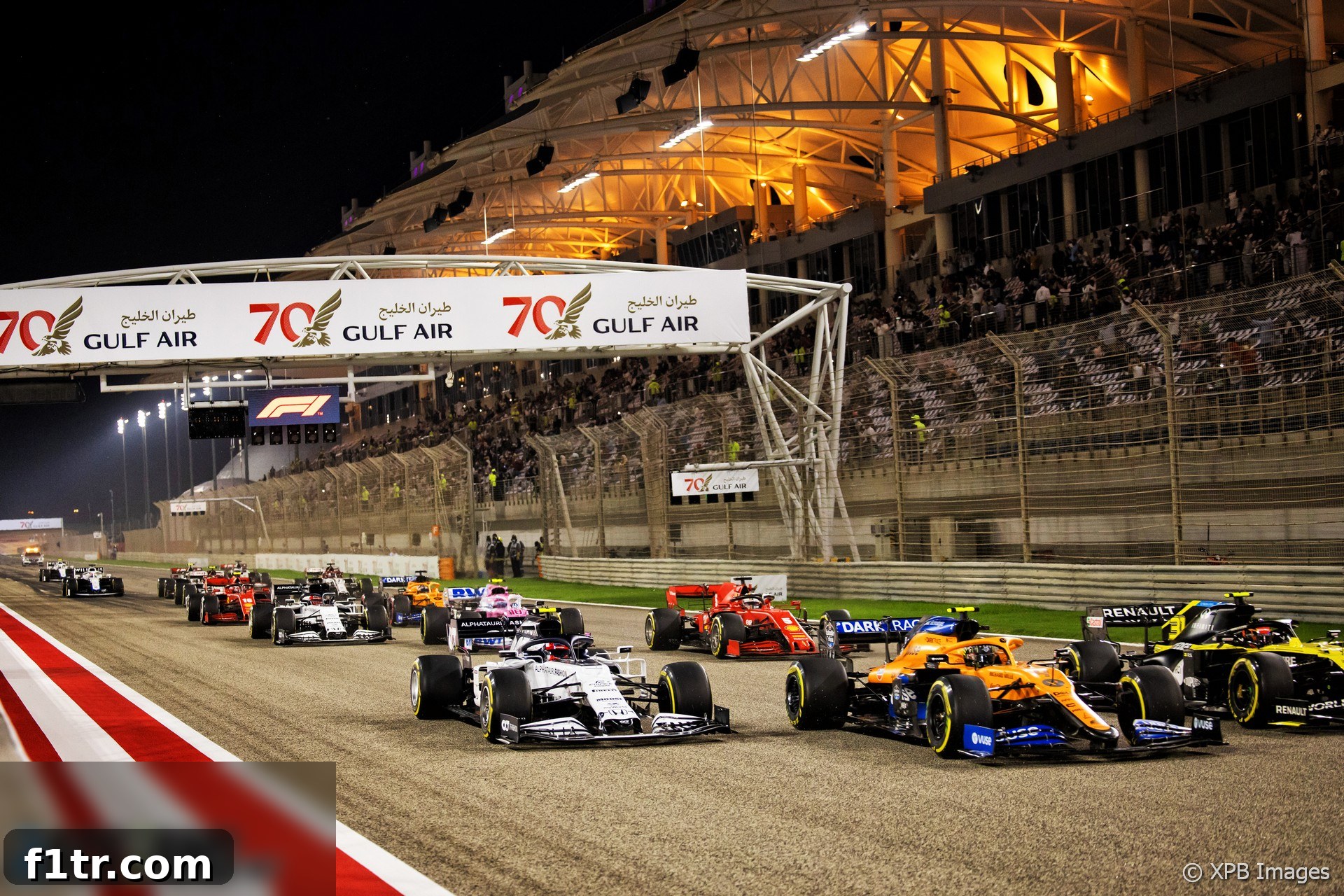
As the pinnacle of motorsport returns to the Kingdom of Bahrain, anticipation is building for a truly unique spectacle: the Sakhir Grand Prix. For the second consecutive week, Formula 1 cars will tackle the Bahrain International Circuit, but this time with an exhilarating twist. Drivers will navigate the lesser-used, high-speed ‘Outer Track’ layout, promising a thrilling and unpredictable race under the desert night sky. This exceptional configuration, renowned for its rapid pace and fewer corners, sets the stage for a dramatic contest where every tenth of a second will count, and strategic decisions will be paramount. With unique weather dynamics playing a crucial role, teams and drivers alike are preparing for a challenging yet exciting weekend.
Advert | Become a Supporter & go ad-free
The Sakhir Grand Prix is set to commence with Sunday’s main event at 8:10 PM local time. This significantly later start time, a full three hours after the previous weekend’s Bahrain Grand Prix, is a deliberate strategic choice. It allows the desert landscape to cool sufficiently from the intense daytime heat, ensuring optimal track conditions for the evening race. Night racing at the Bahrain International Circuit is always a breathtaking affair, with the floodlit track enhancing visibility and creating a spectacular visual experience for fans worldwide. The cooler temperatures typically lead to better tire degradation characteristics and potentially more consistent performance from the cars, although other environmental factors will still pose significant challenges.
While the setting remains the same, the challenges presented by the Sakhir Outer Circuit are distinct. This shortened, high-speed layout features just 11 corners and is expected to yield lap times well under a minute, making it one of the shortest laps in modern F1 history. The emphasis here shifts dramatically towards outright speed and efficient aerodynamics, demanding a low-downforce setup from teams. This configuration will test a car’s top-end speed and stability through fast sweeping corners, contrasting sharply with the more technical and challenging full Grand Prix layout. Drivers will need to be incredibly precise, as there are fewer opportunities to recover lost time, and the margin for error will be razor-thin. Overtaking opportunities, while present, will require impeccable timing and daring maneuvers given the high speeds.
Weather Forecast: The Unpredictable Desert Climate
Forecasting the weather for a desert race always introduces a layer of complexity, and the Sakhir Grand Prix is no exception. While similar ambient conditions to the previous weekend are broadly anticipated, crucial differences in temperature, humidity, and particularly wind will play a pivotal role in the unfolding drama. Unlike the slight risk of rain that was present in forecasts a week prior, the outlook for the upcoming event is overwhelmingly dry, with negligible chances of precipitation throughout all three days of action. This consistency in dry conditions allows teams to focus entirely on optimizing their dry-weather setups, without the added headache of anticipating sudden downpours or considering intermediate/wet tire strategies.
Air temperatures are expected to remain remarkably consistent across the entire race weekend, hovering around a comfortable 26 degrees Celsius during the daytime sessions on Friday, Saturday, and Sunday. This stability provides a baseline for car performance and tire behavior, allowing engineers to gather more reliable data during practice and qualifying. On both Friday and Saturday evenings, as the sun sets, temperatures are predicted to drop only slightly, settling at approximately 22 degrees Celsius. These mild conditions ensure that the track remains warm enough for tires to generate optimal grip, yet cool enough to mitigate excessive thermal degradation, striking a delicate balance for tire management.
However, Sunday’s race night presents a subtly different picture. Forecasts indicate that humidity levels will be noticeably lower, and temperatures are expected to fall more significantly once darkness fully descends, potentially reaching around 17 degrees Celsius. This drop of roughly five degrees compared to the previous nights, combined with reduced humidity, can have a profound impact on engine performance, aerodynamics, and tire grip. Cooler, less humid air is denser, which can boost engine power but also increases drag, requiring fine-tuning of aerodynamic packages. Furthermore, the track surface will cool more rapidly, demanding a different approach to tire warm-up and management, especially during pit stops and restart procedures. These subtle shifts can create unexpected challenges and opportunities, particularly in the later stages of the race.
Adding another layer to the thermal equation are the anticipated overcast conditions on both Saturday and Sunday. While the Bahrain International Circuit is typically bathed in relentless sunshine, a reduction in direct sunlight due to cloud cover could significantly affect track temperatures. An overcast sky acts as a natural cooler, preventing the asphalt from soaking up as much heat as it would under clear skies. This effect will be particularly pronounced on Sunday night, potentially leading to a track surface that is cooler than what drivers experienced during the prior Grand Prix. Lower track temperatures typically translate to reduced tire degradation but can also make it harder to generate the necessary heat in the tires for optimal grip, especially on out-laps or during safety car periods. Teams will need to monitor track temperature meticulously and adjust tire pressures and strategies accordingly to find the sweet spot between grip and longevity.
Wind Conditions: The Unseen Challenge
With the risk of rain virtually non-existent, the primary meteorological concern for teams and drivers at the Sakhir Grand Prix will undoubtedly be the wind. The Bahrain International Circuit is located in an exposed desert environment, offering very little natural shelter from gusts. This vulnerability to wind means that even moderate breezes can have a substantial impact on the aerodynamic performance and stability of Formula 1 cars, which are incredibly sensitive to air flow.
For Friday’s practice sessions and Saturday’s crucial qualifying, a medium-speed, steady wind is expected, generally around 11 kilometers per hour (kph). However, this will be punctuated by occasional gusts that could reach up to 17 kph. Even these relatively modest gusts can disrupt the delicate aerodynamic balance of an F1 car, leading to momentary losses of downforce or unexpected changes in handling characteristics, particularly through high-speed corners. Drivers will have to be acutely aware of these fluctuations, making subtle adjustments to their driving inputs to maintain control and extract maximum performance without unsettling the car.
The wind conditions are predicted to intensify significantly on race day, adding another layer of complexity to the Grand Prix. Gusts are forecast to be potentially as strong as 32 kph, almost double the intensity of the preceding days. More critically, the wind direction is expected to shift, predominantly coming from the west. This change in both strength and direction can drastically alter the behavior of the cars, especially on a high-speed, low-downforce circuit like the Sakhir Outer Track. Corners that were previously manageable might become much trickier, and stability under braking or through fast turns could be compromised.
Several teams have openly admitted to experiencing difficulties with their car balance in gusty conditions throughout the season. The intricate aerodynamic surfaces of an F1 car are designed to work optimally within a specific airflow envelope. When strong, inconsistent crosswinds or head/tailwinds buffet the car, this airflow can be disturbed, leading to a loss of downforce, increased drag, or an unpredictable shift in the car’s center of pressure. This can manifest as sudden oversteer or understeer, making the car difficult to drive consistently at the limit. For a driver, this means a constant battle with the steering wheel, potential tire overheating due to scrubbing, and a significant increase in mental workload. Finding the right compromise in car setup to cope with these varying wind conditions will be a major headache for engineers and a crucial factor in determining who performs well on Sunday.
Strategy and Setup: The High-Stakes Balancing Act
The unique combination of the high-speed Outer Circuit, cooler night temperatures, and challenging wind conditions necessitates a meticulous approach to car setup and race strategy. Teams will primarily focus on achieving a low-downforce configuration to maximize straight-line speed on the numerous flat-out sections. However, this must be carefully balanced against the need for stability and grip in the fast corners, especially with the increased wind gusts. A car that is too trimmed out for speed might become a handful in the unpredictable crosswinds, leading to costly errors or excessive tire wear.
Tire strategy will also be a critical element. While cooler track temperatures typically reduce degradation, the abrasive nature of the Bahrain track surface, combined with the extreme forces generated by high-speed corners, will still put considerable stress on the tires. Pirelli’s compound choices for this event will dictate much of the strategy, with teams needing to understand how each compound performs under varying track temperatures and fuel loads. The short lap time of the Outer Circuit could open up interesting strategic windows, potentially allowing for more pit stops or emphasizing the importance of a well-executed single stop. Managing tire warm-up and degradation across multiple stints will be key to success.
Driver Perspective: Mastering the Unique Challenge
For the drivers, the Sakhir Grand Prix represents a distinct mental and physical challenge. Adapting to the dramatically different Outer Circuit layout, with its emphasis on pure speed and minimal recovery zones, will demand extraordinary precision and courage. Night racing adds an element of visual adaptation, while the constant battle against varying wind conditions will require nuanced car control and a high degree of confidence. Drivers who can quickly adapt their driving style, accurately communicate feedback to their engineers about car behavior in the wind, and maintain consistency over a high number of laps will be the ones to watch. This race promises to be a true test of a driver’s raw talent and adaptability, potentially creating unexpected heroes.
As the Formula 1 circus prepares for this unprecedented second outing at the Bahrain International Circuit, all eyes will be on how teams and drivers contend with the unique demands of the Sakhir Outer Track. The interplay of cooler night temperatures, the distinctive high-speed layout, and the unpredictable desert winds will undoubtedly shape the narrative of what promises to be an unforgettable race. From crucial setup choices to daring overtakes and strategic gambles, every element will contribute to a thrilling spectacle under the Sakhir lights.
For instant, session-by-session updates on track conditions, car performance, and all the breaking news from the Sakhir Grand Prix weekend, make sure to keep a close eye on RaceFans Live. Additionally, follow the latest developments and join the conversation on the official RaceFans Twitter account for real-time insights and analysis.
Advert | Become a RaceFans supporter andgo ad-free
2020 Sakhir Grand Prix
- Leclerc will choose his fights better to avoid more “silly” first-lap crashes
- 2020 Bahrain and Sakhir Grand Prix Star Performers
- Sakhir performance risked making me look a fool, admits Bottas
- Perez makes his case for 2021 chance with masterful recovery drive for first win
- Perez breaks Webber’s record with 190-race wait for first win
Browse all 2020 Sakhir Grand Prix articles