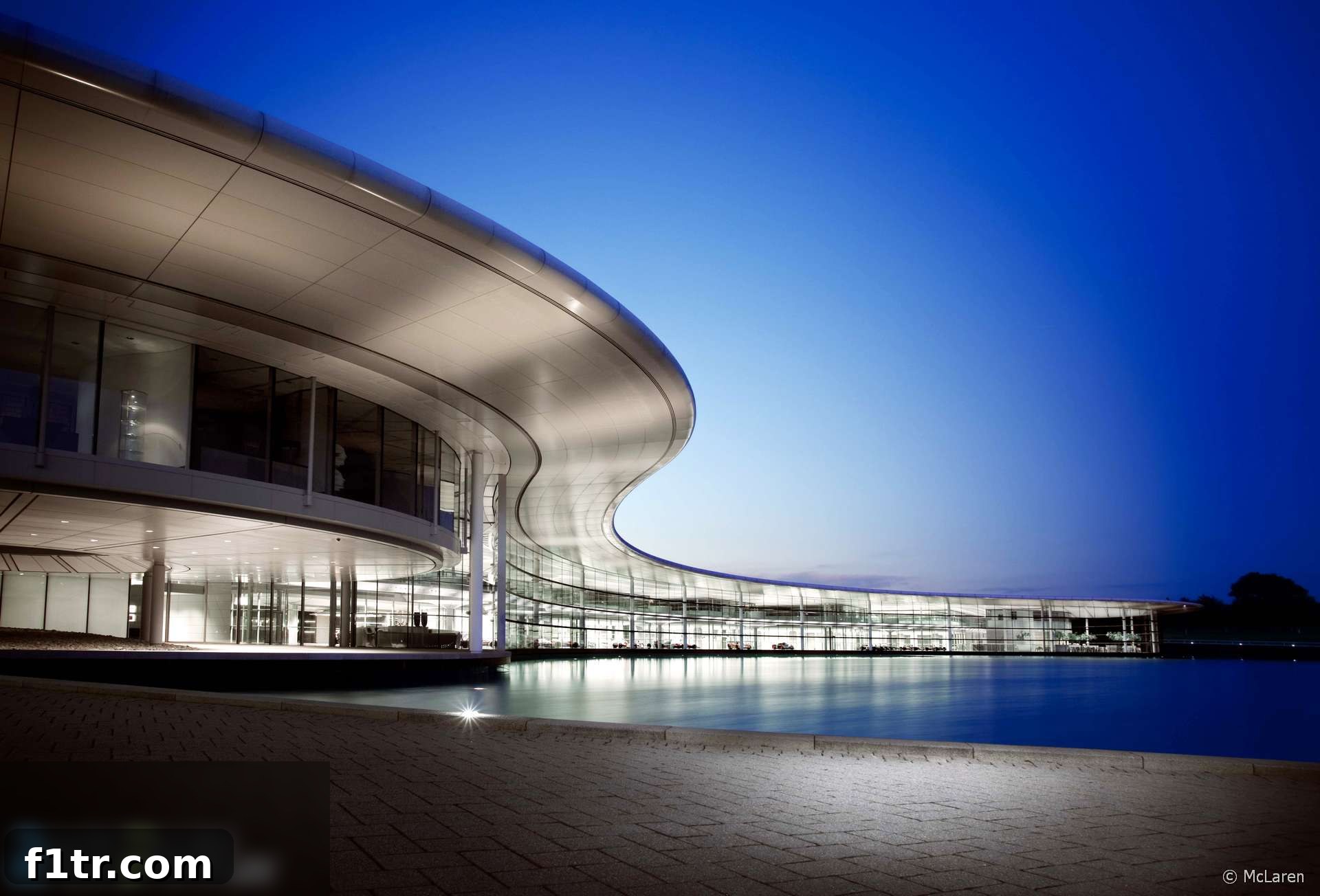
McLaren Group Fortifies Future with £150 Million Strategic Loan from National Bank of Bahrain
The McLaren Group, a globally recognized name synonymous with high-performance engineering and motorsport excellence, has successfully secured a significant £150 million loan from the National Bank of Bahrain. This substantial financial infusion is designed to provide critical support to the British luxury and racing powerhouse as it navigates a complex global economic landscape, heavily influenced by recent unprecedented challenges.
The confirmation of this pivotal funding agreement was officially announced by the National Bank of Bahrain in a statement released earlier this week. This strategic financial arrangement underscores the profound and long-standing relationship between McLaren and the Kingdom of Bahrain, particularly given that Bahrain’s sovereign wealth fund, Mumtalakat, holds a majority ownership stake in the McLaren Group. This loan is therefore more than just a transaction; it represents a shared commitment to McLaren’s enduring stability and ambitious growth trajectory.
Navigating Unprecedented Economic Headwinds and Strategic Adjustments
Like numerous global enterprises, McLaren has faced immense financial pressures that have emanated from the widespread economic repercussions of the recent global health crisis. The temporary suspension of major motorsport events, significant disruptions within intricate global supply chains, and a noticeable downturn in consumer spending across the luxury automotive sector collectively created a challenging environment for the Woking-based organization. In response to these intense pressures, and as part of a comprehensive strategic restructuring initiative aimed at optimizing operational efficiency and safeguarding its long-term viability, McLaren recently announced a series of extensive job reductions. These difficult but necessary decisions resulted in the departure of approximately 1,200 employees from its total workforce of 4,000, reflecting the scale of the adjustments required. Within its highly competitive Racing division, which houses the flagship Formula 1 team, a more contained yet still impactful number of around 70 staff positions were affected.
The imperative for securing additional sources of funding became unequivocally clear for McLaren as it sought to weather this severe economic storm. This substantial loan emerges as a critical component of the Group’s multi-faceted strategy to maintain robust liquidity, continue essential investment in ongoing research and development projects, and proactively prepare for a robust recovery as global markets gradually stabilize and sporting calendars resume. It serves as a testament to the decisive and forward-thinking steps being implemented by McLaren’s leadership and its primary stakeholders, all focused on preserving its revered heritage of innovation, cutting-edge technology, and unparalleled performance.
The Enduring and Strategic Importance of Bahraini Investment
The provision of this substantial £150 million loan by the National Bank of Bahrain extends far beyond a conventional financial transaction; it serves as a powerful affirmation of the deep-rooted and enduring strategic partnership between the McLaren Group and the Kingdom of Bahrain. Mumtalakat, as the dominant shareholder, has consistently demonstrated an unwavering commitment to McLaren’s success, perceiving the Group not merely as a sound commercial investment but also as a powerful global symbol of technological prowess, engineering excellence, and ambitious global reach.
Bahrain’s strategic interest in the pinnacle of motorsport and advanced high-performance engineering is extensively documented, vividly exemplified by its role as a host of the prestigious Bahrain Grand Prix and its significant, targeted investments across a diverse portfolio of automotive and technology ventures. This timely loan further fortifies McLaren’s financial bedrock, enabling it to continue its multifaceted operations with heightened confidence and enhanced resilience. Such steadfast backing from a major shareholder, particularly during a period characterized by pronounced global economic uncertainty, is an invaluable asset, furnishing the crucial stability required to simultaneously address immediate operational demands and pursue ambitious long-term strategic objectives across its diverse business segments.
A Decade of Fluctuations: McLaren’s Formidable Formula 1 Journey
McLaren’s overall financial performance in recent years has been inextricably linked to the varying fortunes of its illustrious Formula 1 team. The inherently competitive and financially demanding nature of Formula 1 means that consistent on-track success directly correlates with crucial commercial revenues, including the lucrative prize money distribution, significant sponsorship deals, and invaluable global brand visibility. For McLaren, the period immediately preceding its recent resurgence was undeniably marked by considerable struggle and extensive challenges.
The Challenging Honda Era and its Profound Aftermath
Following a highly anticipated and much-publicized reunion with Honda as its power unit supplier in 2015, McLaren embarked upon a period of profound difficulty. The Honda power units, unfortunately, proved to be consistently uncompetitive and plagued by reliability issues, severely impeding the team’s ability to challenge at the forefront of the grid. This challenging era witnessed McLaren’s standing in the highly competitive constructors’ championship plummet to an uncharacteristic ninth place in both the 2015 and 2017 seasons. Such sustained underperformance had a profoundly detrimental impact not only on team morale and the ability to attract top-tier driving talent but also on the critical financial streams derived from Formula 1’s intricate prize money structure. Lower championship positions inevitably translate into significantly reduced earnings, thereby creating a challenging cycle that hindered crucial development and future investment.
The financial strain emanating from these lean years was substantial and far-reaching. Reduced prize money meant a diminished pool of capital available for essential research and development, which in turn further impacted performance. Furthermore, attracting and crucially retaining top-tier sponsors became an increasingly arduous task without consistent competitive results, adding yet another layer of financial pressure. The strategic decision to prematurely terminate the partnership with Honda and transition to Renault power for the 2018 season was a clear and unambiguous indicator of the team’s desperate need for a fundamental change in fortunes, driven by an urgent desire to reclaim its former glory and restore its financial health.
The Resurgence: A Glimmer of Hope with Renault Power
The pivotal switch to Renault power in 2018 marked the nascent stages of a gradual yet promising turnaround, although immediate and overwhelming success remained somewhat elusive. In that year, the team commendably managed to ascend to sixth place in the constructors’ championship standings, a modest but important improvement from the preceding years, yet still a considerable distance from their historical front-running positions. However, the most compelling and tangible signs of recovery began to manifest themselves during the highly anticipated 2019 campaign. A revitalized technical structure, synergistically coupled with a fresh, dynamic, and exceptionally talented driver line-up featuring the highly promising talents of Carlos Sainz Jnr and Lando Norris, collectively orchestrated a significant and noticeable uplift in on-track performance.
The 2019 season ultimately proved to be a pivotal and transformative moment for McLaren. The team achieved a remarkable fourth place in the constructors’ standings, unequivocally marking their best collective result in many years. Crucially, Carlos Sainz Jnr secured the team’s first podium finish in a remarkable five years at the Brazilian Grand Prix, a moment laden with immense symbolic significance and tangible practical importance for the entire organization. This compelling resurgence unequivocally demonstrated a renewed and sustained competitiveness, coupled with enhanced operational efficiency, thereby injecting new life and vigor into the team’s long-term aspirations and providing a much-needed and substantial boost to its financial prospects. Improved on-track performance directly translates into higher prize money allocations, significantly greater appeal for potential sponsors, and enhanced global brand value, all of which are absolutely vital for McLaren’s long-term sustainability and its unwavering ambitions to return to championship contention.
Understanding Formula 1’s Prize Money Dynamics
Formula 1’s complex prize money distribution system is multifaceted, with a substantial portion of the revenue allocated primarily based on a team’s finishing position in the constructors’ championship at the end of each season. This is complemented by additional historical bonus payments reserved for long-standing teams that have significantly contributed to the sport over decades. McLaren proudly stands as one of only five teams that currently receive these legacy bonus payments, a testament to its exceptionally rich history, iconic status, and enduring contribution to the sport. While these specific bonus payments are acknowledged to be considerably less substantial than those received by powerhouse teams such as Ferrari, Red Bull, and Mercedes, they nevertheless represent a crucial and consistent revenue stream that provides a fundamental baseline of financial stability.
Therefore, maintaining a strong and competitive position within the constructors’ championship is not merely about achieving sporting prestige or fulfilling historical expectations; it is, in fact, a fundamental pillar of McLaren’s overarching business model. The demonstrable improvement in performance witnessed during the 2019 season, coupled with the optimistic hope for a continued upward trajectory, are absolutely essential for maximizing these vital financial benefits and subsequently enabling continued, necessary investment in cutting-edge technology, state-of-the-art infrastructure, and world-class personnel. As Formula 1 thoughtfully moves towards implementing a more equitable financial structure, notably through the introduction of new budget caps, McLaren is strategically positioning itself to adeptly leverage both its illustrious history and its recent performance gains to compete even more effectively and consistently at the very pinnacle of the sport.
Beyond Formula 1: The Broader McLaren Ecosystem
While the highly visible Formula 1 team often captures the majority of headlines and public attention, the McLaren Group is, in actuality, a highly diversified and complex entity. It comprises McLaren Automotive, renowned for its acclaimed range of high-performance supercars and hypercars, and McLaren Applied Technologies, a division that expertly leverages motorsport innovation for a wide array of broader industry applications, including healthcare and aerospace. The financial challenges highlighted by the recent loan, therefore, impact the entire Group, emphatically underscoring the inherent interconnectedness and symbiotic relationship of its various specialized divisions.
The strategic injection of funds from the National Bank of Bahrain will not only provide robust support to the vital racing division but also furnish essential capital for McLaren Automotive’s ambitious product development plans and its ongoing global market expansion strategies. Crucially, it ensures that the entire Group can continue its relentless pursuit of pushing engineering boundaries in automotive design and maintain its preeminent position as a global leader in high-performance luxury vehicles. This comprehensive financial support demonstrates a holistic and forward-thinking approach to securing the prosperous future of the entire McLaren brand, across all its distinguished facets.
Looking Ahead: Stabilizing for Enduring Success
The £150 million loan from the National Bank of Bahrain marks an undeniably critical and transformative moment for the McLaren Group. It provides a much-needed and substantial financial anchor during a period defined by global economic uncertainty and a crucial phase of strategic realignment within the organization. This significant investment unequivocally reinforces McLaren’s deep-seated commitment to its future, both on the hallowed race tracks and within the fiercely competitive luxury automotive market, and simultaneously underscores the unwavering and steadfast support from its key shareholders.
With this newly enhanced financial stability, McLaren can now dedicate its formidable resources and focus intently on achieving its core strategic objectives: continuing its impressive upward trajectory in Formula 1, meticulously refining its already exceptional high-performance automotive offerings, and relentlessly innovating across its diverse technology ventures. This financial lifeline is fundamentally more than simply a survival mechanism; it serves as a robust foundation for renewed growth, empowering McLaren to maintain its relentless pursuit of excellence and ultimately return to a position of formidable strength and undisputed leadership in its respective, highly specialized fields.
The path forward will undoubtedly still present its share of challenges and obstacles, but with this significant and strategic financial backing, the McLaren Group is now considerably better equipped to navigate them successfully, aiming to once again stand triumphantly at the pinnacle of both motorsport and luxury automotive engineering.
Explore More from McLaren and Formula 1:
- Understanding the economic impact of global events on major sports industries.
- In-depth analysis of Formula 1 team financial models and prize money distribution.
- The strategic role of sovereign wealth funds in global sports and automotive brands.
- A comprehensive look at McLaren’s journey in Formula 1: From dominant champions to determined challengers and back to contenders.
- The critical evolution of driver lineups and their significant impact on team performance and brand perception.