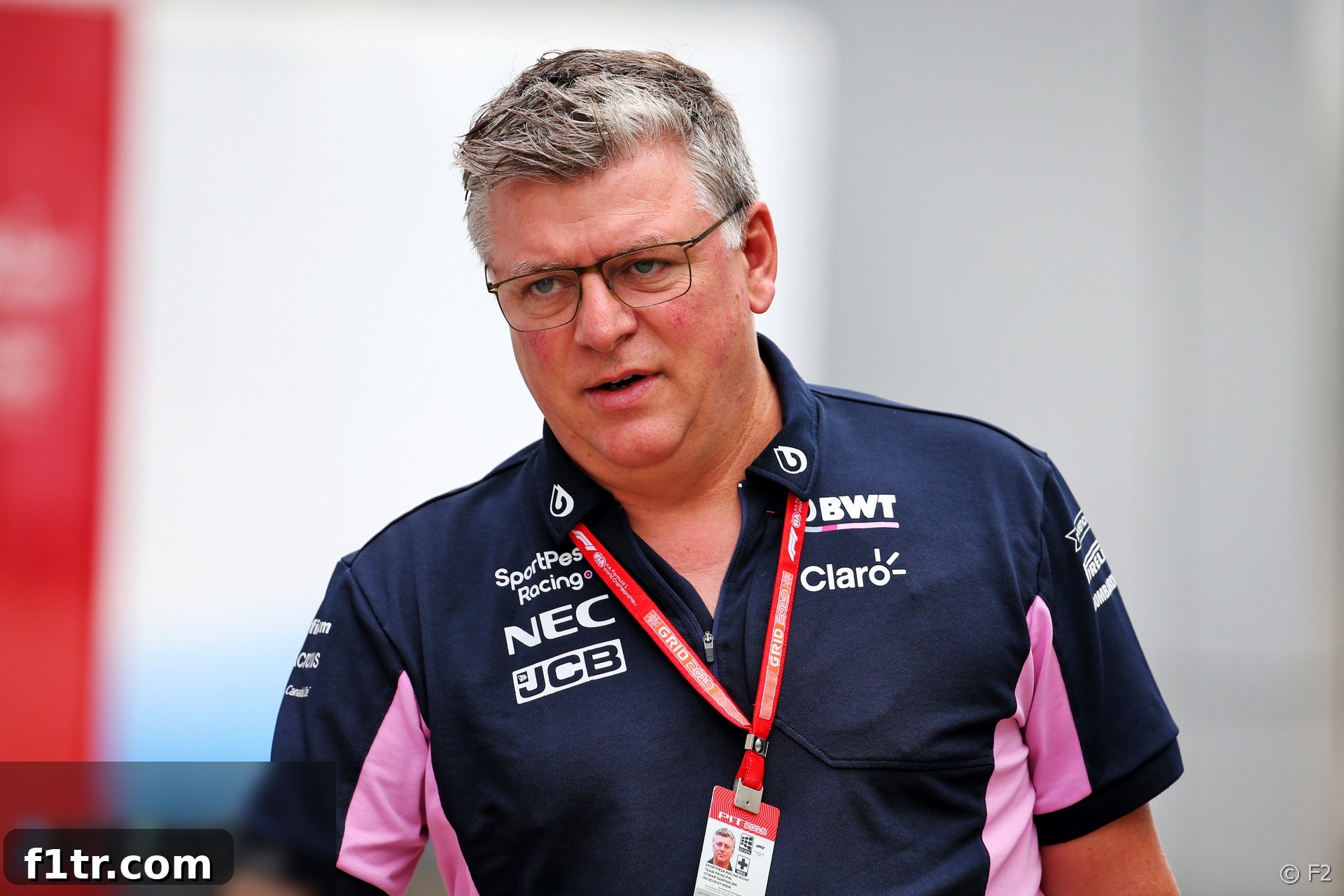
In the high-stakes world of Formula 1, every decision, especially financial ones, can ripple through a team’s performance for years. Racing Point CEO Otmar Szafnauer offered a candid assessment of his team’s struggles in the 2019 season, revealing that their difficulties were not entirely unexpected. He pointed to significant financial constraints faced by the team during the critical car development phase in the preceding year as the primary culprit, a situation that inevitably compromised their on-track competitiveness. This admission sheds light on the often-overlooked financial backbone required to compete at the pinnacle of motorsport and the long lead times involved in car design and manufacturing.
The Impact of Financial Constraints on F1 Performance: A CEO’s Perspective
When questioned about Racing Point’s car development trajectory throughout 2019, Otmar Szafnauer’s response painted a clear picture of the challenges. He acknowledged that the team’s development efforts had not matched their usual high standards, a stark reality in an increasingly competitive midfield battle. The F1 midfield, a fiercely contested segment of the grid, often sees teams separated by mere tenths of a second, making any development shortfall particularly impactful.
Advert | Become a Supporter & go ad-free
“Not as well as we usually do this year. It was very tight in the midfield,” Szafnauer stated, underscoring the relentless pressure of Formula 1. He elaborated on the root cause, explaining, “It’s understandable, last year when we started developing the car we had big financial problems. That always manifests itself into performance the following year, six to 12 to 18 months down the line.” This timeline highlights the critical nature of sustained investment in Formula 1; a dip in funding today can translate into a tangible performance deficit well into the next season or even beyond.
The CEO’s forward-looking perspective, despite the challenges, revealed an inherent optimism. “So I’m not overall surprised, but looking forward very encouraged and also encouraged by the fact that we learned a lot this year. And in trying years, tough years like this one, sometimes you learn more than in ones where it all comes to you.” This sentiment is a common refrain in competitive sports; adversity often forces teams to innovate, optimize processes, and build resilience. Such difficult periods can expose weaknesses that might remain hidden during successful runs, ultimately strengthening the team’s foundation.
Szafnauer also expressed confidence in his personnel, noting, “I think our drivers have learned a lot too and the engineering team I think will be much stronger next year.” This emphasizes the human element in motorsport, where driver feedback, engineer problem-solving, and team cohesion are as crucial as raw car performance. The experience gained under pressure in a challenging season can be invaluable, forging a more robust and adaptable team for future campaigns. For Racing Point, navigating these financial headwinds and emerging with critical lessons learned was paramount for their long-term growth and competitiveness in the ever-evolving landscape of Formula 1.
Quotes: Dieter Rencken
Advert | Become a RaceFans supporter andgo ad-free
Engaging the F1 Community: A Look at Social Media Highlights
Social media platforms have become indispensable tools for Formula 1 teams, drivers, and fans to connect, share insights, and celebrate the sport. From behind-the-scenes glimpses to celebratory moments and even day-to-day training updates, these channels offer a dynamic window into the world of F1. Notable posts from platforms like Twitter and Instagram frequently capture the essence of the racing community, fostering global engagement.
One such post, an Instagram highlight, provides a snapshot of the engaging content shared within the F1 sphere:
https://www.instagram.com/p/B6fKQwQHDKB/
While the specific content of this post remains to be explored, it undoubtedly contributed to the rich tapestry of F1’s digital presence, offering fans a unique perspective or a memorable moment from the season. Social media continues to bridge the gap between the sport and its global audience, allowing for real-time reactions and deeper connections.
- For those looking to expand their F1 social media feed, a comprehensive list of official accounts can be found in the F1 Twitter Directory, an excellent resource for staying up-to-date with the latest from drivers, teams, and the sport itself.
Beyond the Track: F1 News and Analysis from Across the Motorsport World
Formula 1 is a sport constantly in motion, with headlines emerging from race tracks, boardrooms, and digital platforms alike. This collection of recent motorsport links offers a diverse overview of key developments, strategic moves, and intriguing opinions shaping the F1 landscape and broader racing world.
F1 Việt Nam Grand Prix’s remaining tickets go on sale (Vietnam News)
The introduction of new circuits often marks a significant milestone for Formula 1, expanding its global footprint and tapping into new fan bases. The inaugural Formula 1 VinFast Việt Nam Grand Prix, slated for April 3, 2020, in Hà Nội, was generating considerable buzz. The Việt Nam Grand Prix Company’s announcement of remaining ticket sales, including for the two final stands and exclusive ‘Paddock Club’ tickets, highlighted the escalating excitement for this urban street circuit event. The Hanoi street track promised a thrilling spectacle against a vibrant cityscape, symbolizing F1’s strategic expansion into emerging Asian markets and offering a fresh challenge for teams and drivers.
Buemi’s tribute to ‘inspirational’ Driot (Eracing365)
Motorsport is not just about machines and speed; it’s also profoundly shaped by the individuals who dedicate their lives to it. Sébastien Buemi’s heartfelt tribute to Jean-Paul Driot, a towering figure in motorsport, particularly as the founder of the DAMS team, underscored the deep personal connections formed within the paddock. Buemi’s reflection, “I’ve never been as close to a team chief as I’ve been with him. For me, it was a big loss, a big change, because we were so close, and all of a sudden, when things like that stop, you have to get over that,” speaks volumes about Driot’s inspirational leadership and mentorship. Such figures play a crucial role in nurturing talent and shaping the careers of many drivers across various racing categories, leaving an indelible mark on the sport.
Verstappen: F1 stewards like football referees (Autosport)
Consistency in officiating is a perennial debate in many sports, and Formula 1 is no exception. Max Verstappen, known for his forthright opinions, likened F1 stewards to football referees, highlighting the perceived inconsistencies in penalty decisions. His analogy, “Sometimes you can get away with a yellow card and then the other ref gives you a red, and you’re like ‘what was going on?’. It’s exactly the same, I think, in Formula 1,” resonates with many fans and drivers who often express frustration over varying interpretations of regulations. The immense pressure on stewards to make split-second decisions with significant championship implications means their role is constantly under scrutiny, fueling discussions about fairness and clarity in sporting rules.
Investors Chronicle: Chemring, Aston Martin, FirstGroup (FT – subscription required)
Beyond the glamour of the track, the financial health of iconic brands often intersects with the world of motorsport. Aston Martin, a marque synonymous with luxury and performance, confirmed it was actively reviewing its funding position and engaging in talks with potential investors. This announcement, following a sharp decline in its share price, signaled a critical juncture for the company. The financial stability of such a prestigious brand has broader implications, especially given its historical and potential future ties to Formula 1, including the highly discussed possibility of a strategic partnership with a racing team, which could inject both capital and prestige into the sport.
- The financial dynamics surrounding Aston Martin spurred significant discussion, including detailed analysis on what a Racing Point-Aston Martin deal would mean for them, F1 – and Red Bull. Such a partnership could redefine Racing Point’s identity, provide a vital brand platform for Aston Martin, and potentially reshape manufacturer alliances within the F1 paddock, especially concerning engine suppliers and sponsorship alignments.
The expert verdicts – Damon Hill (Motorsport magazine)
The transition of Formula 1 ownership from Bernie Ecclestone to Liberty Media brought about significant changes in the sport’s approach to marketing, digital engagement, and fan experience. Former F1 world champion Damon Hill offered his perspective on the new custodians, stating, “What are your thoughts on Formula 1’s new owners? ‘They are doing a good job. But we miss Bernie (Ecclestone).'” This nuanced view reflects a common sentiment among seasoned F1 observers: while Liberty Media has modernized the sport’s outreach and diversified its calendar, the charismatic, often autocratic leadership style of Ecclestone, who built F1 into a global powerhouse, is still remembered and occasionally missed for its decisive direction and sheer force of personality.
Ex-Ferrari man Luca Baldisserri takes role with Jensen Global Advisors (Formula Scout)
The flow of talent within motorsport often sees experienced professionals moving between F1 and junior categories, bringing invaluable expertise to emerging talent. Luca Baldisserri, a highly respected former Ferrari engineer, embarked on a new chapter by joining Jensen Global Advisors. Known for his tenure as one of Lance Stroll’s race engineers during his time at Williams F1, Baldisserri’s commitment to becoming technical director for Jensen—a team competing in F3 Americas and United States Formula 4—underscores the critical role of seasoned mentors in developing the next generation of racing stars. His move highlights the interconnectedness of motorsport, where F1 experience can significantly elevate the standard of competition and driver development in feeder series.
Hamilton – Global figure with massive influence beyond track (The Telegraph)
Lewis Hamilton’s impact on Formula 1 extends far beyond his record-breaking achievements on the track; he has evolved into a global cultural icon with immense influence. The Telegraph’s piece eloquently captured this, portraying Hamilton as a figure whose presence is vital to the sport’s worldwide appeal. The article suggested that while other prominent German drivers like Nico Rosberg and Sebastian Vettel might fade on their home country’s sporting radar (as evidenced by the German Grand Prix’s cancellation), Hamilton remains an unparalleled star. His activism, fashion choices, and engagement with social issues have cemented his status as a transcendent personality, making him a critical ambassador for F1 and a figure whose potential retirement is a daunting prospect for the sport’s power brokers, underscoring his irreplaceable star power and global resonance.
We always endeavour to credit original sources. If you have a tip for a link to feature in the next RaceFans round-up please send it in via the contact form.
Advert | Become a RaceFans supporter andgo ad-free
The F1 Budget Cap: Scepticism Surrounds Enforcement and Loopholes
The impending introduction of a budget cap in Formula 1, aimed at leveling the playing field and ensuring the sport’s long-term financial sustainability, has been met with both optimism and considerable skepticism. As the deadline for its implementation drew closer, questions around its enforceability and the potential for teams to find loopholes intensified. The core concern revolves around how effectively the FIA can police the spending of large, multi-faceted corporations that own F1 teams.
“Call me a sceptic, well because I am one, but I cannot see how this can be policed,” voiced @JayMenon10, articulating a widely held apprehension. The commenter raised pertinent questions regarding the auditing scope: “In the case of Red Bull Racing, will Red Bull Technologies be subject to the FIA’s auditors? Ferrari? Mercedes?” These inquiries highlight the complexity of separating F1 team expenditure from the broader operations of their parent companies or sister entities, which often share resources, personnel, and technological advancements.
The inherent challenge lies in the intricate structures of teams like Mercedes, Ferrari, and Red Bull. “F1 teams with large parent corporations, like Mercedes, Ferrari, Red Bull and possibly Renault, it will be so easy to slip a 10 million here and there,” @JayMenon10 continued. This observation points to the potential for clever accounting or resource allocation strategies that could effectively circumvent the spirit, if not the letter, of the budget cap rules. Whether it’s through shared R&D facilities, cross-departmental staff secondments, or the development of components nominally for other projects that ultimately benefit the F1 effort, the avenues for creative accounting are vast.
The final rhetorical question from the commenter—”Have you ever known anyone in F1 not to exploit a loophole?”—succinctly captures the cynical view that has often accompanied new regulations in Formula 1. The sport has a rich history of teams pushing boundaries and finding ingenious interpretations of rules. For the budget cap to truly achieve its goals of fostering closer competition and financial prudence, the FIA will need an exceptionally robust and far-reaching auditing mechanism, coupled with severe penalties, to deter any attempts at evasion and ensure a genuinely level playing field.
Exploring Iconic Circuits: Tips for a First-Time Spa-Francorchamps Visitor
- The legendary Spa-Francorchamps circuit, nestled in the Ardennes forest, is a jewel in the Formula 1 calendar, renowned for its dramatic elevation changes, challenging corners like Eau Rouge, and often unpredictable weather. For a first-time visitor planning to attend the Belgian Grand Prix, insights from seasoned attendees are invaluable. A forum discussion seeking recommendations for Spa 2020 provides a fantastic platform for fans to share their experiences. From advice on the best grandstands for viewing the action, essential packing items for the capricious Belgian climate, to transportation logistics and local accommodation options, community-driven tips can significantly enhance the experience of attending one of F1’s most revered races.
Celebrating the F1 Community: Happy Birthday!
Connecting with fans and acknowledging their place within the broader Formula 1 community is a vital part of fostering a strong and loyal following. Today, we extend warm birthday wishes to Lazzar! These personal touches help to build a sense of belonging among enthusiasts, highlighting that the F1 experience is not just about the racing itself, but also about the vibrant global community that supports it.
If you would like to receive a birthday shout-out and be featured in future updates, please share your birthday details with us via the contact form or by adding your date to our dedicated list here. We look forward to celebrating with you!
Remembering F1 History: On This Day in Motorsport
- Formula 1’s rich tapestry is woven with the stories of pioneers and legends who laid the groundwork for the sport we know today. On this day, 110 years ago, we commemorate the birth of David Murray, an early figure in the nascent days of the Formula 1 World Championship. Murray holds a unique place in history, having participated in the very first official world championship race at Silverstone in 1950. Driving a Maserati 4CLT, a prominent grand prix car of its era, he bravely tackled the challenging circuit, though his race ultimately ended prematurely due to technical problems. This pattern of mechanical unreliability, unfortunately, repeated in his three other world championship race starts. His participation, however brief and challenging, symbolizes the spirit of the early privateers and the foundational era of Formula 1, reminding us of the courage and determination of those who first competed at the highest level of motorsport.