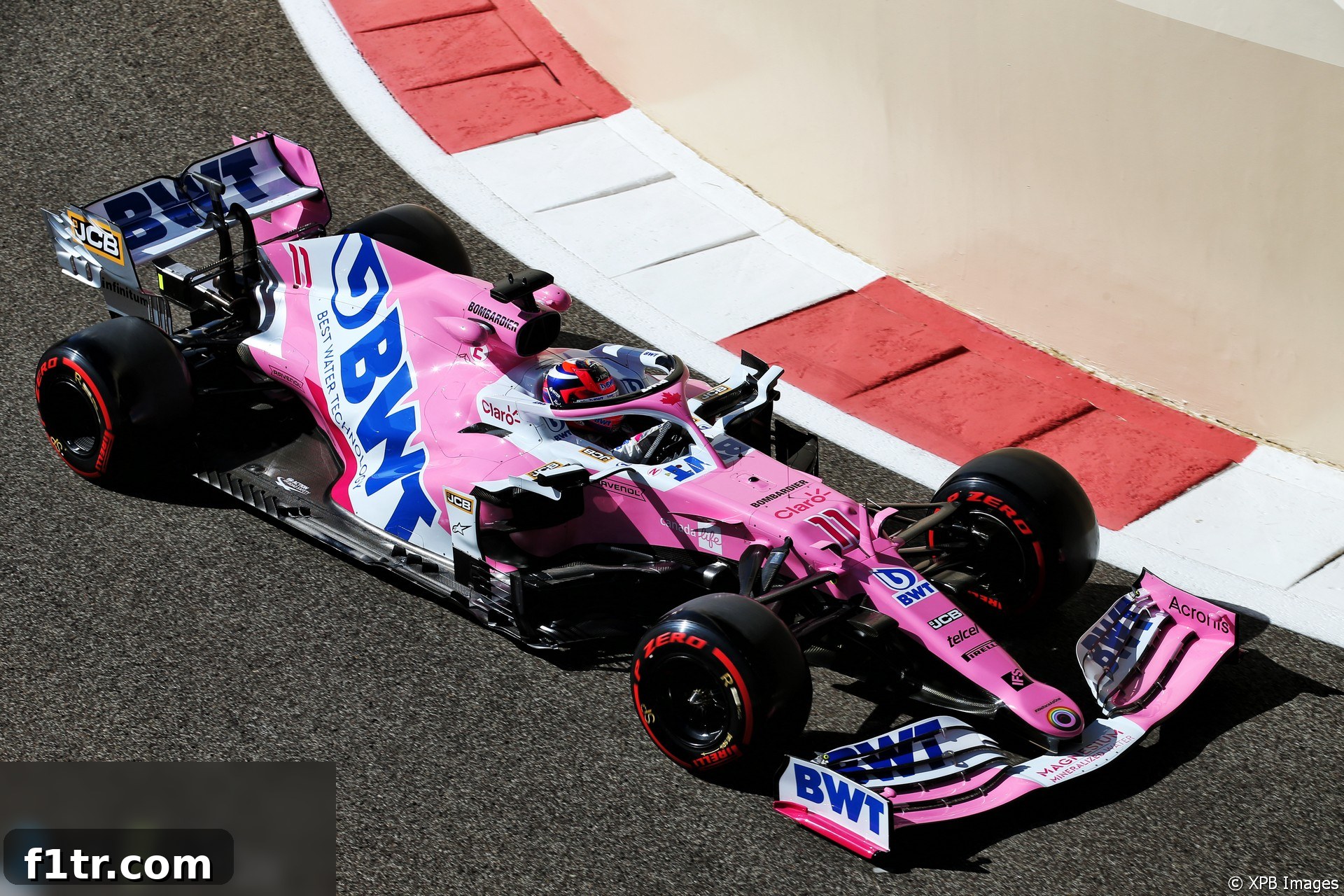
Grid Penalties Shake Up 2020 Abu Dhabi Grand Prix Finale
The highly anticipated season finale of the 2020 Formula 1 World Championship, the Abu Dhabi Grand Prix, is set to begin with a reshuffled grid as two prominent drivers face significant penalties. Sergio Perez and Kevin Magnussen will both start the race from the very back of the grid, having exceeded the maximum allowance for crucial power unit components, a decision that carries substantial strategic implications for their respective teams.
This development adds an intriguing layer of complexity to the final race of a unique and challenging season. While penalties for power unit changes are a common occurrence in Formula 1, their timing and impact in a championship finale always draw significant attention, especially when they involve drivers like Sergio Perez, fresh off a remarkable victory, and Kevin Magnussen, competing in his last race for Haas.
Understanding Formula 1 Power Unit Component Regulations and Penalties
Formula 1 regulations are meticulously designed to control costs and prevent an arms race in engine development, with strict limits on the number of power unit components a driver can use throughout a season. For the 2020 season, teams were generally permitted to use a maximum of three internal combustion engines (ICE), turbochargers (TC), and Motor Generator Units-Heat (MGU-H), along with two Motor Generator Units-Kinetic (MGU-K), energy stores (ES), and control electronics (CE).
Exceeding these allocations triggers automatic grid penalties. The first time a driver uses an additional component beyond the allowed limit, they receive a 10-place grid penalty. Subsequent new components in the same power unit group usually result in a further five-place penalty. However, if a driver takes multiple new components in one go, which effectively constitutes an entirely new power unit beyond the permitted allocation, the penalty is typically to start from the back of the grid. This stringent system forces teams to carefully manage the lifespan and reliability of their power units, balancing performance with the risk of incurring penalties that can severely compromise a race weekend.
The strategic decision to take a penalty is never made lightly. It often occurs when a component is deemed unreliable or has failed, and continuing to use it poses too great a risk of retirement, or when the team believes a fresh unit offers a significant performance advantage that outweighs the grid drop. In a season finale, with championship positions often still at stake or simply the desire to finish strongly, these decisions become even more critical.
Sergio Perez: From Sakhir Triumph to Abu Dhabi Challenge
Advert | Become a Supporter & go ad-free
Fresh from his sensational maiden Formula 1 victory at the Sakhir Grand Prix just a week prior, Sergio Perez arrived in Abu Dhabi carrying the weight of a back-of-the-grid start. His Mercedes-powered Racing Point RP20 has been fitted with a new engine (ICE), turbocharger (TC), and MGU-H (Motor Generator Unit-Heat) for the season finale. This change was necessitated by a problematic MGU-K unit which suffered a catastrophic failure and fire during the previous round, a dramatic incident that nearly cost him his historic win.
The MGU-K, or Motor Generator Unit-Kinetic, is a vital part of the hybrid power unit, recovering energy during braking and deploying it to boost acceleration. Its failure is not only a performance issue but also a significant safety concern dueating to the risk of fire, as witnessed in Sakhir. While Perez miraculously managed to continue and win despite the impending failure of components around the MGU-K, the integrity of the entire power unit was compromised, making a replacement for the final race unavoidable.
Racing Point CEO Otmar Szafnauer elaborated on the team’s difficult decision. “We discovered a problem on Checo’s engine following his Sakhir Grand Prix victory,” Szafnauer explained. “We deliberated long and hard as to what the risk would be for that powertrain to do an even further race. Time will tell, it’s never a controlled experiment. You don’t know if, had we not taken a new powertrain, that would have lasted. But on the balance of probabilities, we thought it would be best to go with a new powertrain and take the penalty.”
This statement underscores the precarious balance teams face: risk a potential race-ending failure and zero points, or take a guaranteed grid penalty but ensure reliability and maximum performance from a fresh unit. For Racing Point, who were locked in a fierce battle for third place in the Constructors’ Championship against McLaren and Renault, securing points was paramount. While a back-of-the-grid start is a major setback, the team likely prioritized reliability, hoping Perez’s proven ability to climb through the field would still yield a strong result.
“It’s going to make it harder starting from the back,” Szafnauer admitted, acknowledging the challenge. “But at the same time we saw what Checo could do last weekend starting from the back – well, he didn’t start at the back, but he was last at one point and came through the field to win. It might be a little bit more difficult overtaking here but I still think it’s possible and we’ll do the best we can with our starting position.” Szafnauer’s optimism, while guarded, highlights the belief in Perez’s racecraft and the car’s potential, even from a compromised starting position.
Kevin Magnussen’s Final Haas Hurrah from the Rear
Joining Perez at the back of the grid is Haas driver Kevin Magnussen. The Danish driver, competing in his final race for the American outfit, has also taken new power unit components for his Ferrari-powered VF-20. Specifically, Magnussen’s car has been fitted with a new energy store (ES) and control electronics (CE) for the Abu Dhabi Grand Prix.
The energy store, essentially the battery pack, is crucial for storing and deploying electrical energy collected by the MGU-H and MGU-K. The control electronics manage the entire hybrid system, dictating power flow and ensuring optimal performance and efficiency. Failures in either of these components can severely impact the car’s power delivery and overall reliability. Given Haas’s challenging season and their position at the lower end of the Constructors’ Championship, ensuring Magnussen can complete his final race for the team without technical issues likely took precedence over avoiding a grid penalty.
For Magnussen, who is set to depart Formula 1 for a new chapter in sports car racing, starting from the back is perhaps less impactful on his personal championship aspirations, but it certainly complicates his final opportunity to make an impression and potentially score points for Haas. The team’s focus will be on allowing him to race cleanly and extract every bit of performance from the car, aiming for a dignified farewell in what has been a difficult year for them.
Charles Leclerc’s Pre-Race Sanction
These two power unit penalties are not the only grid sanctions impacting the 2020 Abu Dhabi Grand Prix. Ferrari’s Charles Leclerc also arrived at Yas Marina with a three-place grid penalty already in hand. This penalty was issued for causing a collision with Sergio Perez at the very start of the preceding Sakhir Grand Prix, an incident that ended Leclerc’s race prematurely and contributed to a chaotic opening lap.
Leclerc’s aggressive maneuver into Turn 4 led to contact with Perez, spinning the Racing Point driver and, unfortunately, damaging his own car beyond immediate repair. While such incidents are often deemed racing incidents, the stewards found Leclerc primarily responsible, resulting in the three-place drop. This penalty, while less severe than a back-of-the-grid start, significantly complicates Leclerc’s qualifying efforts and his chances of securing a strong points finish for Ferrari, especially as they looked to consolidate their mid-table position.
Strategic Implications for the Season Finale
The cumulative effect of these grid penalties adds a fascinating strategic dimension to the 2020 Abu Dhabi Grand Prix. For Racing Point, the pressure is immense. Their battle for third in the Constructors’ Championship is extremely tight, and Perez’s ability to recover from the back will be crucial. His performance in Sakhir demonstrated his exceptional ability to manage tires and carve through the field, but the Yas Marina Circuit presents different challenges.
Advert | Become a RaceFans supporter andgo ad-free
Yas Marina Circuit: Overtaking Challenges
The Yas Marina Circuit is known for its relatively smooth asphalt and a layout that, while scenic, has often been criticized for limiting overtaking opportunities. Its long straights are punctuated by tight corners, making it difficult for cars to follow closely and launch effective attacks. This characteristic means that starting from the back is particularly punitive. Drivers will need impeccable race pace, strategic tire management, and perhaps a dose of luck with safety cars or virtual safety cars to make significant progress.
For Perez, his car’s strong race pace and superior tire degradation management will be his primary assets. Racing Point strategists will be working overtime to devise an optimal plan, potentially utilizing alternative tire strategies or gambling on an early pit stop. For Magnussen, the goal might simply be to enjoy his final race, push the car, and perhaps capitalize on any chaos that might unfold ahead.
Leclerc’s three-place penalty, while not as severe, still means a stronger qualifying performance is required to offset the drop. He will need to extract maximum performance from his Ferrari in Q1 and Q2 to give himself the best possible starting position, aiming to minimize the loss of positions inflicted by the sanction.
Conclusion: A Penalized Grid Sets the Stage
The 2020 Abu Dhabi Grand Prix, marking the conclusion of an extraordinary Formula 1 season, promises to be an eventful affair, not least due to the significant grid penalties incurred by Sergio Perez, Kevin Magnussen, and Charles Leclerc. These sanctions, stemming from power unit component changes and a racing incident, underscore the relentless technical demands and the high-stakes nature of Formula 1 racing. While starting from the back of the grid or dropping places will undoubtedly challenge these drivers, it also sets the stage for potentially thrilling recovery drives and intricate strategic battles. As the sun sets on the Yas Marina Circuit, all eyes will be on how these penalized drivers navigate the field in pursuit of a strong finish to the season.
2020 Abu Dhabi Grand Prix Related Content
- Mercedes also had MGU-K concerns over Russell’s car
- Ferrari hail “outstanding professional” Vettel after his final drive for team
- 2020 Abu Dhabi Grand Prix Star Performers
- Driver line-up confirmed for Yas Marina test, two teams won’t attend
- Paddock Diary: Abu Dhabi Grand Prix
Browse all 2020 Abu Dhabi Grand Prix articles