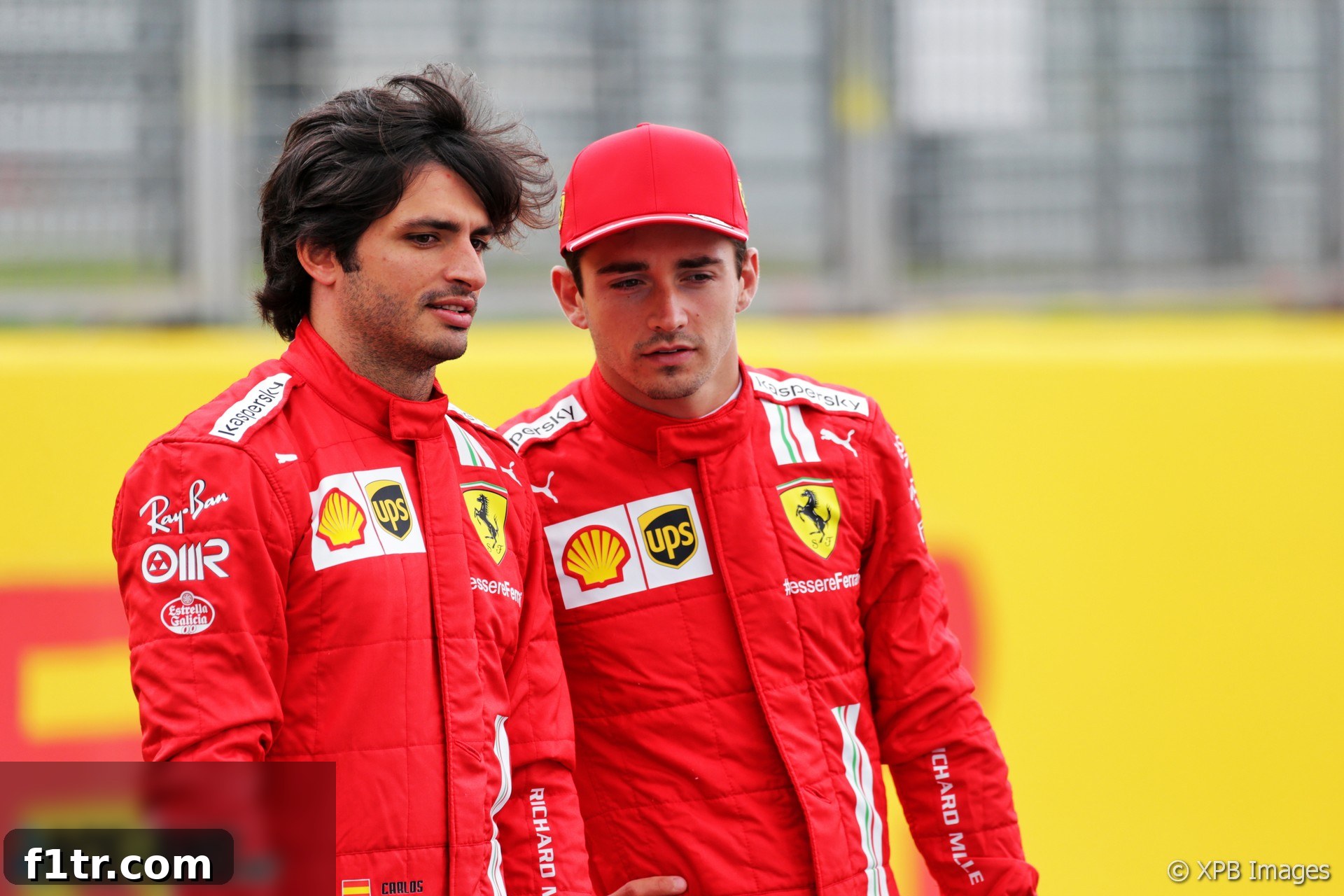
Ferrari’s decision to forgo bringing Sebastian Vettel back for the 2021 season, opting instead for Carlos Sainz Jnr, signaled a bold new direction for the iconic Italian team. This strategic move was a clear endorsement of youth and future potential over established experience, setting the stage for an intriguing intra-team dynamic between Charles Leclerc and the incoming Spaniard. The Scuderia was embarking on a new chapter, aiming to rebuild its competitive edge and reclaim its rightful place at the pinnacle of Formula 1. This significant change within their driver lineup was a statement of intent, indicating a long-term vision rooted in developing emerging talent.
Heading into the 2021 Formula 1 season, expectations were naturally high for Charles Leclerc. Having demonstrably outperformed his four-time world champion teammate in 2020, Leclerc was widely anticipated to assume the undisputed leadership role within Ferrari. His raw speed, aggressive driving style, and undeniable talent had already cemented his status as a future champion in the eyes of many. Carlos Sainz Jnr, fresh from a successful stint at McLaren where he showcased consistent performances and strong racecraft, faced the considerable challenge of integrating into the legendary Scuderia, adapting to a new car, and navigating the unique pressures associated with racing for Ferrari in Maranello. However, the season would unfold in a manner that defied many initial predictions, with Sainz not only quickly finding his feet but also enjoying the lion’s share of on-track success, ultimately finishing ahead of Leclerc in the drivers’ championship and securing the coveted ‘best of the rest’ position of fifth, a remarkable achievement for his debut season with the Prancing Horse.
The commencement of the 2021 campaign presented a steep learning curve for many drivers who had switched teams, and Carlos Sainz was no exception. The initial phase of the season saw Sainz grappling to match Leclerc’s blistering pace in qualifying. The intricacies of the Ferrari SF21, combined with the pressure of a new environment, meant that Saturday performances were a particular area of adjustment. While he showed glimpses of his speed and adaptability, particularly in Portugal where he out-qualified Leclerc, consistency on Saturdays proved elusive. After the first four rounds of the championship, the points disparity was notable, with Sainz having accumulated just 20 points compared to Leclerc’s more impressive 40. This early gap suggested that Leclerc was indeed settling into his expected leadership role, while Sainz was still in the crucial acclimatization period, understanding the nuances of his new machinery and the operational complexities of a top-tier team.
Leclerc’s individual highlight of the season undoubtedly arrived in the glamorous streets of Monaco, his home race. Displaying incredible skill and bravery, he secured a highly popular pole position, sending ripples of excitement through the Tifosi and beyond. This achievement, however, was tinged with bitter irony, as a self-inflicted crash at the exit of the Swimming Pool during the dying moments of Q3, which brought out a red flag, inadvertently secured his pole by preventing rivals from improving their times. The elation of pole position quickly turned to heartbreak on race day. Ferrari’s best opportunity for a victory all year evaporated before the race even began, as a gearbox problem, a direct consequence of his Saturday shunt, manifested itself on the reconnaissance lap. Leclerc was forced to retire, a devastating blow that underscored the fine margins between triumph and disaster in Formula 1.
Yet, Leclerc’s Monte Carlo heartache presented a golden opportunity for his new teammate. While the Ferrari garage grappled with the disappointment of Leclerc’s non-start, Carlos Sainz demonstrated remarkable composure and race craft. Capitalizing on the dramatic events that unfolded on race day, and aided by Valtteri Bottas’ calamitous pit stop, Sainz expertly navigated the challenging street circuit to secure a well-deserved second-place finish. This represented his maiden podium appearance in the iconic Rosso Corsa colors, a significant milestone that not only boosted his confidence but also firmly announced his presence as a serious contender within the team. This result proved pivotal, showcasing Sainz’s ability to remain focused, exploit opportunities, and extract maximum performance when circumstances presented themselves, a pragmatic trait that would define much of his successful season.
Despite the crushing disappointment of Monaco, Charles Leclerc quickly bounced back, following up with his second consecutive pole position in similarly fortunate circumstances in Azerbaijan. His raw speed over a single lap remained undeniable, solidifying his reputation as one of the grid’s fastest qualifiers. The British Grand Prix later in the season saw another strong performance from Leclerc, where he led almost the entirety of the race, skillfully managing his tires and holding off relentless pressure from behind. Only in the closing laps was he eventually caught and passed by a charging Lewis Hamilton, denying him a hard-fought victory that seemed within reach. However, by this point in the season, Carlos Sainz was truly hitting his stride. His adaptation to the Ferrari was becoming complete, and his consistent performances began to manifest in stronger race results. He crossed the chequered flag ahead of Leclerc for the first time in France, a significant psychological benchmark, and repeated this feat in both races held at the Red Bull Ring, highlighting his growing confidence, refined race craft, and mastery of the Ferrari machinery.
Following the summer break, Charles Leclerc appeared to rediscover his earlier season form, demonstrating improved consistency and frequently finishing ahead of Sainz through the latter half of the season. His one-lap pace remained exceptional, and his race management also seemed to improve, showcasing his enduring talent. However, it was Carlos Sainz who consistently delivered the more impactful, high-points scoring results during this critical period. Sainz secured three additional podium finishes – in Hungary, a testament to his opportunistic driving in a chaotic race; in Russia, where a strategic tire call proved crucial; and notably in Abu Dhabi under truly contentious circumstances that saw him benefit from the dramatic late-race events. These strategic results, often achieved through smart racecraft, superior tire management, and an uncanny ability to capitalize on chaotic race conditions, proved instrumental in his championship standing.
These crucial trio of 15-point hauls were game-changers for Sainz. They not only allowed him to surge ahead of Charles Leclerc in the championship standings but also propelled him past his former McLaren teammate, Lando Norris, in the tightly contested ‘best of the rest’ battle for fifth place. This late-season surge from Sainz was a significant factor in Ferrari’s overall constructor’s performance, enabling the Scuderia to consolidate its third-place position and comfortably pull away from McLaren. This marked a substantial improvement for the team compared to their challenging 2020 season, signaling that the strategic investment in their new driver pairing was already paying dividends and setting a positive trajectory for future campaigns.
By the close of the 2021 season, the internal battle at Ferrari presented a fascinating dichotomy. Charles Leclerc had definitively out-qualified Carlos Sainz over the course of the year, showcasing his raw, unadulterated speed on Saturdays and his capability to extract every ounce of performance from the car over a single lap. Furthermore, when both drivers completed a race, Leclerc often finished ahead, underscoring his natural pace. Yet, it was Carlos Sainz Jnr who ultimately emerged victorious in the championship standings, a testament to his remarkable consistency, his ability to seize opportunities, his knack for delivering crucial points finishes, and superior reliability. The Scuderia could look back on a far more fruitful season, with both drivers having provided team principal Mattia Binotto ample justification to declare them the strongest driver pairing on the grid. Their competitive spirit was evident throughout the year, culminating in a fierce, albeit contained, battle in Saudi Arabia – a moment that, much to Sainz’s chagrin, underscored their desire to outperform each other without compromising the team’s objectives. This healthy rivalry, carefully managed by the team, pushed both drivers to elevate their game.
The 2021 season thus concluded with both Ferrari drivers having demonstrated immense talent, adaptability, and an unwavering competitive drive. Leclerc showcased moments of brilliance and outright pace, often dazzling with his qualifying performances and aggressive race starts. Sainz, on the other hand, impressed with his consistency, strategic acumen, and ability to extract maximum results from every race scenario. This complementary dynamic proved beneficial for Ferrari, laying a strong foundation for future seasons. With a significant regulation overhaul looming for 2022, and Ferrari widely expected to be back in the thick of the action at the front of the grid with a more competitive car, the internal rivalry between Charles Leclerc and Carlos Sainz Jnr is set to intensify. It will be genuinely fascinating to observe which driver ultimately comes out on top as they vie for supremacy in what promises to be an exhilarating new era for Formula 1 and for the legendary Maranello squad, potentially bringing Ferrari closer to championship contention once again.
2021 Ferrari Driver Performance Overview: Charles Leclerc vs Carlos Sainz Jnr
The 2021 Formula 1 season for Scuderia Ferrari was characterized by a compelling internal battle between Charles Leclerc and Carlos Sainz Jnr. While detailed statistical tables are often used to illustrate such comparisons, a narrative overview effectively captures the essence of their performances and the ebb and flow of their season-long rivalry:
Qualifying Performance: Leclerc’s Unquestionable Edge
Throughout the 2021 season, Charles Leclerc generally held a significant and consistent advantage over Carlos Sainz in qualifying sessions. Leclerc’s exceptional one-lap speed and natural talent often saw him secure higher grid positions, demonstrating his ability to extract the absolute maximum from the SF21 over a single flying lap. He secured two memorable pole positions (Monaco and Azerbaijan) and consistently placed the car higher up the grid than its true race pace might have suggested. Sainz, while improving significantly throughout the year and closing the gap, initially struggled to match Leclerc’s raw qualifying pace, particularly in the early races. Despite Sainz’s strong overall season, Leclerc maintained a clear statistical edge on Saturdays, underscoring his status as one of the fastest qualifiers on the grid.
Race Performance and Consistency: Sainz’s Defining Strength
While Leclerc often led in qualifying, Carlos Sainz showcased remarkable consistency, astute racecraft, and a superb ability to capitalize on opportunities, particularly in the latter half of the season. Sainz demonstrated an excellent ability to manage tires, execute well-judged overtakes, and crucially, avoid costly mistakes that could jeopardize points finishes. He proved adept at benefiting from chaotic race conditions, safety car periods, or rival retirements. Leclerc also displayed strong race pace and management, often running competitively and delivering robust drives. However, Sainz’s pragmatic approach and ability to convert his race performances into high-scoring results, highlighted by his three crucial podium finishes, ultimately defined his superior championship position.
Championship Standings: Sainz on Top Through Strategic Prowess
The ultimate metric of their season-long battle came down to the championship points. Despite Leclerc’s qualifying prowess and often stronger individual race finishes when both cars completed the grand prix without incident, Carlos Sainz Jnr outscored Charles Leclerc, finishing fifth in the drivers’ championship compared to Leclerc’s seventh. This outcome was a direct result of Sainz’s superior consistency, his tactical acumen, and his knack for delivering big points hauls in pivotal moments, especially towards the season’s close. His strategic drives and ability to stay out of trouble translated into a more consistent stream of points, allowing him to leapfrog his teammate and secure the coveted ‘best of the rest’ title.
Head-to-Head at Each Round: A Dynamic Season of Rivalry
The 2021 season witnessed a dynamic ebb and flow in the intra-team battle between Leclerc and Sainz, with each driver claiming victories at various points:
- **Early Season (Bahrain, Emilia Romagna, Portugal, Spain):** Charles Leclerc generally held the upper hand in both qualifying and races, accumulating more points and demonstrating greater familiarity with the car. Carlos Sainz showed flashes of speed but was still in a crucial adaptation phase.
- **Monaco Grand Prix:** Leclerc secured a famous pole position but retired before the race start due to a gearbox issue. Sainz seized the opportunity to finish second, securing his first Ferrari podium.
- **Azerbaijan Grand Prix:** Leclerc secured another pole position, but Sainz out-finished him in the race (4th for Sainz vs. 8th for Leclerc).
- **Mid-Season Surge (France, Styria, Austria):** Carlos Sainz began to consistently find his rhythm, steadily improving his pace and racecraft. He notably finished ahead of Leclerc in France and both races held at the Red Bull Ring, signaling his successful adaptation.
- **Hungary & Russia:** Sainz delivered strong, high-impact podium finishes (3rd in Hungary, 3rd in Russia), significantly boosting his points tally and closing the gap to Leclerc in the standings.
- **Second Half Consistency (Turkey, USA, Mexico, Brazil, Qatar):** While Charles Leclerc often showed superior qualifying pace and delivered good race performances, Carlos Sainz maintained high levels of consistency, consistently finishing in the points and maximizing his race results.
- **Saudi Arabia Grand Prix:** A closely contested race that highlighted their fierce internal competition, with both drivers battling hard.
- **Abu Dhabi Grand Prix:** Sainz secured another vital podium (3rd place), strategically capitalizing on the dramatic events of the season finale. This result was instrumental in cementing his fifth-place finish in the drivers’ championship, ultimately sealing his victory over Leclerc in the points table.
This comprehensive performance review highlights that while Charles Leclerc consistently displayed flashes of incredible raw speed and delivered stunning qualifying performances, Carlos Sainz Jnr’s remarkable consistency, astute racecraft, and ability to maximize points-scoring opportunities ultimately gave him the edge in the 2021 Formula 1 Drivers’ Championship standings. Both drivers, however, proved to be invaluable assets to Scuderia Ferrari in their quest for resurgence, offering a potent blend of raw speed and consistent performance.
2021 F1 Season Review: Further Insights
For a deeper dive into the individual performances of the top drivers and comprehensive analysis of the thrilling 2021 Formula 1 season, explore our dedicated review articles:
- 2021 F1 driver rankings #1: Max Verstappen
- 2021 F1 driver rankings #2: Lewis Hamilton
- 2021 F1 driver rankings #3: Lando Norris
- 2021 F1 driver rankings #4: Charles Leclerc
- 2021 F1 driver rankings #5: Carlos Sainz Jnr
Browse all 2021 F1 season review articles