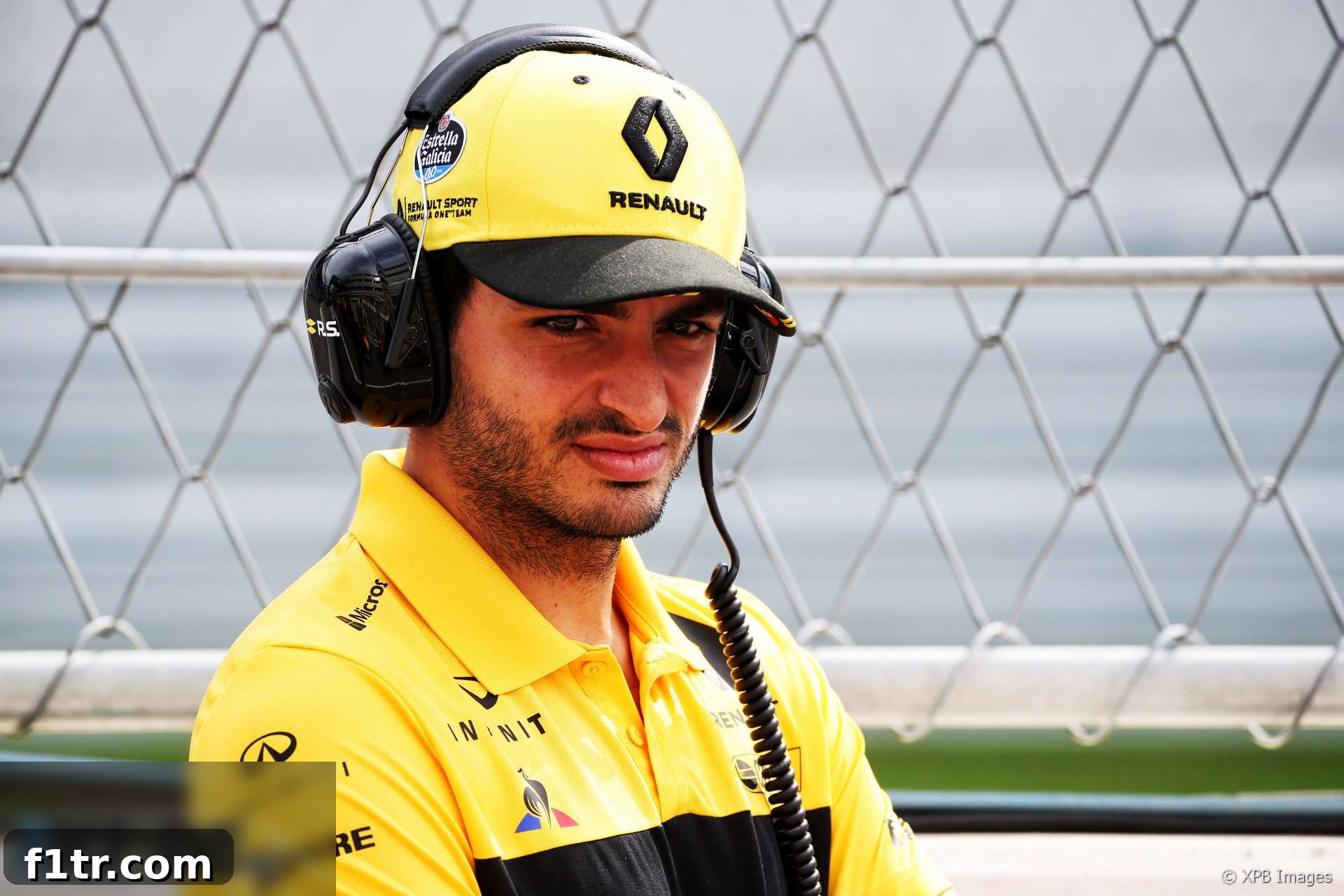
Formula 1 drivers operate at the peak of physical and mental endurance, pushing their bodies and minds to the absolute limit weekend after weekend. Even the slightest deviation from optimal health can have significant repercussions on their performance, a reality Carlos Sainz Jnr faced firsthand during the opening day of running at the Sochi Autodrom. Battling a disconcerting eye infection, the then-Renault driver navigated the initial practice sessions under less-than-ideal circumstances, although he expressed confidence in a swift recovery for the critical days ahead.
Navigating Illness on the Race Weekend
Sainz’s challenging start to the Russian Grand Prix weekend was marked by an unexpected health setback. As he candidly revealed following Friday’s practice sessions, a strange eye infection took hold, bringing with it not only discomfort but also a touch of fever and a sore throat. “I’m feeling better today,” he acknowledged, reflecting on his condition. “I don’t know why, I got a strange infected eye which gave me also a bit of fever and a bit of throat pain so I was a bit of a disaster yesterday.” This candid admission underscored the difficult fight he was waging against his symptoms. Despite the initial struggle, his optimism for a return to full strength was palpable. “I’m nearly back to normal, probably a bit short on energy but tomorrow should be fine,” he concluded, highlighting his determination to bounce back.
The first signs of the infection emerged during his flight to Sochi, a common breeding ground for minor ailments due to confined spaces and recycled air. While undoubtedly a concern, Sainz was quick to reassure that his vision remained unimpaired, and crucially, his ability to drive was unaffected. This distinction is vital in motorsport, where a driver’s sensory faculties are paramount. The immediate response to his condition involved a thorough inspection by a doctor from Hintsa Performance, a renowned organization dedicated to optimizing the health and performance of elite athletes, particularly in Formula 1. Their expertise quickly led to a prescription of antibiotics to combat the eye infection and ibuprofen to alleviate his throat pain, setting him on a path to recovery.
The Undeniable Impact of Missing Practice
Despite his professionalism and commitment to overcoming his physical discomfort, Sainz voiced a universal sentiment among racing drivers: the deep reluctance to cede any track time. On this particular Friday, it was Artem Markelov who took the wheel of Sainz’s car during the crucial first practice session (FP1). While teams often use FP1 to give development drivers or junior talent valuable experience, it invariably comes at a cost to the primary driver’s preparation. Sainz articulated this dilemma with conviction, stating, “It’s damaging, for sure. It’s something that as a driver you always don’t enjoy but it’s something the team has to do.”
The importance of FP1 cannot be overstated. It serves as the initial opportunity for drivers and teams to gather vital data on how the car behaves on a specific circuit, test aerodynamic configurations, and begin to understand the nuances of tire performance. This understanding encompasses everything from initial warm-up characteristics to degradation rates over long runs and optimal performance during a single timed lap. For a driver, these early insights are foundational. They inform crucial setup changes, driving lines, and overall race strategy. Missing out on these critical hours means a significant portion of this foundational work must be compressed into subsequent sessions, particularly FP2, which places added pressure on both the driver and the engineering team.
The ripple effect of missing FP1 extends beyond mere car setup. It impacts a driver’s acclimatization to the track’s unique challenges, their confidence levels, and their ability to fine-tune their driving style to extract every ounce of performance. Modern Formula 1 cars are incredibly complex, and finding the sweet spot for setup is a delicate balance. Without the baseline data and personal feel gained from FP1, a driver is playing catch-up, which can be particularly detrimental on a circuit like Sochi, known for its smooth surface and unique corner profiles. The pressure mounts to deliver maximum performance in a reduced timeframe, a testament to the resilience and adaptability required from these elite athletes.
The Relentless Physical Demands of Formula 1
Carlos Sainz’s encounter with illness at Sochi was not an isolated incident but rather a stark reminder of the immense physical demands placed on Formula 1 drivers. These athletes undergo rigorous training regimes designed to build extraordinary stamina, strength, and mental fortitude. They must endure extreme G-forces through corners and braking zones, operate in cockpits that can reach searing temperatures, and maintain razor-sharp concentration for hours on end. In this high-stakes environment, even a minor illness can significantly impair performance, transforming a potentially competitive weekend into an uphill battle.
The human body’s response to an F1 car is intense. A driver’s neck muscles withstand forces equivalent to several kilograms for extended periods, their cardiovascular system is pushed to its limits, and their cognitive functions are constantly engaged in processing vast amounts of information. Any ailment, be it an eye infection causing discomfort or a fever leading to reduced energy, can compromise these vital systems. Reduced energy levels can lead to slower reaction times, diminished decision-making capacity, and an inability to maintain consistent lap times. For a sport where victories are decided by mere milliseconds, operating at anything less than 100% is a critical disadvantage.
This incident also brings to mind Sainz’s previous health challenge during the 2018 Australian Grand Prix. On that occasion, he famously attributed a bout of nausea to a “poison banana,” an unfortunate dietary mishap that severely impacted his race performance. These recurring health issues underscore a larger point: while drivers are meticulously cared for by teams of doctors, physiotherapists, and nutritionists, they are ultimately still susceptible to the same vulnerabilities as anyone else. However, unlike most, their job demands that they perform at an elite level, regardless of how they feel, demonstrating an extraordinary level of resilience and mental toughness.
Carlos Sainz’s Unwavering Resolve
Throughout his career, Carlos Sainz has consistently demonstrated an unyielding determination and a competitive spirit that allows him to push through adversity. His calm demeanor and focus on recovery, even when battling an infection, exemplify the mindset of a top-tier athlete. Despite the physical discomfort and the disadvantage of lost track time, his primary concern remained performance and preparing for the upcoming qualifying and race sessions.
The ability to compartmentalize and focus on the task at hand, even when unwell, is a hallmark of elite sportsmanship. Sainz’s approach to the Sochi weekend, minimizing the impact of his illness while acknowledging its presence, speaks volumes about his professional dedication. For Formula 1 fans, such instances not only highlight the human element behind the helmets but also reinforce the incredible mental and physical strength required to compete at the pinnacle of motorsport. As the weekend progressed, all eyes were on Sainz, hoping for a complete recovery and a demonstration of his talent unhindered by health concerns, further solidifying his reputation as a formidable and resilient competitor in the fiercely competitive world of Formula 1.
Ultimately, Sainz’s experience at Sochi served as a vivid illustration of the precarious balance between peak performance and physical well-being in Formula 1. It reinforced the notion that even the most meticulously prepared athletes can be sidelined by unforeseen health issues, and how their response to such challenges often defines their character on and off the track. The rapid recovery and eventual return to form expected from Sainz highlighted not just the support system around F1 drivers, but also their personal resolve to overcome obstacles and continue striving for excellence.
2018 F1 season
- F1 feared “death knell” for Drive to Survive after Ferrari and Mercedes snub
- McLaren staff told us we were “totally crazy” to take Honda engines in 2018 – Tost
- ‘It doesn’t matter if we start last’: How Red Bull’s junior team aided Honda’s leap forward
- Honda’s jet division helped F1 engineers solve power unit problem
- McLaren Racing losses rise after Honda split
Browse all 2018 F1 season articles