Dirty Air Challenges: F1 Drivers Grapple with Overtaking in the 2024 Season
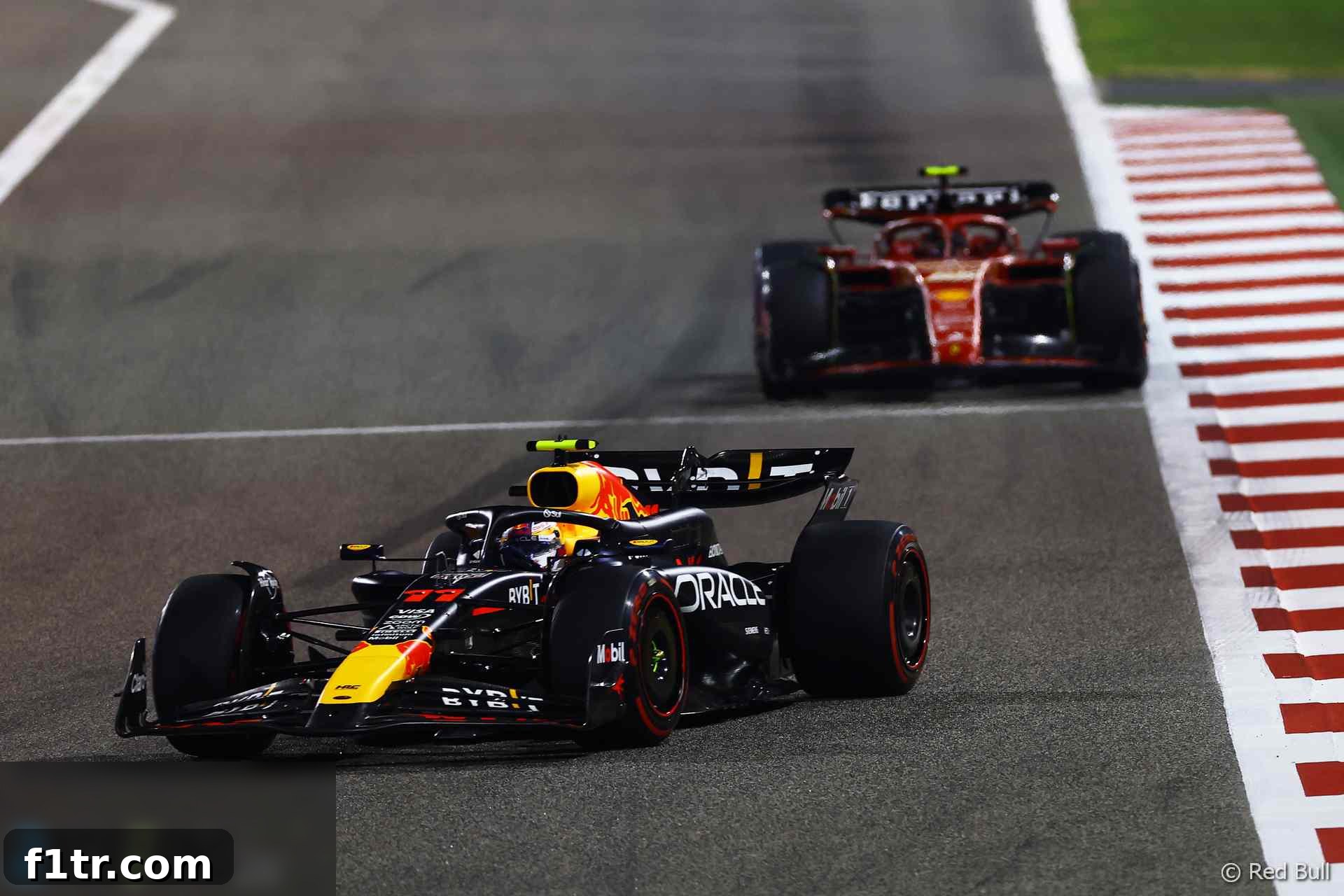
Formula 1 drivers, including Red Bull’s Sergio Perez and Ferrari’s Carlos Sainz Jr., are expressing growing concerns that the persistent issue of ‘dirty air’ could become an even greater obstacle to close racing throughout the 2024 season, particularly at upcoming venues like Jeddah. This sentiment arises despite the sport’s significant aerodynamic overhaul in 2022, which was specifically designed to mitigate the very problem now resurfacing.
The Persistent Problem of Dirty Air in Modern F1
The concept of ‘dirty air’ refers to the turbulent, disrupted airflow created by a leading Formula 1 car. When a chasing car attempts to follow closely, this turbulent air significantly reduces the downforce generated by its own aerodynamic surfaces, leading to a loss of grip, increased tyre degradation, and a general inability to maintain pace with the car ahead. This phenomenon has long been identified as a primary inhibitor of close, wheel-to-wheel racing in Formula 1.
In response to these challenges, the sport introduced radical new technical regulations for the 2022 season, re-emphasizing ‘ground effect’ aerodynamics. The core idea was to generate a greater proportion of a car’s downforce from its underbody, rather than its complex top-side wing elements. It was theorized that this design philosophy would create a cleaner wake behind the cars, allowing drivers to follow more closely and promote more overtakes without experiencing the severe performance drop-off caused by dirty air. However, two seasons on, and especially following the opening race of 2024, it appears the problem may be re-escalating.
Bahrain 2024: An Early Warning Sign
The 2024 season opener in Bahrain offered an early, stark demonstration of these concerns. Despite optimistic hopes for closer battles, the race at the front quickly settled into a procession after the initial laps. Reigning champion Max Verstappen secured a comfortable victory from pole position, his Red Bull teammate Sergio Perez finishing approximately 20 seconds adrift in second place. Carlos Sainz Jr. completed the podium, trailing Perez by three seconds. It was Sainz’s experience during this chase that highlighted the dirty air predicament.
Reflecting on his pursuit of Perez, Sainz explained his struggles: “I was in a bit of an uncomfortable position because you’re there in the two, three-second margin, which is where you get all the dirty air, but you don’t get the advantage of the DRS and the slipstream, so you’re just sliding a bit more.” His comments underscore the frustrating middle ground drivers can find themselves in; too close to avoid the aerodynamic disruption, yet too far to benefit from the overt advantage offered by the Drag Reduction System (DRS). Sainz elaborated, “If I would have been within a second or maybe five seconds behind, I think on the hard tyre I could have maybe showed a bit more the true pace of the car and my pace. But in that two, three seconds is the worst place to be and I could never mount any proper challenge on Checo.”
Driver Perspectives: Perez Foresees a Tougher Season
Sergio Perez echoed Sainz’s observations, anticipating that drivers will find it considerably harder to follow rivals closely this season compared to the previous two, particularly once they fall outside the crucial DRS detection zone. “I saw Carlos, he lost DRS early on and he was just out of contention for a while,” Perez noted, highlighting the immediate disadvantage incurred when a car loses the slipstream and aero aid. He elaborated on the benefit for the leading car: “The car ahead going straight into the clean air, is basically going on his own, has to use more of his tyres, so it’s a bit of a disadvantage if you are fighting.” This suggests that the car in clean air can manage its tyres more effectively, further widening the gap and making the chase even more arduous.
Perez believes the nature of racing will fundamentally change at specific venues. “I think, in places like Baku or even Jeddah… I think the racing is going to be different. It does create a difference to the car ahead in the first few laps. So, it’s going to be interesting, I think.” His prediction suggests that high-speed tracks with long straights, traditionally seen as prime overtaking spots due to slipstream and DRS, might still present significant challenges if the dirty air effect is amplified in 2024, hindering drivers from getting close enough to make an initial move.
The 2024 DRS Rule Change and Its Strategic Implications
Adding another layer of complexity to the 2024 season, Formula 1 has modified its DRS rules. Drivers are now permitted to activate their DRS a lap earlier in Grands Prix than in previous years. This change was implemented with the explicit aim of increasing overtaking opportunities and injecting more dynamism into the early stages of races. However, Perez believes this rule adjustment introduces a profound strategic dilemma for drivers.
The Mexican driver points out a critical trade-off: “I think a lot of strategy comes into play, especially with how sensitive the tyres are to pushing.” Drivers will now have to carefully weigh the benefits of pushing aggressively to either maintain or gain a DRS advantage against the imperative of preserving their Pirelli tyres over a stint. “On one side, you want to push to get out of the DRS or to get into the DRS. And then on the other hand, you want to save tyres because we all know how sensitive the tyres are in the first few laps to pushing. So it’s a very fine line,” Perez explained.
His own experience in Bahrain underscored this strategic balancing act. “As soon as I saw I didn’t have pressure from behind, I decided to manage my tyres and it paid off instead of getting into the DRS battle – so then I could overtake them, no problem.” This suggests that a smart, disciplined approach to tyre management, even at the cost of immediate DRS engagement, could yield greater dividends over a race distance. However, for drivers trapped in the dirty air pocket, the temptation to push harder to escape or close the gap will be immense, potentially at the cost of their tyre life.
Perez concluded that this delicate strategic interplay would be highly “track-dependent” and make for a “very tricky season going 24 races like that.” The new DRS rule was trialled in sprints last year, but its application across full Grands Prix over an extended 24-race calendar presents a fresh and formidable “challenge” for teams and drivers alike, who must now master a nuanced approach to aggression and conservation.
The Broader Impact on Race Excitement and Competition
The renewed intensity of the dirty air problem and the complex strategic choices it forces upon teams could significantly shape the narrative of the 2024 Formula 1 season. While the 2022 regulations aimed to usher in an era of closer racing, the observations from Bahrain and the drivers’ concerns suggest that the aerodynamic wake effect remains a formidable hurdle. If drivers consistently struggle to follow and challenge, it could lead to more processional races, potentially diminishing the on-track spectacle. The hope is that teams will continue to develop their cars to better cope with dirty air, or that the specific characteristics of different tracks will offer varied opportunities for overtaking. For now, the intricate dance between aerodynamic efficiency, tyre management, and the strategic deployment of DRS promises a season of high-stakes calculations and challenging racecraft.
2024 Saudi Arabian Grand Prix and Beyond
As the F1 circus heads to Jeddah, a high-speed street circuit known for its challenging corners and long straights, the dirty air effect and its impact on racing will be under intense scrutiny. The outcomes here, and at subsequent races, will offer further insights into whether the 2024 season will truly deliver on the promise of closer competition or if the invisible barrier of turbulent air will continue to dictate the terms of engagement.
- Bearman’s 2024 Jeddah debut performance makes him ‘feel like an absolute idiot’
- Vowles being patient with Sargeant but expects to see “progress”
- “So I’ve got nothing to worry about?” – The best unheard team radio from Jeddah
- “Shock” of poor start to season showed need for change at Alpine – Famin
- “My tyres are dying”: Stroll’s short-lived struggle until he hit the wall
Browse all 2024 Saudi Arabian Grand Prix articles