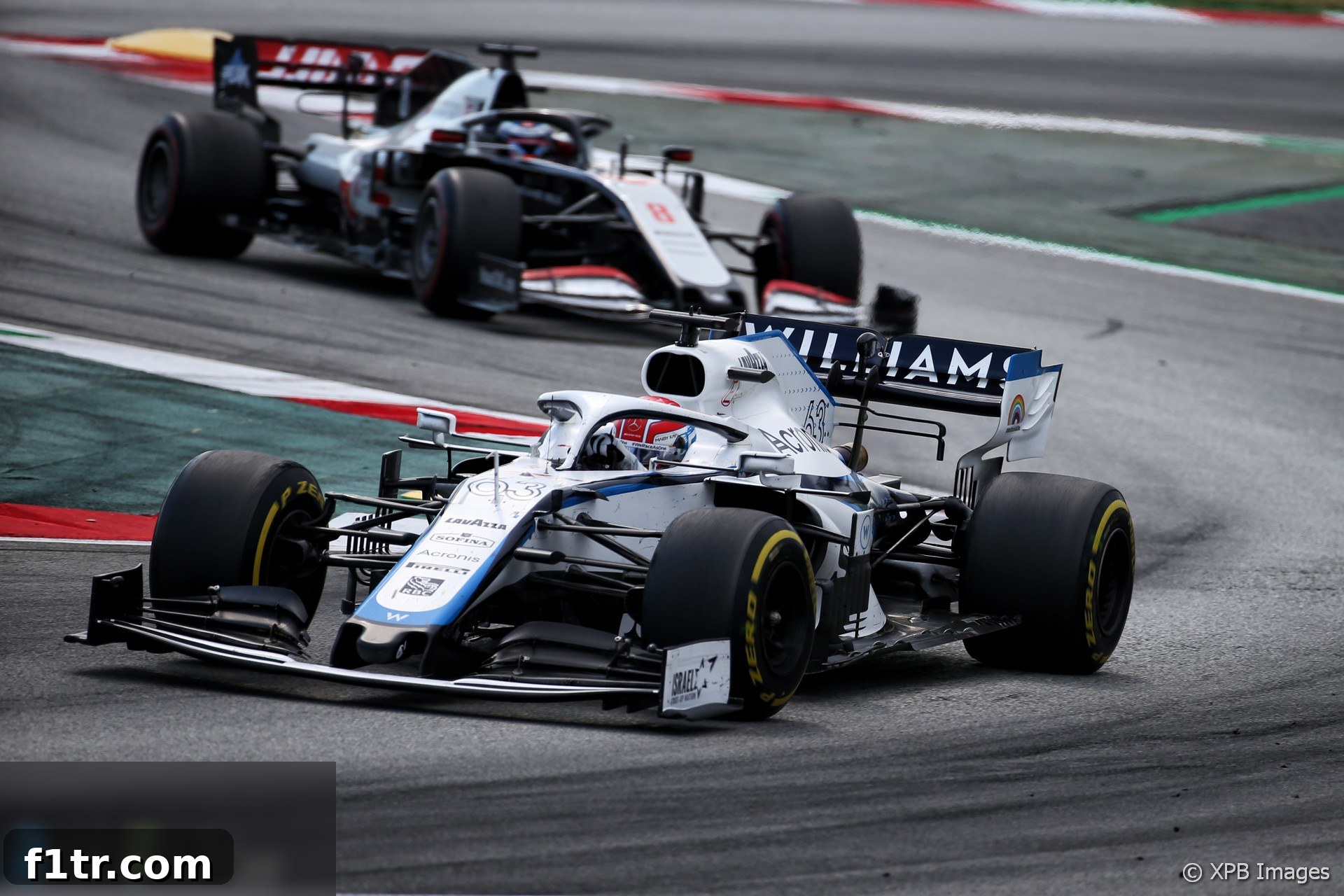
George Russell Calls for Circuit de Catalunya Chicane Removal to Revitalize Spanish Grand Prix Racing
Formula 1 drivers, led by Grand Prix Drivers Association (GPDA) director George Russell, are advocating for a significant modification to the Circuit de Catalunya. The Williams driver believes that removing the final-sector chicane and reverting to the original, high-speed corners would dramatically enhance racing quality at the Spanish Grand Prix, transforming what is often perceived as a “dull” event into an exhilarating spectacle for both competitors and fans.
Russell’s Vision: Elevating Formula 1 Racing Quality
As a newly appointed director of the GPDA, George Russell has made it clear that improving the standard of racing across Formula 1 is a paramount objective. His mandate is not merely to represent driver interests, but to actively contribute to the sport’s evolution, ensuring it remains as captivating as possible. “Good races attract more fans,” Russell stated in an exclusive interview, emphasizing that compelling on-track action showcases F1 in its absolute best light. This ethos underpins his proactive stance on circuit design and the broader ecosystem of the sport.
Russell openly admitted that the quality of racing in Formula 1 over the past two decades has often fallen short of expectations, lacking the “pureness” that true motorsport enthusiasts crave. He highlighted a recurring issue: exhilarating racing typically only materializes when there’s a substantial tyre performance delta between cars, allowing for genuine overtaking opportunities. Without this, the inherent design of many circuits and the characteristics of modern F1 cars and tyres combine to hinder close-quarters battles. Consequently, Russell and the GPDA are actively working to formulate a comprehensive proposal—a “target letter”—to present to Formula 1 management, Pirelli, and circuit designers. This letter would outline the specific requirements needed from cars, tyres, and circuits to consistently promote thrilling and authentic racing action, moving beyond temporary fixes or reliance on external factors like tyre degradation.
The Catalunya Chicane: A Barrier to Exciting Racing
The Circuit de Catalunya, a staple on the Formula 1 calendar, is often criticized for its inability to produce genuinely exciting races. At the heart of this critique, according to Russell, is the tight chicane introduced in the final sector of the track prior to the 2007 Spanish Grand Prix. This section replaced two fast, sweeping corners, drastically altering the character of the lap and, arguably, the quality of the racing. While the original, faster layout of the track still exists and is frequently utilized by other racing series, Formula 1 has remained committed to the chicane for over a decade and a half. Russell believes that this specific alteration has been detrimental to the spectacle, contributing significantly to the perceived dullness of races held at the venue. He passionately argues that a reversion to the circuit’s previous configuration is a logical and necessary step to inject more dynamism into the Spanish Grand Prix, making it a more engaging event for everyone involved.
The Case for Reversion: Unleashing Speed and Overtaking Potential
Russell’s argument for removing the chicane is multi-faceted, focusing on tangible benefits for both the racing itself and the overall experience. He postulates that if the circuit were to reinstate the two fast corners that preceded the pit straight approximately 15 years ago, drivers would find it considerably easier to follow each rival closely through this critical section. This improved proximity is fundamental to setting up overtaking maneuvers, which are currently a rarity at Catalunya. The high-speed nature of the original corners would allow cars to carry significantly more speed onto the main straight, thereby amplifying the slipstream effect down to Turn 1. A more potent slipstream means a greater chance for trailing cars to challenge for position, leading to more overtakes and wheel-to-wheel action at the very first corner.
Beyond the tactical advantages, Russell also highlights the sheer thrill factor. For the spectators, watching Formula 1 cars tackle two incredibly quick corners at immense speeds would be a visual feast, offering a level of excitement currently absent from the final sector. From a driver’s perspective, navigating such demanding, high-speed bends would be an exhilarating challenge, pushing them and their machinery to the absolute limit. Russell succinctly summarized this as a “win-win” situation, presenting it as a straightforward yet impactful solution to a circuit that consistently underperforms in terms of race quality. The proposal isn’t merely about aesthetic preference; it’s rooted in a deep understanding of racing dynamics and a desire to enhance the core product of Formula 1.
Historical Context: Safety vs. Spectacle
The introduction of the chicane in 2007 was not an arbitrary decision but a direct response to a request from the FIA, Formula 1’s governing body. The primary motivation behind this change was safety. The FIA sought to reduce the speed at which cars arrived onto the pit straight, a high-speed section where potential incidents could have severe consequences. At the time, with ever-increasing car performance, there were concerns about the integrity of braking zones and the potential for high-speed impacts. This move reflected a period where safety considerations were paramount, leading to various circuit modifications across the calendar aimed at mitigating risks. While the safety benefits were clear, the trade-off, in the view of many, including George Russell, has been a significant reduction in the circuit’s ability to produce compelling racing. Russell himself acknowledges that removing the chicane would indeed have “safety implications,” meaning a thorough re-evaluation of the circuit’s safety infrastructure would be required, along with potential upgrades to barriers and run-off areas to accommodate higher speeds.
Navigating the Challenges of Track Modification
Implementing such a significant change at an established Formula 1 venue like the Circuit de Catalunya is far from a simple task. The current configuration of the circuit is homologated by the FIA, meaning it has been rigorously inspected and certified to meet the stringent safety and operational standards required for Formula 1 racing. Any proposed revision, particularly one involving the removal of a safety-motivated chicane, would necessitate a comprehensive re-inspection and re-homologation process by the FIA. This typically involves detailed simulations, track redesigns, safety barrier upgrades, and extensive reviews to ensure that the new layout adheres to the highest safety protocols for the speeds F1 cars achieve. As Russell wisely points out, it’s “not quite as simple as saying ‘right, let’s change this circuit and revert’.”
Despite these complexities, Russell remains optimistic about the feasibility of the proposal, suggesting it “could be done as of next year.” This timeline implies that with sufficient political will and collaboration between the circuit management, Formula 1, and the FIA, such a change could be realistically implemented within a relatively short timeframe. Furthermore, the Circuit de Catalunya has demonstrated a willingness to adapt and evolve; for the 2021 Spanish Grand Prix, Turn 10 was revised, bringing its design closer to its original, wider form before it was tightened. This precedent shows that track modifications are not only possible but are actively considered when there’s a consensus on improving the racing experience. Such a move for Turn 10 indicates a broader openness within the sport to revisiting existing layouts to enhance both safety and spectacle.
Broader Implications for F1 Track Design and Driver Input
The discussion surrounding the Circuit de Catalunya chicane extends beyond a single corner at one circuit; it touches upon the fundamental philosophy of Formula 1 track design in the modern era. The sport constantly grapples with the delicate balance between ensuring driver safety, preserving traditional circuit characteristics, and creating layouts that foster exciting, unpredictable racing. For years, concerns have been raised about “Tilkedromes” – modern circuits designed by Hermann Tilke often criticized for producing processionary races. Russell’s intervention highlights a desire from the drivers themselves to have a more active role in shaping the environments in which they compete, ensuring that the spectacle is maximized. The GPDA, under Russell’s influence, aims to be a constructive voice in this ongoing debate, providing invaluable on-track insights that mere simulations cannot replicate.
This initiative also ties into Russell’s broader vision of working with suppliers like Pirelli to ensure tyre compounds facilitate better racing, rather than purely focusing on degradation. When combined with intelligent circuit design, the potential for a richer, more dynamic Formula 1 product is immense. The willingness of a prominent driver and GPDA director to advocate for such changes signals a pivotal moment for the sport, emphasizing that driver feedback is crucial for its future development. As Formula 1 continues to expand its global reach and attract new audiences, delivering consistently captivating racing becomes ever more critical. The Circuit de Catalunya proposal is a test case for how effectively F1 can adapt and evolve to meet this demand.
A Call for Action: Shaping Formula 1’s Future
George Russell’s passionate advocacy for the removal of the Circuit de Catalunya chicane represents a clear call to action within Formula 1. It underscores a collective desire from drivers to enhance the quality of racing, transforming venues that have historically offered limited overtaking into circuits capable of producing genuine on-track drama. While acknowledging the inherent safety considerations and the complexities of FIA homologation, the proposal highlights a feasible pathway to a more thrilling Spanish Grand Prix. By embracing driver insights and demonstrating a commitment to evolution, Formula 1 can ensure that its circuits are not just safe, but also consistently deliver the high-octane spectacle that fans worldwide crave, paving the way for a more engaging and competitive future.
2021 F1 Season Insights
- Masi ‘basically gifted the championship’ to Verstappen says 2021 FIA steward Sullivan
- Las Vegas race backers looking to extend F1 deal beyond 2025
- Why Mercedes put ‘a reminder of joy and pain’ on display in their factory lobby
- Verdict on error in GT race suggests Mercedes would have lost 2021 Abu Dhabi GP appeal
- Title ‘stolen’ from Mercedes made us ‘underdogs people cheer for’ – Wolff
Browse all 2021 F1 season articles