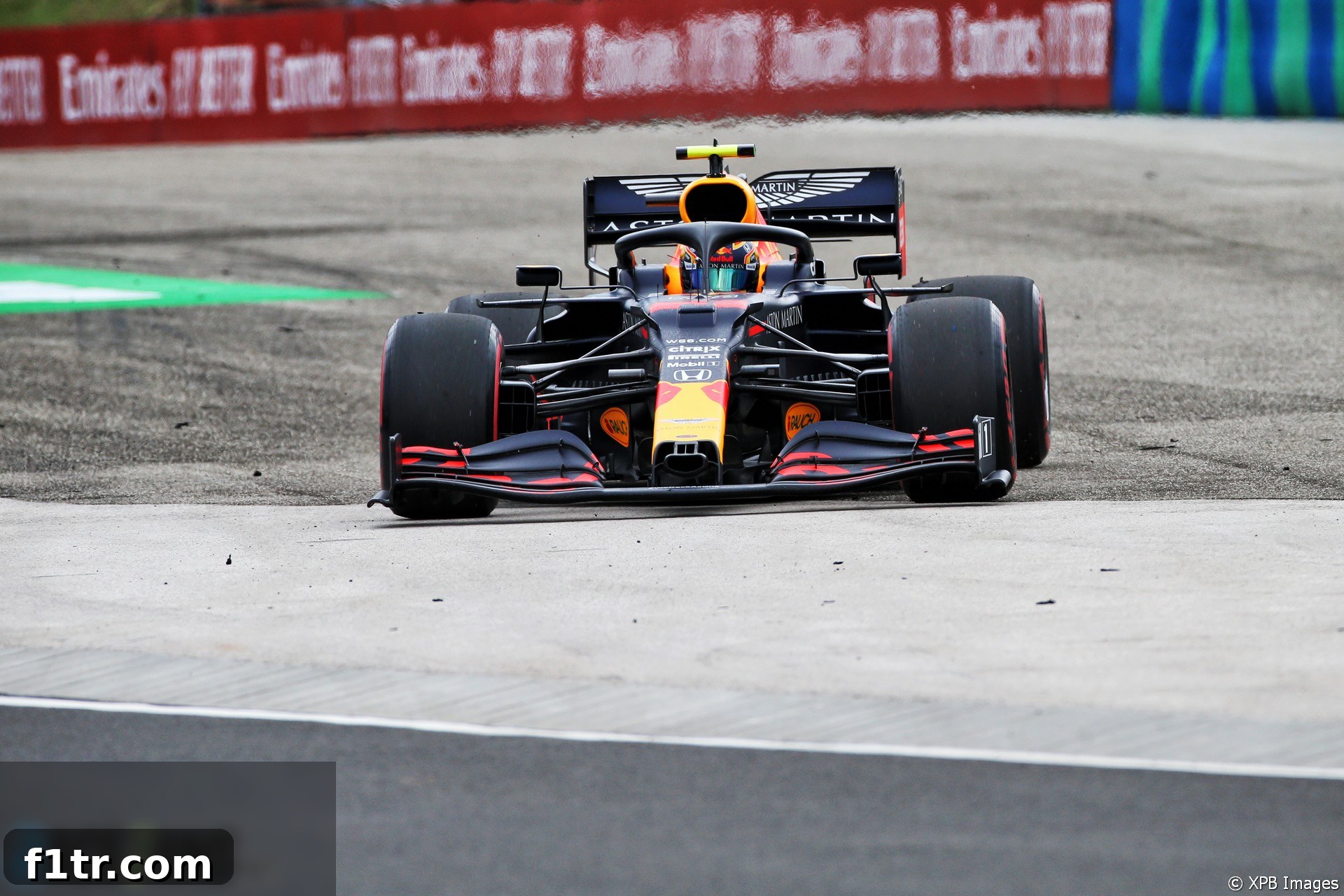
In a powerful display of camaraderie and sportsmanship, George Russell offered a staunch defense of his contemporary, Alexander Albon, following a challenging qualifying session for the Red Bull driver at the Hungaroring. Albon, driving for Red Bull Racing, found himself out-qualified by his former Williams teammate, Russell, and significantly off the pace of his own Red Bull stablemate, Max Verstappen, sparking widespread discussion about his performance and future.
Russell Champions Albon After Difficult Qualifying
The Hungarian Grand Prix qualifying proved to be a pivotal moment, with both Russell and Albon being eliminated in Q2. Russell edged out Albon for 12th place by a mere 17 thousandths of a second, highlighting the intense competition even among midfield runners. The more significant concern for Red Bull, however, was the stark contrast in performance between Albon and Verstappen. Max Verstappen comfortably advanced to Q3, clocking a lap time more than seven-tenths of a second faster than Albon’s best effort in the sister Red Bull car. This substantial gap immediately raised questions and intensified scrutiny on Albon’s position within the team.
However, Russell, who has shared the race track and junior categories with Albon for over a decade and a half, firmly believes that this particular performance does not accurately reflect Albon’s inherent talent or his capabilities as a top-tier racing driver. His outspoken support underscored a deep respect for his peer and a frustration with the narrative that was beginning to form around Albon’s struggles.
A Peer’s Unwavering Support: “He’s One of the Best”
Speaking to Sky Sports after qualifying, Russell didn’t mince words, expressing his long-standing admiration for Albon’s skills. “I’ve known Alex for the last 15 years, been in the same paddock as him, he’s one of the best drivers we all race,” Russell stated emphatically. His comments immediately drew attention, serving as a powerful endorsement from a highly respected competitor. Russell went on to name other top talents, “Max, Charles [Leclerc], all of us will say, he’s always been at the front in everything he’s done.” This assertion paints a picture of Albon as a driver who has consistently excelled throughout his career, casting doubt on the idea that his current difficulties are purely down to a lack of speed or talent.
Russell openly conveyed his sympathy for Albon’s predicament, suggesting that the public perception was unfairly tarnishing his reputation. “And I don’t know what the hell is going on. I feel really, really bad for him because he’s being made to look like an idiot and he’s absolutely not. He’s won in everything he’s done. So I don’t know what’s going on but they need to sort it out for him.” These words highlight the immense pressure F1 drivers face, particularly when paired with a benchmark like Max Verstappen, and the potential for external factors to impact performance far beyond a driver’s raw ability. Russell’s plea for Red Bull to “sort it out” implies a belief that the issues are systemic or car-related rather than solely attributable to Albon himself.
Albon’s Frustration and the Search for Answers
Albon’s own immediate reaction to failing to reach Q3 painted a clear picture of his frustration. A radio message captured his disappointment and a hint at recurring issues: “Sorry guys but I told you, I told you, just don’t put me in traffic,” he relayed to his team. This brief but telling exchange suggested that traffic management, a crucial element in F1 qualifying, had played a significant role in compromising his lap. The Hungaroring, with its short, twisty layout, notoriously makes traffic management a challenging prospect, and being caught out can easily ruin a flying lap.
However, in his post-qualifying debrief, Albon clarified that traffic wasn’t the sole culprit behind his struggles. He acknowledged a multifaceted problem, indicating a deeper set of issues beyond simply encountering other cars on track. “It was a bit of everything,” he explained. “Obviously, I didn’t do a great lap as well. But we had another lap to kind of fix it.” This admission of not delivering his absolute best lap, combined with the presence of other complicating factors, suggests a complex interplay of circumstances contributing to his suboptimal performance.
Albon’s candid assessment continued, “It’s a few things, to be honest. So I just need to speak to the team and discuss it just to be better prepared for next time.” This statement underscores the collaborative nature of Formula 1, where driver feedback and team analysis are vital for improvement. It suggests that the team and driver need to delve into car setup, strategy, and possibly Albon’s comfort level with the car’s balance to unlock more performance. The pressure to perform at Red Bull is immense, and consistent dialogue and problem-solving are paramount for a driver to thrive.
Analyzing the Performance Discrepancy: Albon vs. Verstappen
The significant performance gap between Albon and Verstappen at the Hungaroring was not an isolated incident and formed part of a season-long narrative for the Red Bull team. Max Verstappen, often hailed as a generational talent, consistently pushes the limits of his machinery, extracting every ounce of performance. For any teammate, matching or even coming close to Verstappen’s pace is an extraordinarily difficult task, and few drivers on the current grid could consistently achieve it.
Several factors could contribute to such a disparity. Firstly, a driver’s inherent driving style might simply not align perfectly with the specific characteristics of the car, especially if the car is developed predominantly around the leading driver’s preferences. Red Bull’s cars have historically been known for a sharp front end, which suits drivers who prefer a very responsive and agile car, often described as ‘pointy’. While Verstappen thrives in such conditions, it might be more challenging for others to adapt and find the necessary confidence to push to the absolute limit.
Secondly, the psychological pressure of competing against a proven winner like Verstappen, combined with the high expectations of a front-running team like Red Bull, can be immense. This mental burden can inadvertently lead to overdriving, small errors, or a lack of fluidity that ultimately costs crucial tenths of a second. Russell’s observation that Albon is “being made to look like an idiot” speaks directly to this psychological toll, implying that external judgment can exacerbate internal struggles.
Lastly, car setup can play a pivotal role. Finding the optimal balance for a twisty track like the Hungaroring requires precision. If Albon’s engineers struggled to dial in a setup that provided him with the necessary confidence and grip, even a small compromise could lead to a significant time deficit. His radio message about traffic, while partly tactical, also hinted at a potential lack of pace that made him more susceptible to being caught out.
The Hungaroring Challenge: A Unique Test for Drivers and Teams
The Hungaroring circuit, often dubbed “Monaco without the walls,” presents a unique challenge for Formula 1 drivers and teams. Its tight, twisty layout and lack of long straights mean that qualifying performance is exceptionally crucial for a strong race result. Overtaking opportunities are notoriously scarce, making starting position paramount. A poor qualifying session can condemn a driver to a difficult Sunday, regardless of their race pace.
The circuit demands a car with excellent aerodynamic downforce and mechanical grip, particularly through its numerous medium and low-speed corners. The constant changes in direction and the need for precision make it a true test of a driver’s rhythm and car control. For a driver like Albon, who might already be grappling with car characteristics or setup issues, the relentless nature of the Hungaroring can amplify any underlying problems, making it harder to mask deficiencies or recover from minor mistakes.
Traffic management during qualifying is also a heightened concern at the Hungaroring. With 20 cars vying for space on a relatively short lap, finding clear air for a ‘flying lap’ is a strategic nightmare. Teams meticulously plan their out-laps and warm-up laps to ensure their drivers have an unimpeded run. Albon’s radio message clearly indicated a failure in this crucial aspect of Red Bull’s qualifying strategy, whether due to miscalculation or unforeseen circumstances.
Red Bull’s Driver Policy and the Road Ahead for Albon
Red Bull Racing has a well-documented history of being demanding when it comes to driver performance. Their junior driver program is renowned for identifying and nurturing talent, but also for its ruthless approach to drivers who do not meet expectations. The pressure on the second Red Bull seat alongside Max Verstappen has been immense since Daniel Ricciardo’s departure, with both Pierre Gasly and Alexander Albon facing significant challenges in trying to consistently match the Dutchman’s pace.
Russell’s impassioned defense not only provided crucial insight into Albon’s talent but also highlighted the immense pressure cooker that is F1. For Albon, the road ahead was clear: collaborate closely with the team, analyze the data, and strive for incremental improvements. His commitment to “speak to the team and discuss it just to be better prepared for next time” is the correct approach in such a high-stakes environment.
The support from a competitor like Russell is invaluable, offering a counterbalance to the often-harsh criticism that can come from media and fans. It serves as a reminder that behind the helmets, these are highly skilled individuals battling complex machinery and immense psychological strain. Albon’s career trajectory, marked by victories in junior categories, demonstrates his raw talent. The challenge for him and Red Bull was to unlock that talent consistently at the pinnacle of motorsport.
The 2020 F1 season, characterized by unprecedented circumstances and a condensed calendar, placed additional demands on teams and drivers. The need for rapid adaptation and consistent performance was paramount. Alexander Albon’s journey with Red Bull continued to be a focal point of discussion, with his supporters, including George Russell, firmly believing in his potential to overcome these hurdles and prove his true capabilities on the global stage of Formula 1.
2020 F1 Season Insights and Further Reading
- Grosjean to make F1 test return tomorrow for first time since Bahrain horror crash
- Pictures: Wrecked chassis from Grosjean’s Bahrain fireball crash to go on display
- Bottas vs Rosberg: Hamilton’s Mercedes team mates compared after 78 races each
- F1 revenues fell by $877 million in Covid-struck 2020 season
- Hamilton and Mercedes finally announce new deal for 2021 season
Browse all 2020 F1 season articles