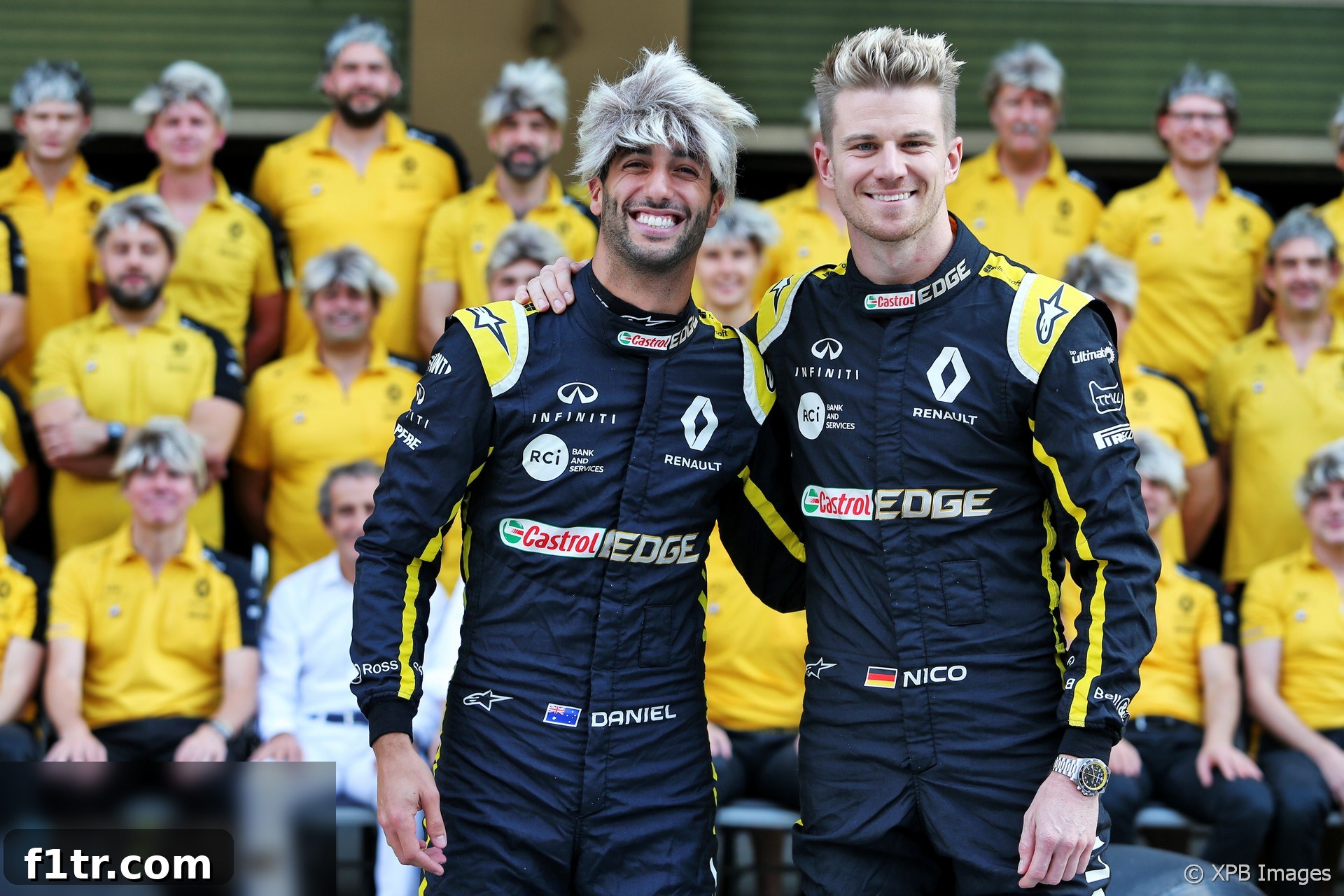
Daniel Ricciardo vs. Nico Hulkenberg: A Deep Dive into Renault’s 2019 Season and Driver Dynamics
Nico Hulkenberg’s Formula 1 career, often marked by consistent performance but a curious absence of a podium finish, reached a significant turning point at the close of the 2019 season. After three years with the French manufacturer, Renault opted not to renew his contract, signaling what many perceived as the potential end of his long and respected tenure in the sport. Having debuted with Williams in 2010 and competed in nearly every season since, Hulkenberg had become a seasoned veteran, known for his qualifying prowess and ability to extract performance from various midfield machinery. His departure opened the door for new talent, but also sparked considerable discussion about his legacy and the factors influencing Renault’s decision.
The 2019 season saw Hulkenberg paired with a new and highly-regarded teammate, Daniel Ricciardo. Ricciardo’s high-profile move from Red Bull Racing to Renault was one of the sport’s biggest stories, bringing with it immense pressure and expectations. His arrival was intended to elevate Renault into a consistent top-tier contender, spearheading their charge towards the front of the grid. However, adapting to a new team and a car that proved to be significantly different from the downforce-rich Red Bull presented its own set of challenges. The RS19, while showing flashes of potential, was often a trickier and less forgiving machine, demanding a distinct driving style and precise setup to unlock its performance.
The Qualifying Battle: Precision and Pace
From the outset, the Saturday qualifying sessions became a crucial battleground for the Renault teammates. Daniel Ricciardo, celebrated for his raw speed and aggressive driving, quickly established a statistical advantage over Hulkenberg. By the end of the season, Ricciardo had out-qualified his teammate 14-7, a clear indication of his immediate impact and speed over a single lap. This head-to-head comparison was a key metric often used to gauge a driver’s raw pace against a direct competitor, and on paper, it painted a dominant picture for the Australian.
However, focusing solely on the win-loss record might overstate the true extent of Ricciardo’s superiority in qualifying. A deeper analysis reveals that the margins separating the two drivers were remarkably tight. On average, only seven hundredths of a second (0.07s) divided Ricciardo and Hulkenberg in qualifying sessions where both set a competitive time. This incredibly small gap highlights Hulkenberg’s enduring pace and ability to stay within striking distance of a universally acclaimed quick driver. In the ultra-competitive world of Formula 1, such fine margins can be influenced by myriad factors, from tire warm-up to track evolution, suggesting that while Ricciardo often found that extra fraction, Hulkenberg was rarely far behind, consistently pushing his teammate to the limit.
Race Day Performance and Maximizing Opportunities
While qualifying offered a glimpse into raw pace, race day performance often tells a more complex story. The distribution of Renault’s points throughout the season reflected a closer contest than the qualifying statistics might initially suggest. Although Ricciardo generally finished ahead when both cars saw the chequered flag, Hulkenberg’s share of the team’s total points was not dramatically lower. This parity in points was partly due to Ricciardo suffering from three more mechanical retirements than Hulkenberg, disrupting his momentum and denying him potential points-scoring opportunities.
The RS19 itself proved to be a somewhat inconsistent performer, with its competitive level fluctuating considerably from track to track – though thankfully not reaching the extreme highs and lows experienced by teams like Haas. What truly set Ricciardo apart was his exceptional ability to capitalize on weekends when the car had genuine potential. A prime example of this was his masterful drive at the Circuit of the Americas. In Austin, Ricciardo delivered a stellar performance, finishing ‘best of the rest’ in sixth place, skillfully fending off tremendous pressure from McLaren’s Lando Norris. This result showcased his talent for extracting every ounce of performance from the car on its stronger circuits, whereas Hulkenberg, despite a respectable ninth place finish, couldn’t quite match his teammate’s outright pace and race craft on that particular Sunday.
Defining Moments: Triumphs and Tribulations
Every Formula 1 season is punctuated by moments that define a driver’s narrative. For Nico Hulkenberg, the nadir of his 2019 campaign arguably came at his home race, the German Grand Prix. Amidst chaotic wet conditions, he found himself in a remarkable third position, seemingly on course for his elusive first F1 podium. However, under immense pressure and challenging circumstances, he tragically skidded into the barriers at the final corner, squandering a golden opportunity. This incident, occurring in front of his home crowd, was a heartbreaking moment that undoubtedly weighed heavily on him and the team, highlighting the fine line between triumph and despair in motorsport.
Conversely, Daniel Ricciardo’s standout performance arrived three races later at the Italian Grand Prix in Monza. In a race where Renault demonstrated exceptional pace, Ricciardo, despite initially slipping behind his teammate at the start, executed a brilliant drive to pass Hulkenberg and secure fourth place. This, combined with Hulkenberg finishing fifth, marked the team’s best result of the season, a powerful four-five finish that underscored Renault’s potential and Ricciardo’s ability to lead the charge. Monza was a crucial validation of Renault’s engineering efforts and Ricciardo’s decision to join the team, offering a glimpse of what the partnership could achieve.
The Decision to Part Ways: Performance and Strategy
The question of how much Hulkenberg’s performance influenced Renault’s decision to drop him is complex. While Ricciardo clearly had the upper hand, Hulkenberg himself suggested that the team had broader strategic reasons for wanting to bring in Esteban Ocon. Indeed, Renault had previously attempted to sign the Mercedes junior driver 12 months prior, indicating a long-standing interest in the young French talent. Ocon’s nationality also held an inherent appeal for a French factory team looking to connect with its national identity and foster future stars.
Ultimately, while Hulkenberg remained a consistent and highly capable performer, the fact that Ricciardo so solidly dominated their head-to-head battle, especially in his debut season with an unfamiliar car and team, was undeniable. Renault likely viewed Ricciardo’s immediate adaptation and flashes of brilliance as a strong indicator that there was significantly more potential to be unlocked from their driver-car package once the combination had fully gelled. The allure of a younger, highly-rated talent like Ocon, combined with the clear benchmark set by Ricciardo, made the decision to move on from Hulkenberg a strategic, albeit tough, choice for the team.
Ricciardo’s Immediate Impact and Renault’s Future Aspirations
Daniel Ricciardo’s first year at Renault, despite the team’s overall struggle to consistently challenge at the sharp end of the midfield, was a testament to his talent and adaptability. His ability to quickly come to grips with a new chassis and integrate into a new team environment speaks volumes about his professional approach and inherent skill. For Renault, this immediate impact validated their significant investment in him, affirming that they had secured a driver capable of leading their ambitious project. The expectation within the team was clear: with a season under his belt and a deeper understanding of the RS19’s successor, Ricciardo would continue to mature with the team, pushing them further up the grid. His leadership, experience, and speed were seen as crucial components in developing the car and inspiring the entire factory.
The anticipation was that with a more refined car and a fully integrated Ricciardo, Renault could genuinely challenge for ‘best of the rest’ honors more consistently, and perhaps even eye occasional podiums. This long-term vision, centered around Ricciardo as the spearhead, became a defining aspect of their strategy moving into the subsequent seasons.
Team Dynamics: Respect, Rivalry, and the Road Ahead
A notable aspect of the Ricciardo-Hulkenberg pairing was their remarkable professionalism on track. Despite often finding themselves in close proximity during races, the two never once made contact over the course of the entire season. This mutual respect and seasoned experience were a credit to both drivers, ensuring that potential points were never squandered through avoidable collisions. Such maturity is invaluable for any team striving for consistency in the constructors’ championship.
However, the new pairing for 2020, featuring Daniel Ricciardo and Esteban Ocon, presented a different dynamic. Ocon’s track record, particularly his intense and sometimes controversial rivalry with Sergio Perez at Force India, was less than stellar in terms of on-track clashes. Similarly, Ricciardo himself had a costly run-in with Max Verstappen in previous seasons. Given Renault’s slip in the constructors’ championship in 2019, falling a place, the team undoubtedly recognized the critical importance of every single point in the fiercely competitive midfield. Therefore, a firm eye from team management would be crucial to ensure their new, potentially explosive pairing could maximize results without self-inflicted damage in 2020 and beyond. The stakes for team cohesion and disciplined racing were incredibly high.
Renault’s Midfield Challenge: A Broader Perspective
Beyond individual driver performances, Renault’s 2019 season was part of a larger narrative within Formula 1 – the intense midfield battle. As a factory team with significant resources, Renault’s ambition was to close the gap to the top three, but they found themselves locked in a fierce fight with rivals like McLaren and Racing Point. The fluctuating performance of the RS19 meant that consistency was hard to come by, and marginal gains from driver performance became even more critical. Ricciardo’s ability to capitalize on the car’s better days, and Hulkenberg’s consistent points finishes, were vital for keeping them in contention, even as they fell short of their ultimate goals. The driver pairing was a significant component of Renault’s strategy to navigate this challenging landscape and demonstrate progress.
Concluding Thoughts: A Season of Transition and Tough Choices
The 2019 Formula 1 season at Renault was undoubtedly a period of transition, marked by high expectations, flashes of brilliance, and ultimately, a pivotal driver change. Daniel Ricciardo’s arrival brought renewed energy and a clear performance benchmark, against which Nico Hulkenberg, despite his undeniable talent and consistent efforts, ultimately fell short. While the average qualifying gap was minuscule, Ricciardo’s stronger race day conversions and ability to seize opportunities proved decisive.
Hulkenberg’s long F1 journey, characterized by resilience and speed but also the unfortunate tag of the driver with the most starts without a podium, paused after 2019. His departure was a strategic move by Renault, balancing immediate performance with long-term potential and national identity. For Ricciardo, it was a season of adaptation and laying foundations, proving his worth as a team leader capable of guiding a factory effort. The stage was set for Renault to build upon the lessons learned, with a new dynamic pairing, aiming for a more consistent and competitive future in the challenging world of Formula 1.
Daniel Ricciardo vs Nico Hulkenberg: Key Performance Indicators
While dynamic graphical representations are often used for detailed comparisons, a summary of key performance indicators from the 2019 season illustrates the dynamic between Ricciardo and Hulkenberg. These metrics often encompass aspects like average qualifying position, number of points scored, head-to-head race finishes, and average race pace. Ricciardo generally held an advantage in outright pace, while Hulkenberg maintained strong consistency. The nuances of their performance are best understood through a combination of raw data and contextual analysis, especially considering the car’s characteristics and reliability issues.
Daniel Ricciardo vs Nico Hulkenberg: Who Finished Ahead at Each Round (2019 F1 Season)
| AUS | BHR | CHN | AZE | ESP | MON | CAN | FRA | AUT | GBR | GER | HUN | BEL | ITA | SGP | RUS | JPN | MEX | USA | BRA | ABU | ||
|---|---|---|---|---|---|---|---|---|---|---|---|---|---|---|---|---|---|---|---|---|---|---|
| Daniel Ricciardo | Q | ✗ | ✓ | ✓ | ✓ | ✓ | ✓ | ✓ | ✓ | ✗ | ✓ | ✓ | ✓ | ✓ | ✓ | ✗ | ✓ | ✗ | ✓ | ✓ | ✗ | ✓ |
| R | ✗ | ✓ | ✓ | ✗ | ✓ | ✓ | ✗ | ✓ | ✓ | ✓ | ✗ | ✓ | ✓ | ✓ | ✗ | ✓ | ✗ | ✓ | ✓ | ✓ | ✓ | |
| Nico Hulkenberg | Q | ✓ | ✗ | ✗ | ✗ | ✗ | ✗ | ✗ | ✗ | ✓ | ✗ | ✗ | ✗ | ✗ | ✗ | ✓ | ✗ | ✓ | ✗ | ✗ | ✓ | ✗ |
| R | ✓ | ✗ | ✗ | ✓ | ✗ | ✗ | ✓ | ✗ | ✗ | ✗ | ✓ | ✗ | ✗ | ✗ | ✓ | ✗ | ✓ | ✗ | ✗ | ✗ | ✗ |
Daniel Ricciardo vs Nico Hulkenberg: Average Qualifying Gap Insights
While specific raw times and detailed gaps for each race typically require dynamic data visualizations, the overarching trend indicated that Daniel Ricciardo was, on average, faster in qualifying. The recorded average difference of approximately seven hundredths of a second underscores the fine margins in Formula 1. Negative values would conventionally indicate Ricciardo was faster, while positive values would signify Hulkenberg’s advantage on that specific occasion. This consistency in Ricciardo’s slight edge over the season contributed significantly to his 14-7 qualifying record.
2019 F1 season review
- ‘I should have done a better job. There’s things that I know I can do better’
- ‘I am definitely not a rookie anymore – but I’m still getting better’
- ‘I didn’t believe in myself much. But after Australia and Bahrain and I gained a lot of confidence’
- ‘It was my best season for sure so far in terms of pure results and speed’
- ‘There’s been plenty of good performances – but there’s also other years I’ve performed at my best’
Browse all 2019 F1 season review articles