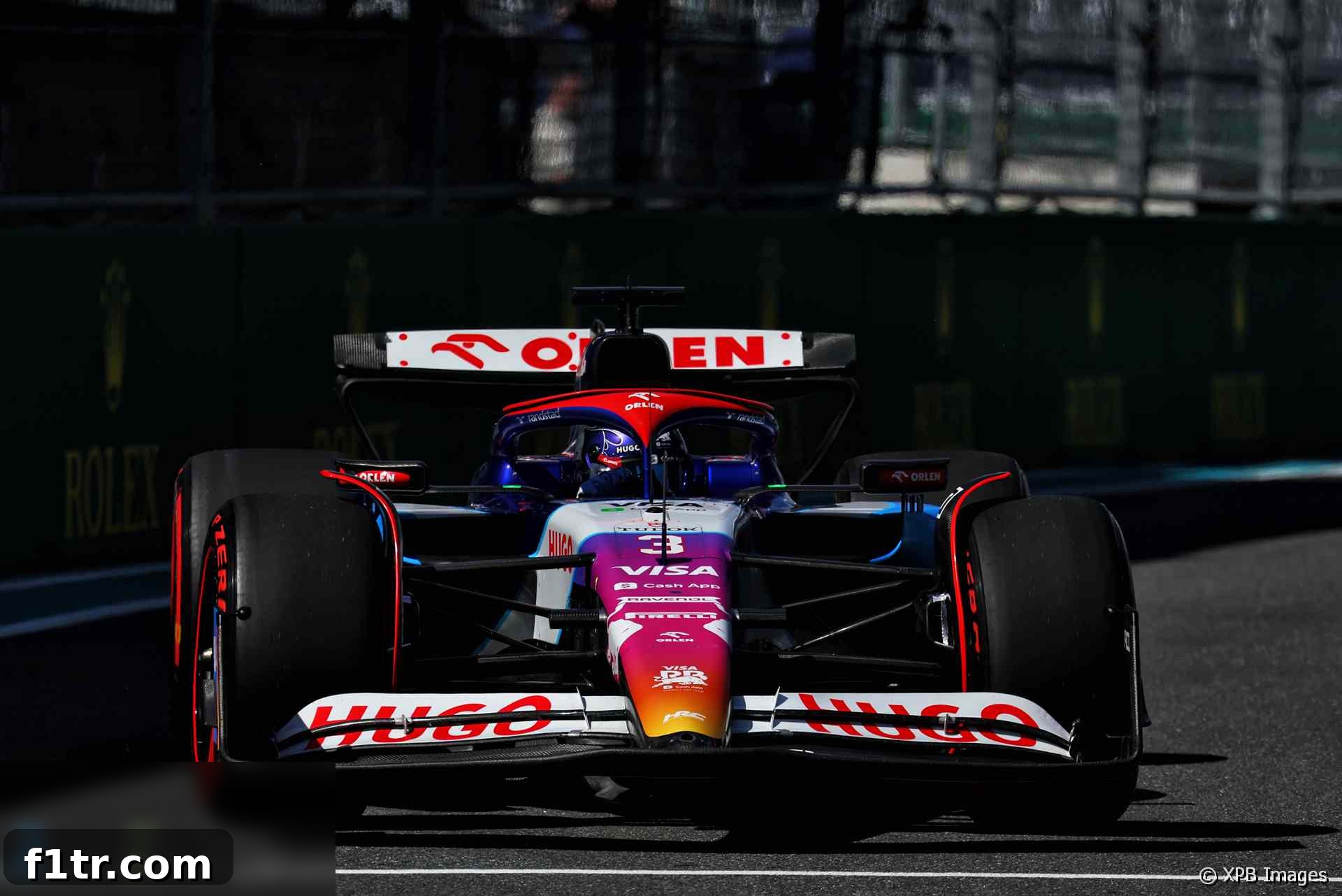
Daniel Ricciardo’s Miami Mystery: From Sprint Hero to Qualifying Zero
The Miami Grand Prix weekend delivered a stark reminder of Formula 1’s unforgiving nature for Daniel Ricciardo. After a brilliant fourth-place finish in Saturday’s Sprint race, the Australian driver faced a perplexing and sudden loss of grip during qualifying for the main Grand Prix, preventing him from progressing beyond the first round (Q1). This dramatic reversal of fortune left Ricciardo and his RB team searching for answers to a bizarre performance anomaly that mirrored an issue experienced by another prominent driver.
Advert | Become a Supporter & go ad-free
A Puzzling Plunge: The Sudden Grip Disappearance
Ricciardo’s qualifying session took an unexpected turn, a stark contrast to his earlier stellar performance. “It’s one of those things, the sport can change so quickly,” a visibly deflated Ricciardo told the official F1 channel after his Q1 elimination. His struggle was characterized by a rapid and inexplicable deterioration in tire performance, particularly with the rear axle. The RB driver recounted the experience, highlighting the immediate and undeniable shift in car behavior.
“Already on that last set, coming out of Turn One, I started sliding. I had a wobble into Turn Seven then went wide, and it was a spiral effect,” Ricciardo explained. The issues weren’t confined to a single corner; they manifested from the very beginning of the decisive qualifying lap, suggesting a fundamental problem rather than a driver error or a minor misjudgment. The car simply lacked the expected adhesion, leaving Ricciardo unable to push for a competitive lap time. This uncharacteristic lack of grip ultimately relegated him to the back of the pack, a devastating blow following his Sprint success.
Echoes of Norris: A Shared Phenomenon?
What made Ricciardo’s experience even more perplexing was its striking similarity to an issue encountered by Lando Norris during the final round of qualifying for the Sprint race on Friday. Ricciardo, having observed Norris’s struggles, immediately drew parallels. “Honestly, I saw Lando’s lap in Q3 yesterday where straight away from the start of the lap you can see he was sliding his rears everywhere on the soft; he obviously struggled a lot,” said Ricciardo. “I honestly felt the same.”
This comparison suggests that the issue might not be entirely unique to the RB car or Ricciardo’s driving style, but potentially linked to broader factors like tire behavior, track conditions, or a batch of tires. When two different drivers, from different teams, report such similar and sudden losses of grip on seemingly identical tire compounds, it raises questions about the intricate dynamics of modern F1 tires and their narrow operating windows. The phenomenon described by both drivers points to an abrupt loss of optimal temperature or an unexpected characteristic of the tire set, pushing them far outside their performance envelope from the outset of the lap.
The Unpredictable Nature of Formula 1 Tires
Formula 1 is a sport of fine margins, and nowhere is this more evident than in tire performance. The Pirelli tires, while designed to be challenging, often present an enigma to teams and drivers. Achieving and maintaining the “tire window” – the optimal temperature range for maximum grip – is paramount, especially in qualifying where every tenth of a second counts. Ricciardo’s experience underscores how quickly this delicate balance can be lost.
Factors such as ambient temperature, track temperature, wind direction, and even the subtle wear of the track surface can significantly impact how tires behave. A slight deviation in tire blanket temperature, an unexpected gust of wind, or even a small variation in the tire compound from one batch to another can lead to a dramatic drop in performance. Ricciardo’s assertion that “everything seemed fine approaching the lap” highlights the suddenness and unpredictability of the issue, suggesting that external or latent factors were at play rather than a pre-existing setup flaw. The shared observation with Norris only reinforces the idea that these incidents might be symptomatic of the challenges posed by F1’s highly sensitive tire technology.
Advert | Become a RaceFans supporter andgo ad-free
Team RB: A Tale of Two Qualifiers
Adding to Ricciardo’s frustration was the contrasting performance of his teammate, Yuki Tsunoda. While Ricciardo languished in Q1, Tsunoda impressively made it into Q3 and secured a strong tenth-place starting position for the Grand Prix. This discrepancy within the same team and car further complicates the diagnosis of Ricciardo’s problem. If the car itself had a fundamental flaw, it would likely affect both drivers similarly. Tsunoda’s success, however, suggests that the issue might be more specific to Ricciardo’s car setup for that particular run, his tire allocation, or perhaps a unique interaction with his driving style and the specific conditions at that moment.
“I honestly, genuinely think we’re not an 18th-place car,” Ricciardo asserted, his belief in the car’s potential undiminished despite the qualifying setback. This confidence is supported by his Sprint performance and Tsunoda’s Q3 appearance. The RB team will undoubtedly be poring over the telemetry data from both cars, comparing every parameter to identify the root cause of Ricciardo’s grip loss. Understanding this divergence in performance is crucial for the team’s overall development and for ensuring both drivers can extract maximum potential from the package consistently.
The Road Ahead: Overcoming Penalties and Predictions
As if the qualifying disappointment wasn’t enough, Ricciardo also carried a three-place grid penalty into the Miami Grand Prix from the previous round in China. This penalty, incurred for an infringement during a Safety Car period, meant that his Q1 elimination would translate into an even more challenging starting position. “We have the penalty so I think we’re dead last,” he acknowledged, facing the daunting prospect of starting from the very back of the grid, a stark contrast to his P4 Sprint start.
Starting from the rear of the grid at the Miami International Autodrome presents a significant challenge. While the track offers some overtaking opportunities, making significant progress through the field is never easy in modern Formula 1, especially when battling against cars that might have better straight-line speed or superior tire management. Ricciardo’s primary focus will now shift to damage limitation, strategic tire choices, and capitalizing on any chaos or Safety Car periods that might arise during the race.
Advert | Become a RaceFans supporter andgo ad-free
Searching for Answers: The Team’s Task
The immediate priority for the RB engineering team is a thorough investigation into the sudden loss of grip. This will involve meticulously analyzing every sensor reading from Ricciardo’s car, cross-referencing it with Tsunoda’s data, and scrutinizing the specific set of tires used in Q1. Was there a manufacturing anomaly in that particular tire set? Did the tire blankets fail to bring them to the optimal temperature? Or was there a subtle setup change that, under the specific track conditions, pushed the car over the edge?
Ricciardo’s earlier conversation with Norris, where he quipped that Norris “looked like you were on used hard tyres in your Q3 run,” highlights the visual severity of the issue and the shared concern among drivers about such abrupt performance cliffs. The quest for answers is not merely about understanding what went wrong for Ricciardo in Miami but also about gleaning insights that can prevent similar occurrences for both RB and potentially other teams in the future. The ability to manage and predict tire behavior is a cornerstone of success in Formula 1, and these unexpected setbacks serve as a reminder of its complexity.
Embracing the Unpredictability: Ricciardo’s Mindset
Despite the crushing disappointment, Ricciardo displayed a characteristic resilience. His immediate reaction underscored the capricious nature of his chosen sport. “Obviously I’m not happy. But it’s also one of those things. This morning, that’s why it’s important I told the team, let’s at least enjoy this for the next 30 minutes, because this sport is highly unpredictable.” This perspective, while born from experience, speaks volumes about the mental fortitude required to compete at the pinnacle of motorsport.
The highs of a strong Sprint performance can quickly be followed by the lows of a qualifying elimination, a rollercoaster that only the most resilient can navigate. For Daniel Ricciardo, the Miami Grand Prix served as a stark demonstration of this unpredictability. As he looks to bounce back from the back of the grid, the focus will be on learning from the mysterious grip loss and using his experience to climb through the field, proving once again his enduring fighting spirit and skill.
2024 Miami Grand Prix Coverage
- McLaren had superior pace before Verstappen’s damage in Miami – Norris
- Sainz ‘struggles to understand’ why he got penalty when Perez didn’t
- Alonso’s unusual brake problem and more unheard Miami team radio
- McLaren’s Miami upgrade success points to even stronger form in coming races
- Norris expects more wins this year and believes “100%” in 2025 title bid
Browse all 2024 Miami Grand Prix articles