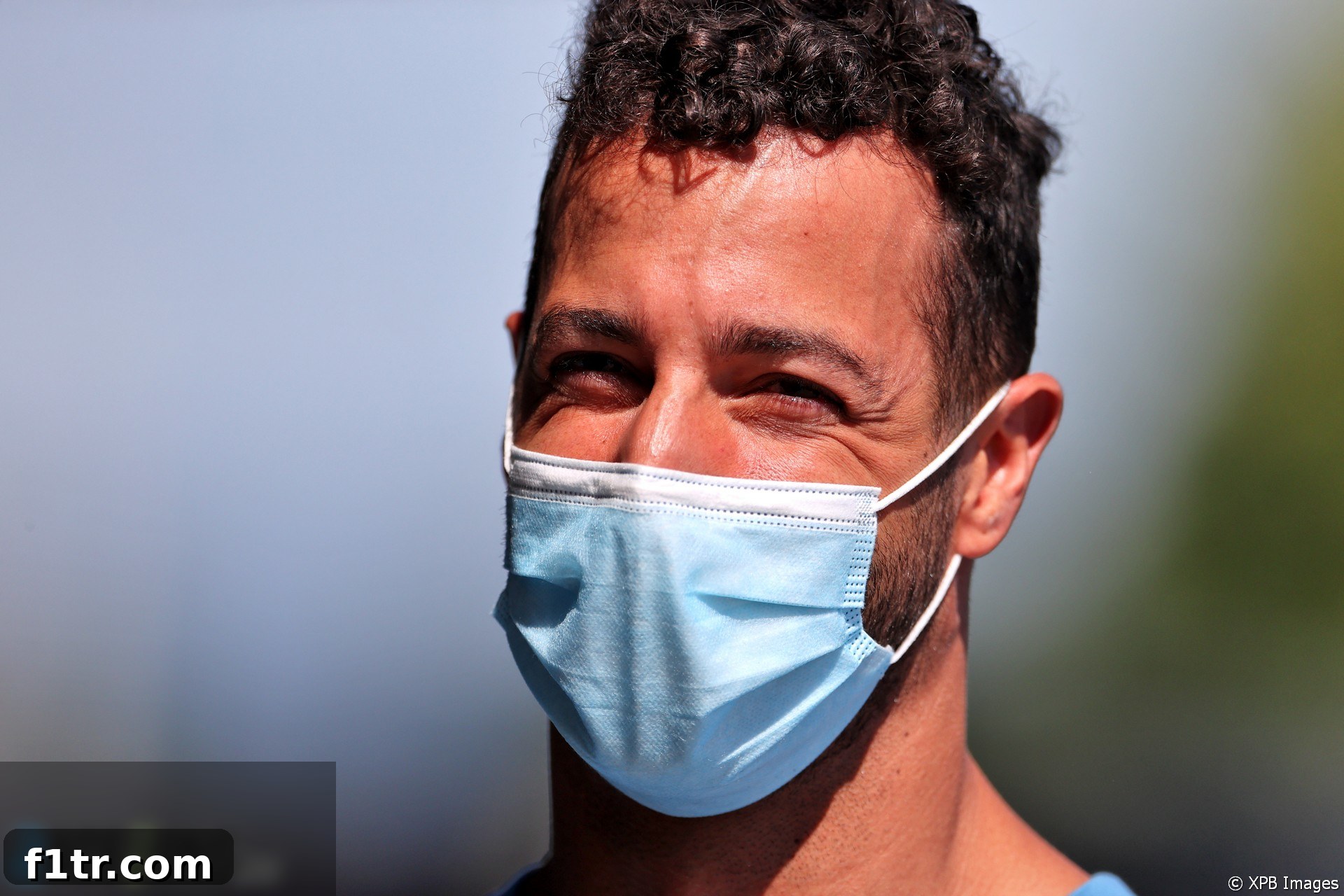
Daniel Ricciardo Weighs In: British Grand Prix Collision Between Hamilton and Verstappen Deemed ‘Hard but Fair’
The highly controversial collision between Lewis Hamilton and Max Verstappen at the British Grand Prix ignited a fierce debate within the Formula 1 community, dominating headlines and sparking intense discussions among fans, teams, and drivers alike. While Red Bull Racing formally petitioned the stewards for a review of their initial decision, believing Hamilton’s 10-second time penalty was insufficient given his eventual victory, one prominent voice has offered a more measured perspective. Daniel Ricciardo, a seasoned F1 veteran and former teammate to Max Verstappen, stated emphatically that he saw “nothing out of line” in the high-stakes incident, suggesting the maneuver, though impactful, fell within the boundaries of aggressive but fair racing.
Ricciardo’s assessment carries significant weight, drawing upon his extensive experience at the pinnacle of motorsport and his unique insight into both Hamilton’s formidable competitive spirit and Verstappen’s evolving driving style. His comments arrive at a crucial juncture, as the sport grapples with defining the precise line between aggressive racing and dangerous conduct, particularly when championship aspirations hang in the balance.
A Driver’s Perspective: Understanding the Onboard View
From the immediate aftermath of the crash at Copse Corner, Red Bull’s argument centered on whether Lewis Hamilton made a sufficient effort to avoid contact with Verstappen, particularly given the high-speed nature of the track’s challenging first sector. However, Daniel Ricciardo, after reviewing the available footage, particularly Max Verstappen’s onboard camera feed, concluded that both drivers operated within the understood parameters of competitive racing.
“Watching Max’s onboard, there was room on the inside,” Ricciardo explained. This observation is critical, suggesting that despite the incredibly tight confines and the immense speed, a small but crucial window of opportunity existed. He further elaborated, “Of course they were racing hard but I would still say hard but fair through those phases of corners.” This distinction between ‘hard’ and ‘fair’ is fundamental to understanding the nuances of Formula 1 racing. Drivers are expected to push limits, to fight for every inch of tarmac, but within an unwritten code of conduct that prioritizes safety and sportsmanship. Ricciardo’s view implies that while the consequences were severe, the actions leading up to them were a product of two top-tier drivers battling fiercely for position.
“Obviously Max expected Lewis was there or knew he was there and gave him a little bit of room. So you know what’s what. I didn’t really see anything out of line with the incident itself, if you know what I mean,” Ricciardo concluded. This highlights a crucial element of driver awareness: anticipating the presence of a rival, even in blind spots, and making micro-adjustments to provide just enough space. The inherent trust and mutual respect, even amidst intense rivalry, often dictate the outcome of such wheel-to-wheel battles. For Ricciardo, the critical factor wasn’t a malicious intent or a reckless disregard for safety, but rather an unfortunate racing incident born from two drivers pushing the absolute limits.
The Unwritten Rules of Racing: Etiquette and Awareness
Ricciardo’s perspective delves deeper into the ingrained understanding among drivers regarding racing etiquette and the unspoken rules that govern wheel-to-wheel combat. He firmly believes that these principles are well-established and understood by everyone in the paddock, regardless of whether they are codified in explicit regulations.
“As racers, we know,” he stated. “And even sometimes it doesn’t have to be written on paper for us, we know just through years of racing and the experience that we have.” This insight underscores the unique culture within motorsport, where a collective understanding of fair play and acceptable aggression is developed through countless hours of competition. It’s a sensibility honed over years, transcending specific rulebooks and becoming almost instinctual.
A key aspect Ricciardo highlighted is the awareness of blind spots and the responsibility to account for a rival’s presence. “Especially because in these cars, there is a point where you don’t see, there are blind spots [where] the car’s a quarter of the way on our inside. But we’re aware that the chance of a car being there is probably pretty high so we’re always going to leave room for one car if there’s a car there.” This emphasizes the sophisticated level of spatial awareness and predictive judgment required in Formula 1. Drivers are constantly processing information, not just what they can visually confirm, but also what they can infer about their competitors’ positions and intentions. The expectation to “leave room” is a cornerstone of fair racing, preventing unnecessary contact and promoting exhilarating, yet safe, competition.
The High-Stakes Consequence at Silverstone
While Ricciardo found nothing egregious in the racing maneuver itself, he acknowledged that the fallout from the collision was undeniably significant and became the central talking point. The sheer speed of Copse Corner at Silverstone amplifies any incident, turning what might be a minor bump elsewhere into a potentially catastrophic crash.
“Obviously the consequence was really the big talking point and it’s just a shame, I guess, that it happened on one of the quickest corners on the calendar,” he lamented. The fact that Max Verstappen endured a 51G impact and had to be taken to a local hospital for precautionary checks underscored the severity. Ricciardo expressed relief that Verstappen was largely unharmed and fit to race in the subsequent weekend, a testament to the safety advancements in modern Formula 1 cars.
“Luckily Max was more or less okay and he’s here to race this weekend,” he added. This outcome, despite the scale of the crash, allowed the focus to remain on the racing aspect rather than solely on the injury. Ricciardo reiterated his belief in the drivers’ inherent understanding of racing boundaries: “So I think that’s it. But I think deep down all of us know racing etiquette and when to squeeze, when not. I think we’re pretty clear with that.” This suggests that regardless of external debate or steward reviews, the core group of F1 drivers shares a common internal compass for what constitutes acceptable and unacceptable conduct on track.
Max Verstappen’s Evolution: From Raw Aggression to Refined Competitor
Beyond the immediate incident, Ricciardo also offered valuable insights into the evolution of his former teammate, Max Verstappen. Verstappen’s arrival in Formula 1 six years prior was marked by a reputation for audacious, sometimes overly aggressive, overtakes and defensive maneuvers, leading to criticism from some quarters. However, Ricciardo believes that time and experience have tempered this raw aggression into a more refined and controlled approach.
“I think Max was under a bit of pressure in his first couple of years of F1 with some of the moves and that and I definitely think he’s ironed a lot of that out,” Ricciardo observed. This suggests a natural progression for young talents entering the sport. The initial exuberance and unbridled ambition often give way to a more strategic and disciplined execution as drivers gain maturity and a deeper understanding of the risks and rewards.
“I think he’s just matured as a driver and the experience now,” Ricciardo continued. The journey from a prodigious, sometimes impulsive, rookie to a championship contender requires not just raw speed but also a refined racecraft, the ability to judge situations, manage tires, and pick battles wisely. Ricciardo, who competed alongside Verstappen at Red Bull for three intense seasons, offered a compelling statistic to back up his claim: “For sure he’ll always race hard. But I think we were team mates three years, we came together twice so that’s pretty low numbers, I think we’re okay.” This personal anecdote serves as strong evidence that while Verstappen’s competitive fire remains undimmed, his judgment and ability to manage close-quarters racing have significantly improved. The British Grand Prix incident, while spectacular and controversial, should be viewed within the context of a highly aggressive, but increasingly mature, driver pushing the limits against a seven-time world champion.
The Intensifying Championship Battle and Future Implications
The British Grand Prix incident, and the subsequent discussion around it, undoubtedly added another layer of intensity to what was already a thrilling championship battle between Lewis Hamilton and Max Verstappen. Daniel Ricciardo’s measured comments provide a valuable counterpoint to the more emotionally charged reactions, highlighting the fine line that Formula 1 drivers constantly navigate between pushing for victory and adhering to the unwritten rules of engagement.
As the season progresses, every wheel-to-wheel encounter between these two titans will be scrutinized even more closely. Ricciardo’s viewpoint suggests that, from a driver’s perspective, incidents like Silverstone are often an unavoidable consequence of two exceptional competitors operating at the absolute peak of their abilities, vying for every advantage. While the stewards’ decisions and team petitions will continue to shape the regulatory landscape, the inherent challenges and the spirit of ‘hard but fair’ racing, as articulated by drivers like Daniel Ricciardo, will always remain at the heart of Formula 1. The memory of Silverstone will undoubtedly fuel both drivers and teams, setting the stage for an even more exhilarating and perhaps equally controversial remainder of the season.