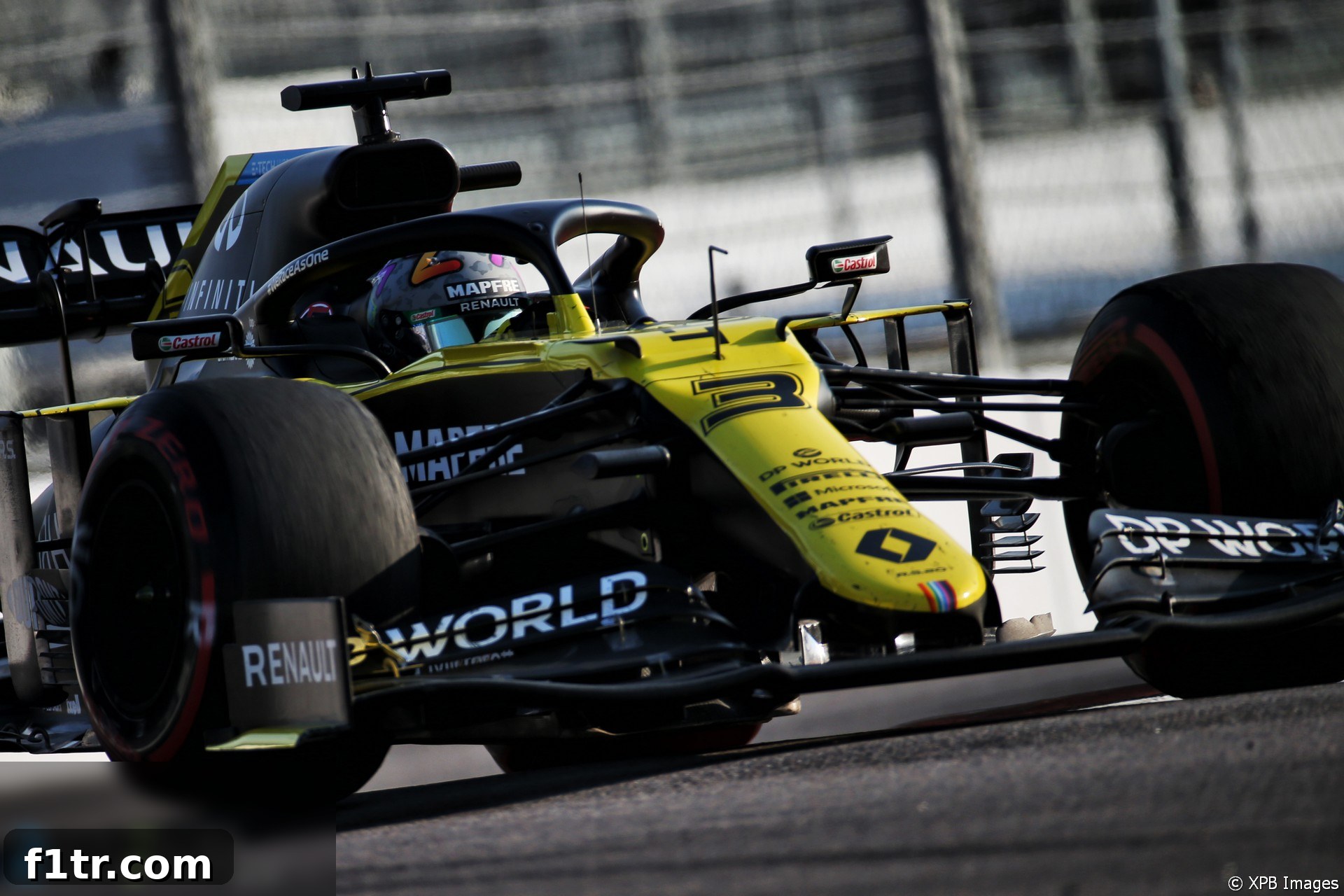
Daniel Ricciardo Unlocks Renault’s Potential: Pushing the Comfort Zone at Sochi
Formula 1 driver Daniel Ricciardo has revealed that Renault’s significant improvement in performance at the Sochi Autodrom was achieved by daringly pushing the car’s setup far beyond its conventional “comfort zone.” This strategic shift, coupled with Ricciardo’s personal dedication to mastering the challenging Russian circuit, proved instrumental in securing a remarkable qualifying position and hinting at a brighter future for the Enstone-based team.
After clinching an impressive fifth spot on the grid for the upcoming race, Ricciardo elaborated on the team’s innovative approach. He explained that their progress stemmed from consciously moving away from a setup that would typically suit his driving style. Instead, they ventured into experimental configurations that, as he put it, “maybe in other places, would scare you.” This willingness to embrace the uncomfortable was a testament to the team’s evolving understanding of their R.S.20 challenger and their ambition to unlock its hidden performance potential.
Strategic Setup Choices and Personal Mastery at Sochi
Ricciardo’s standout performance wasn’t limited to his qualifying lap. He turned heads earlier in the weekend, particularly in Q2, where he recorded the quickest time. While Valtteri Bottas and Max Verstappen opted for the medium tyre compound for their fastest runs, Ricciardo’s pace was undeniable, building on an already impressive showing in Friday practice where he momentarily held third position, trailing only the dominant Mercedes duo. This consistent display of speed underscored the validity of Renault’s unconventional setup choices.
The Australian driver candidly admitted that Sochi had not historically been one of his strongest circuits. Recognizing this, he committed himself to extensive “homework” prior to the event. This involved meticulous study of onboard videos from previous years, analyzing his own driving lines, braking points, and cornering techniques, and working closely with his engineers to identify areas for improvement. “Personally, for me, I’ve never really felt like I’ve been particularly strong on this circuit and I knew there were some things I needed to improve,” Ricciardo confessed. “So I feel like I did my homework before the weekend and yesterday showed pace and obviously could back it up today.” This blend of driver introspection and engineering collaboration proved to be a powerful combination.
Ricciardo observed that last year’s Renault car, while seemingly “benign” and easy to drive, ultimately lacked the raw pace required to compete at the sharp end of the grid. This realization became a catalyst for change, prompting the team to explore more aggressive and less conventional setups. The perceived comfort of the previous car had perhaps masked its underlying limitations, suggesting that a degree of discomfort in handling could actually lead to greater performance.
Embracing the Uncomfortable: A New Philosophy for Performance
The concept of venturing outside the “comfort zone” was central to Renault’s breakthrough at Sochi. Ricciardo elaborated on the nuanced decision-making process behind this strategic pivot. “If you’re not particularly strong on a circuit there’s normally a bit of a reason,” he explained. “Maybe the set-up you normally like, maybe it doesn’t work for this circuit. So you push yourself to do something that maybe doesn’t work on other tracks but it might here, think a little outside the box and try some set-up items on the car that, maybe in other places, would scare you.” This philosophy reflects a maturity within the team, moving beyond conventional wisdom to unlock bespoke solutions for specific track characteristics.
This aggressive mindset wasn’t just about tweaking suspension settings; it also involved a change in driving approach. “I think part of it was trying to slip out of my comfort zone with that, be a bit more aggressive, take a few more risks,” Ricciardo added. He recalled reviewing onboard footage from the previous year, noting how the car appeared “a little too good to drive,” yet ultimately proved to be slow. This stark contrast solidified his conviction that true speed sometimes lies in finding “comfortable in the uncomfortable.” It’s a delicate balance where the driver learns to extract maximum performance from a car that might initially feel unfamiliar or twitchy, ultimately expanding their performance envelope.
The extensive data analysis and investigation played a crucial role in this transformation. Ricciardo meticulously reviewed previous weekend data, specifically focusing on how setup changes had impacted his performance at Sochi in the past. “So there was a bit of investigating and data and that but I was just watching a ton of onboards and just going through set-up things we changed over the weekend last year and where it got away from me,” he shared. This detailed forensic analysis allowed the team to pinpoint exactly where they had gone wrong previously and, more importantly, how to rectify those issues by adopting a bolder approach.
Sochi’s Unique Demands and Their Impact on Setup
Sochi’s peculiar layout further amplified the need for an unconventional setup. Ricciardo highlighted the circuit’s distinct features that make it a challenging proposition for engineers and drivers alike. “It’s a very weird track because it’s so flat,” he noted. “You don’t really have any banking to work on, a lot of the corners are off-camber so the car does feel a bit weird around here.” These characteristics contrast sharply with many other F1 venues, requiring a different philosophy to extract lap time.
Unlike high-speed, flowing tracks such as Mugello, with its long, bold corners that generate immense aerodynamic grip and “suck the car in,” Sochi demands a different kind of finesse. Its flat and often off-camber sections can make the car feel less planted and more prone to understeer or oversteer if not perfectly balanced. “It’s not like Mugello where you’ve got really long, bold corners that really suck the car in and throw you around, it is unique,” Ricciardo explained. “So I think it was just experimenting a bit and finding something which I was going to be uncomfortable with, at first but find comfort in it.” This adaptability and willingness to experiment epitomize the spirit of innovation that propelled Renault forward at this Grand Prix.
Renault’s Ascending Trajectory: Consistency Across Circuits
The team’s impressive performance at Sochi holds significant implications beyond a single race weekend. Ricciardo firmly believes it demonstrates Renault’s newfound ability to be genuinely competitive across a diverse range of circuit types. This consistency is a critical indicator of a team’s genuine progress and potential to challenge for higher honors in the championship.
“We had flashes of it last year but didn’t show it consistently enough to really believe that maybe it was going to get to the level we expected,” Ricciardo reflected, acknowledging past frustrations. “But I think now it’s certainly getting close to that and on all range of circuits, now which I think is the most encouraging thing for the team.” This sustained improvement, rather than sporadic bursts of pace, instills confidence not only within the team but also for fans and observers. For Ricciardo personally, mastering a circuit where he previously struggled adds another layer of satisfaction and a boost to his self-belief. His ability to adapt and excel in less-than-ideal circumstances underlines his status as one of the sport’s premier talents.
The aggressive setup strategy at Sochi, combined with Daniel Ricciardo’s meticulous preparation and willingness to push his own boundaries, has yielded tangible results for Renault. It signifies a crucial turning point for the team, demonstrating their capacity for innovative problem-solving and their increasing competitiveness on various tracks. As the season progresses, this newfound confidence and willingness to experiment outside the “comfort zone” could be the key to unlocking even greater success for the French constructor.
2020 Russian Grand Prix
- Despite F1 drivers’ concerns, stewards don’t give penalty points for “minor infringements”
- 2020 Russian Grand Prix Star Performers
- “Slower” Ferrari only beat us because of Q3 tyre rule – Tost
- “I may not always get it right” says Hamilton after penalty criticism
- Why did the stewards make their second U-turn this year on a Hamilton penalty call?
Browse all 2020 Russian Grand Prix articles