Renault’s Resplendent Return: Unveiling the Iconic Yellow RS16 Livery
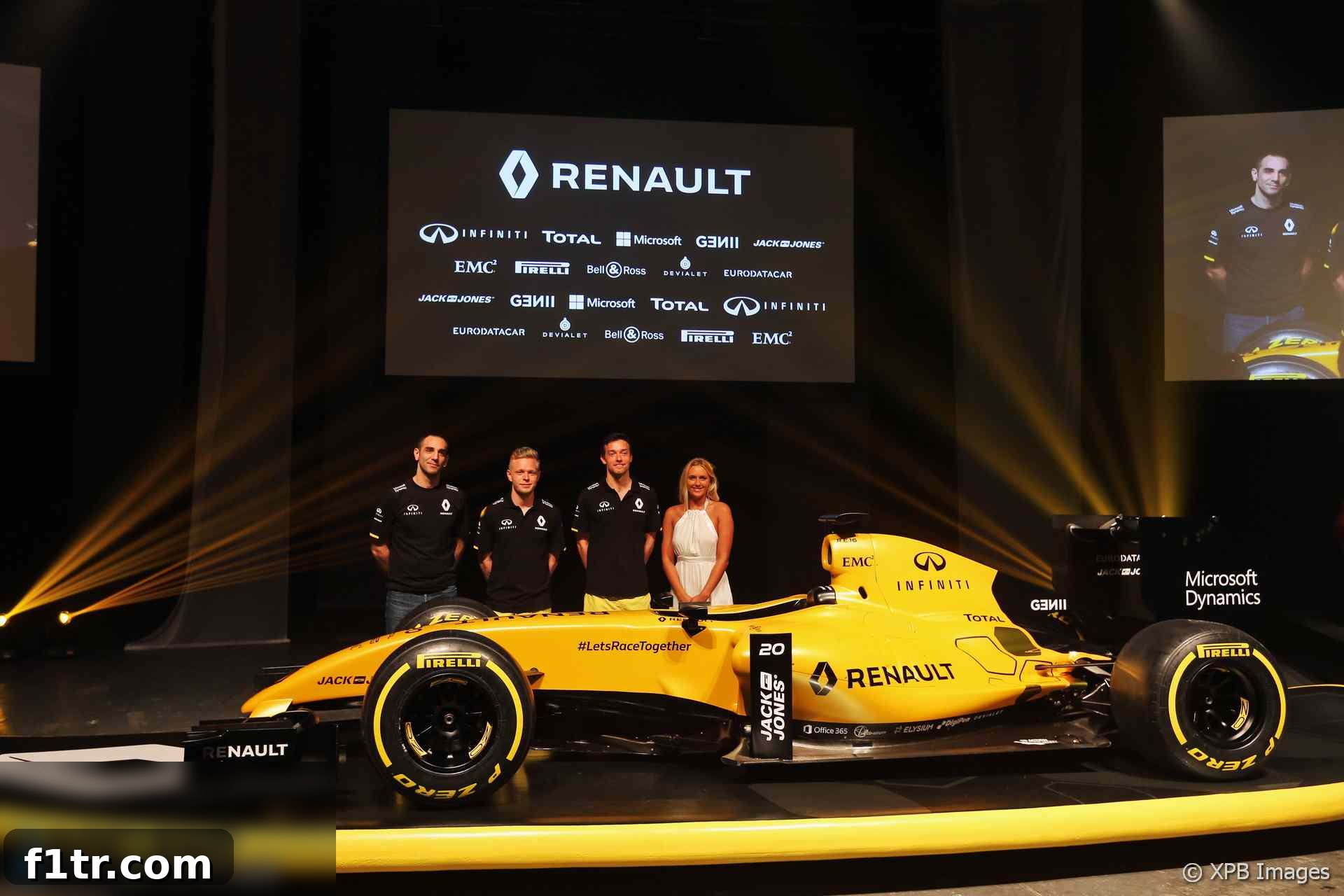
The highly anticipated return of Renault as a full works team to Formula 1 in 2016 marked a significant moment for the sport. After a period operating primarily as an engine supplier, the French manufacturer was back on the grid with its own chassis and a renewed ambition. While their initial testing sessions showcased a discreet black livery, generating curiosity and a sense of mystery, the team officially unveiled the racing colours of their RS16 challenger at a grand launch event in Melbourne, setting the stage for an exciting season ahead. The reveal brought forth a vibrant yellow and black scheme, a powerful nod to Renault’s rich heritage in Formula 1 and a bold statement of their future intentions.
The Grand Reveal in Melbourne: Kicking Off the Season in Style
Wednesday in Melbourne, the host city for the opening round of the 2016 Formula 1 World Championship, became the backdrop for Renault’s official livery unveiling. Rather than on the actual race car itself, the striking new design was displayed on a meticulously crafted show car, captivating media and fans alike. This strategic reveal ahead of the Australian Grand Prix not only generated considerable buzz but also formally cemented Renault’s commitment to reclaim its position at the pinnacle of motorsport. The vivid yellow, instantly recognizable to long-time F1 enthusiasts, promised a visual spectacle that would undoubtedly stand out on the track against a backdrop of diverse team liveries.
The choice of venue underscored the global nature of Formula 1 and the importance of making a strong first impression. Melbourne’s vibrant atmosphere provided the perfect setting for Renault to re-introduce its brand to a worldwide audience, signaling that their return was not merely a participation, but a determined push for prominence. The show car, gleaming under the lights, served as a powerful symbol of the fusion of tradition and modernity that Renault aimed to embody throughout its new chapter in Formula 1.
A Legacy Reborn: The Significance of Yellow and Black
Renault’s 2016 livery is far more than just a fresh coat of paint; it represents a profound return to the team’s historical roots and corporate identity. The iconic yellow and black Sirius colours are not only synonymous with Renault Sport, their high-performance division, but also deeply embedded in the very fabric of the marque’s Formula 1 journey. This colour scheme harkens back to Renault’s original foray into F1 as a constructor, which spanned from 1977 to 1985. During this pioneering era, Renault introduced turbocharging to Formula 1, forever changing the landscape of engine development and performance.
Team Principal Cyril Abiteboul eloquently articulated this connection, stating, “The black and yellow Sirius colours themselves are naturally the corporate colours of Renault Sport but also share the heritage of Renault Sport on track.” He emphasized the direct link to the very first Renault F1 car, the legendary RS01. “The first-ever Renault F1 car, the RS01, hit the track in yellow and black in 1977 and this latest livery is a nod to this formidable car.” The RS01, affectionately known as the ‘Yellow Teapot’ due to its early reliability issues, was a revolutionary machine that laid the groundwork for turbo-era dominance and cemented yellow as Renault’s racing identity.
Beyond this initial period, Renault’s most recent full F1 outfit also briefly sported the yellow and black in 2010, albeit for a single season, reinforcing the visual association. The decision to revert to these time-honored colours for the RS16 was therefore a deliberate and powerful statement of intent, reconnecting the modern team with a glorious past while simultaneously forging a strong and consistent brand image for the future. The livery serves as a constant reminder of Renault’s pioneering spirit and enduring commitment to innovation in motorsport.
Furthermore, the chosen colours bridge the gap between Renault Sport’s racing endeavors and its road car division. Abiteboul highlighted this synergy, explaining, “To create much more tangible links between Renault Sport Cars and Renault Sport Racing, we have also used colours to showcase the matt white colour available on the Renault Clio RS Trophy.” This strategic cross-pollination between their racing and consumer products reinforces the performance DNA that underpins the entire Renault Sport brand, appealing to both motorsport enthusiasts and potential car buyers alike.
Modern Touches for a New Era: Blending Heritage with Contemporary Design
While steeped in history, the RS16 livery is far from a mere replica of past designs. Renault’s design team meticulously incorporated contemporary elements to ensure the car stands out in the modern Formula 1 landscape. Cyril Abiteboul elaborated on these thoughtful additions, stating, “We have added some contemporary touches to make the RS16 stand out.” These modern flourishes demonstrate a keen understanding of current aesthetic trends and the specific demands of Formula 1 racing.
One notable innovation is the use of metallic colours, specifically chosen to enhance the car’s visual appeal under different lighting conditions. Abiteboul explained, “We have used metallic colours that will reflect the lights at the night races.” This detail is particularly significant given the increasing number of night races on the F1 calendar, where cars are bathed in artificial light. The metallic finish ensures the RS16 will shimmer and catch the light, creating a dynamic and memorable spectacle for both on-track spectators and television audiences around the globe.
Another distinctive feature is the “diamond” pattern adorning the rear of the car. This intricate graphic is not merely decorative; it is deeply integrated into Renault’s new corporate brand identity. “The ‘diamond’ pattern at the rear of the car fits in with our new brand identity,” Abiteboul confirmed. This design element provides a cohesive visual link across Renault’s various ventures, from its road cars to its elite racing program, projecting a unified and forward-thinking image. The geometric pattern adds a layer of sophistication and modernity, subtly contrasting with the classic yellow and black.
Finally, the inclusion of “gold flashes” within the livery carries a potent symbolic message. These subtle yet powerful accents signify the team’s lofty aspirations. “The gold flashes signify we aim for the top,” Abiteboul declared. In the competitive world of Formula 1, where every detail communicates intent, these golden embellishments are a clear statement of Renault’s ambition to not just participate, but to challenge for victories and ultimately, championships. They embody the pursuit of excellence and the determination to reach the pinnacle of motorsport success.
Together, these modern touches successfully merge Renault’s storied past with a forward-looking vision, creating a livery that is both iconic and cutting-edge. It’s a design that respects tradition while embracing innovation, perfectly encapsulating the spirit of Renault’s ambitious return to Formula 1.
Renault’s Ambitious Return to Formula 1
The decision for Renault to acquire the Lotus F1 Team and return as a full constructor was a monumental undertaking, driven by a strategic vision to fully control their destiny in Formula 1. Having experienced varying degrees of success as an engine supplier, the French marque recognized that a complete works effort offered the greatest potential for achieving sustained competitiveness and maximizing brand exposure. This comprehensive approach allowed Renault to integrate every aspect of the car’s design, development, and operation, from the chassis to the power unit, fostering a synergistic environment crucial for success in modern F1.
The 2016 season marked the beginning of a challenging yet exhilarating journey. The team, based in Enstone, UK, and Viry-Châtillon, France, faced the arduous task of rebuilding and re-establishing itself as a front-running contender. The RS16, while carrying the weight of expectation and history, was essentially the foundation of this new era. The livery, therefore, played a critical role in visually representing this renewed commitment and inspiring confidence among fans, sponsors, and team personnel alike. It wasn’t just about racing; it was about laying the groundwork for a long-term project aimed at ultimate triumph.
The RS16: More Than Just a Paint Job
Beyond the striking aesthetics, the RS16 was the physical manifestation of Renault’s engineering prowess and competitive spirit. While the livery captured headlines, the car itself represented countless hours of design, simulation, and manufacturing. The yellow and black served as the battle colours for a machine that would be pushed to its limits on tracks around the world. Every curve and component of the RS16 was designed with performance in mind, aimed at delivering the speed and reliability necessary to compete at the highest level of motorsport. The livery, while symbolic, ultimately clothed a sophisticated piece of racing technology ready to face the rigors of a full Formula 1 season.
The team’s objective for the 2016 season was clear: to learn, to develop, and to build a strong foundation for future success. The RS16 was the vessel for this mission, and its vibrant livery was a constant visual reminder of Renault’s long-term vision and unwavering determination to climb back to the top of the Formula 1 Constructors’ Championship. It was a statement that Renault was here to stay and here to compete with the very best.
Visual Splendor: The RS16 Livery in Detail
The Renault RS16 livery is a masterclass in combining nostalgic appeal with modern design principles. The dominant shade of bright, almost iridescent yellow, covers the majority of the car, particularly the nose, engine cover, and rear wing elements. This bold choice ensures immediate recognition and a strong visual presence on track. Contrasting sharply yet harmoniously, swathes of sleek black define the sidepods, parts of the front wing, and key aerodynamic elements, adding depth and an aggressive edge to the design.
The application of metallic finishes, as mentioned by Abiteboul, creates an engaging interplay with light, giving the yellow an almost liquid appearance at times and enhancing its vibrancy, especially under floodlights. The subtle gold flashes, strategically placed, offer a touch of premium sophistication, hinting at the team’s aspiration for podiums and victories. The diamond pattern, understated but effective, integrates the car into Renault’s broader brand identity, making the RS16 not just a racing car, but a rolling ambassador for the entire Renault Sport marque. Compared to other liveries on the grid, the RS16’s design felt distinctly energetic and optimistic, perfectly encapsulating the excitement of a legendary manufacturer’s full-scale return.
Renault RS16 Livery Launch Pictures
Looking Ahead: The 2016 Season and Beyond
With the iconic yellow and black livery proudly displayed, Renault embarked on its 2016 Formula 1 campaign with a clear vision for the future. While the initial season was anticipated to be a rebuilding phase, focusing on development and integration, the reveal of the RS16’s colours served as a powerful declaration of intent. It signified not just participation, but a commitment to long-term success and a renewed pursuit of championship glory. The livery was a physical manifestation of their ambition, a symbol that would carry them through the challenges and triumphs of the season and into the exciting chapters that lay ahead for the Renault Sport Formula One Team.
2016 F1 Season Articles
Delve deeper into the events and stories from a pivotal year in Formula 1 history with our curated collection of articles from the 2016 season. From championship battles to team developments, explore the key moments that defined a memorable year in motorsport.
- Which was F1’s best down-to-the-wire title fight?
- Are tickets too dear? Crowds fell at some tracks in 2016
- F1’s TV audience decline stopped in 2016
- Brawn among key F1 hires announced by Liberty
- Has F1 hit ‘peak penalties’? Fewer sanctions in 2016
Browse all 2016 F1 season articles