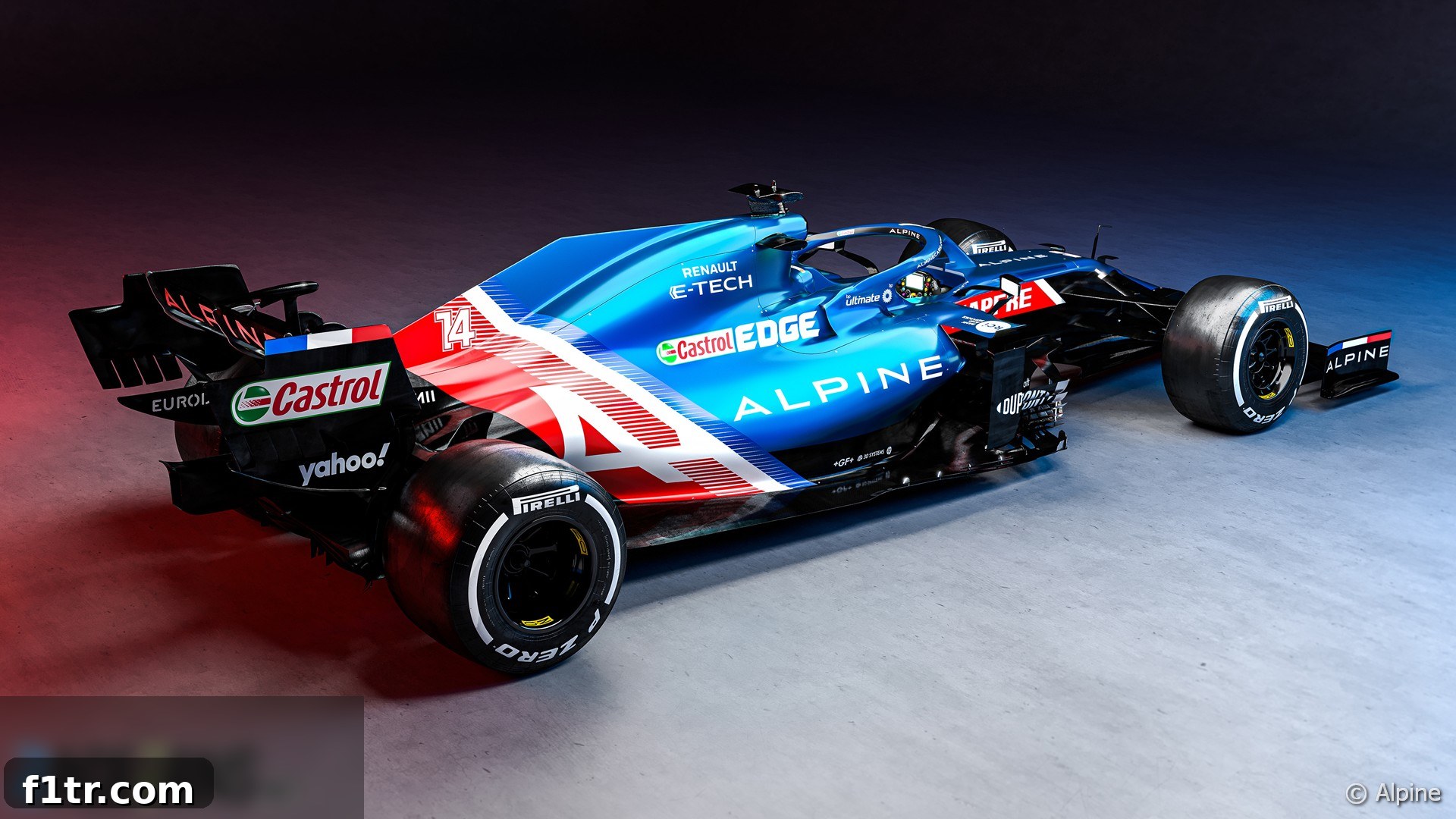
Renault is currently evaluating a significant strategic shift in its Formula 1 engine development, considering whether to adopt the groundbreaking split turbo architecture pioneered by Mercedes. This crucial decision comes as the French manufacturer prepares to introduce a new power unit design for the highly anticipated 2022 F1 season, a year set to be defined by a stringent engine development freeze.
Advert | Become a Supporter & go ad-free
Mercedes’ innovative engine philosophy, which emerged with the introduction of current hybrid power unit regulations in 2014, has been a cornerstone of its unparalleled dominance in the turbo-hybrid era. The German manufacturer notably diverged from its rivals by splitting the turbo from the compressor, connecting these two critical components via a shaft that runs elegantly between the V6 engine’s cylinder banks. This unique configuration has been widely credited for Mercedes’ consistent championship victories, offering significant advantages in packaging, weight distribution, and thermal efficiency.
The Engineering Marvel: Mercedes’ Split Turbo Design
The ingenuity of Mercedes’ split turbo design lies in its ability to separate the hot turbine, which is positioned at the rear of the engine, from the cold compressor, located at the front. This allows for shorter, more efficient plumbing for the compressed air charge, reducing turbo lag and improving engine responsiveness. Furthermore, by placing the compressor at the front, Mercedes could utilize the car’s existing cooling systems more effectively, optimizing the thermal management of the engine. The intercooler, often a bulky component, could be integrated more cleanly, contributing to a lower center of gravity and superior aerodynamic packaging within the chassis. This intricate engineering choice not only enhanced performance but also provided a clear competitive edge, one that other manufacturers have strived to emulate for years.
The impact of this design was immediately apparent when the hybrid power unit regulations were introduced in 2014. Mercedes-powered cars quickly established a significant performance advantage, dominating the sport for an unprecedented period. Their rivals initially struggled to match this innovation, often facing challenges with their more conventional, integrated turbo designs that were bulkier and less efficient. This forced other engine suppliers to reassess their own development paths, recognizing the profound benefits of Mercedes’ approach.
Industry Adoption and Shifting Paradigms
The effectiveness of Mercedes’ design prompted other engine manufacturers to take note and, eventually, follow suit. Honda, for instance, adopted a similar split-turbo configuration in 2017. This strategic decision marked a turning point for the Japanese manufacturer, as it gradually improved its power unit performance, eventually leading to a championship-winning partnership with Red Bull Racing. The success demonstrated by Honda further validated the concept, proving that it was not merely a Mercedes exclusive advantage but a viable, high-performance solution for the complex hybrid regulations.
More recently, even Ferrari, another long-standing F1 engine powerhouse, is rumored to be considering the same solution for its future power units. The widespread interest and adoption of this design signify a paradigm shift within Formula 1 engine development. What was once a unique differentiator for Mercedes is now becoming a recognized benchmark for optimal performance and efficiency. This convergence suggests that the split turbo layout offers such compelling advantages that the risk and cost of redesigning an entire power unit are justified by the potential gains on track. For manufacturers aiming for championship contention, ignoring this proven design is becoming increasingly untenable.
Renault’s Strategic Move for the 2022 F1 Season
Now, Renault has openly admitted that it may also adopt this highly successful architecture for its next-generation power unit. Speaking today about the possibility, engine technical director Remi Taffin’s response was direct and unambiguous: “The simple answer is yes.” He further elaborated on their considerations, stating, “We could be going down that route.” These statements from a high-ranking technical figure underscore the serious nature of Renault’s evaluation and signal a potential foundational change in their engine philosophy.
The timing of this potential design overhaul is incredibly significant. Renault plans to introduce this new power unit next year, precisely in time for the comprehensive freeze on engine development that will come into effect. The 2022 regulations represent a critical juncture for all engine suppliers, as power unit specifications will be largely locked in for several years. Getting the design right for 2022 is paramount, as any fundamental architectural weaknesses or performance deficits will be extremely difficult, if not impossible, to rectify under the freeze. Therefore, Renault’s decision to potentially align with a proven, dominant concept like Mercedes’ split turbo is a calculated gamble aimed at securing a competitive baseline for the foreseeable future of Formula 1.
Navigating Challenges: The Pandemic’s Impact on Engine Development
Renault’s power units are exclusively utilized by its performance brand, Alpine, in Formula 1. The journey to this potential design change has not been without its obstacles. The team had initially planned to introduce a brand-new power unit for the 2021 season, a crucial step in their long-term development roadmap. However, these ambitious plans were unfortunately postponed last year due to the unprecedented disruption caused by the global pandemic, which brought industries worldwide to a halt, including motorsport.
Remi Taffin shed light on the difficult circumstances surrounding that decision. “We had to make this decision last year when we had to shut down for more than two months and re-plan what we had to do,” he explained. “That’s a decision we took actually in March last year.” The extensive shutdowns, travel restrictions, and supply chain disruptions forced teams to drastically alter their development timelines and resource allocation. For an engineering-intensive field like Formula 1 engine design, such interruptions are particularly impactful, demanding difficult choices and significant strategic adjustments.
Once such a monumental decision is made, particularly under duress, the path forward becomes constrained. Taffin emphasized the commitment required: “When you actually go for a decision like that, you can only follow it, and that’s what we did.” This highlights the immense logistical and resource implications of F1 engine development. Changing course mid-stream is often more detrimental than sticking to a revised, albeit delayed, plan. The team had to re-calibrate their entire development program, adapting their workforce and facilities to ensure continuity and progression under the new timeline, despite the initial setback.
Future Outlook and Ambitions for Alpine F1
Reflecting on the shifted timeline, Taffin acknowledged the initial disappointment but expressed optimism for the future. “Obviously, I would have preferred to have this ’21 engine that we now have for ’22,” he admitted, highlighting the natural desire for immediate progress. “But at some point you have to make some plans and follow them, especially in that case.” Despite the delay, the team is now viewing the situation as an opportunity to deliver a highly competitive package for the critical 2022 season, rather than a mere carry-over.
Renault is now leveraging the extra development time to its advantage. “We’re quite happy we can have actually a big push for ’22,” Taffin added, his tone conveying renewed determination. This “big push” involves an aggressive acceleration of their development cycle: “So we are trying, even pushing further forward some of the evolution we had in ’23 into ’22.” This means that technologies and performance enhancements originally earmarked for the 2023 season are now being fast-tracked for integration into the 2022 power unit. Such a condensed development timeline is challenging but, if successful, could yield a significant performance leap right when the engine freeze makes it most impactful.
The strategic implications for Alpine F1, as the sole recipient of Renault’s power units, are profound. A strong, reliable, and powerful engine is the bedrock of any successful Formula 1 campaign. By potentially adopting the proven Mercedes-style split turbo concept and fast-tracking their development, Renault aims to provide Alpine with a power unit that can consistently compete at the front of the grid. This move is not just about incremental gains; it’s about fundamentally repositioning Alpine as a serious contender, armed with an engine design that has demonstrated its championship-winning potential. The anticipation around the 2022 F1 season, with its new aerodynamic regulations and engine freeze, is already high, and Renault’s bold engine strategy adds another layer of intrigue.
Advert | Become a RaceFans supporter andgo ad-free
Related Content: 2021 F1 Season Insights
- Masi ‘basically gifted the championship’ to Verstappen says 2021 FIA steward Sullivan
- Las Vegas race backers looking to extend F1 deal beyond 2025
- Why Mercedes put ‘a reminder of joy and pain’ on display in their factory lobby
- Verdict on error in GT race suggests Mercedes would have lost 2021 Abu Dhabi GP appeal
- Title ‘stolen’ from Mercedes made us ‘underdogs people cheer for’ – Wolff
Browse all 2021 F1 season articles