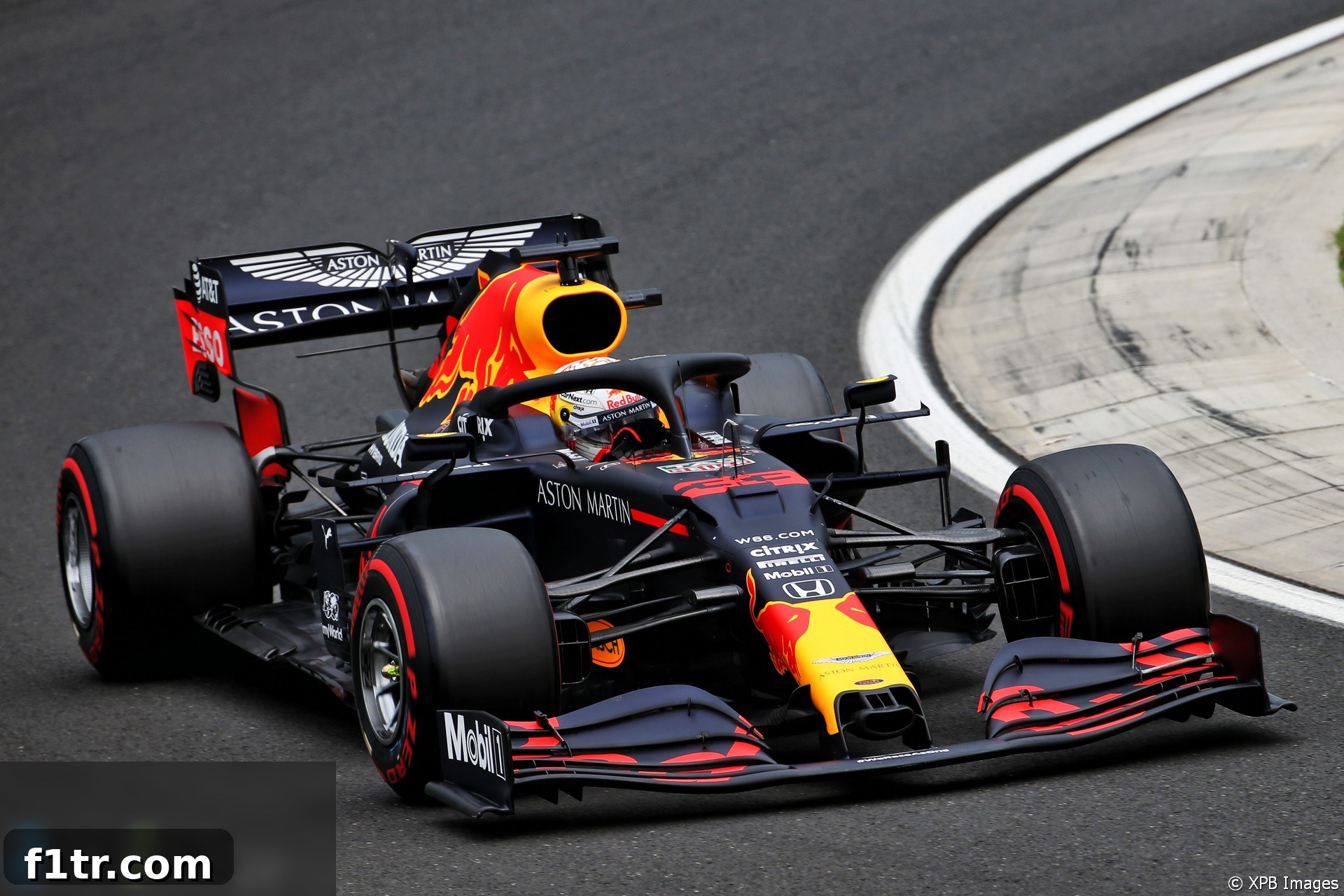
In a critical analysis from the recent Hungarian Grand Prix, Red Bull Racing’s team principal, Christian Horner, confirmed that the team gathered invaluable data during the challenging race weekend. This data is expected to be instrumental in pinpointing and resolving a suspected fundamental aerodynamic issue that significantly hampered their performance. The team’s unexpected struggle for pace at the Hungaroring has brought this aero instability into sharp focus, making its resolution a top priority as the Formula 1 season progresses through its demanding schedule. The implications of such a problem for a team with championship aspirations are substantial, highlighting the urgency for a swift and effective solution to maintain their competitive edge.
Insights from the Paddock: Christian Horner on Red Bull’s Aero Woes
Christian Horner elaborated on Red Bull’s diligent efforts to understand the underlying causes of their surprising lack of pace, particularly during qualifying sessions at the Hungaroring. The iconic Hungarian circuit, known for its tight, technical layout and absence of long straights, often exposes chassis weaknesses and aerodynamic inconsistencies, making it a crucial barometer for car performance. Red Bull’s uncharacteristic struggle for optimal speed and balance here suggested a deeper problem than initially perceived, raising questions about the car’s overall package.
“I think we’ve definitely got something misbehaving aerodynamically,” Horner stated, acknowledging the core of their challenges. “It’s obviously a matter of understanding that deeply and addressing that issue with precision. What’s interesting is that in certain specific conditions, the car behaves precisely as we expect it to, delivering the performance we know it’s capable of. This inconsistency, where performance fluctuates significantly between different track conditions or corner types, is precisely what we need to unravel to unlock the car’s full potential.”
He further added, emphasizing the positive aspect amidst the difficulties: “Despite the struggles, I believe we’ve actually collected some very good and highly pertinent data from this past weekend. This information is now being rigorously analysed by our engineers and aerodynamicists back at the factory. The entire team will be working incredibly hard, dedicating their expertise to understand these anomalies and, most importantly, to resolve them as quickly and efficiently as we possibly can. Our unwavering aim is to bring the car back to its optimal performance window consistently across all conditions and circuits.”
The suspected aerodynamic instability is a critical concern for Red Bull, especially as they compete against a dominant Mercedes team. An aero problem can manifest in various ways, from inconsistent downforce generation to unpredictable handling characteristics, particularly in high-speed corners or under specific yaw conditions. Such issues can severely compromise a driver’s confidence and the car’s overall balance, directly impacting lap times and the ability to extract maximum performance. For a team known for its aerodynamic prowess and innovative designs, identifying and rectifying this suspected flaw is paramount to their championship ambitions and maintaining their competitive edge in the fiercely contested world of Formula 1. Rapid diagnosis and effective implementation of solutions will be key to turning their season around.
Quotes: Dieter Rencken
Advert | Become a RaceFans supporter andgo ad-free
Engaging with the Fanbase: F1 Social Media Highlights
Social media continues to be a vibrant and immediate platform for drivers, teams, and fans to connect, offering behind-the-scenes glimpses, real-time updates, and personal insights from the world of Formula 1. It bridges the gap between the high-octane racing environment and the global fanbase. Here are some notable posts from Twitter, Instagram, and other digital channels, capturing moments from the paddock and beyond:
Día de entreno en el @CircuitoMuseoFA ✊️. #museoycircuitofernandoalonso #karting #FAkart pic.twitter.com/kVPrFi5j7f
— Fernando Alonso (@alo_oficial) July 25, 2020
Spanish racing legend Fernando Alonso, ever dedicated to his craft and always seeking to hone his skills, shared a dynamic peek into his rigorous training regimen. His tweet, translating to “Training day at the @CircuitoMuseoFA,” showcased him engaging in karting at his own Fernando Alonso Museum and Circuit. This post reaffirms his enduring passion for racing and continuous self-improvement, even when away from the Formula 1 grid. Such glimpses into the lives of F1 athletes underscore their relentless dedication, physical conditioning, and love for motorsport, providing fans with unique perspectives into their commitment beyond the grand prix circuits.
- For an extensive list of official F1 accounts and key personalities to follow for the latest updates, exclusive content, and behind-the-scenes insights, explore our comprehensive F1 Twitter Directory. Stay connected with your favourite drivers and teams!
Further Reading: Top Motorsport Headlines and Analysis
Delve deeper into the world of motor racing with these insightful links and analyses from across the globe, covering a range of topics from Formula 1 strategy and team dynamics to broader motorsport controversies and successes:
Advert | Become a Supporter & go ad-free
Einen Aero-Schritt rueckwaerts (Auto Motor und Sport – German)
Red Bull motorsport consultant Helmut Marko offered a provocative perspective regarding the current state of Formula 1 dominance. He suggested that if Red Bull were achieving the same level of sustained supremacy that Mercedes currently enjoys, former FIA president Max Mosley and ex-F1 supremo Bernie Ecclestone would have swiftly intervened to implement rule changes specifically designed to curb their pace. This statement highlights a historical dynamic in Formula 1 where perceived dominance often led to regulatory adjustments aimed at fostering greater competition and maintaining a level playing field. Marko’s pointed comments underscore the palpable frustration within the Red Bull camp regarding Mercedes’ prolonged and unchallenged supremacy and the perceived lack of similar intervention in the modern era to balance performance.
Angry Brazilian GP promoter hits out at F1 over 2020 cancellation (Motorsport)
The promoter of the Brazilian Grand Prix voiced strong disapproval and anger following the decision by Formula 1 Management (FOM) to cancel the 2020 event at Interlagos. The promoter lambasted the cancellation notice as being based on an “almost invented reasoning,” suggesting a lack of transparency and genuine justification for the decision from F1’s side. This incident highlights the complex and often strained relationship between F1’s commercial rights holders and local race promoters, a relationship frequently challenged by financial pressures, intricate logistical arrangements, and the profound impact of unforeseen global events like pandemics. The cancellation not only incurred significant financial losses for the host but also deeply disappointed a fervent fanbase eagerly anticipating the race.
Red Bull distances itself from Thai heir after fatal case dropped (Manila Standard)
Red Bull found itself embroiled in a significant public relations crisis after the fatal hit-and-run case against one of its Thai heirs was unexpectedly and controversially dropped. This decision ignited a firestorm of outrage among the Thai public, who perceived it as yet another egregious example of the impunity often enjoyed by the kingdom’s wealthy elite. The hashtags #BossRedBull and #BoycottRedbull trended extensively across social media platforms in both English and Thai, signalling widespread condemnation and a demand for justice. In response to the escalating public pressure, the Red Bull company swiftly moved to publicly distance itself from the individual and the controversial legal proceedings, attempting to mitigate severe reputational damage and protect its global brand image amidst intense public scrutiny.
Strong start propels reinvigorated Rahal into title contention (IndyCar)
In the hyper-competitive world of IndyCar racing, Graham Rahal has experienced a remarkable resurgence, propelling him firmly into legitimate title contention for the season. “Everything is clicking right now,” Rahal enthusiastically enthused, reflecting on his team’s robust performance and consistent results. “We haven’t quite secured a win yet, but we’ve consistently been in a strong position to win, demonstrating our pace and strategic capabilities.” He recounted a specific instance at the Indy Grand Prix where, but for an untimely yellow flag incident, victory was unequivocally within his grasp: “At Indy in the Grand Prix, if it hadn’t been for the yellow, it was Graham’s race – there wasn’t any doubt of that.” This renewed form underscores the team’s excellent preparation and strategic execution, positioning Rahal as a serious challenger for the championship crown in what promises to be a thrilling IndyCar season.
We are committed to providing our readers with the most accurate and credible information, and we always endeavour to credit original sources appropriately. If you have a valuable tip for a link or a news item that you believe should feature in the next RaceFans round-up, please do not hesitate to send it in via our dedicated contact form. Your contributions help us maintain the quality and breadth of our content, making our round-ups even more comprehensive and insightful.
Advert | Become a RaceFans supporter andgo ad-free
Fan Forum: The Mugello Circuit – A Qualifying Dream, A Race Challenge?
Andrew, a keen observer and commenter within our community, shared his intriguing perspective on the potential for the Formula 1 cars to perform at the Mugello circuit. While acknowledging its inherent beauty and incredible flow, he raises pertinent concerns about its ultimate suitability for consistently exciting F1 racing, especially regarding the crucial aspect of overtaking opportunities. His analysis provides a thought-provoking look into track dynamics.
“It will certainly be an interesting event to witness, offering a fresh challenge to the teams and drivers, but probably not necessarily a spectacular race in terms of constant wheel-to-wheel action or numerous overtakes,” Andrew opined. “Mugello is undoubtedly an amazing track, boasting incredible flow and rhythm throughout its layout, a quality even noticeably captivating in racing simulations like Forza. However, while such magnificent flow makes for superb GT or even prototype racing, it often proves detrimental for Formula 1 if the primary objective is frequent overtaking and intense battles throughout the pack.”
He further elaborated on the technical reasons behind his prediction: “The notorious ‘dirty air,’ or turbulent wake, generated by modern F1 cars will render some of the circuit’s long, high-speed corners almost impossible to follow closely. This aerodynamic wash will prevent drivers from maintaining a tight pursuit to set up a great draft down the straights, or even effectively utilize the Drag Reduction System (DRS), because they’ll be forced to either take a significantly worse racing line to find clean air or drop back considerably to regain aerodynamic stability. This compromises the ability to launch effective overtakes.”
Concluding his analysis with a note of optimism for one aspect of the weekend: “That said, the qualifying session should be absolutely crazy to watch and could very well prove to be more thrilling and compelling than the actual race itself. Here, drivers are free to push the limits of these incredible machines on a truly flowing circuit without the immediate concern of following another car and battling its turbulent wake.”
Andrew
Andrew’s insights resonate with a common debate in modern F1: the inherent trade-off between aerodynamic performance, which makes the cars incredibly fast in isolation, and the ability to foster close racing. Tracks like Mugello, with their high-speed corners and minimal heavy braking zones, highlight how ‘dirty air’ can be a significant impediment to overtakes. While pure pace and single-lap glory in qualifying are often breathtaking on such circuits, the race day spectacle can sometimes suffer as drivers struggle to get close enough to launch an attack. The ongoing challenge for F1 regulators remains finding a delicate balance that preserves the exhilarating speed and technological marvel of these machines while simultaneously promoting more dynamic, wheel-to-wheel racing action for the fans.
Community Corner: Happy Birthday to Our Valued Readers!
A very special happy birthday goes out to our dedicated readers, Spud and Mikef1! We hope you both have a fantastic day filled with joy, celebration, and perhaps a touch of thrilling Formula 1 excitement. We cherish our community and love to celebrate these special moments with you.
If you’d like to receive a special birthday shout-out in our future round-ups and become a part of our growing community celebrations, simply let us know when your birthday is! You can easily send us your details via the contact form on our website, or contribute directly by adding your birthday to our comprehensive community list here. We look forward to celebrating with all our readers!
F1 Flashback: On This Day in Motorsport History
- On this day last year, July 27th, Lewis Hamilton delivered a masterful performance to secure pole position for the German Grand Prix. This achievement was made even more significant and dramatic by the unfortunate turn of events for Scuderia Ferrari, who suffered a double technical disaster during the very same qualifying session. Both their drivers, despite their best efforts, faced unexpected mechanical problems, a devastating blow that effectively removed them from contention for pole position and set the stage for a challenging and disappointing race weekend. Hamilton’s triumph in qualifying highlighted Mercedes’ formidable strength and consistent reliability, contrasting sharply with Ferrari’s ongoing struggles with both performance consistency and mechanical integrity, a theme that often defined that particular Formula 1 season.