As the Formula 1 circus heads to the iconic Shanghai International Circuit, the 2018 season is already shaping up to be one of the most intriguing in recent memory. Following thrilling encounters in Australia and Bahrain, the competitive landscape appears to be a three-way battle for supremacy, adding layers of excitement and unpredictability to every session. This weekend’s Chinese Grand Prix presents a pivotal moment for teams and drivers alike, offering the chance to solidify early season dominance, claw back lost ground, or make a definitive statement about their championship aspirations. From potential historical milestones to critical mid-field battles and significant off-track political maneuvering, there are numerous compelling narratives set to unfold. Here, we delve into five key talking points that will undoubtedly shape the drama of the Chinese Grand Prix and potentially influence the trajectory of the entire 2018 Formula 1 season. Get ready for a high-octane weekend where every lap, every overtake, and every strategic decision could prove crucial.
Can Sebastian Vettel Secure a Historic Three-in-a-Row Victory?
Sebastian Vettel has kicked off his 2018 campaign with an extraordinary display of skill and determination, clinching consecutive victories in both Australia and Bahrain. This perfect start has not only propelled him to the top of the Drivers’ Championship standings but also puts him on the brink of achieving a rare Formula 1 feat. Even during his dominant Red Bull era, where he secured four consecutive world titles, Vettel never managed to win the opening three races of a season. The opportunity to do so this weekend in China would mark an unprecedented accomplishment in his illustrious career, cementing Ferrari’s early season advantage and sending a powerful message to his rivals, particularly Mercedes-AMG.
However, the unique conditions of the Shanghai circuit, often characterized by cooler temperatures compared to the season’s opening rounds, are anticipated to shift the balance of power. Cooler track temperatures typically favor Mercedes, allowing their W09 chassis to operate within a more optimal performance window, especially concerning tyre degradation. This factor could pose a significant challenge to Ferrari’s momentum and prevent Vettel from having an easy run. Moreover, Vettel cannot take for granted that he will solely dictate terms within his own garage at Ferrari.
Kimi Raikkonen, his seasoned teammate, has shown strong form early in the season. He came tantalizingly close to out-qualifying Vettel in Bahrain and has started both of this year’s races from the front row of the grid. This consistent qualifying performance is particularly encouraging for Raikkonen, a driver whose traditional strength has often been his race pace rather than outright qualifying speed. Should Raikkonen maintain this impressive form, he could prove to be a formidable challenger to Vettel, potentially even denying him a victory if strategy or race circumstances align. A win for Raikkonen this weekend would also be personally significant, as it would mark his first triumph since the 2013 Australian Grand Prix, breaking a century of starts without a victory. The internal dynamics at Ferrari, coupled with the external threat from Mercedes, will make Vettel’s quest for a hat-trick a truly captivating storyline.
Are Red Bull Racing Genuine Victory Contenders for the Chinese Grand Prix?
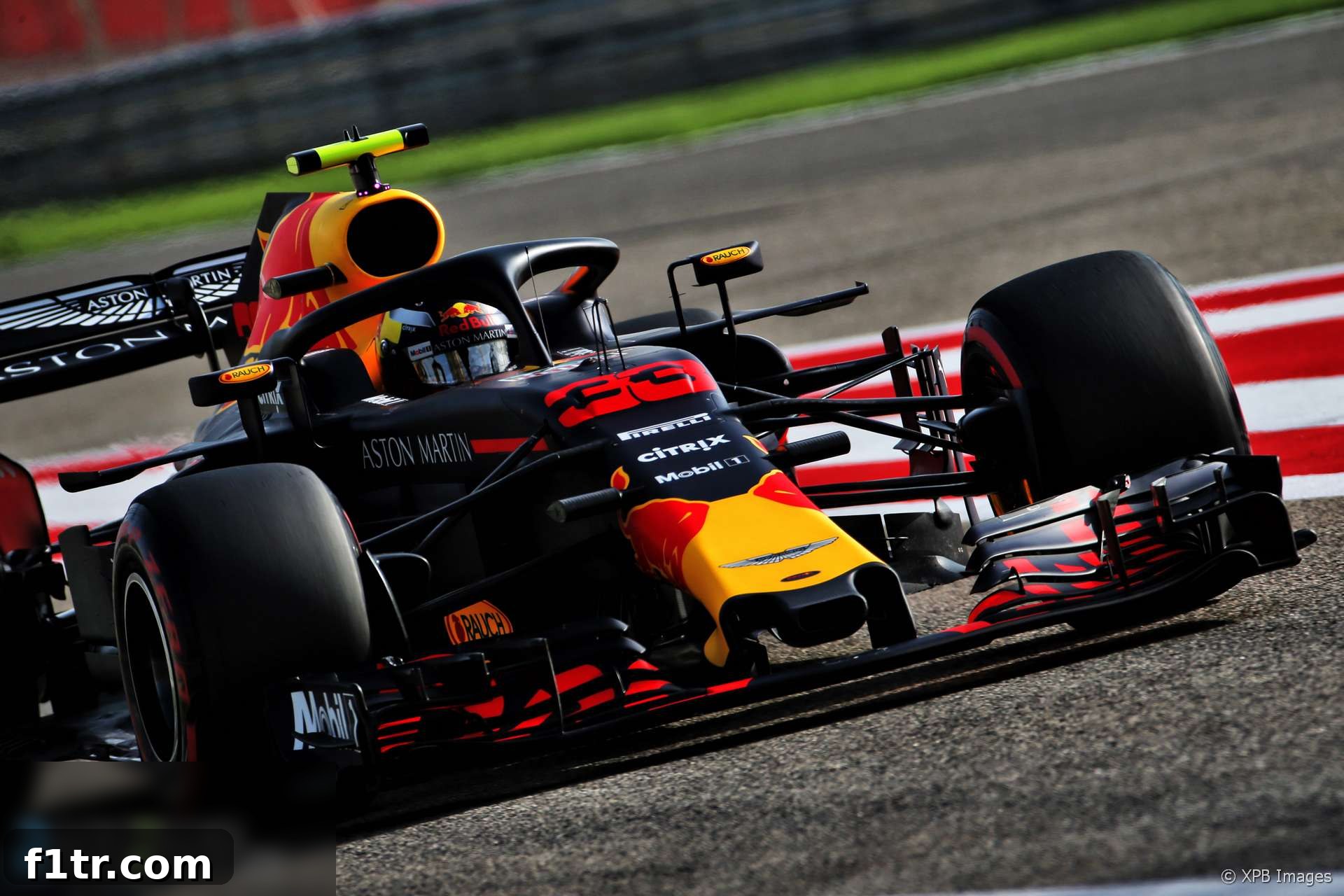
After two races, Red Bull Racing remains the biggest enigma on the grid, oscillating between flashes of brilliance and frustrating setbacks. It is a widely acknowledged fact that they have lacked the outright straight-line speed to consistently challenge Mercedes and Ferrari in qualifying sessions. This perceived power deficit from their Renault engines has often left them playing catch-up on high-speed circuits. However, the true potential of the RB14 chassis often comes alive in race trim, particularly on circuits that reward aerodynamic efficiency and driver skill over sheer engine grunt. In such conditions, Red Bull can be incredibly potent.
The Australian Grand Prix saw both Red Bull drivers, Daniel Ricciardo and Max Verstappen, hampered by traffic for significant portions of the race, preventing them from showcasing their true pace. The Bahrain Grand Prix was even more frustrating, with neither driver making it beyond lap five due to separate incidents. Team Principal Christian Horner remains optimistic, asserting that had they been able to execute their optimal two-stop strategy in Bahrain, they would have been in a very strong position to challenge for victory. The Shanghai International Circuit, with its unique blend of long straights and challenging technical corners, could theoretically play to some of Red Bull’s strengths, particularly in the twisty middle sector.
Whether they can finally deliver on this tantalizing potential this weekend may partly depend on Max Verstappen toning down his aggressive driving style just a touch. Verstappen, undeniably one of the most talented drivers on the grid, has been involved in several incidents in the opening rounds, costing himself and the team valuable points. While his fearless approach is a hallmark of his driving, a more measured, yet still potent, performance could unlock the car’s true potential. Daniel Ricciardo, known for his consistent race craft and opportunistic overtakes, will also be eager to convert strong practice and qualifying into a substantial points haul. Red Bull’s performance in China will be a crucial indicator of whether they can genuinely contend for race wins throughout the season or remain a dark horse waiting for specific circuit characteristics or rivals’ misfortunes.
The Fierce Midfield Battle: McLaren vs. Toro Rosso – A Honda Engine Saga
The rivalry between McLaren and Toro Rosso has quickly emerged as one of the most fascinating and emotionally charged storylines of the 2018 season, largely centered around the performance of the Honda power unit. McLaren’s decision to sever ties with Honda at the end of 2017, after three years of often-painful underperformance, seemed to be vindicated in Australia. Fifth place for McLaren, powered by their new Renault engines, represented their best season-opening result in years, matching their best finish with Honda during the entire previous three-year period. A visibly relieved Fernando Alonso declared, “Now we can fight,” after crossing the finishing line, a statement that resonated deeply given his past frustrations.
However, the narrative took an unexpected and dramatic turn in Bahrain. Toro Rosso, now running the Honda power units that McLaren had so readily discarded, delivered an astonishing performance. Pierre Gasly, in only his sixth Formula 1 start, drove a flawless race to finish a sensational fourth place, equalling the team’s best result in almost a decade. In a poignant moment, Gasly himself invoked Alonso’s famous words, stating, “Now we can fight,” highlighting the remarkable turnaround for the Japanese engine manufacturer. This result not only brought immense satisfaction to Honda but also injected a new layer of intrigue into the F1 paddock.
The immediate implication is a direct, head-to-head battle for midfield supremacy. McLaren, with its larger budget and established infrastructure, would expect to be definitively ahead of Toro Rosso, a junior team designed to nurture talent. Yet, the Bahrain result suggests the Honda engine, in the right package, might be more competitive than many anticipated. Where these two teams go from here will be one of the season’s most captivating storylines. Furthermore, this burgeoning rivalry holds significant implications for Red Bull Racing, who are keeping a very close eye on Honda’s progress. With their current Renault engine deal expiring soon and dissatisfaction simmering, a strong performance from Honda could make a powerful case for Red Bull to switch engine suppliers in the future. The McLaren-Toro Rosso duel is more than just a fight for points; it’s a battle for pride, reputation, and potentially, the engine future of a front-running team.
Can Williams Reverse Their Alarming Performance Trend?
The Bahrain Grand Prix weekend was nothing short of alarming for Williams Martini Racing. A team steeped in Formula 1 history and renowned for its engineering prowess, Williams found themselves not only significantly off the pace of their direct midfield rivals but, perhaps more distressingly, demonstrably slower than they had been 12 months prior at the same circuit. This drastic drop in performance, a staggering 1.3 seconds slower in Bahrain than in 2017 (Williams are 1.3 seconds slower in Bahrain than in 2017), has sent genuine shockwaves through the paddock and raised serious questions about the direction and design philosophy of the FW41 chassis.
The crucial question looming over the Chinese Grand Prix is whether this was merely a one-off blip – perhaps a consequence of specific circuit characteristics or an unoptimized setup – or a disturbing harbinger of a deeply troubled season ahead. The iconic British team has historically been a force to be reckoned with, but recent years have seen them slide down the pecking order. This year’s performance, however, represents a more profound and immediate crisis. The technical issues seem to run deep, with drivers Lance Stroll and Sergey Sirotkin struggling significantly with the car’s balance, aerodynamic stability, and overall grip. This makes it incredibly difficult for them to extract any meaningful performance, regardless of their individual talents.
Consequently, there will be extremely anxious eyes on the timing screens during every practice session on Friday in China. The team needs to show tangible progress, not just in terms of reliability but in raw pace. A repeat of the Bahrain performance would signal a critical design flaw or a fundamental misunderstanding of the current aerodynamic regulations, putting immense pressure on the technical department and potentially impacting the team’s long-term future and commercial viability. The challenge for Williams is immense: they need to quickly understand the core issues, implement effective solutions, and demonstrate that they can at least compete with the rest of the midfield, rather than trailing significantly behind. The Chinese Grand Prix offers a critical opportunity for redemption, or it could underscore a season of unprecedented struggle for the Grove-based outfit.
Has Liberty Media Finally Won Over Ferrari with Their 2021 Vision?
The political landscape of Formula 1 is as dynamic and competitive as the racing itself, and at the heart of recent debates lies Liberty Media’s ambitious proposal for the sport’s future from 2021 onwards. The detailed plans, which were laid out to teams in Bahrain, aim to create a more equitable and sustainable championship through measures such as a budget cap, standardized parts, and a more balanced distribution of prize money. These proposals were largely met with enthusiasm by teams at the lower end of the grid, as they stand to gain significant financial benefits and a fairer competitive playing field.
However, for Ferrari, Formula 1’s oldest and most iconic team, the proposals present a very different scenario. Ferrari, along with Mercedes and Red Bull, currently enjoys historical bonus payments and greater commercial advantages due to their status and past successes. Under Liberty Media’s new prize money structure (Revealed: The winners and losers under Liberty’s 2021 F1 prize money plan), Ferrari stands to lose tens of millions of dollars annually. This potential financial blow, coupled with concerns over engine regulations and a perceived erosion of the sport’s unique DNA, has led Ferrari to make increasingly disgruntled noises about F1’s future plans, even hinting at a potential withdrawal from the sport if their demands are not met.
Despite the detailed presentation in Bahrain and the subsequent public commentary, F1’s oldest team has, so far, maintained a strategic silence on their official response to the 2021 framework (F1 2021: Liberty’s masterplan for Formula One’s future uncovered). This silence has only fueled speculation and intrigue within the F1 community. Will Ferrari finally break their silence in China? The Chinese Grand Prix often serves as a significant platform for major announcements or strategic statements given its global reach and importance in the early part of the season. A definitive response from Ferrari could either signal a willingness to negotiate and compromise with Liberty Media or, conversely, escalate tensions further, potentially throwing the long-term stability of Formula 1 into question. All eyes will be on Maurizio Arrivabene and Sergio Marchionne for any indication of Ferrari’s true intentions and their stance on the sport’s future direction.
Are You Heading to the Chinese Grand Prix This Weekend? Join the Conversation!
If you’re among the fortunate fans making the journey to Shanghai for this weekend’s thrilling Chinese Grand Prix, we’re eager to hear from you! Your unique perspective from the grandstands or the vibrant fan zones adds an invaluable dimension to our race coverage. Share your experiences, your favorite moments, the atmosphere, and any insights you gather from being right there at the heart of the action. What are your expectations for the race? Have you noticed anything interesting during practice or qualifying? Your firsthand accounts help bring the race weekend to life for our global audience.
Beyond those attending, we want to hear from every fan: who do you believe will be the ultimate team to beat at the Shanghai International Circuit? Will Ferrari continue their dominant run, or will Mercedes strike back with renewed vigor? Could Red Bull finally unleash their full potential and challenge for the top step of the podium? Or perhaps a dark horse will emerge from the midfield pack? Have your say below in the comments section – engage with fellow enthusiasts, debate your predictions, and tell us why you think your chosen team or driver will prevail in this high-stakes contest.
And don’t forget to participate in our highly competitive RaceFans Predictions Championship for this weekend’s race! It’s a fantastic opportunity to test your Formula 1 knowledge and strategic foresight against a global community of F1 aficionados. You can meticulously craft and edit your predictions right up until the very start of qualifying, giving you ample time to analyze practice results and make your final informed choices. Will you accurately predict the pole-sitter, the race winner, and the full top ten? There are points and bragging rights at stake!
- RaceFans Predictions Championship
Additional 2018 Chinese Grand Prix Coverage
For more in-depth analysis, stunning visuals, and comprehensive reports from the weekend, explore our dedicated coverage of the 2018 Chinese Grand Prix:
- Top ten pictures from the 2018 Chinese Grand Prix
- Ricciardo denies Bottas a badly-needed win
- 2018 Chinese Grand Prix Star Performers
- Hamilton breaks Raikkonen’s record for consecutive points finishes
- Paddock Diary: Chinese Grand Prix day four
Browse all 2018 Chinese Grand Prix articles