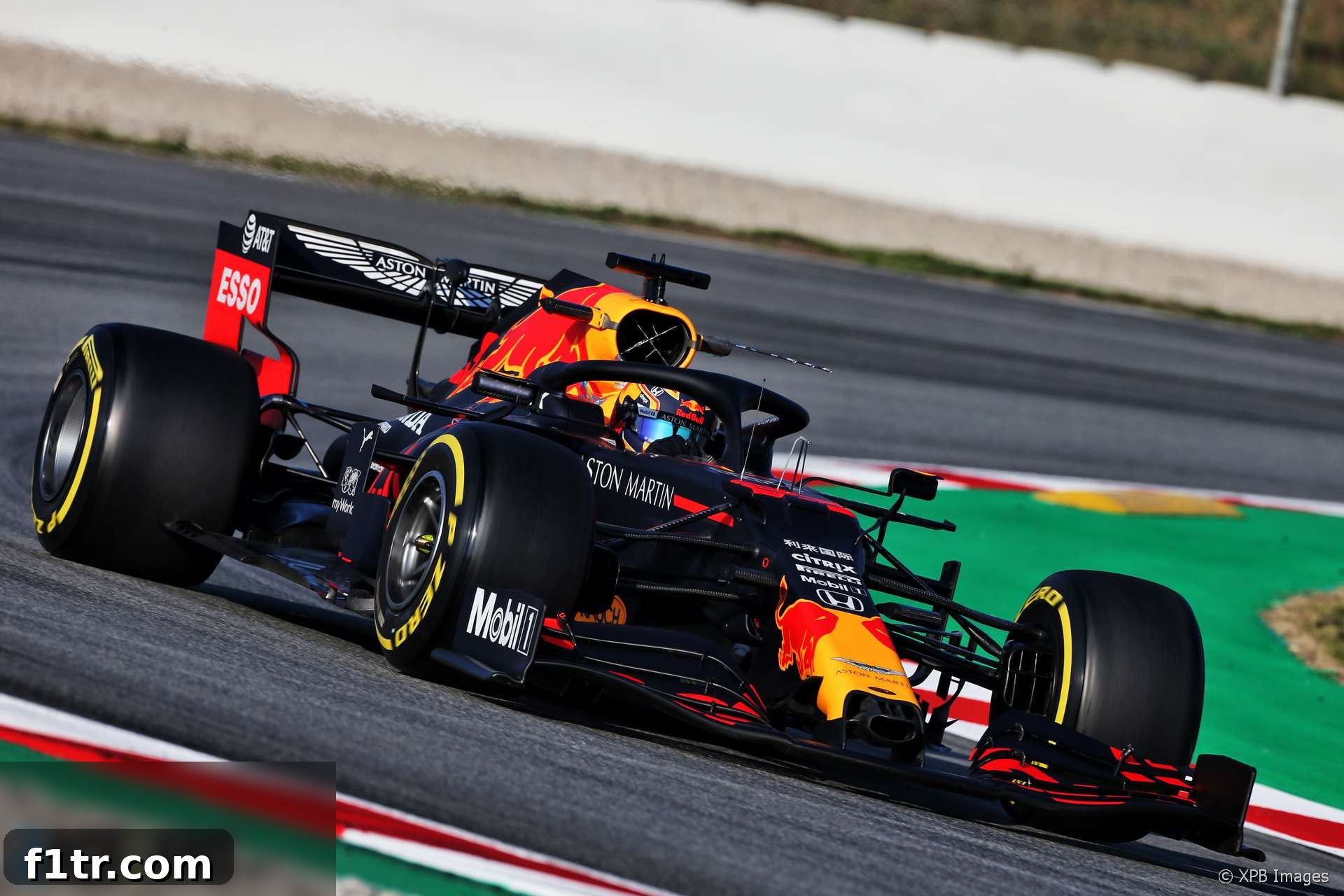
Red Bull Targets Penalty-Free 2020 F1 Season After Precautionary Power Unit Change
As the crucible of pre-season testing intensified, Red Bull Racing made headlines on the second day by undertaking a precautionary power unit change. This strategic decision, while seemingly minor, underscores the team’s heightened focus on reliability and a steadfast ambition to avoid grid penalties throughout the upcoming Formula 1 season. With the memory of component-related setbacks from the previous year fresh in their minds, the Milton Keynes-based squad, in close collaboration with engine partner Honda, is laying down a clear marker for their 2020 campaign: consistent performance without compromise on durability.
Pre-Season Scrutiny: A Precautionary Power Unit Swap
The practice of swapping power units during pre-season testing is not uncommon, especially when teams are pushing components to their absolute limits to gather crucial data. However, the exact circumstances behind Red Bull’s decision highlight a meticulous approach to engine management. Guillaume Rocqueline, Red Bull’s Head of Race Engineering, shed light on the incident, stating, “We did have a small issue just before lunch when the Honda guys noticed something in the data and we therefore elected to perform a precautionary engine change.” This proactive measure, driven by sophisticated telemetry and analytical tools, demonstrates a mature and integrated partnership between the chassis and engine manufacturers. Crucially, the issue was quickly diagnosed as non-critical: “They’ve done a thorough check and there are no problems, so the original PU will be back in the car tomorrow.” This swift resolution and the intention to revert to the original unit speaks volumes about the confidence in the Honda power unit’s underlying reliability and the efficiency of the Red Bull engineering team.
Pre-season testing is not merely about setting blistering lap times; it is a critical phase for validating design, understanding car behaviour, and, perhaps most importantly, ensuring the robustness of every single component. The F1 power unit, a marvel of modern engineering, is one of the most complex and stressed parts of the car. Identifying even the slightest anomaly in its operational data and taking immediate preventative action, as Red Bull did, can avert catastrophic failures and significant financial costs down the line. It allows engineers to thoroughly investigate potential weak points in a controlled environment, making necessary adjustments before the pressures of competitive racing begin. This measured approach during testing periods is a cornerstone of championship-contending strategies, prioritizing data collection and system verification over headline-grabbing lap counts.
Navigating F1’s Stringent Power Unit Regulations
The Three-Component Limit: A Season-Long Challenge
Formula 1’s regulations governing power unit components are notoriously strict, designed primarily to control costs and introduce a challenging element of strategic resource management for teams. For the 2020 season, competitors are limited to a maximum of three Internal Combustion Engines (ICE), Turbochargers (TC), Motor Generator Units-Heat (MGU-H), and Motor Generator Units-Kinetic (MGU-K) across what was initially planned as a 22-race calendar. Exceeding these allocations results in significant grid penalties, typically a 10-place drop for the first additional component and 5 places for subsequent components, which can severely compromise a team’s race weekend. Red Bull Racing is acutely aware of these consequences, having seen both of its drivers incur such penalties during the challenging 2019 season. This experience has clearly informed their strategic outlook for the current year, pushing reliability to the forefront of their objectives.
Christian Horner’s Commitment to Reliability
Red Bull Team Principal Christian Horner has unequivocally stated the team’s ambition to navigate the entire 2020 season within the stipulated component limits. “We’re not planning a fourth engine at the moment,” Horner affirmed, signaling a clear departure from the historical trend where some teams, including Red Bull in the past, might strategically accept penalties in exchange for performance upgrades later in the season. “The plan is to go through on the three.” This declaration reflects growing confidence in the Honda power unit’s endurance, a testament to the significant progress made by the Japanese manufacturer since their initial re-entry into Formula 1. It also highlights Red Bull’s strategic maturity, understanding that championship challenges are built not just on raw speed but on unwavering consistency and faultless execution across every Grand Prix weekend. Avoiding grid penalties allows the team to maximize their qualifying potential and race strategy without the burden of starting out of position.
Adapting to Calendar Changes and Component Allocations
The fluidity of the Formula 1 calendar often necessitates dynamic adjustments to regulations. One such change, which fortunately came into effect prior to the season, saw the maximum allocation for MGU-Ks increased from two to three units. This amendment was made in recognition of the extended 22-race schedule, which inherently places greater stress on components and increases the likelihood of needing an additional unit. The MGU-K (Motor Generator Unit – Kinetic) is a vital part of the hybrid power unit, responsible for recovering kinetic energy during braking and deploying it as additional power, making it a highly stressed component. Even with the subsequent postponement of the Chinese Grand Prix, potentially reducing the calendar to 21 races, this increased allocation for the MGU-K will remain unchanged. This provides teams with a valuable buffer, slightly easing the pressure on managing this particular element over a long and arduous season.
Horner acknowledged the potential benefit of a slightly shorter season, remarking, “If it becomes 21 races that obviously makes life slightly easier.” While the reduction by a single race might seem insignificant, every race less means fewer mileage demands on the power unit components, thus marginally improving the chances of staying within the allocation limits. This flexibility is crucial for engineering teams who meticulously plan the lifespan and usage of each power unit component across the season. The ability to manage these resources effectively can be a significant competitive advantage, allowing teams to optimize performance without the constant worry of impending grid drops. It also provides a margin for error or unexpected issues that may arise during the course of intensive racing.
The Ever-Present Dilemma: Performance Versus Penalties
Despite the strong commitment to reliability, Red Bull’s enduring philosophy still shines through in Christian Horner’s strategic outlook. He candidly admits that while avoiding penalties is the primary goal, the pursuit of ultimate performance will always take precedence. “But if we were to have to take a fourth,” Horner mused, “so long as you take it at the right place, you can minimise the impact of that. We’d always chase performance over anything else.” This statement encapsulates the eternal balancing act in Formula 1: extracting every ounce of speed from the car while managing the associated risks and strategic consequences. Taking a fourth power unit component, and thus incurring a grid penalty, can be a calculated gamble.
The “right place” refers to circuits where overtaking is comparatively easier, or where a team might have such a performance advantage that a grid drop is less detrimental to their overall race result. For instance, a penalty taken at a track like Monza with long straights or Spa-Francorchamps with its flowing layout might be less impactful than one at a tight street circuit where track position is paramount. Teams also consider the stage of the championship; a penalty in the early or mid-season might be absorbed more easily than one in a crucial final few races. This strategic foresight is a critical aspect of F1 management, where short-term tactical decisions can have long-term championship implications. Ultimately, Red Bull’s stance confirms that while reliability is now a top priority, their inherent DNA is rooted in aggressive performance pursuit, suggesting they will push the boundaries wherever possible.
Strengthening Ties: The Evolving Red Bull-Honda Partnership
The second year of the Red Bull-Honda partnership appears to have begun with renewed vigor and a deeper level of integration. Christian Horner expressed immense satisfaction with the progress made over the off-season. “We’ve had a good winter,” he remarked, reflecting on the productive period of development. “Last year was our first year with Honda. I think that relationship has just evolved and tightened throughout last year, over the winter also. So I think this whole package is more integrated.” This growing synergy between the chassis and power unit departments is paramount in modern Formula 1.
A “more integrated” package implies seamless communication, shared development goals, and a unified approach to extracting maximum performance and reliability from the entire car. It means Honda’s engineers are working hand-in-hand with Red Bull’s aerodynamicists and chassis designers, ensuring that every component works in harmony. This level of collaboration is essential for optimizing weight distribution, packaging, cooling, and power delivery – all critical factors in finding those elusive tenths of a second. The increased confidence in Honda’s reliability, evidenced by Red Bull’s penalty-free aspiration, is a direct outcome of this strengthened relationship and the continuous refinement of the power unit. This enhanced partnership sets a strong foundation for Red Bull’s championship aspirations, providing them with a cohesive and powerful platform to challenge the established front-runners.
Looking Ahead: Red Bull’s Championship Aspirations
Red Bull Racing’s proactive power unit change during pre-season testing, coupled with Christian Horner’s ambitious reliability targets, signals a team that is not only meticulously prepared but also supremely confident in its revitalized partnership with Honda. The strategic shift towards avoiding penalties, balanced with their inherent drive for performance, demonstrates a mature and formidable approach to the 2020 Formula 1 season. With a more integrated package and a clear vision, Red Bull is poised to be a serious contender, aiming to convert their pre-season promise into consistent championship points and victories.
Related Articles: 2020 F1 Season
- Grosjean to make F1 test return tomorrow for first time since Bahrain horror crash
- Pictures: Wrecked chassis from Grosjean’s Bahrain fireball crash to go on display
- Bottas vs Rosberg: Hamilton’s Mercedes team mates compared after 78 races each
- F1 revenues fell by $877 million in Covid-struck 2020 season
- Hamilton and Mercedes finally announce new deal for 2021 season
Browse all 2020 F1 season articles