Red Bull RB16B Unleashed: First On-Track Performance at 2021 Bahrain F1 Pre-Season Testing
The motorsport world held its breath as the highly anticipated Red Bull RB16B, the challenger poised to contest the fiercely competitive 2021 Formula 1 season, made its eagerly awaited debut. For the first time, the new machine hit the asphalt during pre-season testing at the challenging Bahrain International Circuit. This on-track appearance wasn’t just another test session; it marked a pivotal moment for Red Bull Racing, signaling the commencement of their relentless pursuit of the constructors’ and drivers’ championship titles, a goal that has eluded them for too long.
The journey to this public debut has been shrouded in a deliberate veil of secrecy. Following a virtual launch event held over two weeks prior, fans and media were only privy to a limited selection of stylized renders and static images of the RB16B chassis. These initial glimpses offered tantalizing hints but kept the true aerodynamic intricacies and overall aesthetic of the car largely under wraps. Even after conducting a private filming day session, often used by teams for promotional material and systems checks, Red Bull chose not to release any official photographs of the RB16B in full motion. This calculated move only served to amplify the anticipation, building a palpable sense of excitement among the Formula 1 community, eager to witness the car’s true form and initial performance on the global stage.
With only three days allocated for pre-season testing – a stark reduction from the extensive programs of previous years – every lap, every data point collected, and every hour spent on track at the Bahrain International Circuit becomes exponentially more valuable. This compressed schedule demands unparalleled efficiency and precision from the entire Red Bull team, from the engineers meticulously analyzing telemetry to the mechanics executing lightning-fast adjustments. The objective is clear: gather as much vital information as possible, fine-tune the car’s intricate setup for optimal balance and speed, and gain a profound understanding of its inherent performance characteristics, all critical steps before the lights go out for the season opener.
Unveiling the RB16B: Design Philosophy and Technical Evolution
The RB16B stands as an astute evolution of its predecessor, the RB16, a necessity dictated by the relatively stable yet strategically tweaked technical regulations governing the 2021 season. The primary regulatory change centered around specific aerodynamic modifications, particularly to the floor, diffuser, and brake ducts, explicitly designed to reduce overall downforce and manage tire loads. Red Bull, renowned for its innovative and often aggressive aerodynamic philosophy under the visionary leadership of Adrian Newey, faced the formidable challenge of meticulously recovering as much of that mandated lost downforce as possible. Observers during testing were keenly focused on spotting the subtle yet potentially game-changing design elements integrated into the RB16B, especially concentrating their gaze around the intricately sculpted rear of the car and its redesigned floor section. These areas are often where the largest performance gains or losses can be found.
A crucial and emotionally charged factor for Red Bull this year is the continuation of their highly successful partnership with Honda for the power units. The Japanese manufacturer made the significant decision to withdraw from Formula 1 after the conclusion of the 2021 season, making this their final campaign as an engine supplier. This imminent departure has injected an even greater sense of urgency and determination into both Red Bull and Honda to deliver a truly championship-winning package. Early assessments of the Honda power unit’s integration and performance were under intense scrutiny during these critical testing days, with particular attention paid to its reliability under strenuous conditions, its power delivery across the rev range, and its overall fuel efficiency – all paramount for sustained success throughout a long F1 season.
Max Verstappen Takes the Wheel: Driver’s Crucial Insights and Expectations
At the very heart of the RB16B’s initial shakedown and performance evaluation is Max Verstappen, the team’s undisputed lead driver and a formidable championship contender. His role in these early testing sessions is absolutely paramount, as his direct and unfiltered feedback provides the most authentic understanding of the car’s behavior. Verstappen’s aggressive yet precise driving style naturally pushes any car to its absolute limits, thereby yielding invaluable insights into its handling balance, responsiveness to inputs, and overall stability. These first laps at Bahrain offered him the indispensable opportunity to assess the car’s intricate behavior under heavy acceleration, fierce braking zones, and through various cornering scenarios. His ability to quickly identify any inherent characteristics that require immediate attention or long-term development is a cornerstone of Red Bull’s testing program. While his initial comments are typically measured and guarded, they often provide the earliest and most accurate glimpse into the RB16B’s true potential and, crucially, how comfortable and confident he feels behind the wheel – a vital ingredient for a successful championship challenge.
For Max Verstappen, the 2021 season represents arguably his strongest and most legitimate opportunity yet to mount a serious and sustained challenge for the coveted drivers’ championship, traditionally dominated by Mercedes. A robust, reliable car that demonstrates strong underlying performance straight out of the box in testing would undoubtedly provide a monumental confidence boost for both him and the entire Milton Keynes-based squad. The captivating images emerging from Bahrain depict Verstappen pushing the RB16B with characteristic vigor and intent, exploring its dynamic limits. This visual evidence serves as a clear and unambiguous indication of Red Bull’s unyielding determination to commence the season on the most competitive footing possible, signaling their intent to fight at the very pinnacle of Formula 1.
Exclusive Pictures: The 2021 Red Bull RB16B in Action on Track
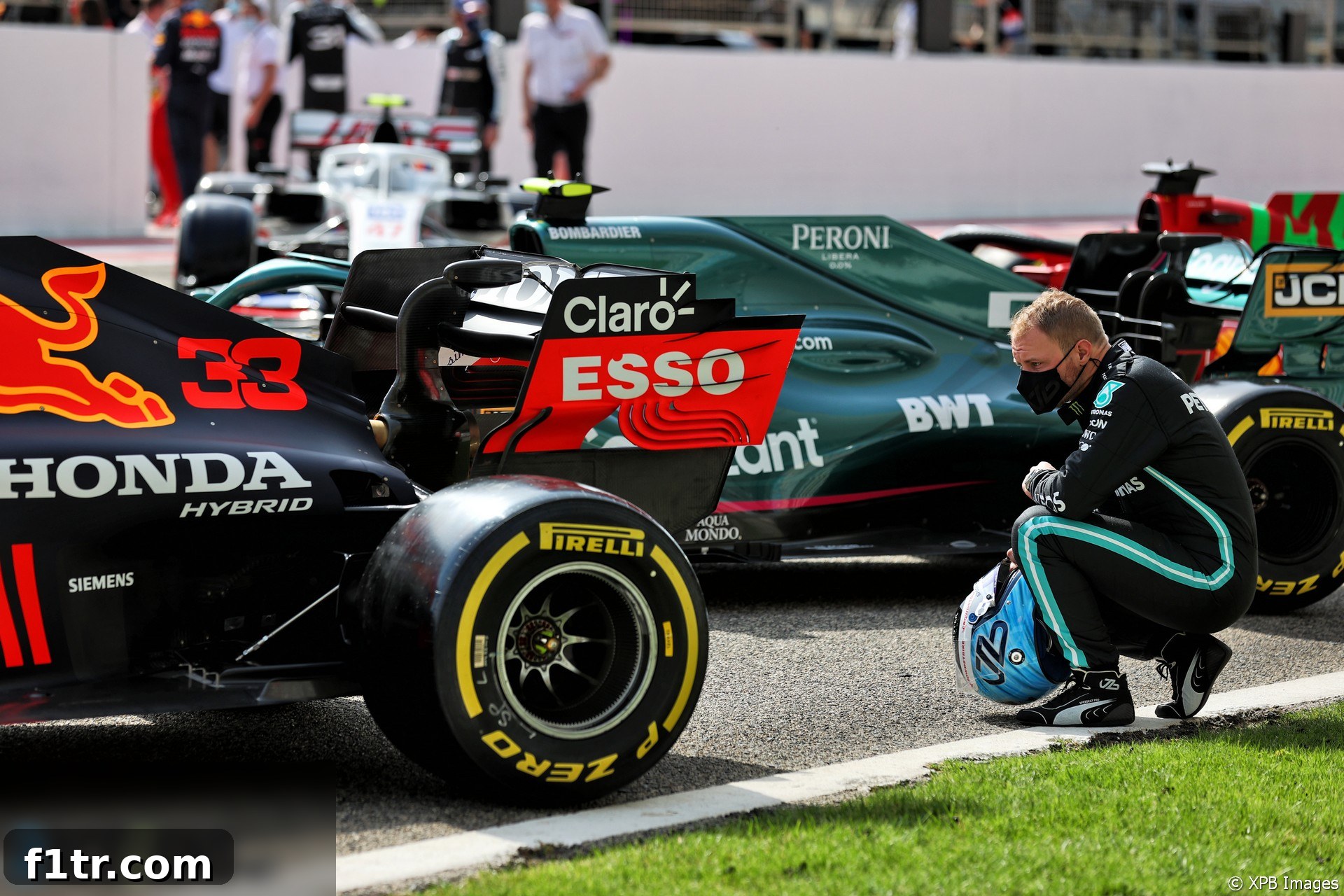
The visual documentation from the Bahrain International Circuit offers the global Formula 1 fanbase and astute technical analysts their first truly detailed and dynamic look at the RB16B in full flight. These exclusive images capture the car’s sleek, aggressive lines, its intricately sculpted aerodynamic elements, and the instantly recognizable vibrant livery of Red Bull Racing as the machine confidently tackles the challenging Sakhir layout. For those with a keen eye for engineering and design, paying close attention to the subtle details – from the meticulously crafted front wing components to the complex geometry of the rear diffuser – is crucial. These minute components often hold the most profound secrets to a team’s potential performance advantage and reveal their interpretation of the complex technical regulations.
The Strategic Importance of Bahrain Pre-Season Testing
The selection of the Bahrain International Circuit as the exclusive venue for the truncated 2021 pre-season testing calendar holds profound strategic significance. Unlike the traditionally cooler and often more abrasive European circuits previously favored for testing, Bahrain delivers ambient and track conditions far more representative of what teams will encounter during the early-season races, particularly in the Middle East and Asia. The Sakhir track is renowned for its demanding characteristics: persistently high temperatures, a diverse array of corner types ranging from slow hairpins to sweeping bends, and incredibly long straights. These elements collectively challenge every single aspect of an F1 car – from the efficiency of the engine cooling systems and the rate of tire degradation to overall aerodynamic efficiency, intricate brake performance, and the durability of crucial components. Teams gain invaluable data on how their cars manage heat, which is absolutely crucial for maintaining performance over long race stints in what promises to be a long and gruelling season.
Furthermore, the severely compressed three-day testing format amplifies the need for unparalleled efficiency in each team’s test program. There is simply no buffer for significant delays, unforeseen reliability issues, or lengthy repairs. Red Bull, in particular, will be laser-focused on ensuring that their Honda power unit, in its final year, proves itself to be both robust and capable of delivering consistent, championship-level performance across varying engine modes and temperatures. Every single hour spent idling in the garage addressing technical problems is an hour irrevocably lost on track, a deficit that could severely impede their meticulous preparations for the impending season opener. The comprehensive insights garnered here will not only dictate the initial setup direction for the first few Grand Prix but also heavily influence the development priorities and upgrade paths for the car throughout the demanding 2021 calendar.
Red Bull’s Ambitious 2021 Championship Aspirations
As the 2021 Formula 1 season looms, Red Bull Racing unequivocally harbors genuine and profound championship aspirations. After enduring several seasons of playing a formidable yet ultimately second-best role to the dominant Mercedes-AMG Petronas F1 Team, the Milton Keynes outfit is now more determined than ever. Buoyed by a remarkably strong and competitive finish to the truncated 2020 season, culminating in impressive victories, and further strengthened by the arrival of the highly experienced and race-winning teammate Sergio Pérez, the team firmly believes it has assembled the comprehensive package required to mount a sustained and credible challenge for both the drivers’ and constructors’ titles. The RB16B is not just a car; it represents their most refined and potent shot yet, meticulously incorporating every lesson learned from previous campaigns and expertly adapting to the subtly but strategically tweaked technical regulations. The raw performance metrics and the tangible confidence exuded during these crucial pre-season testing days will serve as the most critical initial indicator of whether these ambitious aspirations are truly within reach.
The meticulous and exhaustive work invested by the entire Red Bull technical collective, under the revered guidance of figures like Adrian Newey, Technical Director Pierre Waché, and Chief Engineer Paul Monaghan, aims to produce a car that is not only blindingly fast but also possesses enhanced predictability and superior adaptability across the wide spectrum of circuit types found on the F1 calendar. Unwavering reliability is another paramount cornerstone of their overarching strategy; consistent points finishes and avoiding DNFs (Did Not Finish) are absolutely essential to maintaining a championship bid over a long season. The dynamic images captured from Bahrain, showcasing the RB16B’s aggressive stance and formidable presence on track, undoubtedly serve to ignite and fuel the hopes of Red Bull fans around the globe, all eagerly anticipating to witness their team locked in a fierce battle at the very forefront of the Formula 1 grid, vying for ultimate glory.
Advert | Become a RaceFans supporter andgo ad-free
More on the 2021 F1 Season
- Masi ‘basically gifted the championship’ to Verstappen says 2021 FIA steward Sullivan
- Las Vegas race backers looking to extend F1 deal beyond 2025
- Why Mercedes put ‘a reminder of joy and pain’ on display in their factory lobby
- Verdict on error in GT race suggests Mercedes would have lost 2021 Abu Dhabi GP appeal
- Title ‘stolen’ from Mercedes made us ‘underdogs people cheer for’ – Wolff
Browse all 2021 F1 season articles