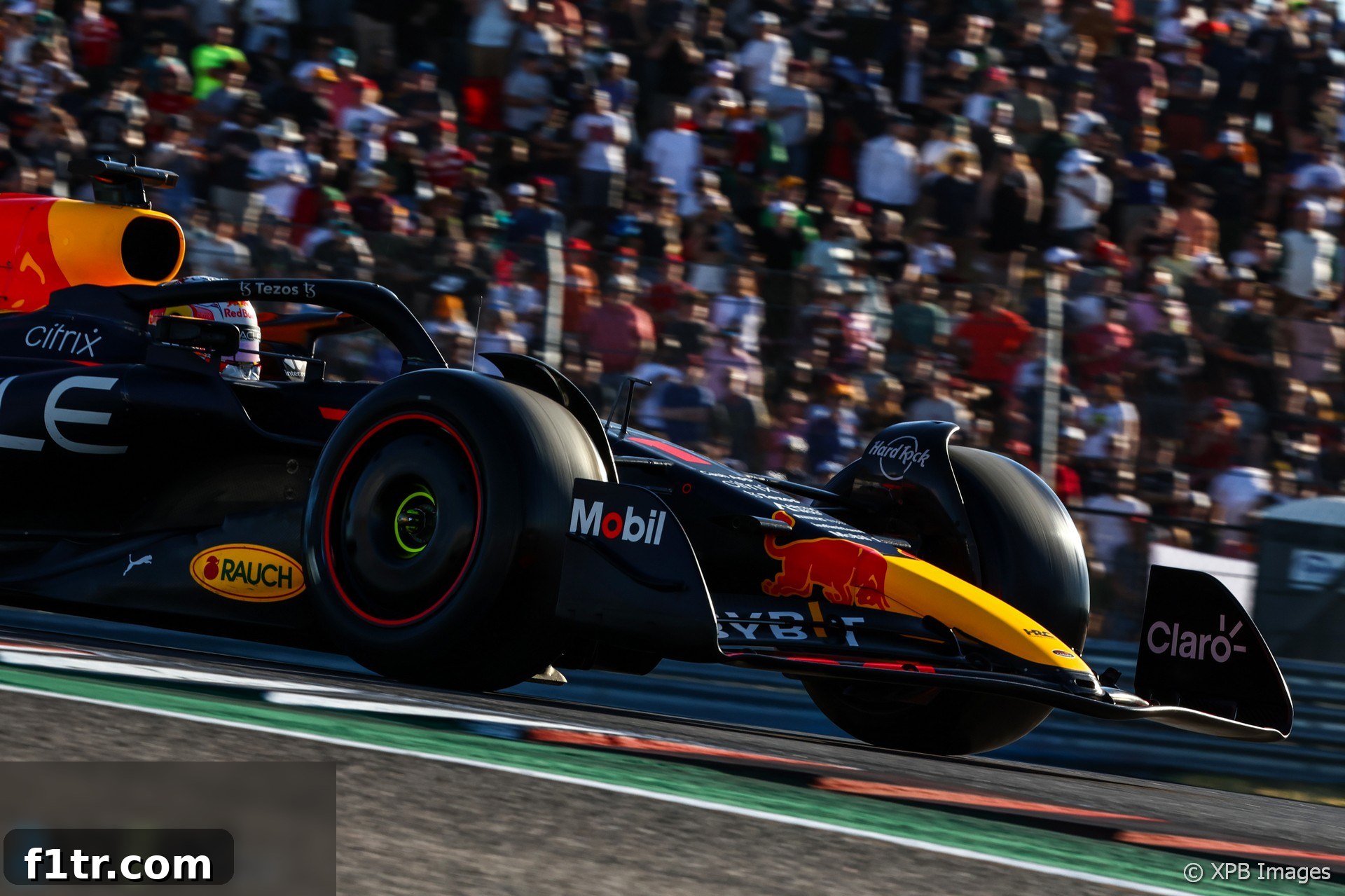
Max Verstappen’s consistent feedback regarding the front-end performance of Pirelli’s Formula 1 tyres has directly influenced the manufacturer’s development strategy for the upcoming season. The reigning world champion’s desire for improved precision and grip from the front axle is a key area Pirelli aims to address with its 2023 compounds, promising a potentially significant shift in car handling characteristics across the grid.
Advert | Become a Supporter & go ad-free
Simone Berra, Pirelli’s F1 chief engineer, has shed light on the extensive development work invested in the 2023 tyre range. He confirmed that driver input, particularly concerning the existing compounds, played a crucial role in shaping the technical directives for the new generation of F1 rubber. This collaborative approach between drivers and the sole tyre supplier is fundamental to refining the sport’s performance and safety standards.
Max Verstappen’s Quest for Front-End Precision
Max Verstappen, known for his aggressive driving style and his preference for a sharp, responsive front end coupled with a more agile rear, has been vocal about the limitations of the current Pirelli front tyres. His feedback highlights a common challenge faced by many drivers, but particularly those who push their cars to the absolute limit in pursuit of speed and control. Earlier in the year, at the Canadian Grand Prix, Verstappen expressed a clear desire for “more front end,” indicating a struggle to achieve the desired turn-in and mid-corner grip.
This sentiment was further elaborated at the French Grand Prix the following month, where Verstappen pinpointed the tyres as “the main limitation” contributing to an understeer trait in his Red Bull car. Understeer, the tendency of a car to turn less sharply than intended, can severely compromise a driver’s confidence and ability to attack corners. For a driver of Verstappen’s calibre, where millisecond advantages are paramount, even minor understeer can be a significant impediment to optimal performance.
Verstappen’s analysis went deeper, touching upon the fundamental characteristics of the tyres in relation to the heavier 2022-generation cars. “Already from the get-go when we were in Bahrain you could just feel like all the time when you really want to carry a lot of speed in, probably due to the weight of the car and just the structure of the tyre, it gives up a lot mid-corner, which is not ideal,” Verstappen remarked. This observation underscores the complex interplay between vehicle weight, tyre construction, and dynamic grip levels, especially during high-speed cornering where the tyres are subjected to immense forces. He acknowledged the team’s efforts to mitigate these issues through car setup, stating, “But that’s why as a team you have to work around that issue with the car to try to make the car turn a bit better. Which on some tracks of course is better and some tracks it’s more of a limitation just because of the layout. But I hope of course for next year something can be done [with the tyres].” His hope for tyre improvements for the subsequent season was a clear call to action for Pirelli.
Red Bull Racing’s engineers have diligently worked to refine the RB18 and RB19 chassis to achieve a more harmonious balance for Verstappen, often involving aerodynamic and suspension adjustments to compensate for the tyre characteristics. However, a fundamental change at the tyre level offers a more direct and universally beneficial solution, influencing not just Red Bull but the entire F1 grid’s car development philosophy.
Pirelli’s Commitment to Driver Feedback: Simone Berra’s Insights
Responding directly to such critical feedback from top drivers, Pirelli has focused its development efforts on the areas identified as most in need of improvement. Simone Berra confirmed that the focus for the 2023 tyre revisions leans heavily towards the front axle, signaling a targeted approach to enhance the front-end characteristics. “We had some information that the front tyre is – let’s say the weakest axle at the moment is the front, so we worked a lot on the front axle structure,” he explained.
This acknowledgment from Pirelli validates the drivers’ experiences and demonstrates a responsive development process. Identifying the front axle as the “weakest” implies that it is currently the limiting factor in overall grip and handling balance, especially under high load and speed. Addressing this weakest link is paramount to unlocking further performance from the cars and improving the driving experience.
Advert | Become a RaceFans supporter andgo ad-free
Revolutionizing the Front Axle: The 2023 Tire Structure
The core of Pirelli’s solution lies in a structural overhaul of the front tyres. A stronger and more robust construction is key to achieving the desired handling characteristics. Berra elaborated on the technical implications: “The new structure, with the new integrity test that we did on the front, gives us the possibility to decrease a little bit the front pressure. So what we expect from next year, if the higher loads don’t change too much, it will decrease a little bit the front pressure.”
This development is crucial because tyre pressure plays a pivotal role in a Formula 1 car’s performance. Generally, a stiffer tyre construction allows for lower inflation pressures while maintaining the necessary structural rigidity. Lower pressures can often lead to a larger contact patch with the track, thereby increasing mechanical grip. Teams traditionally increase front tyre pressures to reduce understeer and sharpen turn-in, but this often comes with trade-offs. Higher front pressures can increase the load transfer to the rear axle, potentially leading to increased oversteer on corner exit or reduced rear stability, disrupting the car’s overall balance.
By engineering a front tyre that is inherently stiffer due to its construction, Pirelli aims to provide a solution that improves front-end grip without forcing teams to resort to excessively high pressures. This targeted modification seeks to optimize the tyre’s performance window. Berra explicitly stated, “At the moment we have a big delta between front and rear and we would like to decrease a little bit this. So our intention and our target is to run at lower pressure on the fronts.” Reducing the pressure differential between the front and rear axles suggests a move towards a more balanced tyre platform, which should inherently improve the car’s overall stability and predictability through corners.
Berra unequivocally confirmed that “the first target” of the 2023 tyre development was “to decrease the level of understeer.” This direct address to one of the most persistent complaints from drivers like Verstappen is a clear indication of Pirelli’s responsiveness. He further noted that with the current compounds, “in low-speed corners, it seems that the front tyre is quite weak.” This weakness is particularly problematic in tight, technical sections of a circuit where precise steering and immediate response are paramount.
Elaborating on the technical solution, Berra added, “The problem is that even running too high pressure is not helping. So with the new structure, it’s stiffer. That tends to give us more integrity resistance [so] we can go lower with the pressure and I think that tyre can work better.” This explanation highlights a critical point: merely increasing tyre pressure isn’t a silver bullet. Beyond a certain point, higher pressures can lead to the tyre becoming too stiff, reducing its ability to absorb road imperfections and provide consistent grip, potentially exacerbating issues rather than resolving them. A structurally stiffer tyre, however, achieves rigidity through its construction, allowing for lower and more optimal operating pressures. This allows the tyre to deform more effectively under load, creating a larger contact patch and generating more grip, especially in those crucial mid-corner phases that Verstappen highlighted.
The Impact of Tire Development on F1 Performance
These planned changes to Pirelli’s 2023 Formula 1 tyres extend far beyond a mere technical update; they carry significant implications for the sport’s competitive dynamics, driver confidence, and overall race spectacle. A tyre that offers a more reliable and responsive front end can profoundly affect how drivers approach corners, enabling them to push harder and with greater conviction. This could lead to more aggressive driving, potentially increasing overtaking opportunities and making races more exciting.
The interplay between chassis design, aerodynamics, and tyre characteristics is symbiotic in Formula 1. Teams invest hundreds of millions in developing cars that perfectly integrate with the tyres provided. When the tyre characteristics shift, teams must re-evaluate their entire car setup philosophy. A stronger front tyre, allowing for lower operating pressures, could provide engineers with more setup flexibility. This could enable them to fine-tune other aspects of the car, such as suspension and aerodynamic balance, to extract maximum performance without being constrained by an inherent front-end limitation.
Furthermore, the increased weight of the current generation of F1 cars has placed unprecedented demands on the tyres. Heavy cars require more robust tyres that can withstand the forces generated during braking, cornering, and acceleration. The new, stiffer front tyre structure is a direct response to this challenge, aiming to provide durability and consistent performance throughout a stint, even under extreme conditions. This could improve tyre degradation patterns, potentially allowing for more varied strategies during races and reducing the incidence of ‘tyre management’ phases that can sometimes dull the racing action.
For drivers who, like Max Verstappen, prefer a very precise and direct steering feel, these improvements could be a game-changer. Enhanced front-end grip and reduced understeer mean less effort fighting the car and more confidence to exploit its full potential. This translates to faster lap times, more consistent performance, and a greater ability to push for overtakes. Pirelli’s continuous challenge is to meet the diverse demands of ten different teams and twenty drivers, each with their unique driving style and car philosophies, across a wide array of circuits with varying layouts and surface characteristics. Their iterative development process, heavily reliant on driver feedback, underscores their commitment to evolving with the sport.
Looking Ahead to the 2023 F1 Season
As Formula 1 looks towards the 2023 season, the anticipation surrounding Pirelli’s new tyre compounds is palpable. The targeted improvements to the front axle, aimed at reducing understeer and allowing for more optimal tyre pressures, are poised to make a tangible difference. Drivers, particularly those who have been vocal about front-end limitations, can expect a more predictable and responsive car, especially in low-speed corners where the current tyres have shown their weaknesses.
These developments could subtly yet significantly shift the competitive landscape. While top teams like Red Bull and Mercedes will undoubtedly adapt quickly, a more balanced tyre platform could empower other teams to close the gap or find new performance windows. Ultimately, a tyre that provides drivers with more confidence and allows them to push harder will only enhance the spectacle of Formula 1. Pirelli’s responsive development, driven by critical feedback from the sport’s elite, reaffirms its crucial role in the ongoing evolution of Grand Prix racing.
Advert | Become a RaceFans supporter andgo ad-free
2023 F1 season: Related Articles
- FIA president cleared of alleged interference in two 2023 races
- First week viewing figures for new Drive to Survive season fall again
- Max who? Drive to Survive season six prefers its favourite faces
- RaceFans’ complete 2023 season review
- The F1 drivers who pulled off the 10 biggest charges through the field in 2023
Browse all 2023 F1 season articles