Lewis Hamilton’s Miraculous Escape: A Deep Dive into Baku’s Tyre Failures and F1 Safety Concerns
The 2021 Azerbaijan Grand Prix delivered a thrilling spectacle of high-stakes racing, but beneath the surface of the dramatic finishes and unexpected victories lay a chilling concern: tyre integrity. While Lewis Hamilton ultimately finished the race after a dramatic late-race restart, it has been revealed that he was teetering on the brink of a catastrophic tyre failure, remarkably similar to the incidents that tragically ended the races of two other prominent drivers, Max Verstappen and Lance Stroll.
Advert | Become a Supporter & go ad-free
The High-Stakes Incidents: Verstappen and Stroll’s Dramatic Exits
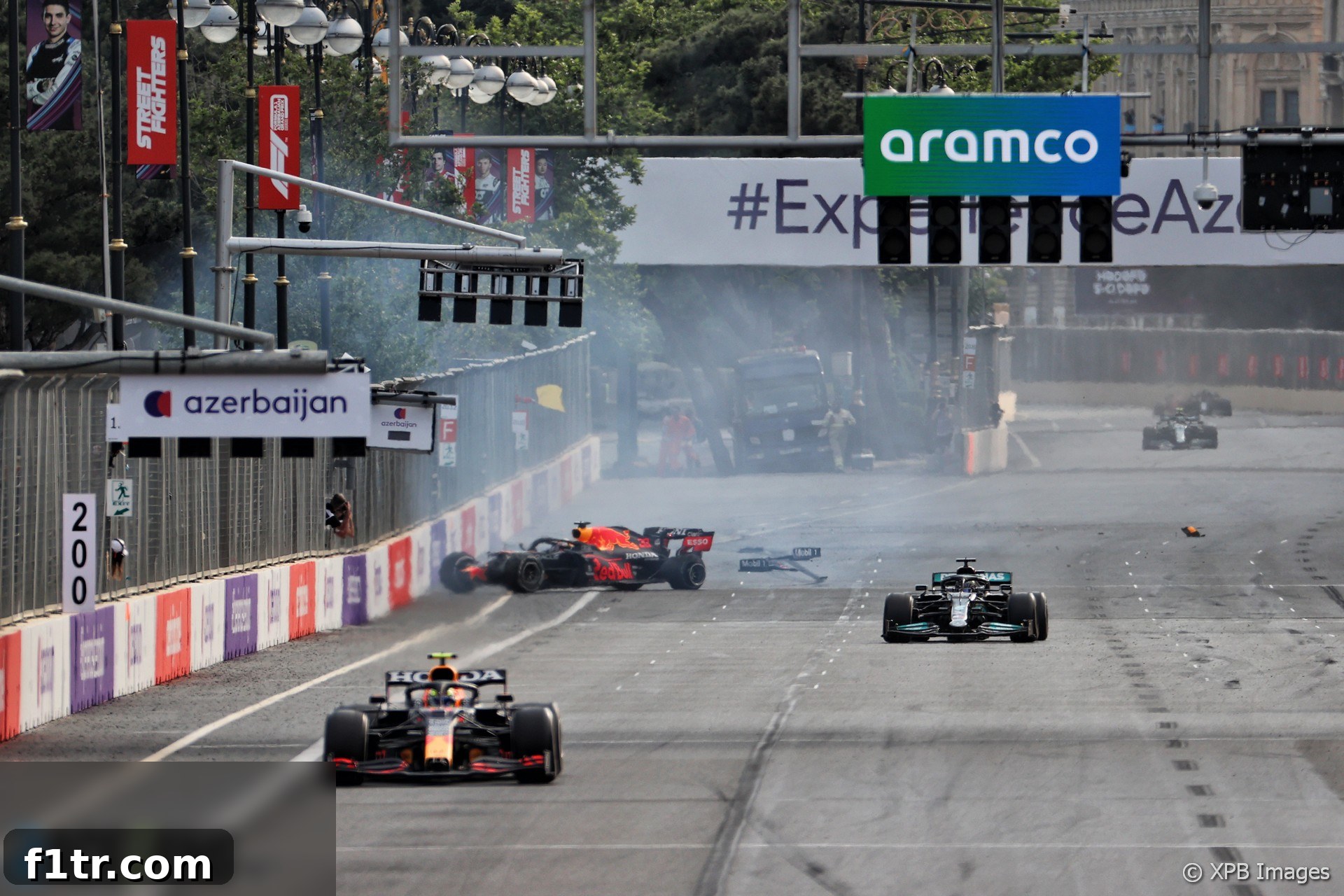
Sunday’s race in Baku was punctuated by two terrifying high-speed crashes, both resulting from apparent failures of the left-rear tyres on the cars of Max Verstappen and Lance Stroll. Verstappen, leading the race comfortably for Red Bull, experienced a sudden and violent tyre blowout on the main straight at extreme speeds. His car veered sharply into the wall, causing significant damage and bringing out the red flag. Earlier in the race, Aston Martin’s Lance Stroll suffered an almost identical fate, his left-rear tyre disintegrating at high speed along the very same section of the track, sending his car into a heavy impact with the barrier. Both drivers were fortunate to emerge from their respective incidents unharmed, a testament to modern Formula 1’s robust safety standards, but the underlying cause immediately raised alarm bells across the paddock.
Hamilton’s Near Miss: A Cut Tyre and a Stroke of Luck
Amidst the chaos and the subsequent investigation into these failures, Pirelli’s Head of Formula 1, Mario Isola, made a critical revelation. Lewis Hamilton, the seven-time world champion, was also running with a severely compromised left-rear tyre. Isola confirmed that Hamilton’s tyre had sustained a significant seven-centimetre cut on its inside shoulder. “Probably in the case of Lewis, the cut was not deep enough to cut the construction, so he was lucky because of all of that,” Isola explained, highlighting the fine line between a dangerous incident and a full-blown failure. He further elaborated, “And in the case of Max and Lance, there was an air loss and therefore a failure.”
The discovery of Hamilton’s damaged tyre occurred during the red flag period, which was triggered by Verstappen’s devastating crash. As drivers pitted to change tyres and allow for track clear-up, Mercedes mechanics and Pirelli personnel conducted routine checks. “We found a cut on the inside shoulder of a rear-left tyre used by Lewis Hamilton in the same stint,” Isola detailed. “The cut was quite deeper and bigger, probably six or seven centimetres, but not cutting the construction. So the tyre was still in one piece.” This crucial distinction explains why Hamilton’s tyre, despite its considerable damage, managed to hold air and avoid the catastrophic delamination seen on Verstappen and Stroll’s cars.
Mercedes’ Reaction and the Call for Investigation
Mercedes team principal Toto Wolff confirmed that his team had observed the alarming damage to Hamilton’s tyre. While acknowledging the potential severity of the situation, Wolff maintained a cautious stance, stating that they would “wait for the analysis of what it was” before drawing any definitive conclusions. “I don’t want to point the finger at anybody,” he added, emphasizing the need for a thorough and impartial investigation into the incidents. This measured response reflects the gravity of the situation and the sport’s collective desire to understand and prevent future occurrences.
Pirelli’s Commitment to a Thorough Investigation
As the sole tyre supplier for Formula 1, Pirelli bears the significant responsibility of ensuring the safety and performance of the sport’s crucial rubber. Following the incidents, Pirelli immediately launched a comprehensive investigation into the failures that forced both Verstappen and Stroll out of the race. This inquiry is expected to be extensive, examining every possible variable, including tyre pressure, track debris, specific car setups, and even potential manufacturing anomalies. The findings will be critical for understanding the root cause and implementing any necessary preventative measures to safeguard driver safety in future races.
The Critical Importance of Tyre Integrity in Formula 1
Tyres are arguably the most critical component of a Formula 1 car, serving as the sole contact point between the 1000-horsepower machine and the track surface. They are subjected to immense forces – extreme temperatures, staggering g-forces during cornering and braking, and incredible speeds on straights. A tiny imperfection or a seemingly minor cut can rapidly escalate into a catastrophic failure, especially at the speeds seen in modern F1. The Baku street circuit, with its long, high-speed main straight and tight, debris-prone corners, presents a particularly challenging environment for tyres. Drivers often clip walls, pick up carbon fibre shards, or run over other debris, all of which can compromise tyre integrity in ways that are not immediately apparent.
The near-miss for Lewis Hamilton underscores the constant vigilance required in Formula 1. Had his tyre completely failed at the speeds Verstappen and Stroll experienced, the consequences could have been far more severe, not just for Hamilton but potentially for other drivers around him. These incidents serve as a stark reminder that despite continuous advancements in safety technology, racing at the pinnacle of motorsport always carries inherent risks, and component integrity remains paramount.
Moving Forward: Lessons from Baku
The findings from Pirelli’s investigation will undoubtedly shape future discussions and potentially lead to new regulations or guidelines concerning tyre usage and design. Whether the issue is attributed to debris, specific operating parameters (like tyre pressures), or a rare manufacturing defect, the sport will strive to learn from these events to prevent their recurrence. Ensuring that tyres can withstand the immense stresses of Formula 1, even in challenging environments like Baku, is a continuous process of research, development, and stringent testing. The ultimate goal is to provide drivers with the confidence that their equipment will perform reliably, allowing them to push the limits of performance without compromising their safety.
Advert | Become a RaceFans supporter andgo ad-free
Related Discussions from the 2021 Azerbaijan Grand Prix
- Aston Martin also confirms it followed Pirelli’s tyre restrictions before crash
- Pirelli confirm teams not to blame for Baku tyre failures following investigation
- “Tyres should not explode like that” says Villeneuve as Pirelli prepares to reveal findings
- Why Alonso is able to enjoy F1 more now than when he left
- Penalty for Safety Car error was just one of Latifi’s frustrations in Baku
Browse all 2021 Azerbaijan Grand Prix articles